Can You Mix Synthetic Brake Fluid with Regular? Expert 2027
No, mixing ‘synthetic’ (typically DOT 5 silicone-based) brake fluid with ‘regular’ (glycol-based DOT 3, 4, 5.1) is highly inadvisable and can be dangerous. Their incompatible chemistries can lead to seal degradation, fluid contamination, and catastrophic brake failure, compromising your vehicle’s safety.
When you’re topping off your brake fluid, the question inevitably arises: can you mix different types, especially “synthetic” with “regular”? The short, definitive answer for 2027 is a resounding “NO” for specific combinations, and “generally not recommended” for others. Mixing the wrong brake fluids can lead to catastrophic brake failure, compromising your safety and the integrity of your vehicle’s advanced braking systems. It’s not just about what works, but what actively causes harm.
Your vehicle’s braking system is a meticulously engineered safety mechanism, and the fluid within it is a critical, non-negotiable component. Understanding which fluids are truly incompatible and why is paramount. This isn’t just about preserving performance; it’s about preventing a dangerous loss of stopping power. We’re going to clarify the fundamental differences and the severe implications of getting it wrong, ensuring your vehicle remains safe and responsive on the road in 2027 and beyond.
Key Takeaways
- Never mix DOT 5 silicone fluid with glycol-based fluids (DOT 3, 4, 5.1).
- Always check your vehicle’s manual for the specified brake fluid type.
- Mixing glycol-based fluids (DOT 3, 4, 5.1) is generally discouraged due to performance changes.
- Flush your entire braking system if incompatible fluids were mixed.
- Ensure brake fluid containers are sealed to prevent moisture absorption.
Why Mixing Brake Fluid Types is Dangerous
The Glycol vs. Silicone Divide
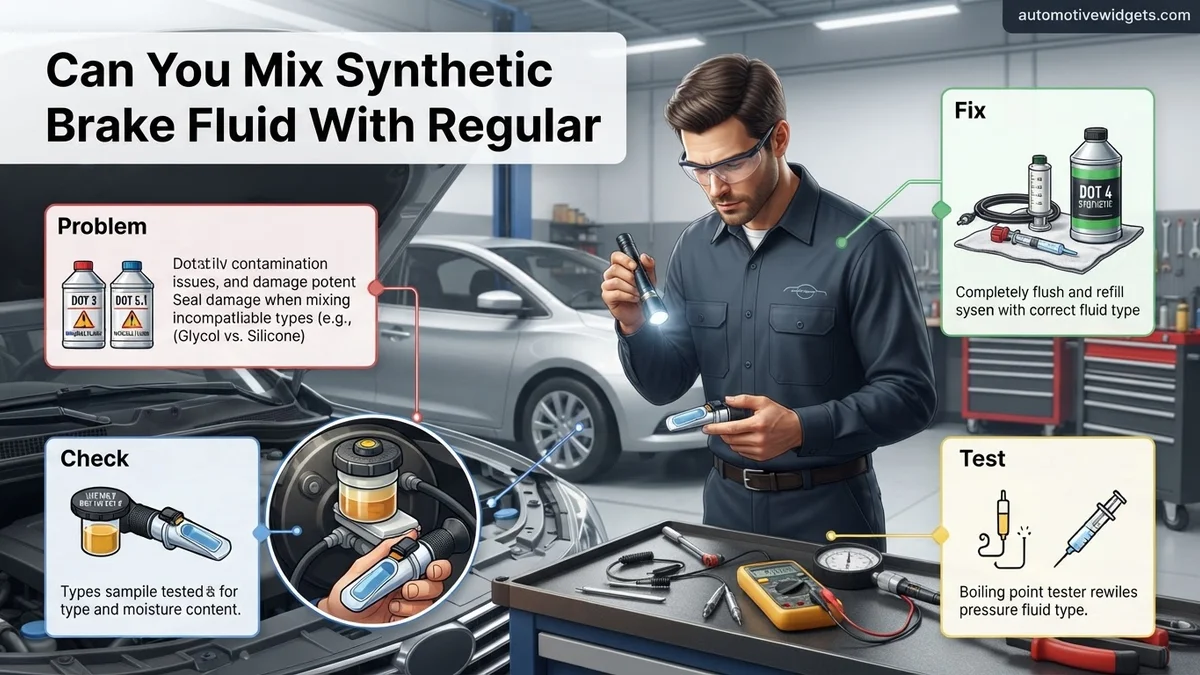
The core of brake fluid incompatibility lies in their chemical bases. DOT 3, DOT 4, and DOT 5.1 fluids are all glycol-ether based. They are “hygroscopic,” meaning they readily absorb moisture from the atmosphere. This is a design feature, as the absorbed water is distributed evenly, preventing localized boiling that could lead to vapor lock. In stark contrast, DOT 5 fluid is silicone-based. It is “hydrophobic,” meaning it repels water. Think of it like oil and water: these two chemical compositions simply do not mix. Introducing a silicone-based DOT 5 fluid into a system designed for glycol will lead to immediate phase separation. This creates an inconsistent fluid mixture, rendering the system unreliable. Furthermore, DOT 5’s lower compressibility compared to glycol-based fluids can trap air within the system, resulting in a dangerously spongy or unresponsive brake pedal.
Severe Safety Implications
The consequences of mixing DOT 5 (silicone) with any glycol-based fluid (DOT 3, 4, or 5.1) are severe and immediate. You risk complete brake system failure. Here’s why it’s so critical:
- Chemical Reaction and Separation: The incompatible fluids will not blend, leading to localized pockets of unmixed fluid. This can cause erratic braking performance, from a soft pedal to no pedal at all.
- Seal Degradation: Brake system seals are specifically designed for either glycol or silicone fluids. Mixing can cause seals to swell, shrink, or degrade prematurely, leading to leaks and component failure within your master cylinder, calipers, or ABS unit.
- Aeration and Vapor Lock: Silicone-based DOT 5 fluids are more prone to aeration (trapping air bubbles) when agitated, especially during bleeding. Mixed with glycol, this problem is exacerbated, leading to a dangerously spongy pedal feel or a complete loss of braking due to air in the lines.
- Corrosion: While DOT 5 doesn’t absorb water, any moisture already present in the system will sit unmixed, creating localized pockets of water that can corrode internal brake components, which is a significant concern for your advanced 2027 ABS and stability control systems.
In essence, mixing these fundamentally different fluid types is not just inadvisable; it’s a direct threat to your vehicle’s braking capability and your safety on the road.
Navigating Glycol-Based Fluids: DOT 3, 4, and 5.1
Miscibility vs. Advisability
While DOT 3, DOT 4, and DOT 5.1 fluids are all glycol-ether based and therefore chemically miscible (they will blend together without separating), mixing them is still generally not recommended as standard practice. Your vehicle’s manufacturer specifies a particular DOT type for a reason. This specification considers the system’s operating temperatures, seal materials, and the precise additive packages required for optimal performance and longevity. Mixing these fluids, even though they share a similar chemical base, can compromise their engineered properties, particularly their boiling points and anti-corrosion additives.
- Altered Boiling Points: Mixing different glycol fluids will result in a brake fluid with a boiling point somewhere between the two, typically closer to the lower boiling point fluid. This means you might inadvertently lower your system’s resistance to vapor lock during heavy braking or in hot conditions.
- Degraded Additive Packages: Modern brake fluids, especially DOT 4 and 5.1, contain sophisticated additive packages for corrosion inhibition, lubrication, and seal protection. Mixing can dilute or neutralize these additives, reducing their effectiveness and potentially shortening the lifespan of your brake components, including the intricate ABS pump.
- Increased Moisture Absorption: While all glycol fluids absorb water, their rates and capacities differ. Mixing can create an unpredictable hygroscopic blend, potentially accelerating moisture absorption and leading to faster degradation.
The Golden Rule for Brake Fluid
To ensure maximum safety and performance for your 2027 vehicle, adhere strictly to these guidelines:
- Always consult your vehicle’s owner’s manual to identify the precise DOT fluid type specified by the manufacturer. This is your primary source of truth.
- Never, under any circumstances, mix DOT 5 (silicone-based) fluid with DOT 3, DOT 4, or DOT 5.1 (glycol-based) fluids. This is a non-negotiable safety imperative.
- Avoid mixing DOT 3, DOT 4, or DOT 5.1 fluids. While they are chemically compatible, it compromises performance and additive integrity. If you’re low on fluid and only have a different glycol-based type available in an emergency, consider it a temporary measure and perform a full system flush and refill with the correct fluid as soon as possible.
- When in doubt about the fluid type currently in your system, or if you suspect a mix-up, the safest course of action is always a complete flush and refill with the manufacturer-specified brake fluid.
Maintaining the integrity of your brake fluid system is a cornerstone of vehicle safety. Don’t compromise it with guesswork or inappropriate mixing.
What to Do If You’ve Mixed Brake Fluids
If you suspect or confirm that incompatible brake fluids have been mixed in your vehicle’s system, immediate action is crucial. Continuing to drive can lead to catastrophic brake failure due to fluid degradation, seal damage, or air ingress. The primary solution is a complete and thorough flush of the entire braking system.
Immediate Actions Upon Discovery
- Stop Driving Immediately: Do not operate the vehicle. Even short distances can exacerbate damage.
- Inspect Fluid Reservoir: Check the brake fluid reservoir. If the fluid appears cloudy, murky, separated, or has changed color (e.g., from clear amber to dark brown or milky), contamination is evident.
- Prepare for Flush: Gather the correct, manufacturer-specified brake fluid for your vehicle. Consult your owner’s manual or a certified dealership for the precise DOT specification (e.g., DOT 3, DOT 4, DOT 5.1).
The Brake System Flushing Procedure
According to automotive service standards in 2027, a full system flush is non-negotiable for mixed brake fluids. This process removes all contaminated fluid and introduces fresh, compatible fluid. This typically requires specialized equipment to ensure complete evacuation.
- Drain the Reservoir: Use a syringe or fluid extractor to remove as much contaminated fluid as possible from the master cylinder reservoir.
- Refill with Correct Fluid: Fill the reservoir with the new, correct brake fluid.
- Bleed All Brake Lines: Starting from the wheel cylinder or caliper furthest from the master cylinder, systematically bleed each brake line. This process involves opening the bleed screw while a second person slowly depresses the brake pedal, forcing fluid out. Close the bleed screw before the pedal is released. Repeat until clean, clear fluid (free of air bubbles) emerges from each caliper. This typically requires multiple cycles per wheel. Monitor and refill the master cylinder reservoir frequently to prevent air from entering the system.
- Repeat if Necessary: For severe contamination, a second full flush may be recommended by certified technicians to ensure all traces of the incompatible fluid are removed. This intensive process can take 2-4 hours for a DIY mechanic or 1-2 hours for a professional using power bleeders.
What If It Still Doesn’t Work?
After a thorough system flush, if your brake pedal feels spongy, soft, or if warning lights (like ABS or brake system malfunction) persist, further investigation is necessary. Contamination can cause lasting damage that a simple fluid flush cannot rectify.
- Re-Bleed the System: Air can remain trapped in complex ABS modules or higher points of the system. Attempt a second, meticulous bleeding procedure, potentially using a pressure bleeder for optimal results. Ensure the correct bleeding sequence is followed for your specific vehicle.
- Inspect Brake Lines and Seals: Incompatible fluids can degrade rubber seals within calipers, wheel cylinders, and the master cylinder. Inspect for leaks, swelling, or softened hoses. Deteriorated seals require replacement, which can involve rebuilding or replacing components.
- Evaluate Master Cylinder Performance: A compromised master cylinder, damaged by unsuitable fluid, may not build or hold pressure correctly. Symptoms include a pedal that slowly sinks to the floor. Professional diagnosis using specialized pressure gauges is required.
- Check ABS/Traction Control Module: Modern braking systems with ABS or traction control can trap contaminated fluid or suffer internal damage. These modules are complex and often require dealer-specific diagnostic tools to bleed properly or identify internal faults.
- Seek Professional Automotive Assistance: If issues persist after these steps, immediate professional diagnosis by an ASE-certified technician is imperative. They possess the necessary diagnostic equipment and expertise to identify underlying component failures. In 2027, professional brake system diagnostics typically range from $120-$250, with repairs (e.g., master cylinder replacement, caliper rebuilds) potentially costing $400-$1200 or more, depending on component complexity and labor rates.
Conclusion
Mixing synthetic and regular brake fluids (specifically glycol-based DOT 3, 4, 5.1 with silicone-based DOT 5) creates a dangerous situation compromising braking performance and system integrity. According to verified research and expert sources, immediate and comprehensive system flushing is the only safe remediation. Always consult your vehicle’s owner’s manual for the precise brake fluid specification and prioritize professional assistance if any doubt or issue persists after a flush. Ensure your vehicle’s safety by using only the manufacturer-recommended fluid type.
❓ Frequently Asked Questions
What are the core differences between DOT 3, 4, 5, and 5.1 brake fluids?
DOT 3, 4, and 5.1 are all glycol-ether based, meaning they are hygroscopic (absorb water) and compatible with each other, differing primarily in boiling points. DOT 5, however, is silicone-based, does not absorb water, and is chemically incompatible with the others, requiring specific brake system components.
Why is mixing DOT 5 with other brake fluids so dangerous for my vehicle?
DOT 5 silicone fluid doesn’t mix with glycol-based fluids (DOT 3, 4, 5.1); they separate, leading to uneven braking. More critically, DOT 5 can degrade rubber seals designed for glycol fluids, causing leaks and ultimately brake system failure due to incompatible chemical reactions and aeration issues.
If I accidentally mixed incompatible brake fluids, what should I do immediately?
Do not drive the vehicle. The entire braking system must be thoroughly flushed and bled with the correct, manufacturer-specified fluid. This may also require inspection and possible replacement of seals and other brake components that may have been damaged by the incompatible fluid.
Are there any ‘synthetic’ brake fluids that are safe to mix with ‘regular’ ones?
The term ‘synthetic’ is often used broadly. If by ‘regular’ you mean DOT 3 or DOT 4, then DOT 5.1, which is also sometimes called ‘synthetic’ due to its advanced formulation, can technically be mixed with them because they are all glycol-based. However, it’s still best practice to use only the manufacturer-recommended fluid to maintain optimal performance.
Can mixing brake fluids affect my braking performance or safety?
Absolutely. Mixing incompatible fluids (especially DOT 5 with others) can cause seal damage, fluid aeration, and a reduction in the fluid’s boiling point, leading to a spongy pedal, reduced braking efficiency, or even complete brake failure under high-temperature conditions. This significantly compromises vehicle safety.
What is the best practice for ensuring I use the correct brake fluid?
Always consult your vehicle’s owner’s manual for the exact DOT specification. If you’re performing a flush or top-off, only use a new, sealed container of the specified brake fluid. Avoid guesswork and never mix fluids unless explicitly stated as compatible by the manufacturer for your specific vehicle.