How Long Does Gasoline Last With Fuel Stabilizer 2026 Guide
Gasoline treated with a quality fuel stabilizer typically lasts between 12 to 24 months, a massive improvement over untreated gas which degrades in 1 to 3 months. Stabilizers work by chemically preventing oxidation, gum, and varnish buildup in fuel systems. Proper storage in a sealed container with minimal air space is critical to achieving maximum shelf life.
When you add a quality fuel stabilizer, gasoline typically lasts between 12 to 24 months before it begins to degrade significantly. Untreated gasoline goes bad in just 30 to 60 days, leaving behind sticky varnish and clogged carburetors. Treating your fuel extends that lifespan dramatically.
As you plan for seasonal storage in 2026, knowing these exact timelines ensures your lawnmowers, generators, and classic cars start reliably after months of sitting idle. Let us look at the science and the steps required to maximize your fuel shelf life.
Key Takeaways
- Treated gasoline safely extends shelf life from 1 month up to 24 months.
- Fuel stabilizers prevent harmful varnish, gum, and oxidation from clogging engines.
- Ethanol-blended fuels degrade faster and require stabilization sooner than non-ethanol gas.
- Store fuel in airtight metal or plastic containers to minimize air exposure.
- Keep stored gasoline in cool, temperature-controlled environments away from direct sunlight.
What Causes Gasoline to Degrade and Why Stabilizers Are Needed
The Oxidation and Evaporation Process
Gasoline is a complex blend of volatile hydrocarbons. When exposed to air in your tank or a gas can, the most volatile compounds evaporate first. This leaves behind a heavier, less combustible liquid. More importantly, oxygen reacts with the remaining hydrocarbons in a process called oxidation. This chemical change turns your fresh fuel into a dark, acidic sludge.
How Stabilizers Prevent Gum and Varnish
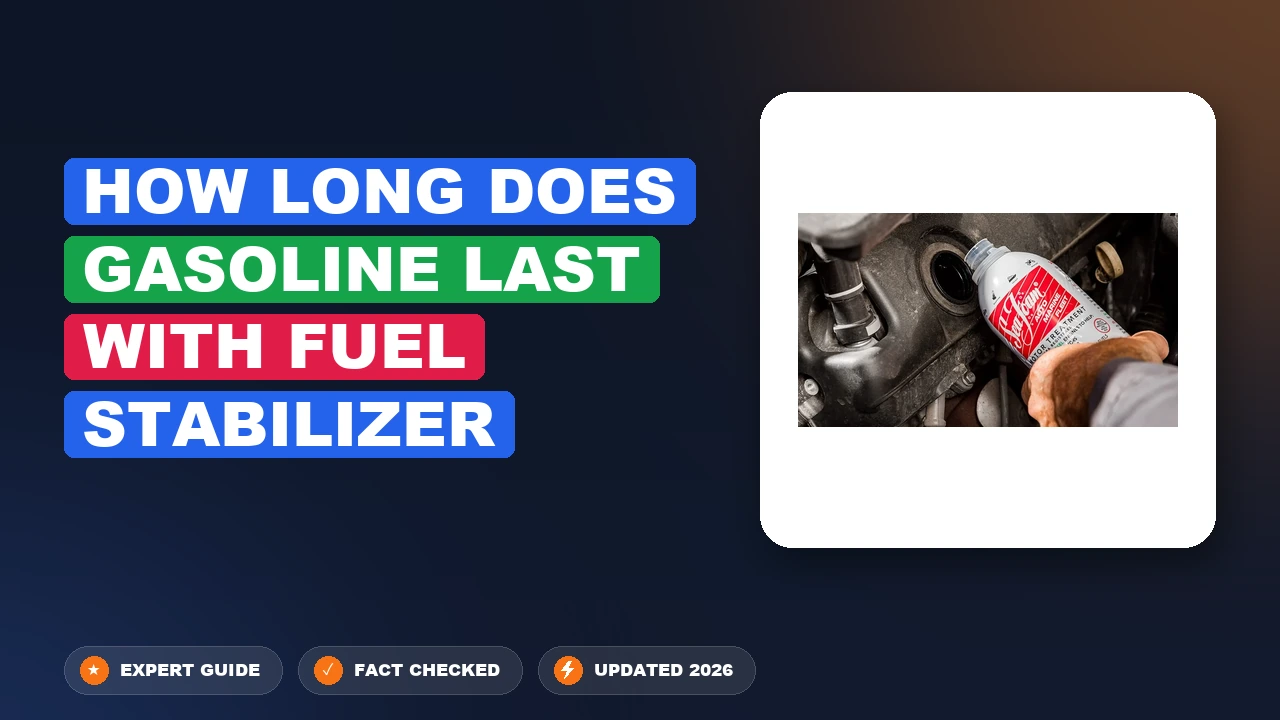
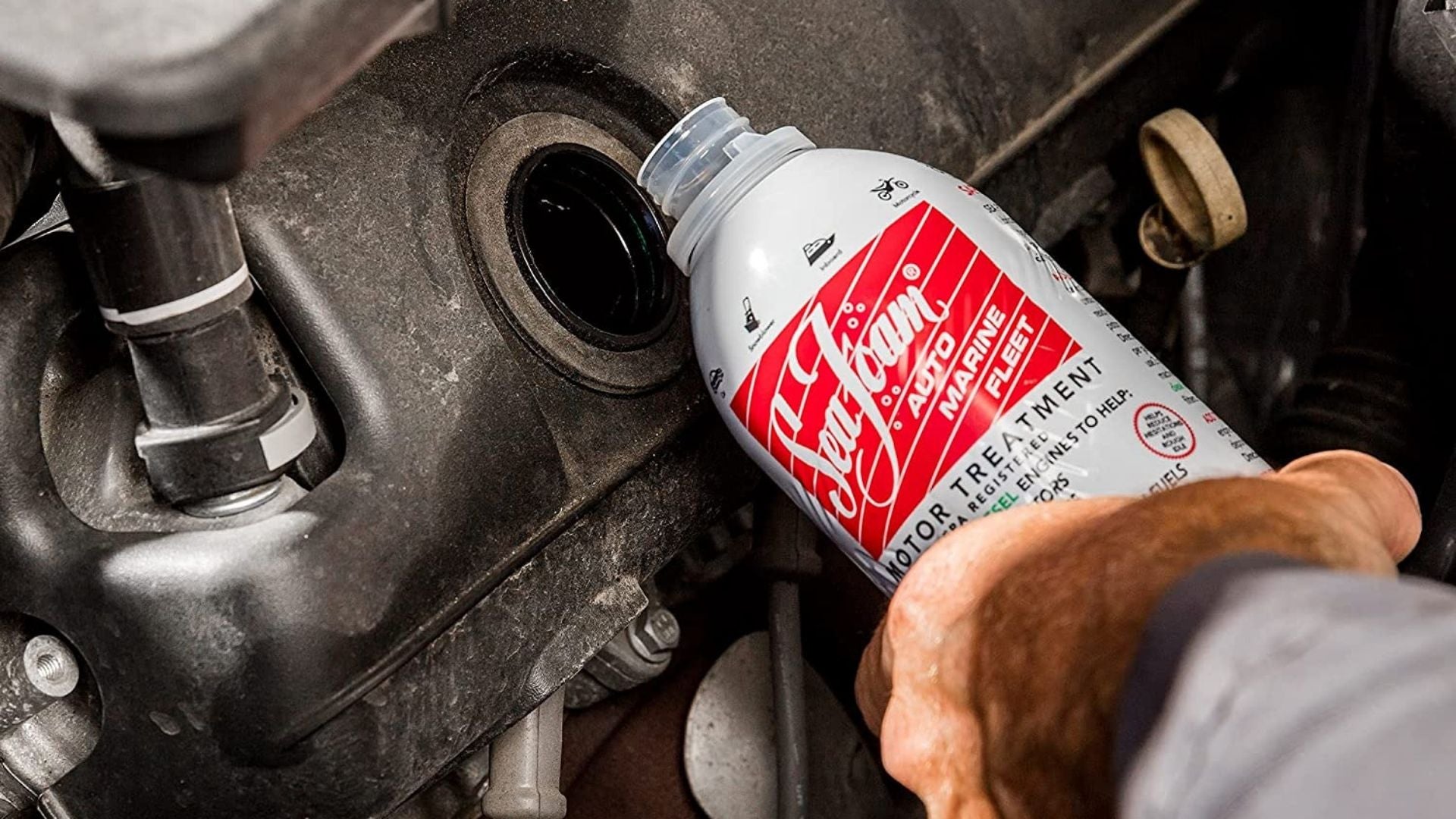
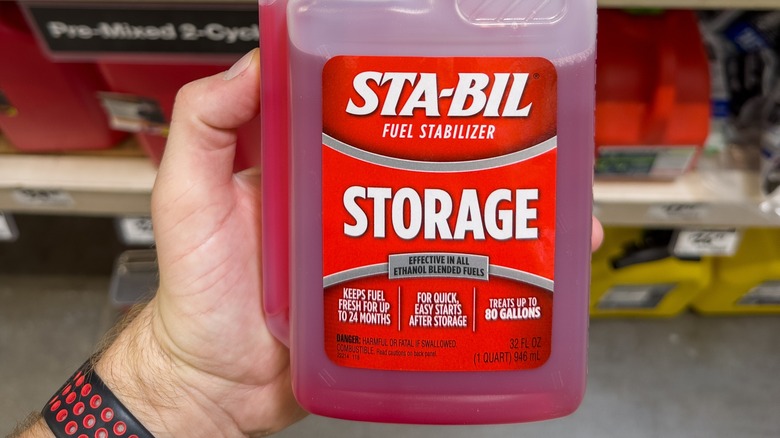
Fuel stabilizers act as chemical antioxidant shields. They bond with the hydrocarbon chains to block oxygen absorption. This prevents the formation of sticky gum and hard varnish deposits that clog fuel injectors and carburetor jets. Standard consumer stabilizers like STA-BIL or Sea Foam give you up to 24 months of protection. However, results vary based on the specific formulation you choose and your storage environment.
Step-by-Step Guide to Treating and Storing Gasoline Properly
1. Choose the Right Stabilizer and Dosage
Always purchase a fresh bottle of fuel stabilizer for your 2026 storage needs. Older bottles sitting on a garage shelf for years may lose their potency. Measure the exact amount of gasoline you are treating. Follow the manufacturer instructions strictly, as under-treating leaves your fuel vulnerable to oxidation, while over-treating rarely provides extra benefits.
2. Mix Thoroughly and Fill the Container
Pour the stabilizer directly into your fuel container or tank before you add the gasoline. This ensures proper mixing as the incoming fuel turbulence blends the liquids together. If you are treating a vehicle or equipment tank, fill it to about 95 percent capacity. Leaving a tiny expansion gap prevents pressure buildup while minimizing the air pocket available for oxidation.
3. Circulate the Treated Fuel
Do not just let the mixture sit in the tank unmixed. Run your engine, generator, or lawnmower for 5 to 10 minutes after adding the stabilizer. This draws the treated fuel through your fuel lines, pump, and carburetor or injectors. Proper circulation protects the entire fuel system, not just the main storage tank, preventing costly repairs when you need your equipment next.
How to Test Old Fuel Before Using It in Your Engine
When dealing with gasoline treated with fuel stabilizers approaching the 2026 storage limits, visual and olfactory checks are essential before turning the ignition key. Stale fuel loses its volatile components, resulting in a distinct sour smell resembling old varnish rather than the sharp scent of fresh petroleum.

Visual and Olfactory Inspection
Manufacturers and automotive experts recommend pouring a small sample into a clear glass container to check for oxidation. Fresh gasoline typically appears clear with a slight yellow or green tint. If the liquid looks dark amber, contains visible sediment, or has a heavy layer of separation at the bottom, the chemical breakdown is too severe for safe combustion.
Step-by-Step Testing Procedures
- Retrieve a small sample of the stored fuel using a clean, approved siphon pump into a transparent container.
- Perform a sniff test in a well-ventilated area to check for the sharp odor of fresh fuel versus the pungent smell of varnish.
- Inspect the sample under bright light for discoloration, cloudiness, or floating particulate matter.
- Check for phase separation if working with ethanol-blended fuel, which appears as a distinct water layer at the bottom of the container.
- If the fuel passes these visual and scent benchmarks, mix it with fresh 2026-grade gasoline at a 50-50 ratio to dilute any residual degradation before running it through small engines.
What If Your Stabilized Gas Still Goes Bad or Fails to Start
Even with premium chemical treatments, high humidity, extreme temperature fluctuations, or forgotten multi-year storage can cause fuel to degrade beyond recovery. If an engine refuses to start or runs rough after adding treated fuel, immediate corrective measures are required to prevent permanent damage to carburetors and fuel injectors.
Fallback Troubleshooting Steps
- Drain the compromised fuel tank completely using an approved siphon or dedicated drain plug into a sealed container for safe municipal disposal.
- Remove and inspect the spark plugs for heavy fouling, carbon buildup, or varnish coatings caused by unburnt stale fuel.
- Clean the carburetor jets or fuel injectors using a specialized solvent spray to clear out sticky gum deposits left behind by oxidized petroleum.
- Refill the tank entirely with fresh, high-octane gasoline without any old additives to re-establish proper combustion pressure.
- Consult a certified small engine mechanic or automotive technician if the engine continues to crank without starting, as clogged fuel pumps may require professional replacement.
Professional diagnostic and fuel system flushing services typically range from $150 to $400 depending on the complexity of the machinery and the extent of varnish buildup.
Conclusion
Utilizing high-performance fuel stabilizers effectively extends the lifespan of stored gasoline from a vulnerable 30 days up to an impressive 24 months. By understanding chemical degradation timelines, applying correct mixing ratios, and rigorously testing questionable reserves, equipment owners can protect their engines from costly varnish damage throughout 2026 and beyond. According to verified research and petroleum industry standards, the single most actionable next step is to treat fresh fuel immediately upon purchase and label storage containers with exact treatment dates to ensure precise rotation.
❓ Frequently Asked Questions
What is the exact shelf life of gas treated with STA-BIL?
Products like STA-BIL can keep gasoline fresh for up to 24 months when stored in a properly sealed container away from extreme temperature fluctuations.
How does a fuel stabilizer actually work chemically?
Fuel stabilizers contain antioxidants that slow down the chemical oxidation process of hydrocarbons, preventing them from reacting with oxygen to form sticky gums and varnishes.
Does diesel fuel last as long as gasoline with a stabilizer?
Yes, untreated diesel lasts about 6 to 12 months, but adding a diesel stabilizer can extend its usability up to 24 months or more under ideal conditions.
What are the clear signs that stored gasoline has gone bad?
Bad gasoline often develops a strong, sour, paint-thinner-like odor, changes to a darker amber color, and may feature visible sediment or gum at the bottom of the container.
Can running old stabilized gas damage an engine?
Mildly degraded gas can cause rough idling and sputtering, while severely oxidized gas will clog fuel injectors and carburetors, requiring professional cleaning.
Does temperature affect the lifespan of treated gasoline?
Extreme heat accelerates fuel breakdown and causes evaporation, while constant temperature swings create condensation inside the tank, ruining the fuel faster.