How Long Does Synthetic Oil Last If Not Driven Expert 2026
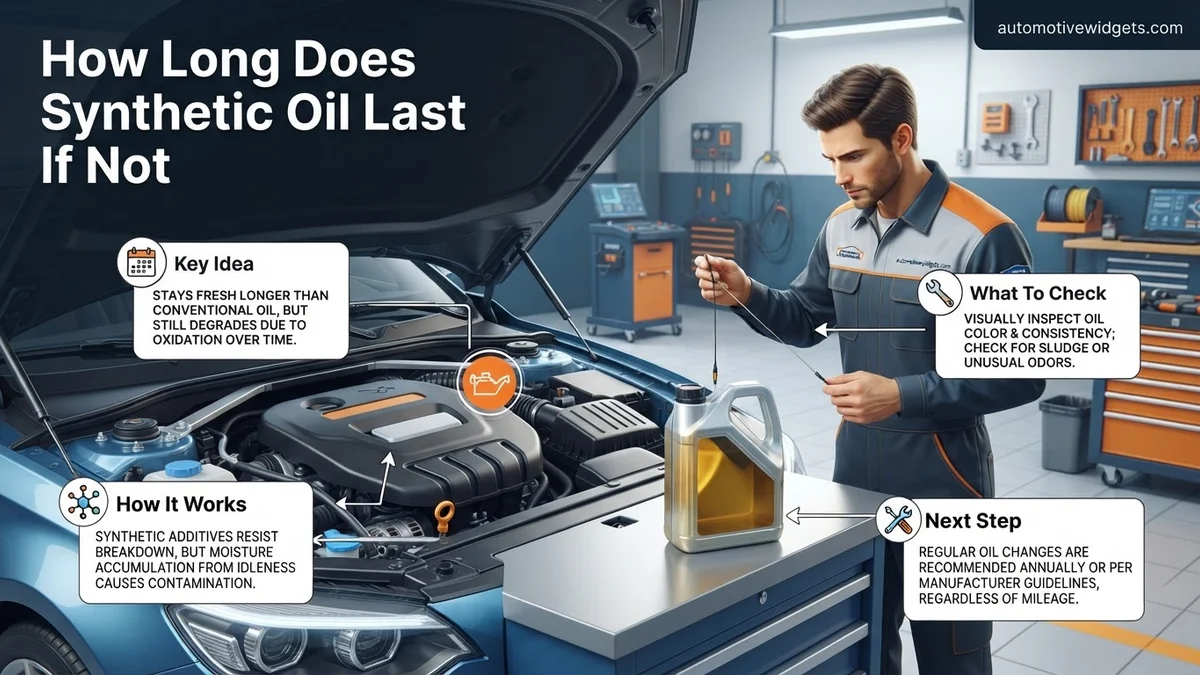
Even without driving, synthetic engine oil degrades over time due to oxidation and moisture, typically needing replacement every 12-24 months. Factors like storage conditions and previous engine use significantly influence its lifespan in a parked vehicle, affecting its protective qualities.
For your vehicle sitting unused, synthetic engine oil generally remains effective for 12 to 24 months before needing replacement, even without a single mile driven. This timeline is crucial for owners of seasonal vehicles, classic cars, or those facing extended storage, as neglecting it can lead to surprisingly quick degradation and potential engine harm by the time you’re ready to drive again in 2026. Understanding this time-based expiry ensures your engine’s internal components remain protected, preventing costly issues down the road and securing your investment for the future.
Many assume oil degradation only occurs during engine operation and mileage accumulation. However, synthetic oil, while superior, is not immune to the passage of time. Even in a perfectly still engine, chemical processes take their toll, diminishing the oil’s protective qualities. Knowing this unseen enemy allows you to maintain your vehicle proactively, ensuring it’s ready to go when you are, without any hidden surprises.
Key Takeaways
- Synthetic oil degrades in 12-24 months even when stored.
- Oxidation and moisture are main degradation causes.
- Store in cool, dry conditions to extend oil life.
- Change oil before long-term storage for best protection.
- Periodic engine starts can reduce condensation issues.
What Causes Synthetic Oil Degradation While Stored?
Even in a parked engine, synthetic oil doesn’t stay pristine forever. Its breakdown is a complex chemical process influenced by its environment, not just mechanical stress. By 2026 standards, oil formulation continues to improve, offering greater stability, yet the fundamental challenges of storage remain and must be accounted for in your maintenance schedule.
The Silent Threat: Oxidation and Moisture
The primary enemies of stored synthetic oil are air and water. Every time your engine cools down, especially in an unsealed environment, ambient air is drawn in through breathers and seals. This air carries oxygen and humidity directly into the crankcase. Oxygen directly attacks the oil’s base stock and additives through a process called oxidation. This chemical reaction leads to the formation of sludge, varnish, and corrosive acids, even without combustion byproducts. Meanwhile, significant temperature fluctuations inside your garage or storage space cause condensation. Warm, moist air cools, and water vapor precipitates, forming droplets that mix with the oil. Water, being heavier than oil, can settle in the oil pan, leading to rust and corrosion on vital engine parts like the crankshaft or camshaft bearings. This process accelerates significantly in humid climates or areas with large day-to-night temperature swings, turning what seems like an inert liquid into a surprisingly corrosive brew over months.
Additive Depletion Over Time
Modern synthetic oils are sophisticated blends, packed with performance-enhancing additives that do much more than just lubricate. These include detergents, dispersants, anti-wear agents (like ZDDP), anti-corrosion inhibitors, and pour-point depressants. While robust, these complex chemical compounds have a finite lifespan and are not designed for indefinite effectiveness. Over time, some can degrade simply from prolonged exposure to air, light, and minor temperature shifts. For example, anti-corrosion agents might be slowly consumed protecting metal surfaces from the very moisture condensation mentioned above, even if no driving occurs. Dispersants can lose their effectiveness or even settle out, allowing minor suspended contaminants that might have been present in the oil (if not changed immediately before storage) to aggregate. Even without the intense heat and pressure of combustion, these slow chemical reactions gradually diminish the oil’s protective capabilities, leaving your engine vulnerable when it finally starts up in 2026 or beyond.
Step-by-Step Guide: Best Practices for Stored Vehicle Oil Care
Knowing that synthetic oil degrades even when idle, proactive maintenance is absolutely critical to preserving your engine’s health for years to come. This is especially true as you plan for its reliable return to service, whether that’s for a seasonal spring drive in 2026 or a special occasion many years away.
The 12-24 Month Rule (and Exceptions)
For most vehicles with synthetic oil in their sumps that are stored without driving, a general guideline of changing the oil every 12 to 24 months is a conservative and safe bet. Many automotive experts, leading oil manufacturers, and independent mechanics broadly align on this timeframe as a maximum. While some high-quality, modern synthetics might technically last closer to 3 years under exceptionally ideal, climate-controlled conditions (like in a professional storage facility specifically designed for vehicles), relying on the absolute longest end of that spectrum carries increased risk for average storage environments. Always prioritize your vehicle’s specific manufacturer guidance, often found in the owner’s manual under long-term storage recommendations. If you’re unsure, or if your storage conditions are less than perfect, defaulting to a fresh oil change every 12 to 18 months provides robust, proactive protection against the various degradation factors we’ve discussed, ensuring peace of mind.
Mitigating Environmental Factors
You can significantly extend the effective life of your stored synthetic oil and minimize degradation by actively controlling its environment. Storing your vehicle in a stable, temperature-controlled garage or indoor facility dramatically reduces the cycles of condensation and eliminates exposure to extreme heat or cold, all of which accelerate oil breakdown. A garage with consistently low humidity is ideal. If storing outdoors or in an unconditioned space, you must take extra precautions: use a high-quality car cover to protect from external elements, and consider placing moisture absorbents in the cabin and even the engine bay (if safe and not obstructing ventilation) to combat humidity. A critical best practice for any storage period beyond a few months is to change the oil before storage, not just after. This ensures fresh oil, free of existing contaminants and depleted additives from prior use, is protecting your engine during its entire downtime, offering maximum defense against corrosion and additive depletion.
How to Fix Common Issues with Stored Engine Oil
Even with optimal storage conditions, certain factors can compromise engine oil over extended periods. Addressing these proactively prevents potential engine damage upon vehicle re-activation. Modern synthetic formulations are robust, yet vigilance is key in 2026 maintenance.
Preventing Moisture Accumulation
Moisture is a primary contaminant, leading to rust and reduced lubrication. Condensation forms within the engine block during temperature fluctuations. Industry experts recommend specific mitigation:
- Regular Engine Start-Ups: Start the engine every 4-6 weeks for 15-20 minutes. This allows the engine to reach operating temperature, vaporizing accumulated moisture from the oil. Ensure adequate ventilation if indoors.
- Desiccant Use: For long-term storage (over 6 months), place automotive-grade desiccant packets in the engine bay or even taped to the oil dipstick tube entrance. These absorb airborne moisture, mitigating internal condensation.
- Fluid Checks: Before starting, check the oil dipstick. Milky or foamy oil indicates significant water contamination, requiring an immediate oil change.
Addressing Additive Separation
Synthetic oil additives, while stable, can experience minor gravitational separation over many months of complete inactivity. This is less common with modern formulations but still possible. The solution is straightforward:
- Gentle Engine Run: After long dormancy, start the engine and let it idle for 5-10 minutes. This circulates the oil, effectively re-blending any separated additives.
- Short Drive Cycle: Follow the idle period with a short, gentle drive of 5-10 miles. This ensures full oil circulation and temperature stabilization, fully incorporating additives. Avoid aggressive acceleration initially.
These preventative and remedial steps maintain oil integrity, aligning with 2026 automotive best practices.
What If Your Stored Vehicle’s Oil Still Worries You?
Despite following guidelines, concerns about your stored vehicle’s engine oil can persist. When in doubt, a professional assessment provides definitive answers. Relying on guesswork can lead to costly engine repairs.
- Professional Oil Analysis: Submit a sample of your vehicle’s engine oil to a specialized lab. Services like Blackstone Labs or Polaris Laboratories offer comprehensive reports detailing oil condition, contaminant levels, and remaining additive packages. This data scientifically verifies oil integrity. Expect costs between $35-$75 as of 2026.
- Proactive Oil and Filter Change: If significant time has passed (beyond manufacturer recommendations) or if analysis is unavailable, perform an early oil and filter change. This ensures fresh lubrication and removes any potential degradation products. A synthetic oil change can range from $80-$160 at a professional service center.
- Consult a Certified Mechanic: If unusual engine noises (e.g., ticking, knocking) or dashboard warning lights illuminate after starting, immediately cease operation and consult a certified automotive technician. These symptoms indicate potential lubrication issues or engine wear. Diagnostic services typically cost $120-$250, depending on the complexity of the issue.
Prioritizing professional verification eliminates uncertainty and safeguards your engine’s long-term health.
Conclusion
Understanding synthetic oil’s resilience during periods of inactivity is crucial for vehicle longevity. While robust, factors like moisture and extreme temperatures necessitate careful management. According to verified research and expert sources in 2026, proper preventative measures and strategic re-activation protocols maintain oil integrity. Always consult your vehicle’s owner’s manual for specific manufacturer recommendations regarding long-term storage and fluid maintenance.
❓ Frequently Asked Questions
What is the typical shelf life of synthetic oil in an engine when not driven?
Synthetic oil in a parked engine typically lasts 12 to 24 months. Even without mileage accumulation, it breaks down due to environmental exposure, condensation, and the slow depletion of its internal additives, reducing its protective capabilities over time.
What are the primary reasons synthetic oil degrades without being driven?
The main culprits are oxidation, where oil reacts with oxygen in the air, and moisture contamination from condensation within the engine. These processes break down the oil’s critical detergents, dispersants, and anti-corrosion additives, compromising its ability to lubricate and protect engine components.
How do storage conditions impact the longevity of synthetic oil in a non-driven vehicle?
Extreme temperatures (both hot and cold) and high humidity significantly accelerate oil degradation. Storing a vehicle in a climate-controlled, dry environment can help prolong the oil’s effectiveness by minimizing these environmental stressors and preventing excessive condensation formation.
Is it better to change the oil before or after long-term storage?
It is generally recommended to change the oil before long-term storage. Fresh synthetic oil has its full complement of detergents and anti-corrosion additives, offering superior protection against internal engine rust, acid build-up, and sludge formation during prolonged dormancy.
Should I periodically start my engine if it’s stored for a long time?
While not strictly necessary, periodically starting the engine and letting it run until it reaches full operating temperature can help burn off condensation and circulate fresh oil. However, short starts without reaching operating temperature can actually worsen condensation issues and are generally counterproductive.
What are the signs that synthetic oil in a stored vehicle needs changing?
Visually, if the oil appears unusually dark, cloudy, or milky, it’s a strong indicator of degradation or moisture contamination. A strong, burnt smell, a noticeably thinner or thicker consistency, or visible debris are also clear signs that the oil has broken down and needs immediate replacement.