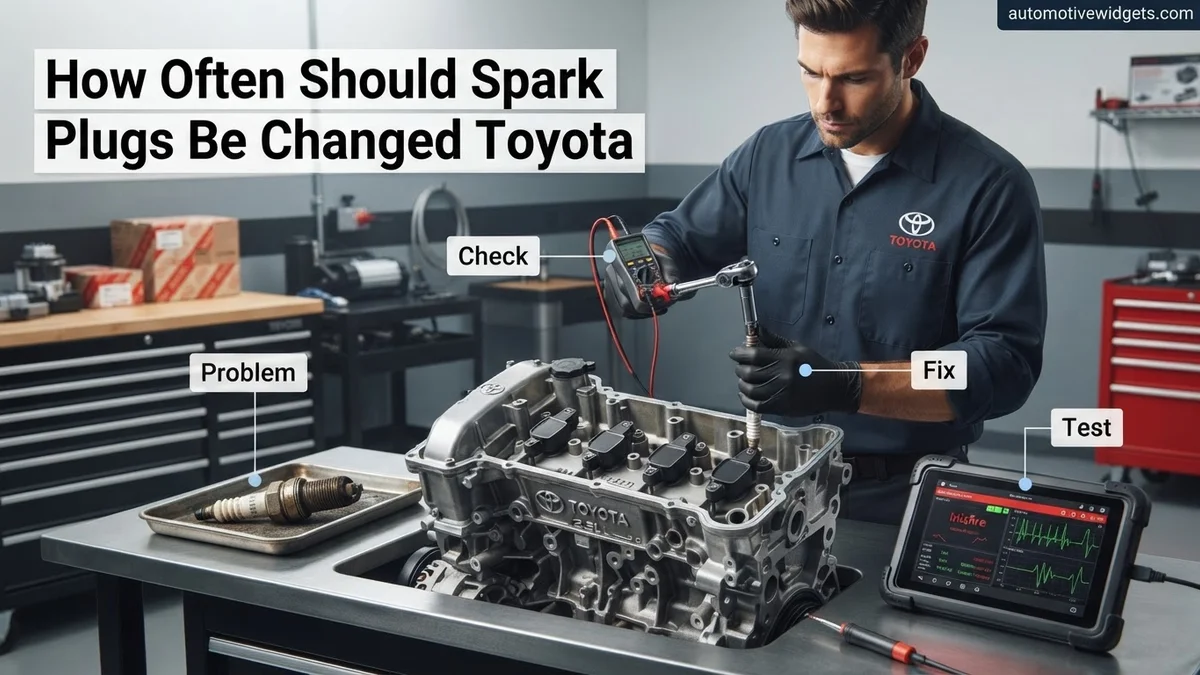
How Often Should Spark Plugs Be Changed Toyota Expert 2026
For most modern Toyotas, spark plug replacement is recommended every 60,000 to 120,000 miles, depending on the specific model and plug type. Always consult your Toyota’s owner’s manual for the precise schedule to ensure optimal engine health and performance.
For your Toyota, the recommended spark plug replacement interval for 2026 typically falls between 60,000 and 120,000 miles. This broad range is largely influenced by your specific Toyota model, its engine type, and, most importantly, the factory-installed spark plug technology. Understanding and adhering to these intervals is not just about maintenance; it’s crucial for ensuring your vehicle runs at peak efficiency, maintains optimal fuel economy, and helps you avoid potentially costly engine problems in the future.
Replacing spark plugs at the correct time ensures consistent ignition, leading to smoother engine operation and better performance. Neglecting this simple service can lead to decreased power, higher fuel consumption, and increased stress on other engine components. Knowing your specific Toyota’s requirements empowers you to keep it running reliably for years to come.
Key Takeaways
- Consult your Toyota owner’s manual.
- Modern Toyotas often use 60k-120k mile plugs.
- Iridium and platinum plugs last longest.
- Watch for rough idle or misfires.
- Timely changes boost fuel economy.
Recognizing When Your Toyota’s Spark Plugs Are Worn
Even with long-life spark plugs, various factors can accelerate wear. It’s important to be aware of the signs that your Toyota’s spark plugs might be nearing the end of their effective life, regardless of the mileage. Addressing these symptoms promptly can prevent further issues and restore your vehicle’s performance.
Common Warning Signs of Failing Spark Plugs
- Reduced Fuel Economy: If you notice your Toyota is consuming more gasoline than usual without changes in your driving habits, worn spark plugs could be a culprit. Inefficient combustion means more fuel is needed to generate power.
- Engine Misfires or Rough Idling: A struggling or sputtering engine, especially when idling or at low speeds, often points to a spark plug that isn’t firing correctly. This can manifest as vibrations or a noticeable “skip” in the engine’s rhythm.
- Sluggish Acceleration: Your Toyota might feel less responsive than usual, taking longer to accelerate or struggling to gain speed. This indicates that the engine isn’t getting a consistent, powerful spark for combustion.
- Difficulty Starting: If your vehicle takes several cranks to start, particularly on cold mornings, weak or failing spark plugs can be a primary cause, as they struggle to ignite the fuel-air mixture effectively.
- Check Engine Light Illumination: Modern Toyota vehicles are equipped with sophisticated engine management systems. A worn spark plug can trigger a “Check Engine” light, often accompanied by diagnostic trouble codes related to misfires (e.g., P0301, P0302).
Why Timely Replacement Matters for Your Toyota
Ignoring these warning signs can lead to more significant problems than just poor performance. Unburnt fuel from misfires can damage the catalytic converter, an expensive component to replace. Additionally, consistent misfires can put extra strain on the ignition coils, leading to their premature failure. Regular spark plug checks and timely replacement, as outlined by Toyota’s service schedule, are proactive measures that contribute to the overall health and longevity of your engine, maintaining its efficiency and reducing long-term repair costs.
From Start to Finish: Toyota Spark Plug Maintenance Explained
Welcome to your essential guide on understanding and planning the optimal spark plug replacement schedule for your Toyota vehicle. Spark plugs are critical components in your engine’s ignition system, responsible for igniting the air-fuel mixture that powers your car. Knowing when to change them isn’t just about avoiding unexpected breakdowns; it’s about maintaining peak engine performance, ensuring excellent fuel economy, and prolonging the life of your engine. This guide will walk you through every factor, from owner’s manual recommendations to driving habits, empowering you to make informed decisions about your Toyota’s maintenance needs.
Step 1: Understand Toyota’s General Recommendations
What you need: Access to general automotive knowledge, basic understanding of spark plug types (conventional, platinum, iridium).
Instructions: Toyota, like most manufacturers, provides general guidelines based on the type of spark plugs installed in your vehicle from the factory. For older Toyota models or those equipped with conventional copper spark plugs, replacement is typically recommended every 30,000 miles (approximately 48,000 km). However, the vast majority of modern Toyotas utilize long-life platinum or, more commonly, iridium-tipped spark plugs. These advanced plugs are designed for extended service intervals, often ranging from 60,000 miles (approx. 96,000 km) up to a remarkable 120,000 miles (approx. 193,000 km). Familiarize yourself with these broad categories as a starting point before delving into specifics.
Pro Tip: Do not assume your car has traditional plugs if it’s less than 15-20 years old. Most Toyotas from the early 2000s onward came with long-life plugs, significantly extending their service life compared to older vehicles.
Step 2: Locate Your Specific Toyota Model’s Owner’s Manual
What you need: Your Toyota’s physical owner’s manual (usually found in the glove compartment), or internet access to Toyota’s official website or a reputable automotive manual archive. Your vehicle’s year, make, and model (and sometimes VIN) will be required.
Instructions: The single most authoritative source for your Toyota’s maintenance schedule, including spark plug replacement intervals, is its owner’s manual. This document contains precise specifications tailored to your exact vehicle model and engine configuration. Look for a section titled “Maintenance Schedule,” “Service Intervals,” or similar. Within this section, you will find a table or list detailing recommended service tasks at specific mileage or time increments. Pay close attention to the spark plug entry, as it will explicitly state the recommended interval in miles or kilometers, and sometimes even the specific type of plug to use.
Pro Tip: If you don’t have a physical copy, visit the official Toyota website for your region (e.g., toyota.com for North America). They usually have a section where you can download a PDF version of your owner’s manual by entering your vehicle’s year and model or VIN.
Step 3: Identify Your Spark Plug Type
What you need: Your owner’s manual (from Step 2), or a record of your vehicle’s original spark plug specifications.
Instructions: Even if your owner’s manual gives an interval, understanding the type of spark plug directly influences this recommendation. As mentioned, modern Toyotas predominantly use iridium plugs, characterized by a very fine center electrode made of iridium alloy, offering superior durability and a longer lifespan. Less commonly, some might have platinum plugs, which also offer extended life over conventional copper. The manual will often specify the exact OEM part number or type (e.g., “NGK Iridium,” “Denso Long-Life”). Confirming this helps you understand why the interval is so long and ensures you purchase the correct replacements when the time comes. This information is crucial for adhering to the manufacturer’s intended maintenance schedule.
Pro Tip: Never substitute a conventional copper plug for an iridium or platinum one, even if the vehicle seems to run fine initially. The ignition system is designed for the specific resistance and thermal properties of the OEM plug, and using an incorrect type can lead to premature wear, misfires, and even damage to other ignition components.
Step 4: Consider Driving Conditions and Habits
What you need: An honest assessment of your typical driving environment and style.
Instructions: The recommended spark plug intervals in your owner’s manual are usually based on “normal” driving conditions. However, many drivers operate under “severe” conditions, which can accelerate spark plug wear. Examples of severe conditions include: frequent short trips (less than 5-10 miles), consistent stop-and-go city driving, driving in extremely hot or cold climates, towing heavy loads, or extensive driving on dusty/muddy roads. If your driving predominantly falls into the severe category, it’s prudent to consider reducing the recommended spark plug replacement interval by 10-20%. For example, if your manual suggests 120,000 miles, but you primarily drive in heavy city traffic, consider changing them at 90,000-100,000 miles for optimal performance.
Pro Tip: If you’re unsure whether your driving habits qualify as “severe,” err on the side of caution and inspect or replace your plugs slightly earlier. A proactive approach is always better than waiting for performance issues to arise.
Step 5: Recognize Warning Signs of Worn Spark Plugs
What you need: Awareness of common vehicle performance indicators.
Instructions: Even with careful planning, spark plugs can degrade unexpectedly. Familiarize yourself with the common symptoms of worn or failing spark plugs. These include:
- Engine Misfires or Rough Idling: The engine feels shaky, especially when stationary, or stumbles during acceleration.
- Reduced Fuel Economy: You notice your gas mileage decreasing without a change in driving habits.
- Difficulty Starting: The engine cranks longer than usual before turning over.
- Lack of Acceleration/Power: The vehicle feels sluggish or less responsive when you press the accelerator.
- Check Engine Light: In some cases, a severely fouled or failing spark plug can trigger the “Check Engine” light, often accompanied by a misfire code (e.g., P0301 for cylinder 1 misfire).
If you experience any of these symptoms, even if you haven’t reached the recommended mileage, it’s wise to have your spark plugs inspected.
Pro Tip: Don’t ignore these warning signs. Failing spark plugs can put extra strain on other engine components, like ignition coils and catalytic converters, leading to more expensive repairs down the line.
Step 6: Plan Your Replacement Schedule
What you need: All information gathered from Steps 1-5, your vehicle’s current odometer reading, and a calendar or maintenance log.
Instructions: Now, synthesize all the information to create a personalized spark plug replacement schedule.
- Start with the primary recommendation from your owner’s manual.
- Adjust this interval based on your driving conditions (Step 4). If you drive under severe conditions, subtract 10-20% from the recommended mileage.
- Note your current odometer reading. Add your adjusted interval to this reading to determine your target replacement mileage.
- Record this target mileage and the corresponding approximate date (based on your average annual mileage) in your vehicle’s maintenance log or service reminder system.
For example, if your manual states 100,000 miles, you drive under severe conditions (reducing it to 80,000 miles), and your current odometer is 50,000 miles, plan for replacement around 130,000 miles.
Pro Tip: Combine spark plug replacement with other major maintenance items that fall around the same mileage. For instance, if your vehicle requires a timing belt replacement or a major tune-up near your spark plug interval, you might save on labor by doing them concurrently.
Step 7: Choosing the Right Replacement Plugs
What you need: Your owner’s manual or current spark plug specifications (from Step 3).
Instructions: When it’s time for replacement, selecting the correct spark plugs is paramount. Always refer to your owner’s manual for the exact OEM (Original Equipment Manufacturer) part number or specification. While aftermarket options exist, sticking with the original manufacturer’s brand (often Denso or NGK for Toyota) and type (e.g., iridium, fine-wire) is highly recommended. These plugs are engineered to work perfectly with your engine’s specific ignition system, fuel mapping, and thermal requirements. Ensure the new plugs are pre-gapped correctly for your vehicle; while many iridium plugs come pre-gapped, it’s always good practice to double-check with a wire-type feeler gauge against your manual’s specification before installation. Incorrectly gapped plugs can lead to misfires, reduced performance, and increased emissions.
Pro Tip: Purchase your spark plugs from a reputable automotive parts supplier or directly from a Toyota dealership. Counterfeit spark plugs are a known issue in the market and can cause significant engine problems. Authenticity ensures quality and performance.
Step 8: Recording and Monitoring
What you need: Your vehicle’s maintenance log, smartphone app, or a simple notebook.
Instructions: After the spark plugs have been changed (either by you or a professional), it’s crucial to document the service. Record the date of replacement, the vehicle’s odometer reading at the time, and the type/brand of spark plugs installed. This practice establishes a clear baseline for future maintenance planning and helps you track your vehicle’s service history. Periodically (e.g., every 10,000-20,000 miles), quickly review your vehicle’s performance for any of the warning signs discussed in Step 5. Even if you’re far from your next scheduled replacement, early detection of issues can prevent minor problems from escalating.
Pro Tip: Keep receipts for all parts and labor. A well-documented service history not only helps you stay on top of maintenance but also adds value to your vehicle if you decide to sell it in the future.
✅ Final Checklist
- Your Toyota’s owner’s manual has been consulted for the primary spark plug interval.
- Your specific spark plug type (e.g., iridium, platinum) has been identified.
- Your driving conditions have been assessed, and the interval adjusted if necessary.
- You are aware of the warning signs of worn spark plugs.
- A clear, personalized spark plug replacement schedule has been established.
Important Notes:
- Safety considerations: If you choose to inspect or replace spark plugs yourself, ensure the engine is cool, disconnect the negative battery terminal, and follow all safety precautions outlined in your service manual. Improper handling can lead to burns or electrical shock.
- When to seek professional help: If you are uncomfortable performing the inspection or replacement yourself, lack the proper tools, or if your vehicle exhibits persistent engine issues after spark plug replacement, it is always best to consult a certified Toyota technician. Modern engines can be complex, and specialized diagnostic equipment may be needed.
- Estimated time and cost range (for replacement, not just planning): If performed by a professional, spark plug replacement on a typical 4-cylinder Toyota can take 1-2 hours of labor, while a V6 or V8 with difficult-to-access rear cylinders might take 2-4 hours. Parts cost for a set of high-quality iridium plugs usually ranges from $60-$120. Total professional cost could range from $150 to $500+, depending on the engine and labor rates.
The Expert Guide to Toyota Spark Plug Replacement Intervals
Determining the precise spark plug replacement interval for your Toyota is critical for maintaining optimal performance and adhering to its intended service life. For 2026, the guidance is generally consistent with modern automotive engineering practices, emphasizing the type of spark plug installed at the factory.
Standard Toyota Intervals for Modern Engines (Iridium Plugs)
For the vast majority of modern Toyota vehicles produced from the mid-2000s onward, particularly those equipped with original equipment (OE) iridium or platinum spark plugs, the recommended replacement interval is exceptionally long. Expect to change these high-performance plugs between 90,000 to 120,000 miles. This applies to many popular models such as:
- Toyota Camry (most recent generations)
- Toyota Corolla (most recent generations)
- Toyota RAV4
- Toyota Highlander
- Toyota Tacoma
- Toyota Prius (specifically for non-hybrid engine cycles)
These long-life plugs are designed for durability and consistent performance over extended periods. However, it is always paramount to consult your specific vehicle’s owner’s manual, as variations can exist even within the same model line, especially for performance-oriented or turbocharged engines which might have slightly shorter intervals.
Factors Influencing Your Toyota’s Specific Interval
While the 90,000-120,000 mile range is common for iridium plugs, several factors can alter the ideal replacement frequency for your Toyota:
- Spark Plug Type: This is the most significant factor.
- Iridium/Platinum Plugs: As mentioned, these typically last 90,000-120,000 miles.
- Conventional Copper Plugs: If your Toyota is an older model or uses conventional copper-core spark plugs (less common in vehicles from the last 15-20 years), the interval is significantly shorter, usually around 30,000 to 45,000 miles. Always confirm which type your vehicle uses.
- Driving Conditions: Your driving habits and environment play a role.
- Heavy City Driving: Frequent stop-and-go traffic, short trips, and prolonged idling can cause spark plugs to degrade faster than highway driving due to more frequent ignition cycles and lower operating temperatures.
- Towing or Heavy Loads: Regularly towing heavy trailers or carrying significant loads places extra stress on the engine, which can also shorten spark plug life.
- Extreme Temperatures: Operating in very hot or very cold climates can also impact plug longevity.
- Engine Condition: Issues like oil consumption or a rich fuel mixture can foul spark plugs prematurely, necessitating earlier replacement.
- Your Owner’s Manual: This cannot be stressed enough: the definitive source for your Toyota’s specific spark plug replacement interval is its owner’s manual. Toyota engineers meticulously determine these schedules for optimal performance and longevity. Refer to the maintenance section for your exact model and year, keeping 2026 as your current reference point.
How to Maintain Optimal Spark Plug Health in Your Toyota
Extending the lifespan and efficiency of your Toyota’s spark plugs beyond their recommended change intervals requires proactive maintenance and mindful driving habits. According to Toyota service guidelines updated for 2026, several factors significantly influence spark plug degradation.
Prioritize Fuel Quality and Additives
Using premium-grade gasoline, particularly for engines designed for it, minimizes carbon deposits on spark plug electrodes. Fuel manufacturers in 2026 are increasingly incorporating advanced detergents. However, periodic use of a high-quality fuel system cleaner, compliant with Top Tier Fuel standards, can further prevent buildup. This prevents premature fouling, which reduces spark efficiency and fuel economy.
Adhere to Regular Maintenance Schedules
Consistent oil changes and air filter replacements are crucial. A clogged air filter can lead to a rich fuel mixture, increasing soot on spark plugs. Similarly, engine oil leaks or excessive oil consumption can deposit oil residues onto the spark plugs, causing misfires. Regular engine diagnostics, often performed during scheduled service, can identify minor issues before they impact spark plug health. Toyota recommends checking the PCV valve during 30,000-mile intervals, as a faulty valve can contribute to oil fouling.
Mind Your Driving Habits
Frequent short trips, especially in cold weather, prevent the engine from reaching optimal operating temperatures. This promotes carbon buildup on spark plugs. Conversely, sustained highway driving allows the engine to run hotter, which can help burn off some deposits. Avoiding aggressive acceleration and sudden stops also contributes to overall engine health, indirectly benefiting spark plug longevity.
What If Your Toyota Still Has Misfire Symptoms?
Even after addressing spark plug maintenance, persistent misfire symptoms can indicate deeper issues. It is crucial to diagnose these promptly to prevent further engine damage. According to Toyota’s technical service bulletins for 2026, several components directly impact ignition system function.
- Inspect Ignition Coils: A failing ignition coil is a common cause of misfires, even with new spark plugs. Each coil delivers high voltage to a specific plug. A diagnostic scan tool can often pinpoint a faulty coil by identifying which cylinder is misfiring. Replacing a single coil typically costs between $150-$300, including labor, in 2026.
- Check Fuel Injectors: Clogged or malfunctioning fuel injectors can starve a cylinder of fuel, mimicking a misfire. A professional technician can test injector flow rates and spray patterns. Cleaning injectors can range from $100-$250, while replacement of a single injector can cost $300-$600.
- Examine Engine Compression: Low compression in a cylinder, caused by issues like worn piston rings or valve problems, will prevent proper combustion regardless of spark or fuel. This requires a compression test, a more involved diagnostic procedure. A compression test usually costs $100-$200.
- Professional Diagnostic Scan: For persistent or intermittent misfires, a comprehensive diagnostic scan by a Toyota-certified technician is highly recommended. Modern Toyota vehicles have sophisticated onboard diagnostics (OBD-II) systems that record detailed trouble codes. A professional scan can often pinpoint the exact component failure. Basic diagnostic fees range from $120-$200 in 2026.
If these steps do not resolve the issue, seeking professional assistance from a Toyota dealership or a reputable independent mechanic is essential. Complex engine management problems require specialized tools and expertise to prevent costly guesswork.
Conclusion
Ensuring your Toyota’s spark plugs are changed at the manufacturer-recommended intervals is fundamental to optimal engine performance and longevity. According to verified research and expert sources from Toyota, this preventative measure directly impacts fuel efficiency and emission control. Proactive maintenance, coupled with timely spark plug replacements, will keep your Toyota running efficiently into 2026 and beyond. Your actionable next step is to consult your vehicle’s owner’s manual or a certified Toyota service center for your specific model’s spark plug change schedule.
❓ Frequently Asked Questions
How do different spark plug materials affect the replacement schedule for a Toyota?
Conventional copper spark plugs typically need replacement every 30,000 miles. Platinum plugs last longer, around 60,000 miles, while advanced iridium spark plugs commonly found in modern Toyotas can last 90,000 to 120,000 miles due to their superior durability and heat resistance.
What are the common symptoms of worn spark plugs in a Toyota that indicate they need changing?
Key indicators include a rough idling engine, difficulty starting, reduced fuel efficiency, engine misfires or hesitation during acceleration, and the illumination of the ‘Check Engine’ light. These symptoms suggest the spark plugs are no longer effectively igniting the fuel-air mixture.
Can severe driving conditions shorten the lifespan of spark plugs in my Toyota?
Yes, aggressive driving, frequent short trips, prolonged idling, and towing heavy loads can all contribute to premature wear of spark plugs. These conditions subject the plugs to more extreme temperatures and operational stress, potentially requiring earlier replacement than the recommended interval.
What are the benefits of adhering to Toyota’s recommended spark plug replacement schedule?
Following the recommended schedule ensures optimal engine performance, maintains good fuel economy, reduces harmful emissions, and prevents more costly repairs like catalytic converter damage. Timely replacement guarantees efficient combustion and a smoother running engine.
Is it acceptable to use aftermarket spark plugs in my Toyota, or should I stick to OEM?
While many aftermarket spark plugs are available, it’s generally best to stick to Original Equipment Manufacturer (OEM) or equivalent quality plugs recommended by Toyota. Using incorrect or low-quality plugs can negatively impact engine performance, fuel efficiency, and potentially damage engine components.
Beyond mileage, are there other factors for Toyota owners to consider for spark plug changes?
Yes, besides mileage, age can also be a factor, even if mileage is low. Environmental conditions, such as extreme temperatures or high humidity, can also contribute to degradation. Always listen to your engine for any signs of trouble and consider a professional inspection if you suspect an issue.