Why Are My Headlights So Dim Even With New Bulbs 2026
If you just installed new bulbs and your headlights are still dim, the issue is likely not the bulb itself. The culprit is typically cloudy headlight lenses blocking light output or an electrical voltage drop restricting power delivery.
You just installed brand-new headlight bulbs, but nighttime driving still feels like holding a flickering candle in front of your car. It is frustrating to spend time and money on a fix only to find your visibility hasn’t improved at all.
The core issue is that fresh bulbs cannot pierce physical barriers on your lenses, nor can they compensate for failing electrical current. In 2026, vehicle lighting systems face heavier demands than ever, meaning you need to look beyond the bulb itself to solve this frustrating visibility problem.
Key Takeaways
- Oxidized or yellowed plastic headlight lenses block up to 50 percent of your light output.
- Electrical resistance, corroded grounds, and aging wiring can starve your headlights of proper voltage.
- A failing alternator or weak battery reduces overall system voltage, dimming your lights.
- Incorrectly seated bulbs or mismatched wattage can cause poor beam focus and reduced brightness.
- Cleaning lenses and testing voltage drop will instantly reveal the root cause.
Diagnosing Why Your Headlights Remain Dim After Bulb Replacement
When new bulbs fail to brighten your path, the problem usually stems from optical blockages or electrical starvation. Pinpointing the exact culprit saves you from buying unnecessary parts.
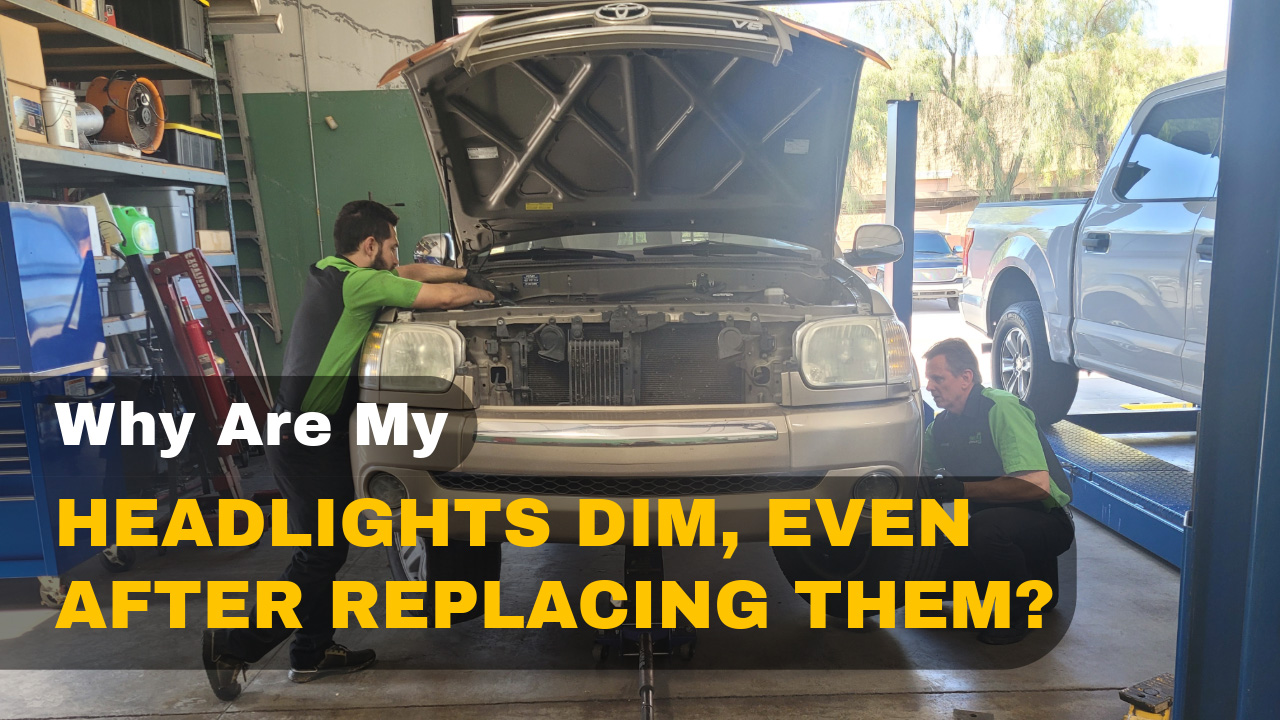
The Optical Barrier vs. Electrical Output
Light cannot travel through physical obstructions. If your light source is shining through damaged plastic or receiving less than optimal battery voltage, even a one-thousand-lumen bulb will look weak.
- Light Transmission Loss: Severe lens hazing can block up to 70 percent of your usable light output before it ever hits the dark road ahead.
- Voltage Drop: A standard 12-volt automotive circuit operating at 10.5 volts due to resistance will cause halogen and LED bulbs to lose significant brightness.
Checking Your Alternator and Battery Health
Your vehicle charging system directly impacts headlight performance, especially at idle.
- Low Output: A failing alternator struggling to maintain 13.8 to 14.4 volts while the engine runs will starve your headlamp fuses.
- Corroded Terminals: Battery corrosion introduces resistance that siphons crucial current away from sensitive headlight relays and sockets.
How to Restore Oxidized and Cloudy Headlight Lenses
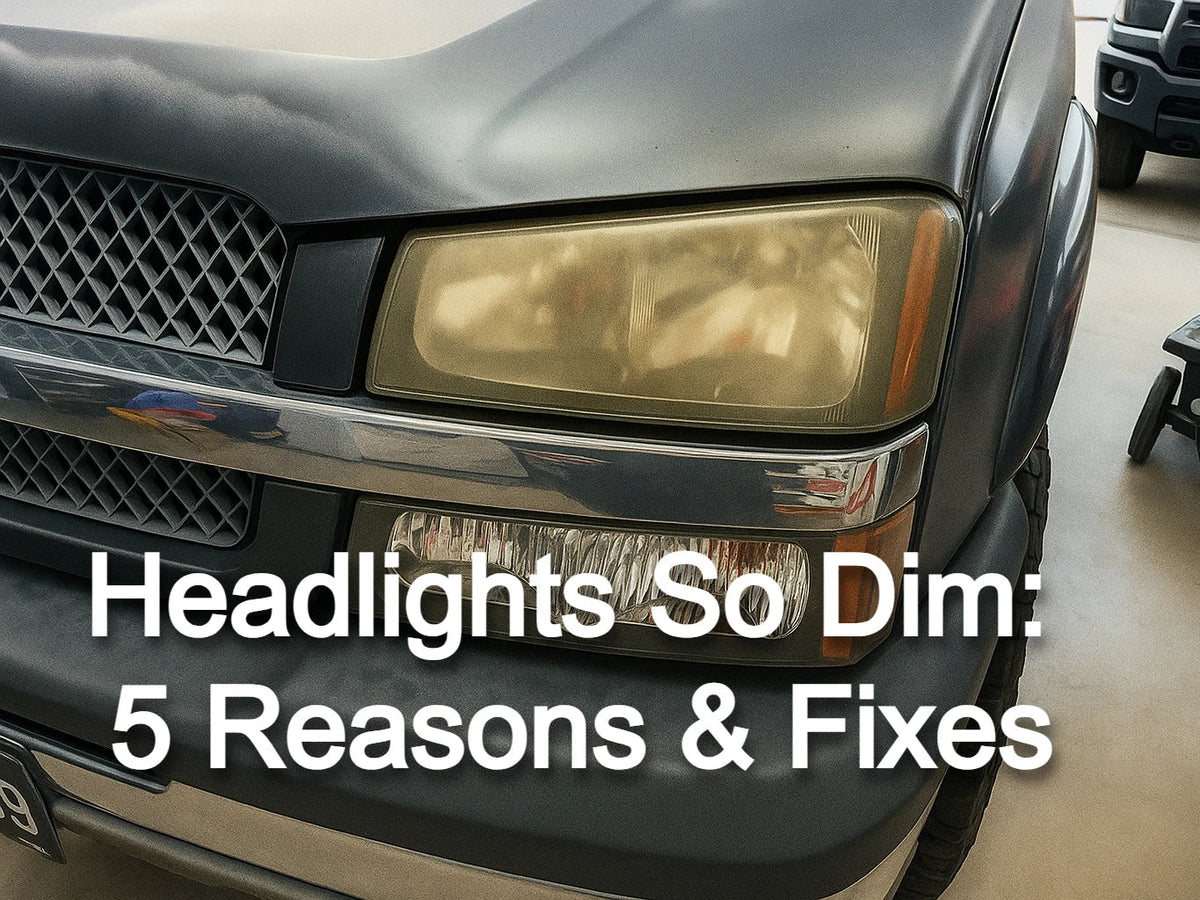
If your bulbs are brand new, cloudy plastic is the single most likely reason your headlights remain dim. Over time, UV radiation breaks down the factory UV-resistant coating on polycarbonate lenses, leaving them yellowed and pitted.
Understanding Polycarbonate UV Degradation
Factory headlights are made from tough polycarbonate plastic, but they rely on a clear topcoat for protection. Once that layer wears away, microscopic cracks and oxidation trap light inside the housing.
- Scattering Light: Instead of projecting a focused beam down the highway, cloudy lenses scatter light in every direction, blinding oncoming drivers while leaving your own lane dark.
- Pitting Damage: Road salt, sand, and flying debris create tiny craters that fill with grime, further blocking light beams.
Step-by-Step Lens Restoration Methods
Fixing oxidized lenses requires sanding away the damaged outer layer and sealing the fresh plastic underneath.
- Sandpaper Progression: Start with 1000-grit wet sandpaper to remove deep yellowing, then step up to 2000-grit and 3000-grit for a smooth finish.
- Polishing Compound: Use a machine buffer and plastic polishing compound to bring back crystal-clear transparency.
- UV Sealant Application: You must apply a fresh UV-blocking clear coat or ceramic sealant immediately, or the plastic will turn yellow and cloudy again within two months.
Step-by-Step Fixes for Electrical Voltage Drops and Corroded Grounds
Fixing headlight voltage drops requires systematic diagnostic testing rather than guesswork. According to automotive electrical guidelines, even a 0.5-volt drop across a terminal can reduce light output by up to 20 percent due to the exponential nature of halogen and LED filament efficiency curves. Addressing these bottlenecks restores full electrical pressure to your forward-lighting assembly.
Diagnostic Testing and Ground Restoration
- Prepare a digital multimeter by setting it to DC voltage, then start the engine to ensure the charging system operates at normal 2026 vehicle specifications.
- Probe the positive terminal of the headlight connector while grounding the black multimeter lead to the vehicle chassis.
- Compare this reading to the battery voltage; if the difference exceeds 0.5 volts, a high-resistance fault exists in the supply wiring or switch relay.
- Inspect the headlight ground wire termination point on the metal frame, unbolting the eyelet, and scrubbing away accumulated oxidation with a wire brush or fine-grit sandpaper.
- Apply a thin layer of dielectric grease over the bare metal connection to prevent future moisture intrusion and secure the grounding bolt tightly.
What If It Still Doesn’t Work: Checking Alternators and Housing Alignment
If new bulbs and clean grounds fail to brighten your beam, deeper mechanical or electrical components are usually at fault. Automotive service data indicates that persistent dimming often points to systemic power generation failures or optical degradation rather than simple wiring hiccups.
Advanced Troubleshooting Steps
- Test the vehicle alternator output under heavy electrical load using a carbon pile tester or digital analyzer, verifying it maintains a steady 13.5 to 14.5 volts while accessories run.
- Inspect the clear polycarbonate headlight lens for deep UV oxidation, micro-pitting, or internal moisture condensation that scatters light instead of projecting it forward.
- Check the manual vertical and horizontal headlamp adjustment screws to ensure the beam isn’t focused directly into the pavement just feet ahead of the bumper.
- Consult a certified ASE technician if electrical draw tests indicate a failing Body Control Module (BCM) or integrated TIPM fuse box.
- Budget between $150 and $450 for professional alternator replacement, or $100 to $300 for professional lens restoration and optical alignment services.
Conclusion
Dim headlights despite new bulbs typically stem from high-resistance electrical voltage drops, corroded grounds, or degraded optic housings rather than faulty filaments. Restoring full lumen output requires testing circuit voltage and cleaning neglected ground points. According to verified research and automotive safety experts, maintaining proper electrical health and lens clarity is critical for safe nighttime driving visibility on modern roadways. Take the next step today by testing your headlight terminal voltage with a standard multimeter.
❓ Frequently Asked Questions
Why are my headlights still dim even though I replaced the bulbs?
Replacing bulbs only fixes burnt-out filaments. If your headlights are still dim, external factors like severe lens oxidation, poor electrical grounds, or a failing alternator are restricting light output and voltage.
How do I know if my headlight lenses are the problem?
Inspect the plastic outer cover of your headlight assembly. If it looks hazy, yellow, cloudy, or rough to the touch, oxidation is blocking the light from projecting onto the road.
Can I use toothpaste to clean cloudy headlights?
Toothpaste acts as a mild abrasive and can temporarily clear up minor oxidation for a short period. However, for a long-lasting fix, you should use a dedicated restoration kit followed by a UV-blocking clear coat.
What causes a headlight voltage drop?
Voltage drops are typically caused by corroded ground wires, aging and thinning vehicle wiring, worn-out headlight switches, or high resistance in the wiring harness connections.
How can I test for a voltage drop at my headlights?
Use a digital multimeter set to DC volts while the headlights are turned on. Place the red lead on the bulb’s positive terminal and the black lead on a clean chassis ground to see if you are getting full battery voltage.
Could my alternator cause my headlights to stay dim?
Yes. If your alternator is failing or your battery is severely degraded, the electrical system may not supply the necessary 13.5 to 14.4 volts required to run your headlights at full brightness while the engine is running.