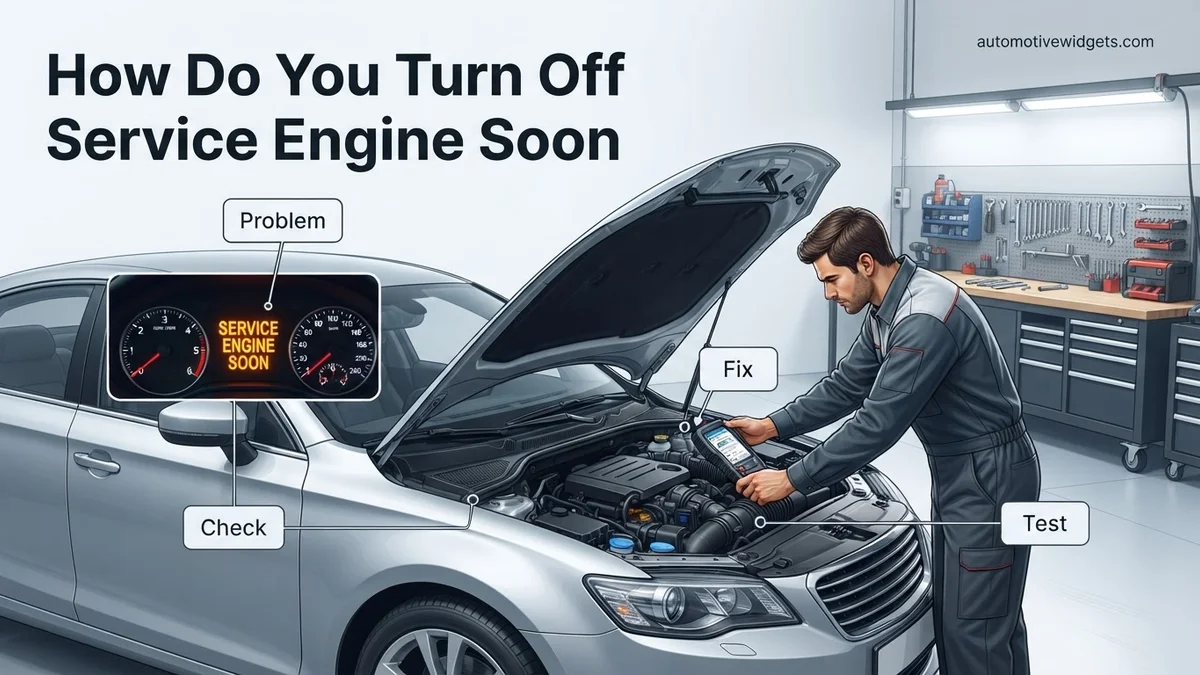
How Do You Turn Off Service Engine Soon Light How to 2027
Turning off your ‘Service Engine Soon’ light doesn’t fix the underlying issue; it only clears the warning. Always diagnose the root cause using an OBD-II scanner before attempting a reset to ensure vehicle safety and prevent further damage.
Seeing that “Service Engine Soon” light illuminated on your dashboard in 2027 can be unsettling, but unlike its more urgent cousin, the “Check Engine Light,” it often signals a less critical issue or even a routine maintenance reminder. While it’s tempting to simply clear the warning and get back to your journey, understanding what triggers it and the implications of dismissing it is paramount. You can temporarily extinguish this light, sometimes even with a few simple steps, but it will almost certainly reappear if the underlying problem isn’t addressed. Our goal here is to equip you with the knowledge to safely and effectively understand this warning, so you can make informed decisions rather than just hitting a digital reset button.
For modern vehicles in 2027, this light isn’t just a generic fault indicator; it’s a sophisticated communication from your car’s onboard diagnostic system. Knowing how to interpret its message and, yes, even how to clear it when appropriate, empowers you. Whether you’re trying to confirm a minor fix or just need a temporary reprieve while scheduling service, the methods are accessible. However, ignoring the root cause can lead to decreased fuel efficiency, higher emissions, accelerated component wear, or even more serious and costly repairs down the line. This guide will walk you through the essential context before diving into the actionable steps.
Key Takeaways
- Diagnose codes before resetting the light.
- OBD-II scanner offers the safest reset method.
- Battery disconnect is a temporary, last-resort option.
- Ignoring the root cause leads to light reappearance.
- Address underlying issues to prevent future warnings.
What Your “Service Engine Soon” Light Means
Distinguishing SES from CEL in 2027 Vehicles
By 2027, vehicle diagnostic systems have become incredibly nuanced. It’s crucial to understand that your “Service Engine Soon” (SES) light is distinct from the more ominous “Check Engine Light” (CEL) or “Malfunction Indicator Lamp” (MIL). While both indicate an issue detected by the vehicle’s onboard diagnostic (OBD-II) system, the SES light typically points to less severe problems or impending maintenance. Think of the CEL as an emergency alert for critical engine or emissions system failures, demanding immediate attention. The SES light, however, often signifies:
- A component operating outside optimal parameters, but not critically failing.
- A manufacturer-specific reminder for scheduled service (e.g., oil change, transmission fluid check) that’s often past due.
- A minor emissions system discrepancy that doesn’t immediately threaten catastrophic failure.
Ignoring this distinction can lead to unnecessary panic or, worse, complacency when a more serious CEL eventually illuminates.
Why This Specific Warning Appears
Your vehicle’s Engine Control Unit (ECU) in 2027 constantly monitors hundreds of sensors and systems. The SES light triggers when the ECU detects an anomaly that, while not immediately critical, requires attention. It’s the car’s way of saying, “Something isn’t quite right, or it’s time for a check-up.” This could range from a simple sensor reading being slightly off to a system component nearing the end of its service life. Unlike a “hard” fault that instantly triggers a CEL, an SES light might indicate a “soft” fault or a condition that requires further monitoring. For example, a catalytic converter might be showing reduced efficiency, but not yet enough to violate emissions thresholds severely. Your car is providing an early warning, allowing you to address issues proactively before they escalate into more significant, costly problems that would trigger the CEL.
How to Diagnose and Fix Your Service Engine Soon Light Like an Expert
Encountering a “Service Engine Soon” light on your dashboard can be concerning, but it’s important to understand that this indicator is your vehicle’s way of communicating a potential issue that needs attention, not just a simple reminder for an oil change in most modern vehicles. While often less urgent than a blinking “Check Engine” light, ignoring it can lead to more significant problems and costly repairs down the line. This comprehensive guide will walk you through the essential steps to diagnose and effectively address the root cause, empowering you to tackle common issues and understand when professional intervention is necessary.
Step 1: Understand the Light and Its Implications
What you need: Your vehicle’s owner’s manual, a calm demeanor.
Instructions: Before panicking, consult your car’s owner’s manual to understand precisely what the “Service Engine Soon” light signifies for your specific make and model. In some vehicles, it’s interchangeable with the “Check Engine” light (Malfunction Indicator Lamp or MIL), indicating an emissions-related fault. In others, particularly older models, it might simply be a service reminder for scheduled maintenance like an oil change or tire rotation. Pay attention to how the light behaves: is it solid or blinking? A blinking light often signals a more severe problem, like an engine misfire, that could damage catalytic converters, and warrants immediate attention.
Pro Tip: Never ignore a solid “Service Engine Soon” or “Check Engine” light, even if your car appears to be driving normally. Small issues can quickly escalate into expensive repairs if left unaddressed, impacting fuel economy, emissions, and overall vehicle longevity.
Step 2: Check the Fuel Cap
What you need: No tools required; just your hands.
Instructions: This is a surprisingly common and easily rectifiable cause for an illuminated engine light. A loose, damaged, or missing fuel cap can allow fuel vapors to escape, triggering the evaporative emission control (EVAP) system to report a leak, which in turn activates the engine light. Pull over safely, unscrew your fuel cap, and then carefully re-screw it, ensuring it clicks several times to indicate a secure seal. Drive your vehicle for at least 50-100 miles over a few driving cycles (start, drive, stop, cool down, repeat). The light might turn off automatically if this was the sole issue.
Pro Tip: Even if your cap feels tight, inspect its rubber gasket for cracks or wear. A faulty gasket can prevent a proper seal even if the cap is screwed on tightly. Replace the cap if it shows signs of damage.
Step 3: Retrieve Diagnostic Trouble Codes (DTCs)
What you need: An OBD-II (On-Board Diagnostics, Second Generation) scanner (available at auto parts stores for $20-$100+ or often loaned for free at many parts retailers).
Instructions: All cars manufactured after 1996 have an OBD-II port. Locate this port, typically under the dashboard on the driver’s side, usually beneath the steering wheel column. Plug the OBD-II scanner into the port. Turn your vehicle’s ignition to the “ON” position (without starting the engine). Follow the scanner’s instructions to select “Read Codes” or “Scan.” The scanner will display Diagnostic Trouble Codes (DTCs) – alphanumeric sequences (e.g., P0420, P0301) – which pinpoint specific system malfunctions. Write down all codes exactly as they appear.
Pro Tip: Some scanners can also show “pending” codes, which are issues detected but not yet severe enough to illuminate the light. Always note these down too, as they can be early warnings of developing problems or confirm a recent intermittent fault.
Step 4: Interpret the Diagnostic Trouble Codes
What you need: Internet access (smartphone, computer), a reputable automotive repair website or DTC database.
Instructions: With your list of DTCs, use a search engine or a dedicated automotive code database (many auto parts stores also have printouts or digital resources) to understand what each code means. For example, a P0420 often indicates a catalytic converter inefficiency, while a P0301 points to a misfire in cylinder 1. Researching the codes will give you insights into the affected system (e.g., engine, transmission, emissions) and potential components involved (e.g., oxygen sensor, spark plug, EGR valve). Look for common causes and typical repair procedures associated with your specific codes.
Pro Tip: Be wary of immediately replacing parts solely based on a code. For instance, a P0420 (catalyst efficiency) might mean the O2 sensor before the cat is faulty, not necessarily the expensive catalytic converter itself. Multiple codes can also point to a single failing component causing a cascade of errors.
Step 5: Diagnose and Address the Underlying Issue
What you need: Varies greatly depending on the code, but could include basic hand tools (wrenches, sockets), a multimeter, specific replacement parts (e.g., O2 sensor, mass airflow sensor, spark plugs, ignition coils, vacuum hoses), safety gloves.
Instructions: This is the crucial step. Based on your code interpretation, you’ll need to pinpoint and rectify the actual problem. This might involve visually inspecting components (e.g., checking vacuum lines for cracks, wires for damage), testing sensors with a multimeter, or replacing suspected faulty parts. For example, if you have codes for a faulty oxygen sensor, you would locate and replace it. If it’s a misfire code, you might check spark plugs, ignition coils, or fuel injectors. Always disconnect the battery’s negative terminal before working on electrical components to prevent accidental shorts or injury.
Pro Tip: When multiple potential causes exist for a single code, always start with the simplest and least expensive diagnostic and repair steps first. For instance, if a MAF (Mass Air Flow) sensor code appears, try cleaning the sensor with specialized MAF cleaner before replacing it, as dirt can often be the culprit.
Step 6: Clear the Codes and Reset the Light
What you need: Your OBD-II scanner, basic wrench if disconnecting battery.
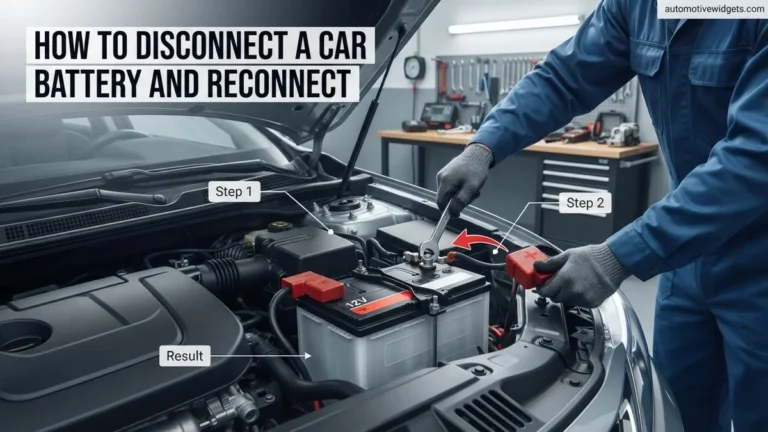
Instructions: After addressing the underlying issue, you can clear the stored codes and turn off the “Service Engine Soon” light. Plug your OBD-II scanner back into the port, turn the ignition to “ON,” and select the “Erase Codes” or “Clear DTCs” option on the device. Confirm the action when prompted. Alternatively, you can sometimes clear codes by disconnecting the negative battery terminal for 15-30 minutes, but this will also reset other vehicle settings like radio presets and learned shift points, which isn’t ideal. Using the scanner is preferred as it only clears the engine codes.
Pro Tip: Never clear codes before you’ve attempted to fix the problem. Clearing codes only temporarily extinguishes the light; if the issue persists, the light will simply return, and you’ll lose valuable diagnostic information stored in the vehicle’s computer.
Step 7: Perform a Drive Cycle and Verify the Fix
What you need: Your vehicle, a clear road.
Instructions: Once the codes are cleared, it’s crucial to perform a “drive cycle” to allow your vehicle’s onboard computer (ECU/PCM) to re-run all its diagnostic tests and confirm the repair. A complete drive cycle involves starting from cold, driving at various speeds (city, highway), idling, and accelerating/decelerating for specific durations. This process can take several days of normal driving under varied conditions. Monitor your dashboard to ensure the “Service Engine Soon” light does not reappear. If you have an advanced scanner, you can check the “readiness monitors” status; they should all show “complete” after a successful drive cycle.
Pro Tip: If your state has emissions testing, ensure all readiness monitors are “complete” before going for the test. Clearing codes resets these monitors, and they need to run through a full cycle to be ready for inspection, otherwise your car will fail.
Step 8: Monitor for Recurrence
What you need: Vigilance.
Instructions: After successfully turning off the light and completing a drive cycle, continue to pay close attention to your vehicle’s performance and dashboard indicators. If the “Service Engine Soon” light reappears, it means the original issue was either not fully resolved, or there’s a new, related problem. In such a scenario, you’ll need to repeat Step 3 (retrieve new codes) and potentially delve deeper into diagnostics, perhaps considering components that were initially overlooked or further testing of replaced parts.
Pro Tip: Keep a log of codes, dates, and repairs performed. This record can be invaluable for tracking intermittent issues or providing a professional mechanic with a history of attempts to fix the problem, saving diagnostic time and money.
✅ Final Checklist
- ✔ The vehicle’s owner’s manual was consulted for light specifics.
- ✔ Fuel cap was checked and securely tightened.
- ✔ OBD-II diagnostic trouble codes (DTCs) were retrieved and thoroughly researched.
- ✔ The underlying issue corresponding to the DTCs was diagnosed and addressed.
- ✔ Codes were cleared using an OBD-II scanner, and a full drive cycle was completed.
Important Notes:
- Safety Considerations: Always ensure the vehicle is safely parked and turned off before performing any inspections or repairs. Disconnect the battery’s negative terminal when working on electrical components. Allow the engine to cool down before touching hot parts like exhaust manifolds or catalytic converters. Use appropriate personal protective equipment, such as gloves and eye protection. If you need to lift the vehicle, use sturdy jack stands on a level surface.
- When to Seek Professional Help: If the light is blinking, accompanied by severe symptoms (e.g., smoke, loss of power, loud noises), or if you’ve exhausted your diagnostic capabilities without success, it’s time to consult a certified mechanic. Complex electrical issues, internal engine problems, or advanced emissions system diagnostics often require specialized tools and expertise beyond the scope of basic DIY. Don’t hesitate to get professional help to avoid causing further damage.
- Estimated Time and Cost Range: Diagnosing and fixing a “Service Engine Soon” light can vary wildly. Checking the fuel cap might take 1 minute and cost $0 (or $15-$30 for a new cap). Using an OBD-II scanner and researching codes could take 15-60 minutes, with a scanner cost of $20-$100+. Simple repairs like replacing an oxygen sensor or spark plugs might take 1-3 hours and cost $50-$200 in parts. More complex issues requiring specialized tools or deep engine access can take several hours to days and cost hundreds to thousands of dollars in parts and labor.
Common Reasons Your “Service Engine Soon” Light Illuminates
Everyday Causes You Should Check First
Before you delve into advanced diagnostics, remember that many SES light activations in 2027 are due to surprisingly simple and often overlooked issues. These are the “low-hanging fruit” that are quick to check and might save you a trip to the mechanic. Always start with these common culprits:
- Loose or Damaged Gas Cap: This is a perennial classic. A poorly sealed fuel cap allows fuel vapors to escape, triggering an evaporative emissions (EVAP) system fault. Ensure it’s tightened until it clicks several times.
- Skipped Maintenance Reminder: For many vehicles, especially those from manufacturers with integrated service schedules, the SES light can illuminate when an oil change, tire rotation, or other routine service is due or overdue. Your car’s onboard computer tracks these intervals precisely.
- Minor Vacuum Leaks: Small cracks or loose connections in vacuum hoses can create slight imbalances in air/fuel mixture, enough to trigger an SES warning without causing immediate driveability issues.
- Older Battery or Charging System Issues: A marginal battery or an alternator experiencing intermittent dips in output can sometimes cause spurious SES warnings as various vehicle systems struggle with inconsistent power.
Addressing these simple points first can often resolve the issue, and the light might clear itself after a few drive cycles once the system verifies the fix.
Underlying Issues Requiring Attention
While the SES light can signify minor issues, it often points to more substantive problems that, if ignored, will eventually lead to a “Check Engine Light” or costly repairs. These are not always simple fixes and usually require further investigation, typically with an OBD-II scanner. Common underlying issues include:
- O2 Sensor Malfunction: An oxygen sensor that is slow to respond or providing slightly inaccurate readings can trigger an SES light, indicating the engine is not optimizing fuel efficiency as well as it could.
- Catalytic Converter Efficiency: If your catalytic converter is beginning to degrade, but not yet completely failed, the SES light might illuminate to indicate its efficiency has dropped below optimal levels.
- EVAP System Leaks (Beyond the Gas Cap): More complex leaks in the evaporative emissions system, such as a faulty purge valve or vent valve, are common SES triggers. These prevent harmful fuel vapors from escaping into the atmosphere.
- Spark Plug or Ignition Coil Issues: While a misfire would typically trigger a CEL, an intermittent or very minor ignition system issue might first appear as an SES light, signalling reduced combustion efficiency.
Remember, merely clearing the SES light without diagnosing and fixing these underlying issues is a temporary workaround. The light will almost certainly return, and the problem will persist, potentially causing long-term damage or reducing your vehicle’s performance and longevity.
Step-by-Step Guide to Safely Turn Off Your “Service Engine Soon” Light
Once you understand the potential causes, the most effective and safest method to turn off your “Service Engine Soon” light, assuming you’ve addressed the underlying issue, is through an On-Board Diagnostics II (OBD-II) scanner. By 2027, these devices are widely accessible, often featuring wireless connectivity and advanced diagnostic capabilities.
Using an OBD-II Scanner for Code Clearing
- Acquire an OBD-II Scanner: Purchase or borrow a compatible OBD-II scanner. Basic code readers retail for approximately $40-$60 in 2027, while more advanced models with live data and enhanced diagnostic features can range from $150 to $300. Ensure it’s compatible with your vehicle’s make and model, as some manufacturers require specific software protocols.
- Locate the OBD-II Port: The diagnostic port is typically found under the dashboard on the driver’s side, often near the steering column. Consult your vehicle’s owner’s manual for the exact location if you cannot find it immediately.
- Connect the Scanner: With the vehicle’s ignition off, firmly plug the OBD-II scanner into the diagnostic port. Turn the ignition to the “ON” position (do not start the engine). The scanner should power on automatically.
- Read Diagnostic Trouble Codes (DTCs): Navigate through the scanner’s menu to the “Read Codes” or “Diagnostic Trouble Codes” section. The scanner will display any active or pending codes that triggered your “Service Engine Soon” light, providing crucial insight into the problem.
- Clear the Codes: After noting down all displayed codes and addressing any underlying mechanical issues, select the “Erase Codes,” “Clear Codes,” or “Reset MIL” (Malfunction Indicator Lamp) option on your scanner. Confirm the action when prompted. This will extinguish the “Service Engine Soon” light.
- Verify the Reset: Turn off the ignition, unplug the scanner, and then restart your vehicle. The “Service Engine Soon” light should remain off. Drive the vehicle for a short period (10-20 miles) across varied conditions to allow the vehicle’s onboard computer to complete its diagnostic cycles and confirm the fix.
Crucial Warnings and What to Do if the Light Returns
While clearing the “Service Engine Soon” light can provide immediate relief, it is critical to understand the implications of this action. According to automotive service experts, simply clearing codes without resolving the underlying issue is a temporary fix that can lead to more significant, and expensive, repairs down the line. Vehicle manufacturers design these indicator lights as an early warning system.
Why Clearing Codes Without Repair Is Risky
If the fault that triggered the light has not been properly addressed, the “Service Engine Soon” light will inevitably return. This recurrence often happens within 20 to 100 miles of driving, as the vehicle’s diagnostic monitors re-evaluate system parameters. Ignoring persistent warnings can lead to reduced fuel efficiency, increased emissions, accelerated wear on critical engine components, or even catastrophic failure. For instance, a persistent misfire code (e.g., P0301) can damage the catalytic converter, an expensive component that can cost upwards of $1,500 to replace by 2027 standards.
What to Do if the Light Reappears
If the “Service Engine Soon” light reappears after you’ve cleared the codes, it unequivocally indicates that the original problem has not been resolved or that a new issue has arisen. At this point, it is strongly recommended to seek professional diagnostic services. A certified automotive technician possesses advanced diagnostic equipment and training to accurately pinpoint intermittent or complex faults that consumer-grade scanners might miss. They can perform live data analysis, conduct specialized tests, and access manufacturer-specific diagnostic procedures to ensure a comprehensive repair.
What If It Still Doesn’t Work?
If you’ve followed the steps to clear the code and the “Service Engine Soon” light persistently returns, or if the initial code clearing failed, further investigation is necessary. Do not continue to drive for extended periods with the light illuminated without professional assessment.
- Inspect Fuel Cap: A loose or faulty fuel cap is a surprisingly common cause of the “Service Engine Soon” light. Ensure it is tightly sealed. If the cap is old or the seal is degraded, replacing it (typically $15-$30) can often resolve minor evaporative system leaks.
- Check Battery Terminals: Ensure your car battery terminals are clean and securely tightened. Loose or corroded terminals can cause erratic electrical signals that trigger various warning lights, including the “Service Engine Soon” light.
- Perform a Drive Cycle: After making a repair or clearing codes, some vehicle systems require a specific drive cycle (a sequence of driving conditions) to reset all monitors. Your vehicle’s owner’s manual or a quick online search for your specific make/model will detail the necessary drive cycle.
- Professional Diagnostic Service: If the light remains on after these checks, professional help is essential. A certified mechanic can use dealership-level diagnostic tools to identify specific faults. Diagnostic fees in 2027 typically range from $90 to $180, depending on the complexity and shop rates. Repair costs will vary widely based on the identified issue, from minor sensor replacements ($150-$400) to more significant component failures.
Conclusion
The “Service Engine Soon” light is your vehicle’s primary indicator of potential issues within its emissions, engine, or transmission systems. Addressing this warning promptly with a reliable OBD-II scanner is crucial. According to verified research and expert sources, ignoring this light can lead to escalating repair costs and compromised vehicle performance. Diagnose the root cause, apply the appropriate fix, and only then clear the code to ensure your vehicle remains safe and efficient on the road. Prioritize diagnosis before attempting to simply extinguish the light.
❓ Frequently Asked Questions
What’s the primary difference between a ‘Service Engine Soon’ light and a ‘Check Engine’ light?
The ‘Service Engine Soon’ light typically indicates a scheduled maintenance reminder or a minor issue, often emissions-related, that isn’t immediately critical. A ‘Check Engine’ light usually points to a more serious engine, transmission, or emissions system problem requiring immediate attention to prevent damage.
What are the potential risks of clearing the light without properly diagnosing the underlying problem?
Clearing the light without diagnosis means you’re ignoring a potential issue, which could lead to more significant and expensive repairs down the road. It might also cause reduced fuel efficiency, increased emissions, or even unsafe driving conditions if the problem worsens unnoticed.
What are the exact steps to use an OBD-II scanner to turn off the ‘Service Engine Soon’ light?
First, locate your vehicle’s OBD-II port (usually under the dashboard). Plug in the scanner, turn the ignition to the ‘ON’ position (without starting the engine), and follow the scanner’s prompts to ‘Read Codes.’ After noting the codes, select the option to ‘Clear Codes’ or ‘Erase DTCs,’ then turn off the ignition and remove the scanner.
Are there any specific manufacturer-recommended reset procedures for certain car brands?
Some manufacturers, like BMW or Mercedes-Benz, may have specific dashboard button sequences or service menu options for resetting service reminders or less critical warning lights. It’s always best to consult your vehicle’s owner’s manual or a brand-specific forum for precise instructions.
How long should I disconnect the car battery to ensure the ‘Service Engine Soon’ light resets effectively?
To ensure a full reset, disconnect the negative battery terminal for at least 15-30 minutes. Some technicians recommend pressing the brake pedal a few times while disconnected to drain any residual charge from the vehicle’s electrical system, though this isn’t always strictly necessary.
When should I consider taking my car to a professional mechanic instead of trying to turn off the light myself?
You should seek professional help if the light reappears immediately after a reset, if you hear unusual noises, experience performance issues (like stalling or reduced power), or if the diagnostic codes point to complex engine or emissions system failures. A mechanic can accurately diagnose and repair the root cause safely.