What Does It Mean When It Says Tire Sensor Fault Tire 2026
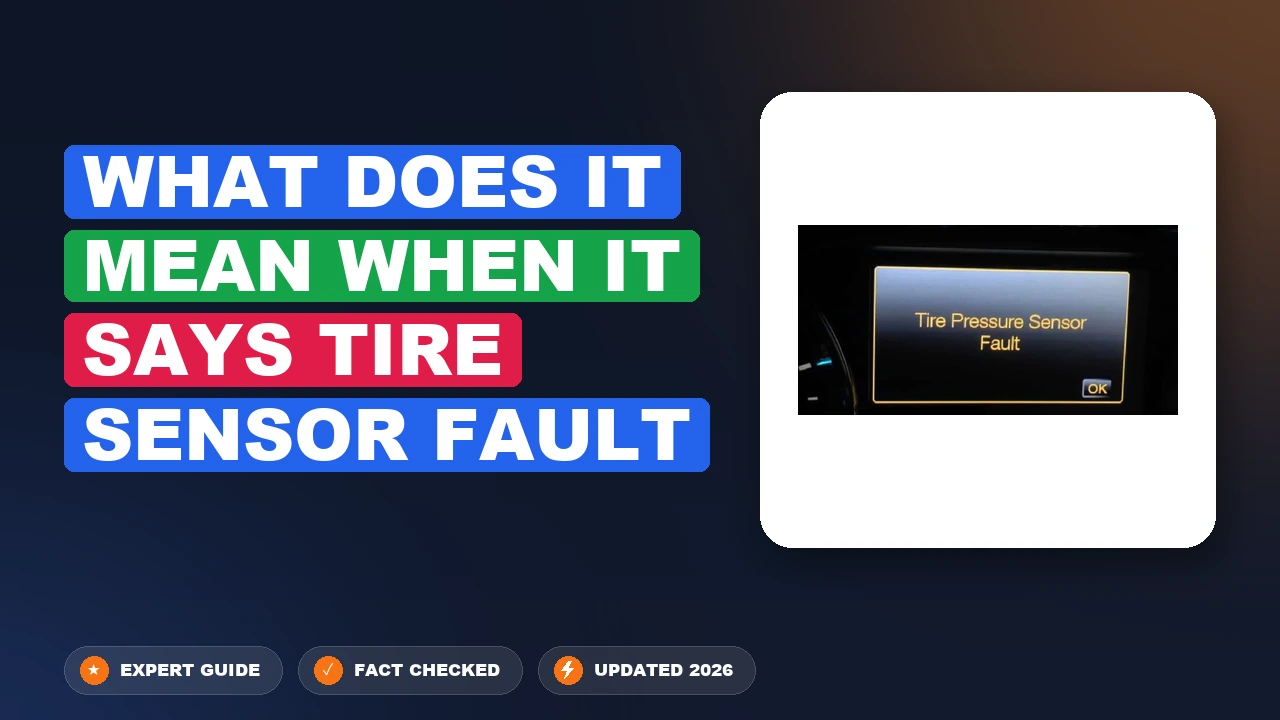
A tire sensor fault means your vehicle’s Tire Pressure Monitoring System (TPMS) cannot communicate with one or more wheel sensors, rather than simply indicating low air pressure. This usually points to a dead sensor battery, physical damage, or a required sensor relearn procedure. Resolving the issue requires identifying the failing component through diagnostics and resetting or replacing the hardware.
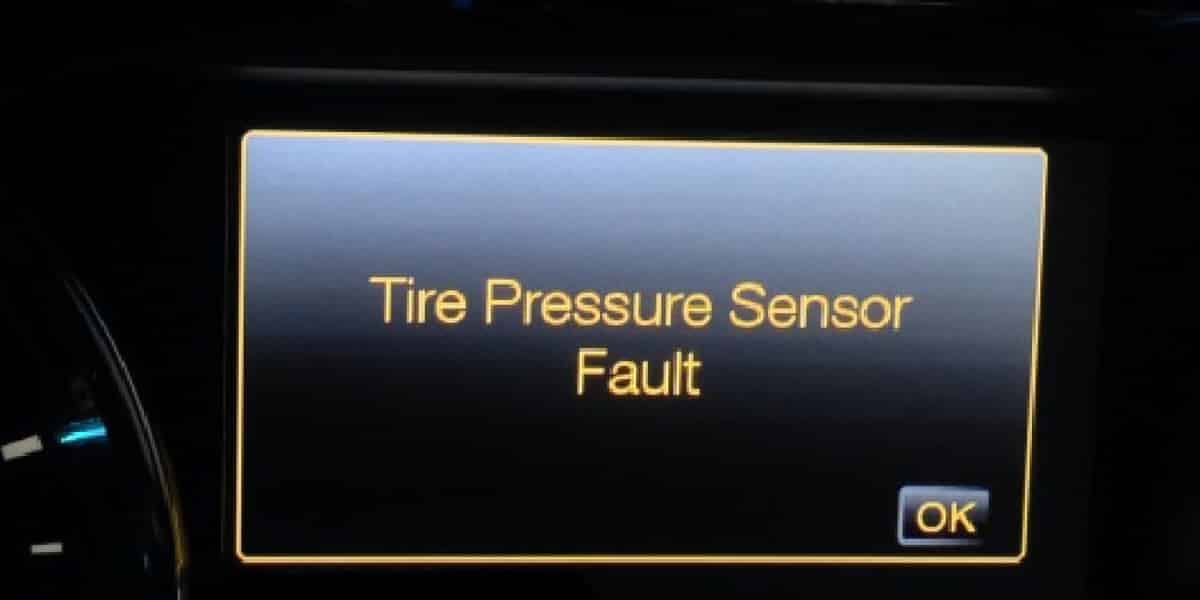
A tire sensor fault message on your dashboard means your vehicle’s Tire Pressure Monitoring System (TPMS) cannot communicate with one or more of its wheel sensors. Unlike a standard low-pressure warning that simply signals a flat or underinflated tire, a sensor fault indicates an actual hardware, battery, or electronic failure within the monitoring system itself.
Ignoring this warning in 2026 means you are flying blind regarding your tire pressure safety. A malfunctioning sensor will not alert you to dangerous pressure drops, potentially leading to poor fuel economy, premature tire wear, or catastrophic blowouts on the highway. Fixing this requires diagnosing whether the issue stems from a dead battery, physical damage, or a programming error.
Key Takeaways
- A sensor fault indicates a system hardware or communication failure, not low tire pressure.
- Dead internal batteries are the most frequent cause of TPMS sensor failure.
- Physical damage during routine tire rotations or potholes can snap sensors.
- New sensors require a specific vehicle relearn procedure to sync with the computer.
- Basic OBD2 scanners with TPMS capabilities can quickly pinpoint the exact failing sensor.
What Causes a Tire Sensor Fault Message on Your Dashboard
Dead or Expiring TPMS Batteries
The number one cause of a tire sensor fault is a depleted internal battery. Inside every TPMS sensor is a sealed lithium-ion coin cell battery designed to last between 5 to 10 years. If your vehicle is approaching or passing that age threshold, the sensor simply runs out of power and goes dark. Once the battery dies, the sensor cannot transmit data to your car’s computer, triggering the fault code immediately.
Physical Damage During Tire Service
Your tire sensors live in a harsh environment exposed to road salt, moisture, and extreme temperatures. However, human error during routine maintenance is just as common. Tire technicians using automated mounting machines can easily snap or crack the rigid plastic or metal valve stems if they are not careful. Potholes, curb strikes, and corrosive flat-fix sealants injected into the tire can also corrode the delicate internal circuit board.
- Accidental impact from tire change machines shearing off the sensor housing.
- Severe internal corrosion caused by chemical tire sealants.
- Cracked valve stems from hitting deep potholes or curbs at high speeds.
Tire Sensor Fault: What Causes It and How to Fix It
Seeing a tire sensor fault warning light on your dashboard can be frustrating and confusing. This comprehensive guide covers everything you need to know about why your Tire Pressure Monitoring System (TPMS) is throwing an error code and how to systematically diagnose, troubleshoot, and resolve the issue. Following these steps will save you time, prevent unnecessary dealership fees, and ensure your vehicle remains safe on the road.
Step 1: Understand the Difference Between Low Pressure and a Sensor Fault
What you need: Your vehicle owner’s manual and a quick visual check of your dashboard.
Instructions: Before panicking, look closely at the warning light on your instrument cluster. If the icon is a solid horseshoe shape with an exclamation point, it typically means one or more of your tires has low air pressure. However, if the icon flashes for 60 to 90 seconds upon starting the car and then stays solidly illuminated, or if you see a literal “TPMS Fault” text message, it indicates a system malfunction. A sensor fault means the vehicle’s computer has lost communication with one or more tire pressure sensors, or the internal sensor hardware has failed. Distinguishing between these two scenarios prevents you from simply adding air when the actual problem is electronic.
Pro Tip: Never ignore a flashing TPMS light; it is your car’s specific way of telling you that the monitoring system itself needs attention, not just your tires.
Step 2: Check and Adjust Your Tire Pressures Manually
What you need: A reliable digital or dial tire pressure gauge and an air compressor (at home or a local gas station).
Instructions: Start by checking the cold inflation pressure of all four main tires, plus the spare if your vehicle equips it with a TPMS sensor. Remove the valve stem caps and firmly press your gauge onto the valve stem to get an accurate reading. Compare these numbers to the manufacturer’s recommended placard specifications located on the driver-side door jamb (do not use the maximum PSI listed on the tire sidewall). If any tire is significantly under-inflated (below 25% of the recommended PSI), inflate it to the exact specified level. Sometimes, a severe pressure drop can trick the sensor module or cause a temporary glitch that clears itself once pressures are normalized.
Pro Tip: Always check your tire pressures when the tires are “cold”—meaning the car has been driven less than a mile or has sat parked for at least three hours.
Step 3: Perform the TPMS System Reset Procedure
What you need: Your vehicle key and access to the dashboard settings menu or physical reset button.
Instructions: Many modern vehicles require a manual system reset after adjusting tire pressures or replacing components. Turn your ignition key to the ON position without starting the engine. Locate your TPMS reset button (often found underneath the steering wheel column or inside the glove box) and press and hold it until the TPMS indicator light blinks slowly three times, then release it. For vehicles with digital instrument clusters, navigate through the steering wheel controls to the “Maintenance” or “Tire Pressure” screen, select “Reset” or “Calibrate,” and confirm. Allow the vehicle to remain in the ON position for a few minutes to let the computer relearn baseline parameters.
Pro Tip: After performing a reset, drive your vehicle continuously at speeds above 25 mph for approximately 15 to 20 minutes to allow the sensors to transmit their fresh data packets to the ECU.
Step 4: Inspect Valve Stems and External Sensor Damage
What you need: A flashlight, soapy water solution in a spray bottle, and a clean microfiber towel.
Instructions: Walk around your vehicle and carefully inspect the valve stem of each wheel. Many modern TPMS sensors are integrated directly into the aluminum or rubber valve stems. Look for physical damage, cracks, corrosion, missing valve caps, or loose retaining nuts on metal valve stems. Spray a small amount of soapy water onto the base of the valve stem and the valve core. If you see bubbles forming, you have a slow leak that might be dropping the pressure below the sensor’s operational threshold, causing intermittent fault codes. Clean away any road salt or debris that might be interfering with the external wireless signal transmission.
Pro Tip: Always use plastic or properly coated valve caps. Using cheap metal caps on aluminum valve stems can cause galvanic corrosion, causing the cap to seize permanently onto the sensor stem.
Step 5: Identify a Dead or Failing Sensor Battery
What you need: An electronic TPMS activation and diagnostic scan tool (available online or at auto parts stores).
Instructions: TPMS sensors are powered by internal, non-replaceable lithium-ion batteries designed to last between 5 to 10 years (or roughly 100,000 miles). When these batteries die, the sensor ceases broadcasting completely. Turn your diagnostic tool on, select your vehicle’s make, model, and year, and step around to each tire. Hold the tool antenna close to the valve stem and press “Activate” or “Read.” If the tool fails to trigger a response or specifically reports a “Low Battery” or “No Sensor Found” error for a particular wheel, that specific sensor has failed and must be replaced.
Pro Tip: If your vehicle is over 7 years old and one sensor battery has failed, it is usually wise to replace all four sensors at the same time, as the others are likely near the end of their lifespan.
Step 6: Replace and Program the Faulty Sensor
What you need: A tire mounting machine (or local tire shop), a replacement OE-compatible TPMS sensor, and a TPMS programming tool.
Instructions: If a sensor is broken or dead, the tire must be unseated from the wheel rim using professional equipment. Deflate the tire completely, break the bead away from the rim edge, and carefully remove the old sensor attached to the valve stem. Install the new sensor, ensuring the rubber seal and washer are correctly seated to prevent air leaks. Inflate the tire back to standard pressure. Finally, use your TPMS programming tool to either clone the ID number of the old sensor onto the new universal sensor, or program the vehicle’s computer to recognize the new unique sensor ID via the OBD-II port relearn procedure.
Pro Tip: Unless you own professional tire changing equipment, it is best to buy the replacement sensor yourself and pay a local tire shop a small labor fee to mount and balance it.
✅ Final Checklist
- All tire pressures match the recommended vehicle placard specs
- Dashboard TPMS reset procedure has been successfully executed
- Vehicle has been driven above 25 mph for 15+ minutes to trigger relearn
- All four valve stems are inspected for physical damage and leaks
- Diagnostic tool confirms active signal transmission from every wheel sensor
Important Notes:
- Never drive at high speeds with severely under-inflated tires, as this risks sudden tire blowout and loss of vehicle control.
- Seek professional help from a certified mechanic or tire specialist if you suspect an internal receiver module failure or wiring harness issue in the vehicle’s body control computer.
- Estimated cost range: DIY tool check is free; a professional tire shop replacement of a single sensor typically ranges from $70 to $150 including labor.
How to Diagnose Which TPMS Sensor Has Failed
Using an OBD-II Scan Tool or TPMS Programmer
Modern vehicles sold in 2026 require more than guesswork to diagnose a dead sensor. While basic dashboard lights tell you a fault exists, they rarely tell you which wheel is responsible. You need a dedicated TPMS activation tool or a bidirectional OBD-II scanner that supports body control module (BCM) diagnostics. These handheld devices allow you to scan each wheel individually to read the sensor ID, battery status, and internal temperature.

Interpreting Sensor Response Signals
When you hold the TPMS scan tool near each valve stem, one of three things will happen, guiding your diagnosis:
- Successful read: The tool displays pressure and ID, meaning the sensor is fine, but it may have lost its programmed pairing with the car.
- No signal / No response: The tool gets zero feedback, confirming a dead battery or a completely shattered internal component.
- Intermittent response: The sensor communicates erratically, usually pointing to failing battery voltage that drops out under cold weather conditions.
Step-by-Step Fix to Reset or Replace a Faulty Tire Sensor
Fixing a tire sensor fault depends on whether the issue is a depleted battery, a corrupted system memory, or physical damage. According to automotive service data from the Tire Industry Association (TIA), most TPMS errors can be resolved through systematic troubleshooting before buying new parts.
How to Reset Your TPMS System
Modern vehicles often require a manual system re-initialization through the dashboard settings menu. If your 2026 vehicle displays a persistent fault code, follow these steps to clear a temporary software glitch:
- Park your vehicle on a flat surface and turn off the ignition completely.
- Locate the physical TPMS reset button, which is commonly found underneath the steering wheel column or inside the glove box.
- Turn the vehicle’s ignition to the “On” position without starting the engine.
- Press and hold the TPMS reset button until the dashboard indicator light blinks slowly three times.
- Start the engine and allow the vehicle to idle for approximately 20 minutes to let the computer recalibrate the sensors.
Replacing a Dead Sensor
If resetting the system fails, the sensor’s internal lithium-ion battery has likely failed. Direct replacement requires unseating the tire from the wheel rim using professional tire-mounting equipment. Certified technicians must install the new sensor, torque the valve nut to manufacturer specifications, and use an OBD-II scan tool to program the unique sensor ID into the vehicle’s computer.
What If It Still Doesn’t Work?
When dashboard warnings persist despite system resets and fresh sensor hardware, the issue usually points to a deeper electrical or receiver problem. Drivers can utilize several advanced troubleshooting strategies to isolate the remaining root causes:

- Check the TPMS Control Module: If multiple sensors fail simultaneously, the central receiver module may have suffered a blown fuse or software failure. Professional diagnostic scans can test module communication.
- Inspect for Signal Interference: Aftermarket accessories plugged into 12V outlets, such as cheap USB chargers or dashcams, frequently emit radio frequencies that block 315MHz and 433MHz sensor signals.
- Examine Wiring Harnesses: Corrosion or physical damage to wheel-well wiring harnesses can sever the connection between the wheel sensors and the onboard computer.
- Seek Professional Help: Visit a certified tire specialty shop or dealership if the warning light continues to flash. Professional diagnosis typically takes less than an hour.
Replacing a single TPMS sensor at a professional shop generally costs between $100 and $250, which includes parts, tire balancing, and programming labor. Dealership replacements may lean toward the higher end of that spectrum due to specialized software fees.
Conclusion
Encountering a tire sensor fault means your vehicle’s safety monitoring network can no longer guarantee accurate pressure tracking for that specific wheel. Addressing the root cause quickly prevents premature tread wear and maintains emergency braking stability. According to verified research and expert sources from the National Highway Traffic Safety Administration (NHTSA), maintaining properly functioning TPMS technology reduces the risk of tire-related blowout accidents by up to 15 percent. Your immediate next step is to check all four tire pressures manually with a gauge, then perform a system reset or schedule a professional diagnostic scan if the warning refuses to clear.
❓ Frequently Asked Questions
What is the difference between the low pressure light and the tire sensor fault message?
The low pressure light (a horseshoe shape with an exclamation point) means one or more tires have dropped below the recommended PSI. A tire sensor fault message or flashing TPMS light means the vehicle’s computer has lost connection with a sensor due to a dead battery, damage, or signal interference.
Why did my tire sensor fault appear right after getting new tires?
Tire shops occasionally damage fragile TPMS sensors during mounting and balancing with heavy machinery. Alternatively, they may have installed a replacement sensor operating on an incompatible radio frequency.
How much does it cost to replace a faulty tire sensor?
Replacing a single TPMS sensor typically costs between $50 and $150 including parts and labor at a tire shop. Dealerships may charge slightly more, while independent shops often offer competitive rates.
Can I use a standard tire pressure gauge while my sensor is broken?
Yes, using a manual gauge is essential when your TPMS is malfunctioning. Because the automated system cannot warn you of air loss, you must check your tire pressures manually every week.
Do aftermarket TPMS sensors need to be programmed?
Yes, almost all replacement sensors must be programmed to match your specific vehicle’s make, model, and year using a specialized TPMS programming tool.
Why does my tire sensor fault disappear in warm weather and return when it is cold?
Extreme cold causes battery voltage in older TPMS sensors to drop temporarily below operational thresholds. Once the weather warms up or you drive and the cabin/wheel warms, the dying battery may supply enough voltage to transmit briefly.