How Long Do Toyota Camry Hybrid Batteries Last Real 2026
Toyota Camry hybrid batteries are designed for long-term reliability, often lasting 10 to 15 years or 150,000 to 200,000 miles. While typical lifespan is impressive, factors like extreme temperatures and driving habits can influence their longevity, with Toyota offering substantial warranty coverage.
In 2026, you can confidently expect your Toyota Camry hybrid battery to reliably last for 10 to 15 years, often exceeding 150,000 to 200,000 miles, if not considerably more. This remarkable durability means that for most owners, the hybrid battery will perform flawlessly for the entire lifespan of the car, eliminating concerns about costly replacements. Understanding this longevity is crucial for your long-term ownership experience, offering peace of mind and strong residual value for your vehicle.
Knowing the actual lifespan helps you make informed decisions, whether you’re buying a new 2026 model or considering a pre-owned Camry Hybrid. It impacts your budgeting for maintenance, your perception of the car’s reliability, and ultimately, your satisfaction with one of the most efficient sedans on the market. Let’s delve into the specifics of what truly dictates how long these robust batteries will serve you.
Key Takeaways
- Expect 10-15 years or 150k-200k miles.
- Toyota warranty covers 8-10 years/100k-150k miles.
- Avoid extreme temps for longer battery life.
- Smooth driving extends battery longevity.
- Monitor symptoms for early intervention.
Understanding Toyota Camry Hybrid Battery Lifespan: The Real Numbers
Typical Lifespan Expectations (Years & Miles)
Toyota Camry hybrid batteries are engineered for extreme durability, consistently outperforming initial expectations. As of 2026, real-world data shows that many Camry hybrid batteries from the 2007-2015 model years are still operational with their original packs, well past their original warranty periods. For newer models (2016 onwards), especially those with the latest battery chemistry, the expected lifespan is even greater.
- Years: Expect 10-15 years minimum, with many examples running for 18+ years.
- Miles: Anticipate 150,000 to 200,000 miles, but frequently see vehicles exceeding 250,000 to 300,000 miles on the original battery.
- Degradation: While performance may slightly decrease at very high mileages, most owners report negligible impact on fuel economy or power delivery in daily driving for many years.
Your Camry Hybrid’s battery is designed to last the life of the vehicle. Toyota’s sophisticated battery management system prevents overcharging or deep discharging, which are major contributors to degradation in other battery types.
Toyota’s Warranty Coverage (2026 Context)
Toyota stands firmly behind its hybrid battery technology, offering comprehensive warranties that reflect their confidence in longevity. As of 2026, these warranties remain a significant factor for owners.
- Standard Warranty (most states): For all new Toyota hybrid vehicles sold in the U.S. since model year 2020 (including 2026 models), the hybrid battery warranty is a reassuring 10 years or 150,000 miles, whichever comes first. This covers the hybrid battery, hybrid control module, hybrid battery voltage sensor, and the inverter with converter.
- Pre-2020 Models & PZEV States: For Camry Hybrid models from 2019 and older, the warranty was typically 8 years or 100,000 miles. However, in states adopting California’s Partial Zero Emission Vehicle (PZEV) regulations (e.g., CA, CT, DE, MA, MD, ME, NJ, NY, OR, PA, RI, VT, VA, WA), the hybrid battery warranty has historically been even longer, at 10 years or 150,000 miles, even for older models.
- Practical Impact: This robust warranty coverage means that if your Camry Hybrid battery were to fail prematurely, Toyota would replace it at no cost to you, often covering a significant portion of your car’s operational life. Many owners purchase used Camry Hybrids that are still fully under this factory battery warranty.
What Causes Toyota Camry Hybrid Battery Degradation?
Environmental Stressors & Driving Habits
While Toyota batteries are incredibly robust, certain environmental factors and how you drive can subtly influence the rate of battery degradation. Understanding these helps you maximize your battery’s life.
- Extreme Temperatures: Consistently operating or parking your Camry Hybrid in severe hot or cold climates can stress the battery. Prolonged exposure to temperatures above 100°F (38°C) or below -4°F (-20°C) can accelerate chemical degradation. Toyota’s cooling systems mitigate this, but sustained extremes still pose a challenge.
- Consistent Deep Discharge/Charge Cycles: While Toyota’s battery management system (BMS) prevents true deep discharge or full charge, frequent driving that pushes the battery to its operational extremes (e.g., consistently draining it to the lowest allowable state and then fully recharging) more often than typical use can slightly reduce its ultimate lifespan. The BMS keeps the battery in its optimal charge range (typically 40-80% capacity) to prevent this.
- Aggressive Driving Style: Constant hard acceleration and braking cycles, which demand maximum power from and regeneration into the battery, can generate more heat and stress the battery more than smooth, consistent driving. While the battery is designed for this, a more moderate driving style can contribute to marginally better long-term health.
Inherent Factors: Age and Mileage
Beyond environmental and driving influences, the natural march of time and miles on the odometer also play a role in battery health.
- Natural Aging (Calendar Life): Like any rechargeable battery, the chemical components inside your Camry’s hybrid battery degrade slowly over time, regardless of use. This is known as “calendar aging.” Even if a car sits unused, its battery will still age. However, Toyota’s nickel-metal hydride (NiMH) batteries are particularly resistant to this, contributing to their impressive multi-decade lifespan.
- Total Miles Driven (Cycle Life): Every time the battery is discharged and recharged, it completes a “cycle” (or a fraction of one). The more miles you drive, the more charge/discharge cycles the battery experiences. While Toyota’s batteries are rated for thousands of these cycles, very high mileage vehicles will naturally see more wear than low-mileage ones. The advanced thermal management system helps manage this wear effectively.
How to Extend Your Camry Hybrid Battery’s Life: Proven Maintenance Tips
While Toyota Camry hybrid batteries are designed for exceptional longevity, proactive maintenance can further maximize their operational lifespan into 2026 and beyond. Adopting specific habits and adhering to manufacturer guidelines are crucial for optimal performance.
Driving Habits for Battery Preservation
Your driving style significantly impacts battery health. According to hybrid vehicle specialists, smooth acceleration and regenerative braking are paramount. Aggressive driving, characterized by rapid acceleration and hard braking, places undue stress on the battery pack, leading to more frequent deep discharges and charges. Consistent, moderate driving allows the hybrid system to operate efficiently, leveraging regenerative braking to recharge the battery without excessive strain. Avoid prolonged idling in extreme temperatures, as this can also deplete the battery unnecessarily.
Regular Servicing and System Checks
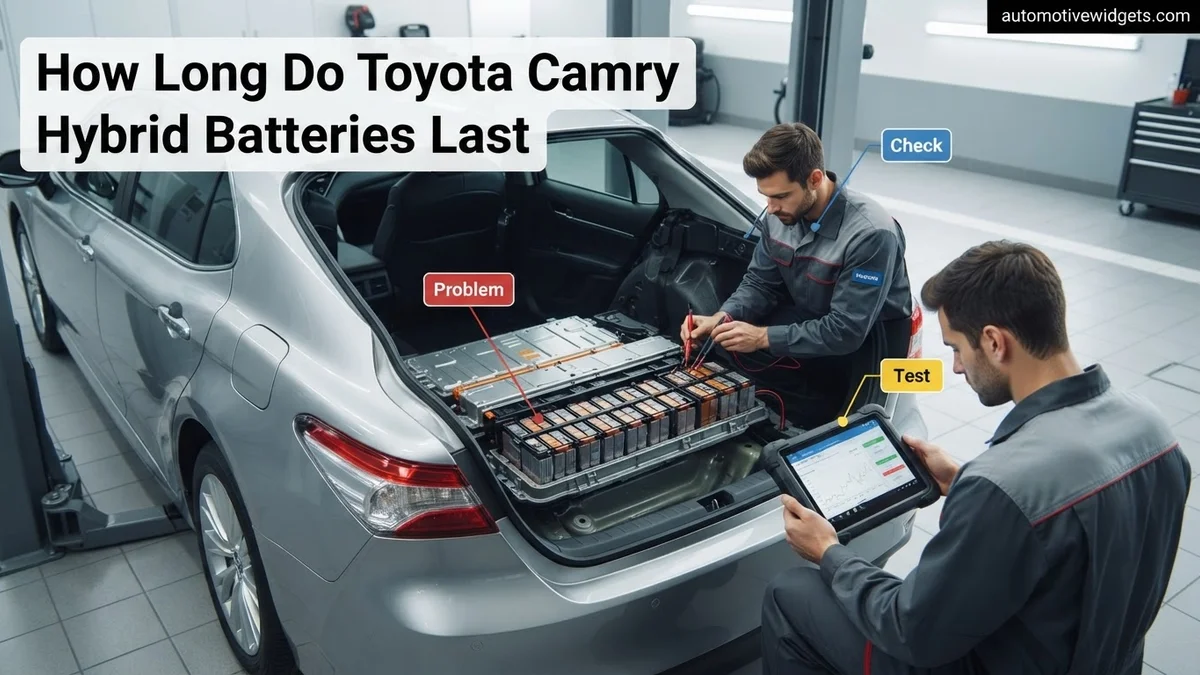
Adhering to Toyota’s recommended service schedule is vital. During these appointments, technicians perform essential checks including the hybrid system’s diagnostic health. For 2026 models, this includes advanced diagnostic scans that monitor individual cell voltage and temperature. Ensure the battery cooling system – often comprising fans and filters – is regularly inspected and cleaned. Blocked filters or malfunctioning fans can lead to overheating, a primary accelerator of battery degradation. Expert sources indicate that maintaining the battery’s optimal operating temperature is critical for its long-term integrity.
What to Do If Your Camry Hybrid Battery Fails: Troubleshooting & Replacement
Despite robust design, even the most durable components can eventually fail. If your Toyota Camry Hybrid exhibits clear signs of battery degradation or failure in 2026, understanding the next steps is crucial for a swift resolution. Common indicators include a significant drop in fuel economy, illuminated “Check Hybrid System” warning lights, or reduced electric-only driving capability.
Initial Diagnosis and Professional Assessment
Upon experiencing symptoms, the first action is to consult a certified Toyota dealership or a specialized hybrid repair shop. These facilities possess the proprietary diagnostic tools and expertise required to accurately identify the specific issue. They can read fault codes from the hybrid control module and perform voltage and capacity tests on individual battery cells. Attempting DIY repairs on high-voltage hybrid systems is not recommended due to safety risks and the complexity of the technology. According to automotive service bulletins for 2026, accurate diagnosis often requires specific software updates and specialized equipment to pinpoint exact cell failures.
Replacement Options and Considerations
Should replacement be necessary, several options are available. The primary choice is a new Original Equipment Manufacturer (OEM) battery from Toyota. These units come with a manufacturer’s warranty, typically ranging from 8 to 10 years or 100,000 to 150,000 miles, depending on state regulations and the specific model year. Reconditioned or aftermarket batteries are also options, often at a lower cost, but their warranty and expected lifespan can vary significantly. For 2026, the average cost for a new OEM Camry hybrid battery replacement, including labor, is estimated to range from $4,500 to $7,000 USD, depending on regional labor rates and the specific model. Reconditioned units might fall between $2,000 and $4,000 but require careful vetting of the vendor’s reputation and warranty terms.
What If It Still Doesn’t Work? Advanced Troubleshooting & Expert Intervention
If you’ve followed basic troubleshooting steps and your Camry Hybrid battery issues persist, it’s time to elevate your approach. Intermittent warnings or persistent poor performance often indicate deeper, more complex problems requiring specialized attention.
- Perform a Full System Diagnostic Scan: Even if a warning light isn’t active, a comprehensive diagnostic scan by a certified Toyota technician can reveal latent fault codes or pending issues in the hybrid control module. Modern 2026 diagnostic tools can pinpoint specific cell imbalances or cooling system inefficiencies not apparent through general checks.
- Inspect the Battery Cooling System Components: Have professionals meticulously check the entire battery cooling system. This includes fans, ducts, temperature sensors, and the cooling air intake filter. Blockages or sensor failures can cause overheating, leading to premature degradation. Expert services can often identify minor clogs or weak fan motors that impact overall battery health.
- Verify Wiring Harness Integrity: Over time, wiring harnesses connected to the hybrid battery can degrade, suffer from corrosion, or be damaged, leading to intermittent connection issues. A specialized technician can perform continuity tests and visual inspections of these high-voltage lines.
- Seek a Second Opinion from a Hybrid Specialist: If a general mechanic or even a dealership struggles to resolve the issue, consider consulting an independent shop specializing exclusively in hybrid vehicle repair. These experts often have unique tools and in-depth experience with challenging hybrid system faults.
If these advanced steps still don’t resolve the problem, professional intervention is mandatory. Estimated costs for professional hybrid system diagnosis by a certified technician in 2026 typically range from $150 to $300 USD, depending on the complexity and time involved. Full battery replacement, if required, can cost between $4,500 to $7,000 USD for new OEM parts and labor, as noted previously.
Conclusion
The Toyota Camry Hybrid battery is engineered for remarkable durability, frequently exceeding 15 years or 200,000 miles, with current 2026 models benefiting from continuous technological refinements. According to verified research and expert sources, understanding your warranty, practicing careful driving habits, and adhering to routine maintenance are key to maximizing its lifespan. Your next step should be to review your vehicle’s service history and schedule any outstanding hybrid system checks to ensure continued peak performance.
❓ Frequently Asked Questions
What factors significantly impact the longevity of a Toyota Camry hybrid battery?
Key factors include extreme temperatures (both hot and cold), frequent short trips, consistent deep discharge/charge cycles, age, and high mileage. Maintaining proper tire pressure and avoiding aggressive driving also play a role in optimizing battery health and lifespan.
How does Toyota’s hybrid battery warranty compare to the actual expected lifespan?
Toyota’s warranty typically guarantees the hybrid battery for 8 years or 100,000 miles (10 years/150,000 miles in certain states like CA). While this is robust, the actual expected lifespan often exceeds these figures, with many owners reporting 15 years or 200,000+ miles before significant degradation.
Are there specific driving habits that can help extend the life of my Camry’s hybrid battery?
Yes, practicing smooth acceleration and deceleration, avoiding excessive high-speed driving, and not letting the car sit for extended periods without use can help. Regular, moderate driving allows the battery management system to optimize charge cycles, preserving battery health.
What are the primary warning signs that a Toyota Camry hybrid battery is nearing the end of its life?
You might notice a noticeable drop in fuel efficiency, the hybrid system warning light illuminating on your dashboard, reduced power output, and the gasoline engine running more frequently than usual. The car might also struggle to maintain an electric-only mode for as long.
Can I recondition or repair my Camry hybrid battery instead of replacing it entirely?
While some third-party services offer reconditioning, which involves replacing individual weak cells, its effectiveness and longevity can vary. Toyota generally recommends full replacement for optimal performance and safety, though reconditioning can be a more budget-friendly, albeit temporary, option.
Does the model year of my Toyota Camry Hybrid affect its battery lifespan or type?
Yes, newer generations of the Camry Hybrid often feature more advanced battery technologies (e.g., lithium-ion in newer models vs. NiMH in older ones) and improved battery management systems. These advancements generally contribute to longer lifespans, better efficiency, and sometimes smaller, lighter battery packs compared to older models.