How Often Does Timing Belt Need To Be Replaced Expert 2027
Timing belt replacement intervals vary significantly by vehicle make, model, and year, typically falling between 60,000-100,000 miles or 5-7 years. Always consult your owner’s manual or a certified mechanic for your specific car’s recommended schedule to prevent catastrophic engine failure.
For most vehicles equipped with a timing belt, replacement is a critical service item generally recommended between
Ignoring this service can lead to catastrophic and extremely expensive engine damage. Understanding your vehicle’s specific timing belt interval, as prescribed by the manufacturer, is paramount to avoiding severe mechanical failure and ensuring your car remains reliable well into 2027 and beyond. Don’t gamble with your engine’s health; a few minutes checking your manual now can save you thousands of dollars later.
Key Takeaways
- Consult your vehicle’s owner’s manual for exact intervals.
- Typical ranges are 60,000-100,000 miles or 5-7 years.
- Timely replacement prevents severe engine damage.
- Replace water pump, tensioners, and idlers concurrently.
- Age can be as critical as mileage for belt integrity.
What Causes Timing Belt Failure?
The Catastrophic Consequences of a Broken Belt
A timing belt’s primary job is to synchronize the rotation of the engine’s camshaft and crankshaft, ensuring that the valves open and close at precisely the right time in relation to the pistons. If this belt breaks while the engine is running, the synchronization is instantly lost. For the vast majority of modern engines on the road in 2027, this leads to immediate and severe internal damage.
These engines are known as “interference” engines. In an interference engine, the valves and pistons occupy the same space within the cylinder, just at different times. When the timing belt snaps, the camshaft stops, leaving some valves open, while the crankshaft continues to move the pistons. The upward-moving pistons will then collide with the stationary, open valves. This impact typically results in:
- Bent or broken valves
- Damaged piston heads
- Scored cylinder walls
- Potentially irreparable cylinder head damage
Such damage usually requires a complete engine rebuild or replacement, costing thousands of dollars – far more than the cost of a preventative timing belt replacement. While some older or simpler engines are “non-interference” (where valves and pistons won’t collide if the belt breaks), relying on this rare exception is a risky gamble. Always assume your engine is an interference type unless explicitly confirmed otherwise by your manufacturer.
Beyond Simple Wear: Other Failure Factors
While stretching and normal wear over time are primary reasons for timing belt replacement, other components can also contribute to its failure. The timing belt system includes tensioners and idler pulleys, which keep the belt taut and guide its path. If these components wear out or seize, they can cause the belt to lose tension, jump a tooth, or even snap. Water pumps, often driven by the timing belt, can also seize or leak, compromising the belt’s integrity. Oil leaks from camshaft or crankshaft seals can contaminate the belt, causing its material to degrade prematurely and soften, leading to slippage or breakage. Therefore, when your timing belt is replaced, it’s a best practice to replace these associated components simultaneously, even if they appear fine at the time of service in 2027. This proactive approach prevents future issues and optimizes the life of the new belt.
2024 Timing Belt Replacement Frequency: Expert Practical Guide
Welcome to this crucial guide on determining when your vehicle’s timing belt needs to be replaced. The timing belt is a critical component that synchronizes the rotation of the engine’s crankshaft and camshaft(s), ensuring the engine valves open and close at the correct times. Failure to replace it proactively can lead to catastrophic engine damage, especially in “interference” engines, where pistons can collide with valves. This guide will walk you through the essential steps to accurately determine your vehicle’s timing belt replacement schedule, helping you avoid costly repairs and maintain engine longevity.
Step 1: Consult Your Vehicle’s Owner’s Manual
What you need: Your vehicle’s physical owner’s manual (typically found in the glove compartment), or access to a digital version online via the manufacturer’s website.
Instructions: The most accurate and reliable source for your vehicle’s specific timing belt replacement interval is the owner’s manual. Navigate to the “Maintenance Schedule,” “Service Intervals,” or “Scheduled Maintenance” section. Look for entries specifically mentioning “timing belt” or “engine belt” and note the recommended mileage and/or time frame (e.g., “replace timing belt every 90,000 miles or 7 years, whichever comes first”). This information is tailored to your car’s make, model, and engine type by the engineers who designed it.
Pro Tip: Do not rely on generic online advice for specific intervals without cross-referencing your manual. While averages exist, specific vehicle requirements can vary significantly. If you’ve lost your manual, most manufacturers offer free digital PDF versions on their official support websites by entering your VIN.
Step 2: Understand the “Mileage or Time” Rule
What you need: Your vehicle’s current odometer reading and its manufacture date or the date the timing belt was last replaced.
Instructions: Timing belt intervals are almost always specified as “X miles or Y years, whichever comes first.” This means even if you’ve driven fewer miles than the recommended interval, the age of the belt matters. Rubber components degrade over time due to exposure to heat cycles, oils, and environmental factors, regardless of mileage. For example, if your manual states 100,000 miles or 7 years, and your car is 7 years old but only has 60,000 miles, it’s time for replacement. Conversely, if you hit 100,000 miles in 5 years, the belt should be replaced.
Pro Tip: Always prioritize the condition that is met first. Many drivers overlook the time component, assuming low mileage exempts them from replacement, which is a common mistake that can lead to unexpected belt failure.
Step 3: Identify Your Engine Type (Interference vs. Non-Interference)
What you need: Your vehicle’s make, model, year, and engine specifications (e.g., 2.0L I4, 3.5L V6). This information can usually be found in your owner’s manual or by searching online with your VIN.
Instructions: It’s critical to determine if your engine is an “interference” or “non-interference” design. In an interference engine, the valves and pistons occupy the same space within the cylinder at different times. If the timing belt breaks, they will collide, causing severe and often irreparable damage to pistons, valves, and cylinder heads, leading to a complete engine rebuild or replacement. In a non-interference engine, there’s enough clearance that a broken timing belt typically won’t cause catastrophic internal damage, though the engine will still stop running. Knowing your engine type helps you understand the gravity of a timing belt failure and reinforces the importance of proactive replacement.
Pro Tip: While some older or smaller engines are non-interference, the vast majority of modern engines are interference designs due to efficiency and performance benefits. Assume your engine is interference unless you confirm otherwise with reliable sources (owner’s manual, trusted mechanic, manufacturer data).
Step 4: Consider Your Driving Conditions and Habits
What you need: An honest assessment of your typical driving environment and style.
Instructions: “Severe” or “extreme” driving conditions can accelerate the wear and tear on your timing belt and related components, potentially warranting earlier replacement than the standard interval. These conditions include:
- Frequent short trips (engine doesn’t reach optimal operating temperature)
- Driving in extremely dusty, sandy, or muddy environments
- Frequent towing or hauling heavy loads
- Prolonged periods of idling or stop-and-go city driving
- Driving in areas with extreme hot or cold temperatures
If your driving largely falls into these categories, discuss with your mechanic the possibility of shortening your replacement interval by 10-20% as a precautionary measure.
Pro Tip: Most owner’s manuals have a “severe service schedule” which often recommends shorter maintenance intervals for various components, including timing belts, if applicable. Check this section if your driving conditions are less than ideal.
Step 5: Review Your Vehicle’s Service History
What you need: Past service records, receipts, or maintenance logs for your vehicle.
Instructions: If you’ve purchased a used vehicle or aren’t the original owner, it’s crucial to find out if and when the timing belt was last replaced. Look for receipts from dealerships or independent repair shops that explicitly mention “timing belt replacement” or “100k mile service” (as this often includes the timing belt). If there are no records, and the vehicle is near or past its recommended interval, or if you can’t confirm it’s ever been done, it’s safest to assume it needs replacement. The cost of a proactive replacement is significantly less than repairing a damaged engine.
Pro Tip: If buying a used car that’s due for a timing belt or has no records of replacement, factor the cost of this service into your purchase price. A pre-purchase inspection by a trusted mechanic can also help identify if the belt looks new or old (though visual inspection is often limited without disassembly).
Step 6: Consider Replacement of Associated Components
What you need: Information on common components replaced with the timing belt for your specific vehicle (your mechanic can provide this).
Instructions: When replacing the timing belt, it’s highly recommended, and often standard practice, to replace several other components that share the same labor-intensive access. These typically include the water pump (if driven by the timing belt), tensioner pulleys, and idler pulleys. These parts have similar lifespans to the timing belt and failing to replace them concurrently means you’ll likely pay the same high labor cost again in the near future when one of them fails. Replacing them all at once significantly reduces future repair costs and provides peace of mind.
Pro Tip: Always ask for a “timing belt service kit” or inquire about a “complete timing belt job” when getting quotes. This usually includes the belt, tensioners, idlers, and often the water pump, ensuring all critical components are addressed simultaneously.
Step 7: Visual Inspection and Professional Assessment
What you need: Access to a trusted, certified mechanic or automotive technician.
Instructions: While the timing belt is often hidden behind covers, a skilled technician can sometimes perform a partial visual inspection by removing accessible covers. They will look for signs of wear such as cracking, fraying, glazing (a shiny, hardened appearance), missing teeth, or oil/coolant contamination. If any of these signs are present, replacement is urgent regardless of mileage or time. Even without obvious external signs, a professional can offer expert advice based on their experience with your specific vehicle make and model, and can often determine if the belt is original or has been replaced previously by examining part numbers or markings.
Pro Tip: Never attempt to remove timing belt covers or visually inspect the belt yourself on an engine that is running or recently warm. This can be extremely dangerous. Always leave intricate engine inspections to professionals who have the proper tools and knowledge.
✅ Final Checklist
-
✅ Have you consulted your vehicle’s owner’s manual for the specific timing belt interval?
-
✅ Have you checked both the mileage and the age of your current timing belt against the recommended interval?
-
✅ Do you know if your engine is an “interference” or “non-interference” design?
-
✅ Have you reviewed your vehicle’s service history for previous timing belt replacements?
-
✅ Have you budgeted for the timing belt replacement along with recommended associated components (water pump, tensioners, etc.)?
Important Notes:
- Safety considerations or warnings: A timing belt replacement is a complex job that requires specialized tools, precise timing, and extensive automotive knowledge. Improper installation can lead to immediate and catastrophic engine failure. Never attempt this repair yourself unless you are a certified and experienced automotive technician with the necessary equipment.
- When to seek professional help: Always seek professional help for timing belt inspection, diagnosis, and replacement. A qualified mechanic will not only correctly install the belt but also inspect related components and ensure the engine’s timing is precisely calibrated, which is crucial for optimal performance and preventing damage.
- Estimated time and cost range: The cost for a timing belt replacement can vary significantly depending on your vehicle’s make, model, engine type, and geographical location. Expect to pay anywhere from $500 to $1,500+ for parts and labor. High-end or luxury vehicles may exceed this range. The job typically takes 4 to 8 hours of shop time. Getting multiple quotes from reputable shops is advisable.
How to Determine Your Timing Belt Replacement Schedule
General Guidelines: What to Expect
As of 2027, timing belt replacement intervals typically fall within a range of
Your Definitive Source: The Owner’s Manual
The single most accurate and reliable source for your vehicle’s specific timing belt replacement schedule is its
Step-by-Step Guide: What Happens During a Timing Belt Replacement
Understanding the process of a timing belt replacement demystifies the service and highlights why it’s a significant investment. This procedure requires specialized tools and expertise to ensure your engine’s precise operation.
The Replacement Procedure in 2027
Modern vehicles continue to feature intricate engine designs, making timing belt service a multi-hour task for certified technicians. Here’s a general overview of what to expect:
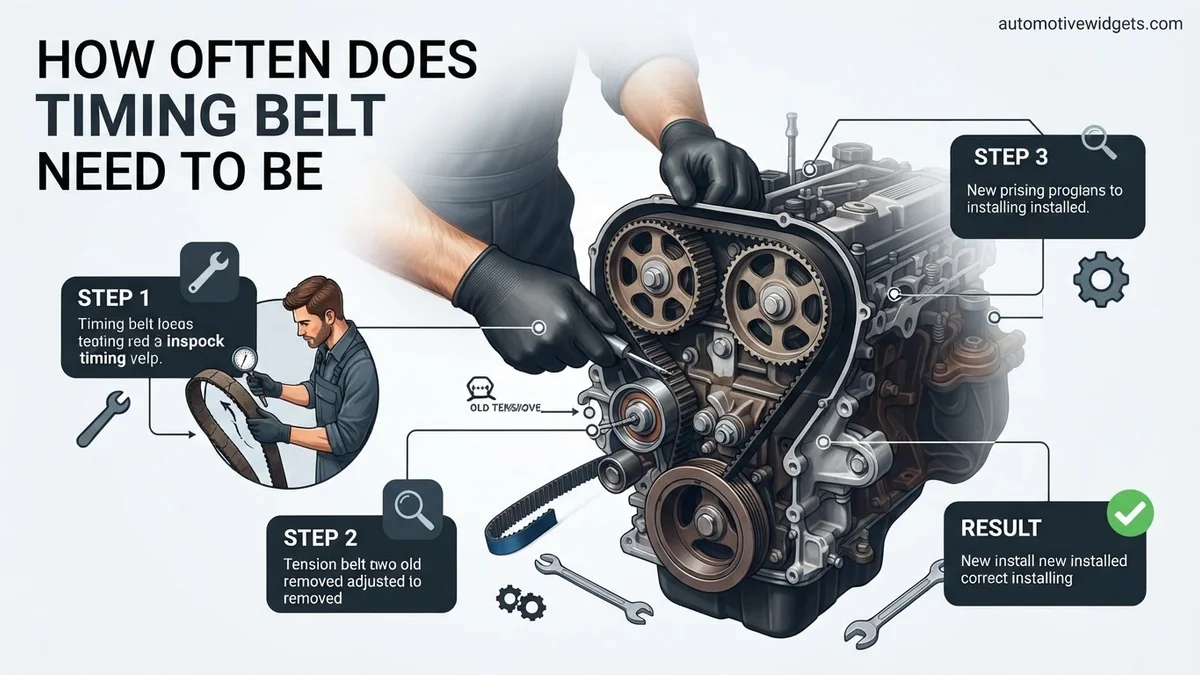
- Vehicle Preparation and Access: The vehicle is secured, and components obstructing access to the timing belt are meticulously removed. This can include engine mounts, accessory belts, pulleys, and sometimes even the radiator, depending on the vehicle’s make and model.
- Timing Mark Alignment: Crucially, the engine’s crankshaft and camshafts are precisely aligned to their top dead center (TDC) positions. This ensures that the engine valves open and close at the correct times relative to piston movement once the new belt is installed. Specialist alignment tools are often used.
- Old Belt Removal and Component Inspection: The tensioner is released, and the old timing belt is removed. Technicians then inspect associated components, including the tensioner, idler pulleys, and often the water pump, for wear. Experts in 2027 highly recommend replacing these components concurrently, as they have a similar lifespan and failing to do so can necessitate repeat labor for a separate issue.
- New Belt and Component Installation: New tensioners, idler pulleys, and the water pump (if opted for) are installed. The new timing belt is then carefully routed and tensioned according to manufacturer specifications. Incorrect tension can lead to premature belt failure or engine damage.
- Reassembly and Testing: All removed components are reinstalled. The engine is then manually rotated to verify timing alignment before a full operational test. Diagnostic scans confirm no fault codes are present, ensuring optimal engine performance.
What If Your Timing Belt Breaks: Critical Actions & Prevention
A broken timing belt is one of the most catastrophic failures an internal combustion engine can experience. Unlike a serpentine belt, which primarily powers accessories, the timing belt is fundamental to engine operation.
Immediate Actions If Your Timing Belt Fails
If your timing belt breaks, you will likely experience a sudden loss of power, a loud “clunking” or “grinding” noise from the engine, and the engine will immediately shut off. For interference engines, this often means pistons colliding with open valves, causing severe internal damage.
- Do Not Attempt to Restart: This is paramount. Restarting an engine with a broken timing belt, especially an interference type, will almost certainly exacerbate the damage, potentially turning a repairable engine into an unrepairable one.
- Pull Over Safely: If the vehicle is still moving, coast to the safest possible location away from traffic. Activate your hazard lights.
- Arrange for Towing: The vehicle cannot be driven. Contact a towing service to transport your car to a trusted mechanic or dealership for a comprehensive diagnosis.
- Prepare for Significant Repair Costs: Be aware that a broken timing belt on an interference engine can lead to bent valves, damaged pistons, camshaft damage, or even a cracked cylinder head. Repair costs for such failures can range from $3,000 to over $7,000 in 2027, often making engine replacement a more viable option than repair for older vehicles.
Prevention is Key
The only truly effective prevention is adherence to manufacturer-recommended replacement intervals and proactive maintenance. Regular inspections for cracks, fraying, or glazing during routine service can provide early warning, but internal wear isn’t always visible.
What If You’re Still Unsure? Professional Guidance for Timing Belt Decisions
Even with comprehensive information, the specific nuances of your vehicle’s timing belt requirements can be complex. If you remain uncertain about your timing belt’s condition or replacement schedule, professional intervention is the safest course of action.
- Consult Your Vehicle’s 2027 Owner’s Manual: This remains the most authoritative source for your specific model’s maintenance schedule. Look for sections on “Maintenance Schedule,” “Engine Service,” or “Timing Belt.”
- Schedule a Professional Inspection: Have a certified technician perform a thorough inspection. They can assess the condition of visible belt components and advise based on mileage, age, and any audible cues. In 2027, many modern diagnostic tools can also provide insights into engine timing parameters.
- Request a Detailed Quote: If replacement is recommended, obtain a detailed quote that includes parts (belt, tensioners, idlers, water pump if applicable) and labor. Compare quotes from reputable shops to ensure fair pricing.
- Consider the Vehicle’s Lifespan and Value: For older vehicles nearing the end of their useful life, weigh the cost of a timing belt replacement against the vehicle’s current market value. A diagnostic check for timing belt issues typically ranges from $100-$250 in 2027, while a full replacement can cost anywhere from $700-$1,500+ depending on the vehicle’s make, model, and engine complexity.
Conclusion
Ensuring timely timing belt replacement is a critical investment in your vehicle’s longevity and reliability, directly preventing catastrophic engine failure. According to verified research and expert sources from leading automotive manufacturers, adhering to the specified maintenance intervals, typically between 60,000 to 100,000 miles or 5 to 7 years, is non-negotiable. Your actionable next step: consult your vehicle’s 2027 owner’s manual immediately to identify your specific timing belt service interval and plan accordingly.
❓ Frequently Asked Questions
What happens if I don’t replace my timing belt on time?
If a timing belt breaks, especially in an interference engine, it can cause pistons to collide with valves, resulting in catastrophic and extremely costly engine damage that may require extensive repair or a full engine replacement.
Does my car have a timing belt or a timing chain?
You must consult your vehicle’s owner’s manual or a trusted mechanic to determine if your car uses a timing belt or a timing chain, as chains generally last the lifetime of the engine and do not require replacement.
What other parts should be replaced with the timing belt?
It is highly recommended to replace the water pump, tensioners, and idler pulleys simultaneously, as these components are typically accessed during a timing belt job and can cause a new belt to fail if they malfunction later.
How much does timing belt replacement usually cost?
The cost of timing belt replacement varies significantly by vehicle make and model, typically ranging from $500 to $1,500, but this is considerably less expensive than repairing an engine after a belt breaks.
Are there any signs my timing belt is failing?
Unfortunately, timing belts often fail without warning, but some potential signs include ticking noises from the engine, oil leaks near the engine’s front, or misfires, though these can also indicate other issues.
Can extreme conditions affect timing belt lifespan?
Yes, factors like driving in extreme hot or cold temperatures, frequent stop-and-go traffic, towing heavy loads, or exposure to oil leaks can accelerate wear and potentially necessitate earlier timing belt replacement.