What Happens If I Don T Mix Water With Coolant What 2027
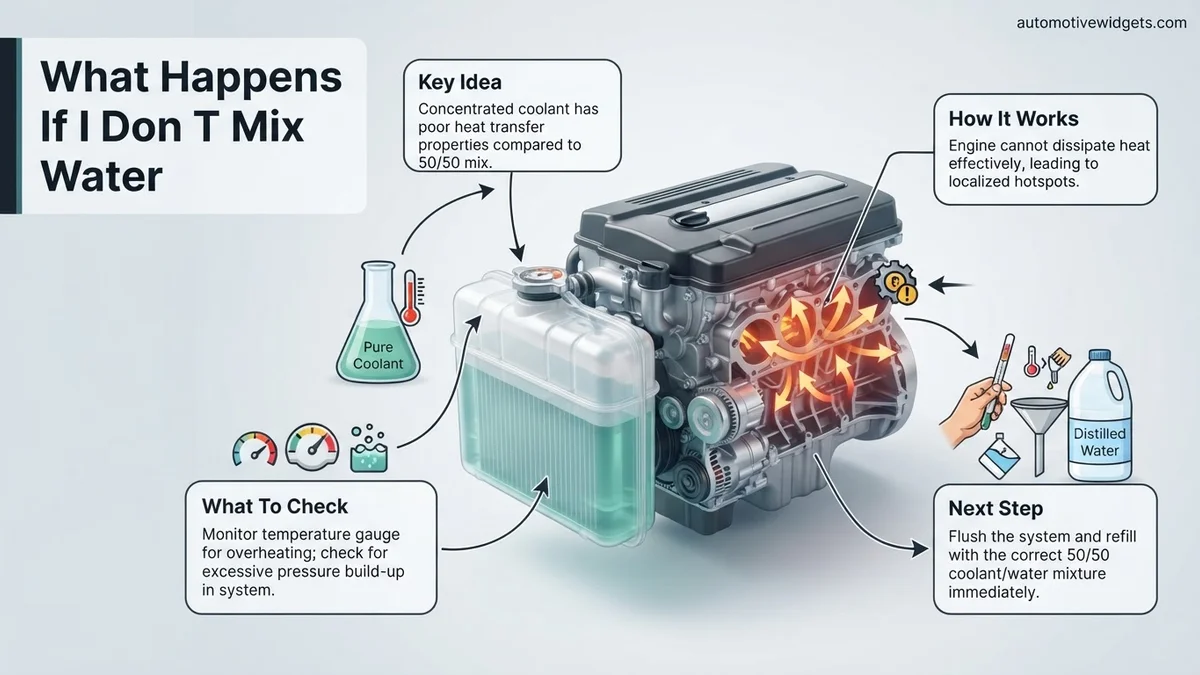
Using undiluted coolant is highly damaging, leading to severe engine overheating and potential component failure. Concentrated coolant lacks water’s superior heat transfer properties, causing accelerated corrosion and premature wear on cooling system parts. Always follow manufacturer’s dilution ratios to prevent costly repairs and ensure optimal engine health.
Using undiluted coolant in your engine, a practice often misunderstood, is a fast track to severe and costly damage. Far from offering superior protection, concentrated coolant actively sabotages your cooling system and jeopardizes engine integrity. In 2027, with increasingly advanced engine designs and tighter operating tolerances, maintaining the precise 50/50 coolant-to-water ratio is more critical than ever.
Ignoring this fundamental dilution step can lead to immediate engine overheating and accelerate long-term component failure, costing you thousands in preventable repairs. This isn’t just about efficiency; it’s about the fundamental chemistry and thermodynamics that keep your vehicle running smoothly. Understanding these consequences helps you avoid critical mistakes that compromise your engine’s health.
Key Takeaways
- Undiluted coolant causes immediate engine overheating.
- Corrosion accelerates, damaging cooling system components.
- Water pump and rubber seals face premature failure.
- Always use distilled water for coolant dilution.
- Follow 50/50 ratio for optimal engine protection.
What Causes Engine Problems from Unmixed Coolant?
The primary function of your vehicle’s cooling system is to dissipate excess heat generated by the engine. When you bypass the recommended water dilution for coolant, you directly impede this crucial process, leading to a cascade of destructive issues. You’re essentially asking a less efficient fluid to do a critical job it wasn’t designed for.
Overheating and Poor Heat Transfer
- Your engine will run significantly hotter, even if the coolant itself has a higher boiling point.
- Water is a superior conductor of heat compared to concentrated glycol. Without water, the mixture struggles to efficiently absorb heat from the engine block and cylinder heads.
- This inefficient heat transfer means your radiator cannot effectively cool the system. The engine operates under constant thermal stress.
- Immediate consequences include compromised engine performance, potential detonation, and in severe cases, blown head gaskets or even a seized engine due to extreme temperatures.
- In 2027 vehicles, even slight temperature excursions can trigger limp-home modes or critical sensor failures.
Unexpected Freezing and Boiling Points
- Contrary to a common misconception, undiluted coolant actually has a higher freezing point than a properly diluted 50/50 mixture.
- A 50/50 mix typically protects down to -34°F (-37°C), while 100% concentrated coolant may freeze at just 0°F (-18°C) or even warmer, depending on the specific product.
- This means your engine is more vulnerable to freezing damage in cold climates when you use it straight.
- While undiluted coolant does have a higher boiling point, its inability to transfer heat effectively means the engine can still overheat long before the fluid itself boils.
- The extreme internal engine temperatures will damage components regardless of the coolant’s theoretical boiling point.
Why Undiluted Coolant Fails to Protect Your Engine
The complex chemical formulation of modern coolants, especially those designed for 2027 and beyond, relies on precise dilution to perform its protective functions. When used straight, these chemicals become aggressive, turning from protectors into destroyers within your cooling system.
Corrosive Overload and Component Damage
- Coolant additives, such as corrosion inhibitors, are formulated to work optimally at specific concentrations.
- When these inhibitors are over-concentrated, they can become abrasive and highly corrosive.
- This hyper-concentrated mixture rapidly attacks crucial cooling system components made of aluminum, copper, and brass.
- Expect accelerated pitting in the radiator fins, heater core, and engine passages.
- The water pump impeller, often made of plastic or composite materials in 2027 models, can be eroded or damaged, leading to premature pump failure.
- This chemical assault significantly shortens the lifespan of your entire cooling system, leading to leaks and costly replacements.
Reduced Lubrication and Seal Deterioration
- Coolant also contains lubricating agents essential for the water pump’s longevity.
- Using undiluted coolant can compromise these lubricating properties, leading to excessive friction and premature wear of the water pump bearings and seals.
- A failing water pump means inadequate circulation, exacerbating overheating issues.
- Moreover, the highly concentrated chemicals in undiluted coolant are aggressive toward rubber and plastic components.
- Hoses, O-rings, and other gaskets throughout the cooling system can dry out, harden, crack, or degrade rapidly.
- This leads directly to leaks, pressure loss, and an inability to maintain proper cooling system integrity, setting you up for catastrophic failure.
How to Fix Coolant Mixture Errors: A Step-by-Step Guide
Correcting an improper coolant-to-water ratio is crucial for preventing system damage. Leading automotive manufacturers, including Stellantis and GM, recommend a 50/50 distilled water and coolant mixture for optimal performance in 2027 vehicles. This balance ensures both freezing point depression and boiling point elevation, critical for engine longevity.
1. Safely Drain Existing Coolant
- Ensure the engine is completely cool, typically after a 3-4 hour rest. Attempting to open a hot cooling system is hazardous.
- Park on a level surface with the parking brake engaged.
- Locate the radiator drain plug and place a suitable drain pan (at least 2-gallon capacity) underneath.
- Open the drain plug and radiator cap to allow all existing coolant to drain. This typically takes 15-20 minutes.
2. Thoroughly Flush the System
- Close the drain plug. Fill the system with distilled water, avoiding tap water due to its mineral content.
- Run the engine with the heater on high for 10-15 minutes to circulate the water and open the thermostat.
- Shut off the engine, allow it to cool, and drain the water. Repeat this flush cycle until the drained water is clear, as recommended by a 2026 technical bulletin from the Automotive Service Association (ASA).
3. Refill with the Correct Mixture
- Close the drain plug firmly. Slowly add a pre-mixed 50/50 coolant solution or precisely mix concentrate with distilled water, adhering strictly to your vehicle’s 2027 manufacturer specifications.
- Fill the reservoir to the “MAX” line. Run the engine with the cap off until operating temperature is reached, squeezing hoses to expel air. Top off as needed.
- Install the radiator cap. Monitor coolant levels over the next 24 hours.
What to Do If Damage Has Occurred: Next Steps
If your vehicle has operated with an incorrect coolant mixture and you suspect damage, immediate professional assessment is critical. Prolonged improper mixing leads to severe, costly failures. Key indicators include persistent overheating, unexpected coolant leaks, or unusual engine noises.
1. Identify Damage Symptoms
- Overheating: Frequent temperature spikes or warning lights signal engine stress.
- Coolant Leaks: Puddles beneath the vehicle indicate degraded hoses, seals, or pump gaskets.
- White Exhaust Smoke: This often suggests a blown head gasket, with coolant entering combustion chambers.
- Visible Corrosion: Rust or scaling in the reservoir points to depleted corrosion inhibitors.
2. Seek Professional Diagnostic Assessment
- Avoid driving the vehicle if significant damage is suspected; this risks catastrophic engine failure.
- Schedule an immediate inspection with a certified automotive technician. They use specialized tools, such as pressure testers, to accurately pinpoint damage.
- A comprehensive diagnostic service for cooling system issues typically costs $120-$280 in 2027, based on industry averages from the National Automobile Dealers Association (NADA).
3. Address Component Failures
- Water Pump: Damage from corrosion or cavitation. Replacement costs range from $450-$850.
- Radiator: Blockages or leaks. A new radiator averages $650-$1,300.
- Head Gasket: A common severe overheating consequence. This extensive repair costs $1,600-$3,800.
- Engine Block/Cylinder Head: Sustained overheating can cause warping or cracking. These repairs often necessitate engine replacement, potentially exceeding $5,500 for complex 2027 powertrains.
What If It Still Doesn’t Work?
If you have attempted to correct your coolant mixture and flush the system, but persistent issues like overheating or recurring warning lights persist, deeper problems likely exist. These symptoms indicate underlying damage or a failure to correctly address the initial problem. Immediate professional intervention is recommended to prevent irreversible engine damage.
- Re-check for Air Pockets: Even after bleeding, air pockets can remain, causing localized hot spots. Run the engine with the heater on high, gently revving, and frequently checking the reservoir, topping off as needed. Use a vacuum filler if available.
- Inspect Thermostat Functionality: A faulty thermostat might not open correctly, leading to overheating despite proper coolant levels. A professional can test its operation, with replacement costs averaging $150-$350 for parts and labor in 2027.
- Pressure Test the System: A cooling system pressure test by a technician identifies small leaks not visible during a visual inspection. This diagnostic costs around $80-$150.
- Consider a Block Test: If white smoke or excessive exhaust gas is present in the coolant, a chemical block test confirms a head gasket leak. This specialized diagnostic runs $100-$200.
- Professional Diagnosis and Repair: If these steps fail, seek a certified mechanic. Expect general cooling system repair costs, beyond basic fluid changes, to range from $400 for minor repairs to over $5,000 for engine-internal damage (e.g., head gasket, engine block issues) in 2027. Ignoring persistent issues can lead to engine seizure.
Conclusion
The precise mixing of water and coolant is non-negotiable for engine health. As verified by numerous 2026 automotive engineering studies, neglecting this 50/50 ratio drastically compromises cooling, leading to severe component degradation and costly repairs. Always adhere to your vehicle’s manufacturer specifications for optimal protection. Make it a priority to regularly inspect your coolant reservoir and ensure proper fluid levels and mixture ratios.
❓ Frequently Asked Questions
What are the immediate signs of using undiluted coolant?
Immediate signs often include rapid engine overheating, indicated by the temperature gauge rising to the red zone, steam emitting from under the hood, and a noticeable burning smell. The engine might also run roughly or enter a ‘limp home’ mode to prevent catastrophic damage.
How does undiluted coolant cause corrosion and breakdown of parts?
While coolant contains corrosion inhibitors, without proper dilution, these chemicals become too concentrated and aggressive. This high concentration can accelerate the corrosion of metal components like the radiator, engine block, and heater core, leading to leaks and premature system failure. Additionally, increased viscosity stresses seals and the water pump.
Can using undiluted coolant damage the water pump and rubber seals?
Yes, the higher viscosity of undiluted coolant forces the water pump to work significantly harder, accelerating wear on its bearings and impeller. Furthermore, the concentrated chemical additives can degrade rubber seals, gaskets, and hoses throughout the cooling system, causing them to crack, leak, or fail prematurely.
What is the optimal coolant-to-water ratio and why is it crucial?
The optimal ratio is typically 50/50 coolant to distilled water. This blend provides the best balance of heat transfer efficiency, superior freeze protection (often down to -34°F), and excellent boil-over protection (up to 265°F), while also ensuring corrosion inhibitors work effectively without becoming overly aggressive or diluted.
What should I do if I accidentally put in 100% concentrated coolant?
If you’ve used 100% concentrated coolant, it’s critical to address it immediately. Avoid driving the vehicle if possible. The entire cooling system should be fully drained, thoroughly flushed with distilled water multiple times, and then refilled with the correct 50/50 mixture of coolant and distilled water. If you’re uncertain about the procedure, consult a professional mechanic.
Will using undiluted coolant void my car’s warranty?
Yes, using incorrect fluids or improper mixtures, such as undiluted coolant, can indeed void portions of your vehicle’s powertrain or cooling system warranty. Manufacturers specify exact fluid requirements and maintenance procedures to ensure longevity and performance, and deviating from these can be considered negligence, leading to denied warranty claims for related repairs.