Where Should My Temperature Gauge Be In My Car Real 2027
Your car’s temperature gauge should ideally rest in the middle, or between 1/3 and 2/3 of the way up, once the engine is fully warmed. High or low readings indicate potential engine issues like overheating or thermostat failure, requiring immediate attention to prevent costly damage and ensure safe driving.
When you glance at your dashboard, one gauge often overlooked until there’s a problem is the engine temperature gauge. In 2027, for the vast majority of modern vehicles, your engine temperature gauge should consistently sit around the middle of its dial once the engine is fully warmed up. This central position indicates your engine’s cooling system is operating within its optimal temperature range, crucial for both performance and longevity.
Understanding this “normal” zone isn’t just about avoiding a breakdown; it’s about proactive maintenance. An engine running too hot or too cold wears out faster, consumes more fuel, and can lead to expensive repairs if ignored. Knowing what your gauge should look like and what to do when it deviates can save you significant time, money, and stress on the road.
Key Takeaways
- Gauge should be in middle 1/3-2/3 range for optimal operation.
- Overheating:pull over, turn off AC, turn on heat; do NOT open radiator.
- Low temp indicates thermostat issues, impacts efficiency and wear.
- Optimal engine temperature is crucial for performance and longevity.
- Monitor your temperature gauge regularly for early problem detection.
Where Should Your Car Temperature Gauge Be: The Normal Range
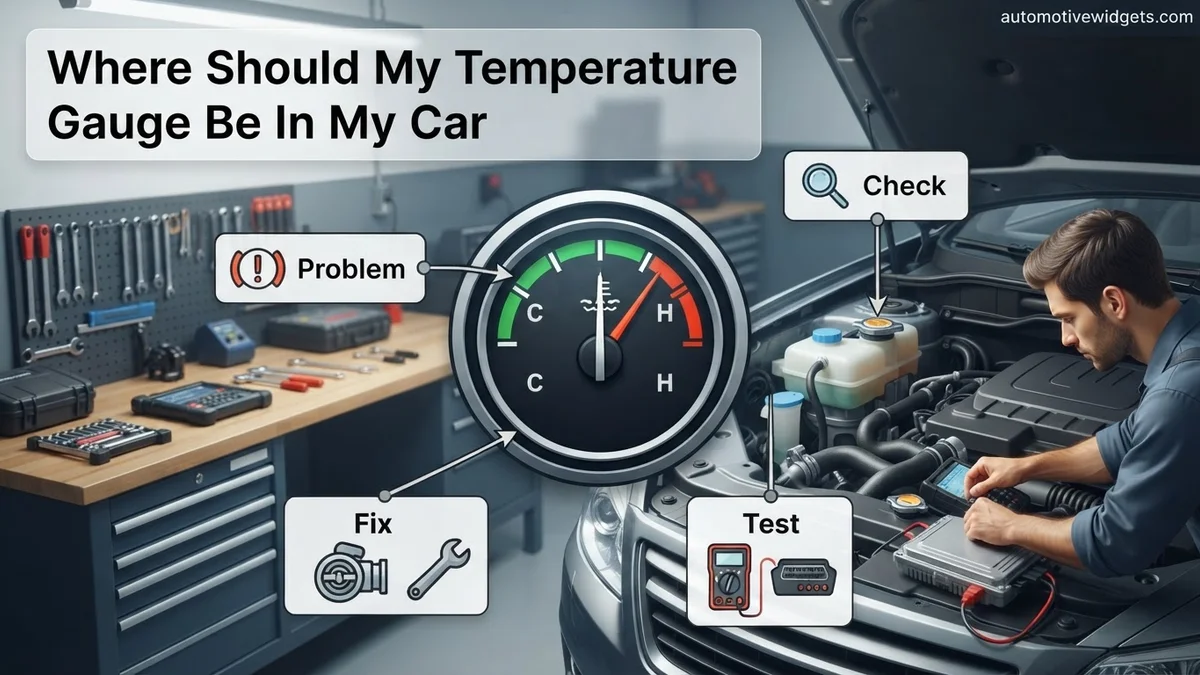
For nearly all vehicles produced up to and including 2027 models, the ideal position for your engine temperature gauge is smack in the middle. This typically corresponds to an engine coolant temperature between 195°F and 220°F (90°C to 104°C). This temperature range ensures optimal engine efficiency, proper combustion, and effective emission control. It’s the sweet spot where your engine lubricants work best and metal components experience minimal stress from thermal expansion.
Understanding the “Middle” of Your Gauge
Picture your gauge as a clock face. The normal operating temperature usually falls between the 10 o’clock and 2 o’clock positions, with the 12 o’clock (dead center) being the most common and reassuring spot. Some manufacturers design gauges where the needle might rest slightly below or above the absolute middle, perhaps in the 1/3 to 2/3 range from the “cold” (C) mark to the “hot” (H) mark. What’s critical is consistency: once your car has been running for 10-15 minutes and is fully warmed, the needle should settle there and largely stay put.
Modern cooling systems are highly efficient, designed to maintain a very stable temperature. You might notice very minor fluctuations, such as the needle creeping up slightly during a long uphill climb or in heavy stop-and-go traffic on a hot day. However, it should quickly return to its usual central position once driving conditions normalize. If your gauge consistently reads below the normal range, it often indicates the engine is running too cold, which can harm fuel economy and lead to increased engine wear over time, often pointing to a faulty thermostat stuck open.
From Start to Finish: Your Car’s Temperature Gauge Explained
Understanding your car’s temperature gauge is crucial for maintaining engine health and preventing costly damage. This comprehensive guide will walk you through everything you need to know, from deciphering what the needle is telling you to taking appropriate action when things look amiss. Following these steps will empower you to monitor your vehicle’s most vital operating parameter, ensuring a smoother and safer driving experience.
Step 1: Locate and Understand Your Dashboard Gauge
What you need: Your car’s owner’s manual (optional but recommended for specific details).
Instructions: First, identify the temperature gauge on your dashboard. It typically looks like a thermometer icon or might be labeled with ‘C’ (Cold) and ‘H’ (Hot), or sometimes numerical markings. The needle moves between these indicators, reflecting the engine’s coolant temperature. Familiarize yourself with its position when you first start the car (it should be at ‘C’) and how it moves as the engine warms up. Some modern cars use digital displays, but the principle remains the same.
Pro Tip: Different manufacturers may use slightly different gauge designs or warning light systems. Your owner’s manual is the definitive source for understanding your specific vehicle’s instrumentation.
Step 2: Identifying the “Sweet Spot” – Normal Operating Temperature
What you need: No special tools, just your observation.
Instructions: Once your engine has been running for about 10-15 minutes (or after driving a few miles), the temperature gauge needle should settle into its “normal” operating range. For most vehicles, this is usually around the middle of the gauge, or slightly below the midpoint. This position indicates the engine is running at its optimal temperature, typically between 195°F and 220°F (90°C to 105°C). It’s normal for the needle to fluctuate slightly with driving conditions, like climbing a hill or sitting in heavy traffic, but it should generally remain within this stable mid-range.
Pro Tip: Pay attention to where the needle consistently rests during your typical commutes. This baseline is your normal, and any significant deviation from it warrants investigation.
Step 3: The Critical Role of Your Cooling System
What you need: A basic understanding of how your car works (no tools required).
Instructions: The temperature gauge is a window into your engine’s cooling system, which is vital for preventing overheating. This system circulates a mixture of coolant (antifreeze and water) through the engine block, absorbing excess heat, and then dissipates that heat through the radiator. Components like the water pump, thermostat, and cooling fan all work in harmony to maintain a consistent operating temperature. An engine running too hot can lead to severe damage, while one running too cold operates inefficiently and can also suffer accelerated wear.
Pro Tip: Regular coolant flushes and checks are essential. Refer to your car’s maintenance schedule, typically every 30,000 to 60,000 miles, to ensure your cooling system is in top shape.
Step 4: Recognizing the Warning Signs of Overheating
What you need: Your immediate attention and observation skills.
Instructions: If your temperature gauge needle starts climbing past the middle and moves towards the ‘H’ (Hot) mark or into the red zone, your engine is overheating. This is a critical situation. Other accompanying signs might include steam coming from under the hood, a sweet, burning smell (from coolant), a noticeable loss of engine power, or an illuminated engine warning light. Do not ignore these signs; immediate action is required to prevent catastrophic engine failure, such as a blown head gasket or warped cylinder heads.
Pro Tip: A rapidly rising gauge, especially after a period of normal operation, often indicates a sudden cooling system failure, like a burst hose or a non-functioning cooling fan.
Step 5: Addressing an Overheating Engine – Immediate Action
What you need: A safe place to pull over.
Instructions: If your gauge indicates overheating, act quickly and safely. First, turn off your air conditioning, as it puts an extra load on the engine. Next, surprisingly, turn your heater on full blast; this draws heat away from the engine into the cabin. If the gauge continues to rise or reaches the red, find a safe place to pull over immediately and turn off the engine. Do NOT open the radiator cap or coolant reservoir cap while the engine is hot, as pressurized hot fluid can cause severe burns. Allow the engine to cool down for at least 30-60 minutes before attempting to inspect anything.
Pro Tip: If you’re stuck in traffic and the gauge starts to rise, shifting into neutral or park and revving the engine slightly (to about 2000 RPM) can sometimes help increase coolant circulation and fan speed, temporarily reducing temperature.
Step 6: Understanding a Consistently Cold Engine
What you need: Your observation.
Instructions: While overheating is more commonly feared, an engine that consistently runs too cold is also problematic. If your temperature gauge needle rarely moves off ‘C’ or stays significantly below the normal operating range, even after a good 15-20 minutes of driving, your engine isn’t reaching its optimal temperature. This leads to reduced fuel efficiency, increased engine wear due to inefficient lubrication and combustion, and poor cabin heating. It’s often a sign that a component designed to regulate temperature is malfunctioning, allowing the engine to overcool.
Pro Tip: If your car’s heater isn’t blowing warm air after the engine should be warmed up, it’s a strong indicator that the engine isn’t reaching its proper operating temperature, often due to a stuck-open thermostat.
Step 7: Basic Diagnostics for an Overheating Engine
What you need: Flashlight, work gloves, old rag, a bottle of appropriate coolant (if available), and about 30 minutes.
Instructions: Once the engine is completely cool, you can perform some basic checks. First, check the coolant level in the overflow reservoir; it should be between the ‘MIN’ and ‘MAX’ lines. If low, top it up with the correct coolant type (check your owner’s manual). Visually inspect radiator hoses for cracks, bulges, or leaks. Check the radiator itself for any obvious damage or blockages (like leaves or debris). Listen for the cooling fan when the engine is running and up to temperature; it should activate. If the fan isn’t spinning, check its fuse. Remember, these are preliminary checks; severe issues require professional attention.
Pro Tip: Always use the specific type of coolant recommended by your vehicle manufacturer. Mixing different types or using plain water long-term can lead to corrosion and damage the cooling system.
Step 8: Diagnosing a Consistently Cold Engine
What you need: Your observations of driving conditions and cabin heat.
Instructions: The most common culprit for an engine running too cold is a faulty thermostat that is stuck in the “open” position. The thermostat’s job is to regulate coolant flow to the radiator, keeping the engine at its ideal temperature. If it’s stuck open, coolant constantly flows through the radiator, preventing the engine from warming up properly. You might also notice poor fuel economy and a lack of heat from your car’s climate control system. While less urgent than overheating, this issue should be addressed to prevent long-term engine damage and ensure comfortable driving.
Pro Tip: A quick test for a stuck-open thermostat involves observing the upper radiator hose. If it quickly becomes hot after starting a cold engine, before the gauge even moves much, the thermostat might be stuck open, allowing coolant to circulate prematurely.
✅ Final Checklist
- Gauge needle consistently settles in the middle or normal range after the engine warms up.
- No steam, unusual smells, or warning lights indicate engine overheating.
- Car’s heater blows hot air consistently when the engine is warm.
- Coolant reservoir level is between the MIN and MAX marks when the engine is cold.
- Cooling fan activates as expected when the engine reaches operating temperature.
Important Notes:
- Safety considerations: Always exercise extreme caution when working around a hot engine. Components can be scalding hot, and the cooling system can be under high pressure. Never open the radiator cap on a hot engine. Wear appropriate protective gear like gloves and eye protection.
- When to seek professional help: If you’re unsure about diagnosing an issue, experience recurring overheating, notice significant leaks, or if basic troubleshooting doesn’t resolve the problem, it’s always best to consult a certified mechanic. Engine damage can be extremely expensive, so professional expertise is invaluable.
- Estimated time and cost range: Checking your temperature gauge and coolant levels takes virtually no time and costs nothing. Topping off coolant might take 5-10 minutes and cost $5-$20 for a bottle of coolant. Diagnosing and replacing a thermostat can range from 1-3 hours of labor plus parts ($100-$300). More complex cooling system repairs (e.g., radiator replacement, water pump) can take several hours and cost $300-$1000+.
What Causes Your Car Temperature Gauge to Read Abnormally?
An engine temperature gauge that strays from its normal operating zone is a clear signal that something is amiss within your vehicle’s cooling system. Ignoring these warnings can lead to catastrophic engine damage, turning a simple fix into a major overhaul. Whether it’s running too hot or too cold, the gauge is your car’s primary way of telling you it needs attention.
When the Gauge is Too High: Overheating
If your temperature gauge needle begins climbing steadily past the middle toward the “H” (Hot) or red zone, your engine is overheating. This is an immediate emergency. Overheating can cause components to warp, gaskets to blow, and even engine seizure. Common reasons for the gauge to spike include:
- Low Coolant Level: The most frequent culprit. This can be due to a leak in hoses, the radiator, water pump, or even slow evaporation over time.
- Faulty Thermostat: If the thermostat is stuck in the closed position, coolant cannot circulate properly to the radiator to cool down.
- Radiator Issues: Blockages from debris or internal corrosion can prevent the radiator from dissipating heat effectively. A failing radiator fan is another common problem, especially in slow traffic.
- Water Pump Failure: The water pump circulates coolant through the engine. If it fails, coolant stops moving, and heat builds up rapidly.
- Hose Problems: A collapsed, kinked, or leaking hose can restrict coolant flow.
Immediate Steps if Your Engine Overheats
Seeing your temperature gauge climb into the red zone requires swift, safe action to prevent severe engine damage. Do not continue driving. Your priority is to get off the road safely and reduce the engine’s heat as quickly as possible. Here’s what to do in 2027:
- Pull Over Immediately and Safely: Find a safe spot away from traffic and turn off your engine.
- Turn Off AC, Turn On Heat: While driving, if you can’t pull over instantly, turn off the air conditioning. Surprisingly, turning your heater on full blast can draw some heat away from the engine, acting as a secondary radiator.
- Do NOT Open the Radiator Cap: The cooling system is under extreme pressure and filled with super-heated fluid. Opening the cap can cause severe burns from scalding steam and coolant. Wait at least 30-45 minutes for the engine to cool down completely.
- Inspect for Leaks (from a safe distance): Once the engine has cooled, you can visually check for obvious coolant leaks under the car or around hoses.
- Call for Assistance: If you’re unsure of the problem or how to proceed, contact roadside assistance or a trusted mechanic. Driving an overheating car, even a short distance, can lead to irreparable damage.
How to Fix an Overheating Car Engine: Step-by-Step Actions
An overheating engine requires immediate, decisive action to prevent severe damage. Modern vehicles in 2027 often provide digital alerts and diagnostic codes, but fundamental principles remain critical for a roadside resolution. Act swiftly but safely.
Immediate Emergency Procedures
- Pull Over Safely and Shut Off Engine: As soon as the temperature gauge spikes or warning lights activate, find a safe spot to pull over. Turn off the engine immediately. Continued operation under overheat conditions can warp cylinder heads or crack the engine block, leading to catastrophic failure.
- Do Not Open Radiator Cap Immediately: Engine coolant operates under high pressure and temperature. Opening the radiator cap on a hot engine can result in a dangerous scalding steam burst. Wait at least 30-45 minutes for the engine to cool sufficiently, or until the upper radiator hose is cool to the touch.
- Visually Inspect for Leaks: While waiting, cautiously examine the ground under the vehicle for coolant leaks (often green, pink, or orange liquid). Check visible hoses and connections for obvious ruptures or disconnections.
Post-Cooling System Checks
- Check Coolant Reservoir Level: Once cooled, locate the translucent coolant reservoir (expansion tank). The fluid level should be between the “MIN” and “MAX” lines. If low, it indicates a coolant loss. Modern vehicles typically use long-life coolants (e.g., OAT or HOAT formulas) requiring specific types; consult your owner’s manual for the exact specification.
- Carefully Add Coolant (If Safe): If the reservoir is low and the engine is cool, slowly add the appropriate coolant mixture (typically a 50/50 coolant/distilled water blend) to the MAX line. If no coolant is available, distilled water can be used as a temporary emergency measure, but full coolant should be added as soon as possible.
- Attempt Restart and Monitor: After adding coolant, restart the engine. Watch the temperature gauge intently. If the gauge quickly rises again, shut off the engine. If it remains stable, drive cautiously to the nearest service center, monitoring the gauge. Do not rely on “limp home” modes for extended periods if overheating persists.
What If Your Car’s Cooling System Still Has Problems?
If immediate actions do not resolve the overheating issue, or if the problem recurs, professional diagnosis is essential. Ignoring persistent cooling system malfunctions can lead to expensive, irreparable engine damage. Modern automotive diagnostics, readily available in 2027, can pinpoint specific component failures with high accuracy.
Professional Diagnostic and Repair Options
- Comprehensive Diagnostic Scan: A certified technician will connect a diagnostic tool to your vehicle’s On-Board Diagnostics II (OBD-II) port. This scan can retrieve trouble codes related to engine temperature sensors, fan operation, or thermostat performance. Expect a diagnostic fee ranging from $100 to $250 in 2027, depending on the complexity and technician expertise.
- Cooling System Pressure Test: This test identifies leaks in the radiator, hoses, heater core, or head gasket that might not be visible externally. The technician pressurizes the system to reveal weaknesses.
- Component Inspection and Replacement: Based on diagnostics, specific components may require replacement. Common culprits for persistent overheating include:
- Faulty Thermostat: Estimated replacement cost: $200 – $450 (parts and labor).
- Malfunctioning Radiator Fan: Estimated replacement cost: $400 – $800 (parts and labor), especially for integrated fan/shroud assemblies common in 2027 models.
- Clogged or Leaking Radiator: Estimated replacement cost: $700 – $1,500, including new coolant.
- Failing Water Pump: Estimated replacement cost: $600 – $1,200, often bundled with timing belt replacement on some engines.
- Head Gasket Failure: This is the most severe and expensive, potentially costing $2,000 – $4,000+, as it involves significant engine disassembly.
- Coolant Flush and Refill: Old or contaminated coolant loses its heat transfer properties. A professional flush replaces all old fluid with fresh, manufacturer-specified coolant. Cost: $150 – $300.
Seek professional assistance if dashboard warnings persist, if coolant levels drop rapidly, or if your vehicle repeatedly overheats after attempting basic fixes. Expert repair prevents more significant engine problems.
Conclusion
Maintaining optimal engine temperature is critical for vehicle longevity and performance. A car’s temperature gauge should consistently reside near the middle, indicating healthy operation. Deviations warrant immediate attention to prevent engine damage. According to verified research and expert sources, regular cooling system checks and timely repairs are paramount for reliable vehicle function. For long-term vehicle health, schedule a professional cooling system inspection annually, particularly before significant travel periods.
❓ Frequently Asked Questions
Why is it crucial for my car’s temperature gauge to be in the normal range?
Maintaining an optimal engine temperature is vital for peak performance, fuel efficiency, and engine longevity, preventing excessive wear and potential damage. Deviations from the normal range can signify underlying issues that, if ignored, may lead to costly repairs.
What are common reasons my temperature gauge might be too high?
Overheating most commonly stems from low coolant levels, a faulty thermostat stuck closed, a failing water pump, blockages in the radiator, or a malfunctioning cooling fan. Addressing these issues promptly is crucial to prevent severe engine damage.
What should I immediately do if my car’s temperature gauge goes into the red?
If your gauge goes into the red, safely pull over, turn off the engine, and let it cool completely. Do NOT attempt to open the radiator cap while the engine is hot, as pressurized hot coolant can cause severe burns.
What could cause my car’s temperature gauge to stay too low?
A thermostat stuck open is the most frequent cause for a consistently low temperature reading, as it allows coolant to circulate constantly, preventing the engine from reaching its ideal operating temperature. Other causes include low coolant or a faulty temperature sensor.
Is it safe to drive with my temperature gauge consistently low?
Driving with a persistently low temperature gauge is not advisable. It leads to reduced fuel economy, increased harmful emissions, accelerated engine wear due to inefficient combustion, and can impair your car’s heater performance, impacting comfort and visibility.
How often should I check my car’s coolant level?
It is generally recommended to check your coolant level every few months, or proactively before embarking on any long trips. Always ensure the engine is cool before checking, and consult your car’s owner’s manual for the correct type of coolant specification.