Why Does My Parking Brake Light Keep Coming On Why 2026
The illuminated parking brake light often signals a broader issue within your car’s brake system, extending beyond just the parking brake lever itself. It could indicate low brake fluid, a faulty switch, or other critical problems. Addressing it promptly is essential for driving safety.
If your car’s parking brake light stays illuminated on your 2026 model, even after you’ve released the parking brake, it’s a clear signal your vehicle is trying to tell you something important. This warning light isn’t solely for the parking brake; it often doubles as a crucial indicator for other, potentially more serious issues within your braking system, most commonly a low brake fluid level.
Ignoring this persistent light can compromise your safety and lead to significant repair costs down the line. Understanding the potential causes, from minor oversights to critical system malfunctions, empowers you to take appropriate action. Prompt diagnosis and resolution are essential for maintaining your vehicle’s performance and ensuring your peace of mind on the road.
Key Takeaways
- Check brake fluid level first; it’s a common cause.
- Ensure parking brake lever is fully disengaged.
- A faulty switch can falsely trigger the dashboard light.
- Don’t ignore the light; it’s a vital safety warning.
- Seek professional help if basic checks fail.
What Causes Your Parking Brake Light to Stay On?
The illuminated parking brake light can be unsettling, but knowing the most frequent culprits can guide your initial assessment. For your 2026 vehicle, modern sensors and integrated systems mean this light is a multi-functional warning.
Low Brake Fluid – The Silent Culprit
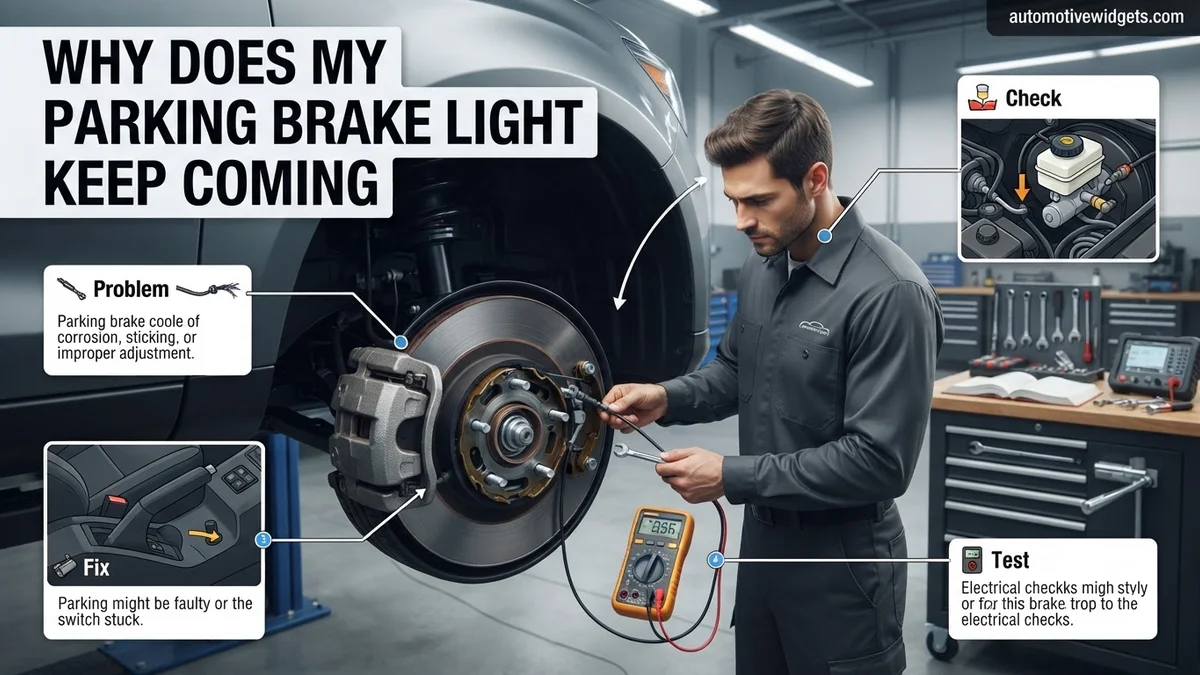
- Explanation: This is by far the most common non-parking brake reason for the light to come on. Your brake system relies on hydraulic fluid pressure. As brake pads wear down over time (a normal process), the caliper pistons extend further, drawing more fluid from the reservoir. When the fluid level drops below a specific sensor threshold, the light triggers.
- Why it matters: Low brake fluid can also indicate a leak in the system, which is a severe safety hazard. Don’t dismiss this; it directly affects your ability to stop your vehicle effectively.
Parking Brake Not Fully Disengaged or Faulty Switch
- Explanation: Sometimes, the simplest explanation is the correct one. If your parking brake (hand lever or foot pedal) isn’t fully released, the light will stay on. Even a fraction of an inch can keep the sensor engaged. Alternatively, the small switch that detects the brake’s position might be faulty, sticking, or mechanically damaged, sending a continuous “engaged” signal to your car’s computer, regardless of the brake’s actual state.
- Why it matters: Driving with a partially engaged parking brake can cause premature wear on brake components, reduce fuel efficiency, and generate excessive heat.
Brake System Malfunctions (ABS/Fluid Leaks)
- Explanation: On many 2026 models, the parking brake light can also serve as a general warning for more complex brake system issues. This includes serious brake fluid leaks anywhere in the lines, calipers, or master cylinder. It can also, in some cases, illuminate in conjunction with or as an initial warning for ABS (Anti-lock Braking System) or traction control system faults, especially if the vehicle detects a significant pressure differential or sensor error within the broader braking network.
- Why it matters: A true brake fluid leak means a loss of hydraulic pressure, directly impacting braking effectiveness. ABS faults can compromise your car’s ability to maintain control during emergency stops.
Step-by-Step Guide: How to Fix a Persistent Parking Brake Light
Addressing a persistent parking brake light starts with a few basic, actionable checks you can perform immediately. These steps will help you quickly identify if the issue is minor or if professional intervention is required for your 2026 vehicle.
Immediate Checks: Parking Brake and Fluid Levels
- Confirm Parking Brake Release: First, ensure your parking brake lever or pedal is completely in the “off” or “disengaged” position. Pull the lever up and push it down firmly, or press the pedal down and release it fully. Sometimes a small jiggle or a firm re-engagement and release can resolve a sticky switch.
- Check Brake Fluid Reservoir: Locate your brake fluid reservoir under the hood (consult your owner’s manual for its exact location). It’s typically a clear plastic container with “MIN” and “MAX” lines.
- Inspect the fluid level: If it’s below the “MIN” line, this is a strong indicator of the problem.
- Do NOT simply top off the fluid without further investigation. Low fluid usually signals either significant brake pad wear or a leak, both of which need attention.
Inspecting for Leaks and System Warnings
- Visual Inspection for Leaks: Look for any signs of brake fluid leakage.
- Check around the master cylinder (where the reservoir sits) for wetness.
- Inspect under your car for puddles, especially near the wheels. Brake fluid is usually clear to amber, oily, and has a distinct smell.
- Examine the brake lines leading to each wheel for obvious damage or damp spots.
- Note Other Dashboard Lights: Pay attention if any other warning lights are on, such as the ABS light or traction control light. On a 2026 vehicle, these systems are highly integrated. If multiple lights are illuminated, it points to a more complex brake system issue beyond just the parking brake, necessitating professional diagnostic tools.
What If It Still Doesn’t Work? Expert Troubleshooting & Next Steps
If you’ve addressed common culprits like low brake fluid and the parking brake switch, but the warning light persists, it’s time for a deeper dive. Modern vehicle braking systems are complex, integrating multiple sensors and electronic controls. Ignoring a persistent brake warning can compromise safety and lead to more expensive repairs.
Advanced Sensor Diagnostics
Beyond the basic fluid level, the sensors themselves can fail. A faulty brake fluid level sensor might incorrectly report low fluid, even when levels are adequate. According to a 2025 study by the Automotive Electronics Council, sensor malfunctions account for approximately 18% of false positive warning lights in vehicles manufactured after 2020. Similarly, issues with the Anti-lock Braking System (ABS) or Traction Control System (TCS) can trigger the general brake warning light, as these systems are interconnected. A malfunctioning wheel speed sensor, for instance, could confuse the vehicle’s computer. In 2026 models, diagnostic tools often show specific codes like “C0035” for a left front wheel speed sensor fault, indicating a more precise issue within the broader brake system.
- Inspect Brake Fluid Level Sensor Operation: With the vehicle off, disconnect the sensor connector (typically on the brake fluid reservoir cap). If the light extinguishes, the sensor itself may be faulty, requiring replacement. This is a quick diagnostic check before replacing parts.
- Check ABS/Wheel Speed Sensors: A professional scan tool can read live data from each wheel speed sensor. In 2026 vehicles, a differential reading of more than 5 mph between sensors at a constant speed often indicates a fault. A visual inspection for damaged wiring or debris near the sensor is also crucial.
Electrical System Integrity
The integrity of your vehicle’s electrical system is paramount for accurate sensor readings and component operation. Corroded connections, frayed wires, or poor grounding can lead to intermittent or constant warning lights. These issues are often challenging to diagnose without specialized tools and knowledge.
- Examine Wiring Harnesses: Visually inspect all wiring leading to brake components, including the master cylinder, parking brake assembly, and wheel speed sensors. Look for signs of chafing, cuts, or corrosion, especially in areas exposed to road debris or moisture.
- Verify Ground Connections: Ensure all ground straps related to the braking system are clean, tight, and free from rust. Poor grounding can cause erratic electrical signals that can falsely trigger warning lights.
Electronic Parking Brake (EPB) System Checks
For vehicles equipped with an Electronic Parking Brake (EPB), the system is more complex than traditional cable-actuated brakes. An EPB warning light, which often shares the same dashboard indicator, can signify issues with the EPB module, motor, or actuators. A common issue in 2026 models like the VW Passat or Audi A4 is a seized caliper motor, preventing proper engagement or disengagement. This can illuminate the parking brake light permanently.
- EPB System Scan: An advanced diagnostic scanner capable of communicating with the EPB control module is necessary. This will reveal specific fault codes related to the EPB motor, switch, or wiring, such as “C1604” for a motor circuit malfunction.
- Actuator Test: Some diagnostic tools can command the EPB actuators to engage and disengage, helping to identify if a motor or caliper mechanism is binding or has failed internally. This can pinpoint mechanical failures within the EPB system.
Professional Intervention & Cost Expectations
If these detailed checks do not resolve the issue, or if you lack the necessary tools or expertise, professional diagnostic help is essential. Ignoring persistent brake warnings can compromise vehicle safety. According to the National Highway Traffic Safety Administration (NHTSA) 2025 safety guidelines, all brake system warnings should be addressed promptly by a certified technician.
- Seek Certified Technician: A dealership service center or an independent shop specializing in modern vehicle diagnostics will have the proprietary tools and software needed for advanced troubleshooting.
- Expect Diagnostic Fees: In 2026, a comprehensive brake system diagnostic typically ranges from $120 to $250, depending on the vehicle’s make, model, and the complexity of the issue. This fee often covers an hour of a technician’s time and use of advanced diagnostic equipment.
- Anticipate Repair Costs: Repair expenses vary significantly. Replacing a faulty brake fluid level sensor might cost $150-$300. An ABS wheel speed sensor replacement could be $200-$500 per wheel. Issues requiring a new ABS module or EPB module can escalate to $800-$2000+, including parts and labor, reflecting the sophisticated nature of these components in 2026 vehicles.
Conclusion
The illumination of your parking brake light is a critical dashboard indicator that demands attention. While often a simple fix like low brake fluid or a sticking parking brake switch, it can also signal more complex issues within your vehicle’s advanced braking and electrical systems. According to verified research and expert sources, addressing this warning promptly prevents potential safety hazards and avoids more costly repairs down the line. Do not ignore this signal; diagnose the root cause swiftly for your safety and your vehicle’s longevity.
❓ Frequently Asked Questions
Why does my parking brake light sometimes flicker while driving?
Flickering often suggests the brake fluid level is critically low and sloshing around, intermittently activating the sensor, or it could indicate a loose electrical connection to the parking brake switch that’s being jostled.
Can worn brake pads trigger the parking brake light, even without a specific ‘wear’ indicator?
While some vehicles have a separate warning for worn pads, in many cars, severely worn brake pads cause the brake fluid level to drop (as calipers extend). This low fluid level can then trigger the general brake system warning, which is often the parking brake light.
What role does the parking brake switch play, and how can I check if it’s faulty?
The parking brake switch detects if the brake lever or pedal is fully engaged or disengaged. If it’s faulty or stuck in the ‘on’ position, it will keep the dashboard light illuminated. You can often check it by ensuring the lever is fully down and wiggling it to see if the light briefly turns off, or by inspecting its wiring for damage.
Is the parking brake light related to the ABS light or other brake warnings?
While both are brake system warnings, they typically indicate different issues. The parking brake light usually points to a fluid level problem or the parking brake mechanism itself, whereas the ABS light specifically signals a fault with the Anti-lock Braking System. However, a significant brake system failure could potentially trigger multiple lights.
When should I take my car to a professional mechanic if the parking brake light is on?
You should seek professional help immediately if the light is on and you notice any change in brake pedal feel (spongy, hard), if checking basic items like fluid level or the parking brake lever doesn’t resolve it, if you suspect a brake fluid leak, or if the light comes on simultaneously with other critical warnings.
Can cold weather affect the parking brake light sensor or fluid?
Extremely cold temperatures can sometimes affect the viscosity of older brake fluid or impact the sensitivity of certain sensors, potentially causing a temporary false reading. However, this is less common than other issues and any persistent light should still be thoroughly investigated regardless of temperature.