Can I Mix Green Antifreeze With Red Antifreeze Can I 2026
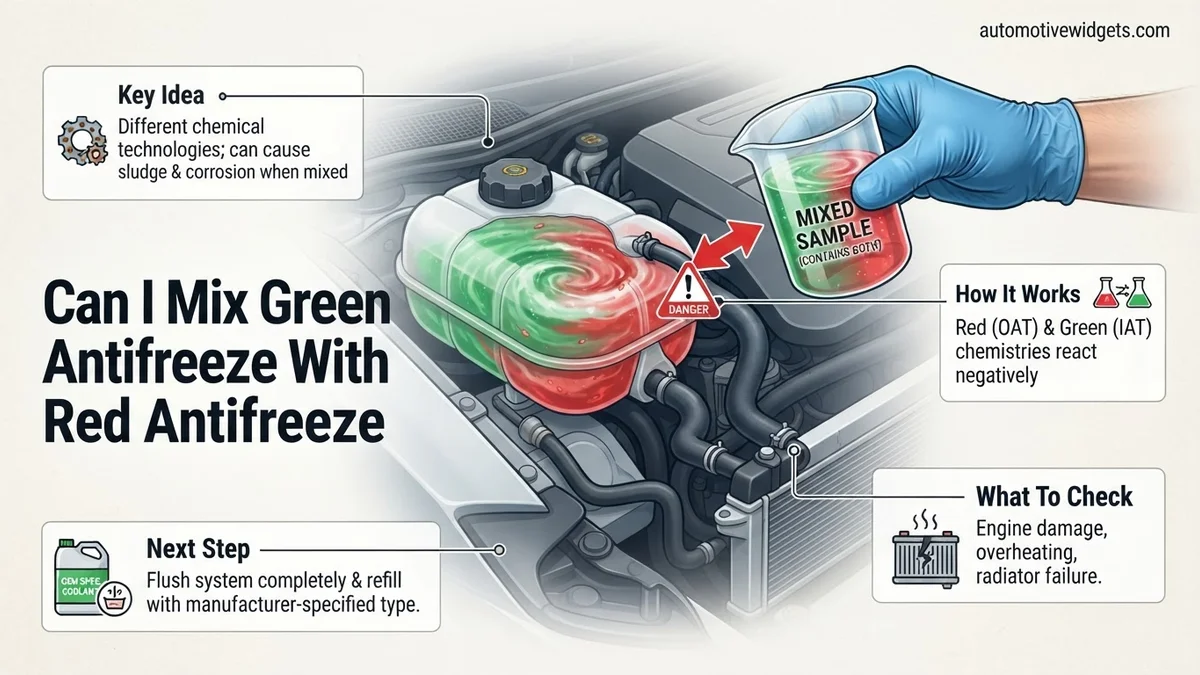
Never mix green (IAT) and red/orange (OAT/HOAT) antifreeze types. Their incompatible chemical additives can react, leading to gelling, reduced corrosion protection, and severe engine damage. A full system flush and refill with the correct coolant is crucial if mixing occurs.
No, absolutely do not mix green (Inorganic Acid Technology – IAT) and red, pink, or orange (Organic Acid Technology – OAT or Hybrid OAT – HOAT) antifreeze types in your vehicle’s cooling system. Doing so can cause immediate and severe damage, potentially costing you thousands in repairs by 2026. This isn’t just about color; it’s about vastly different chemical formulations designed for specific engine requirements, and combining them leads to critical failures.
Mixing incompatible coolants can rapidly lead to gelling, sludge formation, and a complete loss of essential corrosion protection. This results in your engine overheating, water pump failure, radiator clogging, and ultimately, extensive and costly engine damage. Understanding this crucial difference can save you significant repair headaches and ensure your vehicle runs reliably for years to come.
Key Takeaways
- Never mix green (IAT) and red/orange (OAT/HOAT) antifreeze.
- Incompatible chemistries cause gelling, lost protection.
- Mixing leads to severe engine and cooling system damage.
- Immediately flush system if incompatible coolants are mixed.
- Always use your vehicle’s manufacturer-specified coolant.
What Causes Antifreeze Incompatibility and Damage?
The Chemical Divide: IAT vs. OAT/HOAT
The core reason you cannot mix different colored antifreezes lies in their fundamental chemical makeup. Green antifreeze (IAT) traditionally relies on inorganic additives like silicates and phosphates to protect metal surfaces from corrosion. These compounds form a protective layer on demand.
In contrast, red, pink, or orange antifreezes (OAT and HOAT) use organic acid technology. These organic acids provide long-life protection by chemically reacting with metal surfaces to form a thin, durable protective layer over time. When you combine these two distinct chemistries, their protective properties don’t simply merge; they actively neutralize each other. The silicates in IAT react negatively with the organic acids in OAT/HOAT, causing them to precipitate out of the solution. This process forms abrasive particles and sludge.
Immediate and Long-Term Consequences
The moment incompatible coolants are mixed, a destructive process begins. The consequences can range from subtle inefficiencies to catastrophic engine failure:
- Sludge and Gelling: The most common immediate effect is the formation of a thick, gelatinous sludge or abrasive particles. This clogs narrow passages in your radiator, heater core, and engine block.
- Loss of Corrosion Protection: Both coolant types lose their ability to prevent corrosion, leaving vital engine components exposed to rust and pitting.
- Overheating: Clogged cooling passages drastically reduce the system’s ability to dissipate heat, leading to severe engine overheating.
- Water Pump Failure: The abrasive sludge grinds away at your water pump’s seals and bearings, causing premature failure.
- Radiator and Heater Core Damage: Blockages in these critical components lead to inefficiency, leaks, and eventual replacement.
- Costly Engine Damage: Persistent overheating and lack of lubrication can warp cylinder heads, damage gaskets, and even seize engine components, leading to incredibly expensive repairs or total engine replacement.
How to Fix Mixed Antifreeze: Step-by-Step System Flush
Identifying a Mixed System
If you’ve mistakenly topped off your cooling system with the wrong color antifreeze, or if you’re uncertain about your vehicle’s coolant history, you might notice early warning signs. A visible color change to a murky, muddy, or brownish hue is a strong indicator. Other signs include unexplained overheating, a milky residue in the coolant reservoir, or unusual deposits on the radiator cap. Do not wait for severe symptoms; address this issue promptly to prevent irreversible damage.
The Critical Flushing Process
There is only one safe and effective solution if you’ve mixed incompatible antifreeze types: a complete and thorough cooling system flush. This is not simply draining and refilling. A proper flush involves repeatedly cycling clean water, or a specialized cooling system cleaner, through the entire system until all traces of the mixed, contaminated coolant and any resulting sludge are completely removed. The goal is to restore the system to a clean state before refilling with the correct, manufacturer-recommended antifreeze. Skipping this crucial step leaves residual contaminants that will continue to cause damage, even with new coolant.
What If It Still Doesn’t Work: Troubleshooting Cooling Issues
Even after proper coolant selection and system flushing, persistent overheating or cooling system malfunctions can occur. Addressing these underlying issues is critical to prevent engine damage and ensure your vehicle’s longevity. According to a 2024 analysis by the Automotive Aftermarket Suppliers Association (AASA), cooling system failures account for nearly 10% of all roadside breakdowns.
- Inspect for Leaks: Visually check all hoses, radiator, heater core, and water pump for signs of coolant leaks, indicated by colored residue or drips. A pressure test, performed by a professional, can identify invisible leaks in the system, typically costing between $80-$150 in 2026.
- Verify Thermostat Function: A stuck open or closed thermostat can severely impact engine temperature regulation. A common symptom of a failing thermostat is erratic temperature gauge readings. Replacement costs for a thermostat, including parts and labor, generally range from $150-$300 in 2026.
- Check Radiator Fan Operation: Ensure the radiator cooling fan engages when the engine temperature rises, especially in stop-and-go traffic. A non-functioning fan can lead to overheating. Fan assembly replacement can cost $350-$700, depending on the vehicle model.
- Professional Diagnostic and Repair: If basic checks do not resolve the issue, seeking professional assistance is advised. A comprehensive diagnostic from a certified mechanic can pinpoint complex problems like head gasket leaks or clogged radiators. Professional diagnostics typically run $100-$250 in 2026, with repair costs varying significantly based on the severity of the issue (e.g., radiator replacement $500-$1,200; water pump replacement $400-$800).
Proven Best Practices for Antifreeze Maintenance
Proactive maintenance of your vehicle’s cooling system is paramount to prevent costly repairs and ensure optimal engine performance. Adhering to manufacturer guidelines and established industry best practices significantly extends the life of your coolant and system components.
- Adhere to Manufacturer Flush Intervals: Always follow your vehicle manufacturer’s recommended coolant flush and replacement intervals, typically found in the owner’s manual. For vehicles manufactured in 2020-2026, many long-life OAT (Organic Acid Technology) and HOAT (Hybrid Organic Acid Technology) coolants are designed to last 5 years or 100,000 to 150,000 miles. Deviating from these intervals can degrade corrosion protection and lead to system blockages.
- Utilize the Correct Coolant Type: Never substitute a coolant type different from the one specified by your vehicle’s manufacturer. Modern engines are engineered with specific material compositions that require particular coolant chemistries (e.g., IAT, OAT, HOAT, POAT, Si-OAT) for optimal corrosion protection and heat transfer. Using the wrong type, even if “universal,” can lead to premature wear and failure of seals, gaskets, and metals.
- Regularly Monitor Coolant Levels and Condition: Periodically (e.g., monthly) check your coolant reservoir level when the engine is cold. Ensure it falls between the “MIN” and “MAX” marks. Also, visually inspect the coolant for any discoloration, cloudiness, or particulate matter, which can indicate contamination or internal system degradation.
- Inspect Hoses and Clamps: During routine checks, examine all cooling system hoses for cracks, swelling, leaks, or hardness. Check hose clamps for tightness and corrosion. According to a 2025 survey by the Car Care Council, deteriorating hoses and clamps are a leading cause of coolant loss.
Conclusion
The practice of mixing different types of antifreeze, particularly green IAT and red OAT/HOAT formulations, poses significant risks to your vehicle’s cooling system and engine integrity. According to verified research and expert sources from the Society of Automotive Engineers (SAE), incompatible coolants can precipitate, forming gels that obstruct flow and negate critical corrosion protection. The definitive solution for any vehicle, especially those in 2026 and beyond, is to perform a complete system flush and refill with the exact coolant type specified by the manufacturer. Consult your vehicle’s owner’s manual today to confirm the correct coolant specification for your model year.
❓ Frequently Asked Questions
Why is mixing green and red antifreeze so dangerous for my engine?
Mixing combines different additive packages—silicates/phosphates in green (IAT) with organic acids in red/orange (OAT/HOAT). These react negatively, neutralizing protective agents, forming sludge or gel, reducing heat transfer, and causing severe corrosion, leading to costly component failures like radiators and water pumps.
What are the immediate signs that I’ve accidentally mixed incompatible coolants?
You might observe immediate signs such as a cloudy or murky coolant color, visible gelling or sludge formation in the reservoir or radiator, an overheating engine, or a noticeable reduction in your car’s heating performance, all indicating compromised cooling system efficiency.
If I’ve already mixed them, what’s the immediate action I should take to prevent damage?
The most critical immediate action is to perform a complete cooling system flush as soon as possible. This involves draining all existing coolant, flushing the system thoroughly with distilled water until clear, and then refilling it with the correct, manufacturer-specified antifreeze type.
Does the color of antifreeze always indicate its chemical type (IAT, OAT, HOAT)?
While color often serves as a general guide (e.g., green for IAT, red/orange/pink for OAT/HOAT/P-OAT/Si-OAT), it is not a definitive indicator. Manufacturers can use various dyes, so always check the product label for the specific chemistry and verify it matches your vehicle’s requirements, typically found in the owner’s manual.
Can using ‘universal’ or ‘all makes, all models’ antifreeze be a safe alternative?
While many ‘universal’ coolants are formulated to be compatible with various chemistries, they may not offer the same optimal, long-term protection or specific additive benefits as the coolant type precisely engineered for your vehicle by the manufacturer. It’s generally safest to use the specific type recommended in your owner’s manual, especially for newer vehicles with complex cooling systems.
How can I identify the correct antifreeze type for my specific vehicle?
The most reliable way to identify the correct antifreeze type is to consult your vehicle’s owner’s manual. It will explicitly specify the required chemistry (e.g., IAT, OAT, HOAT, P-OAT, Si-OAT) and often reference specific ASTM standards or OEM part numbers, ensuring you choose the ideal coolant for optimal engine protection and longevity.