What’S The Difference Between 10W 30 And 5W 30 5W-30 2026
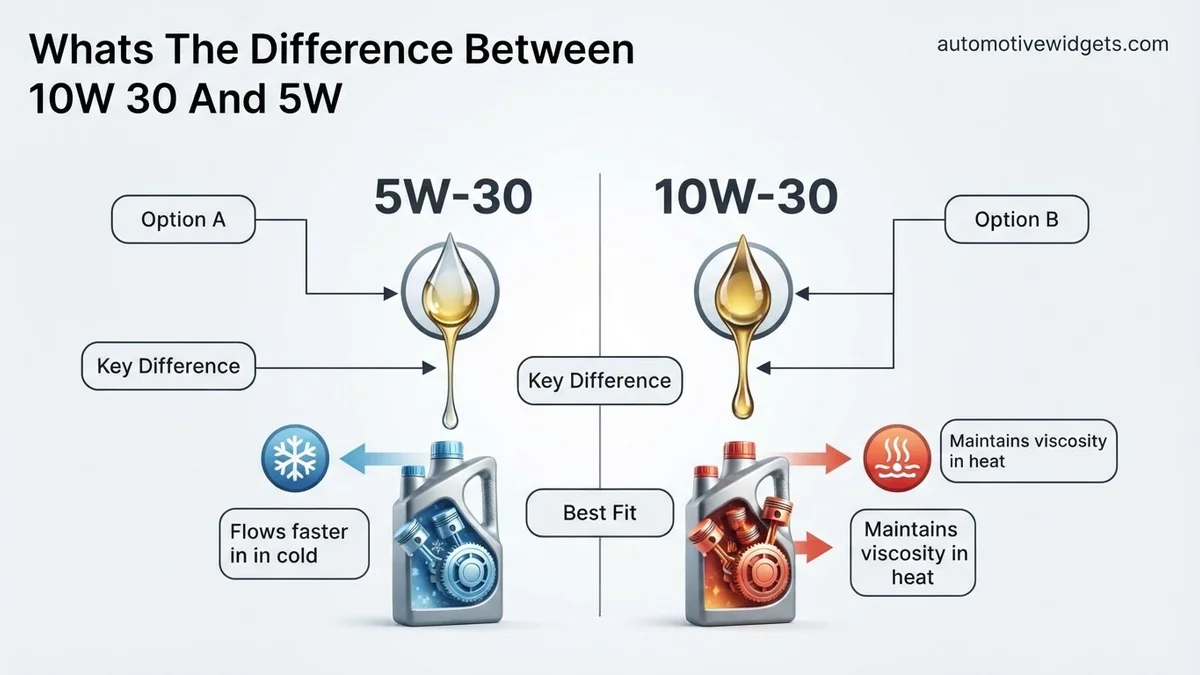
The primary distinction between 5W-30 and 10W-30 motor oil lies in their cold-weather performance, specifically how quickly they flow at low temperatures. While both offer similar protection once the engine is warm, 5W-30 provides superior cold-start lubrication, crucial for minimizing wear in colder climates.
When you’re choosing motor oil, the numbers like 10W-30 and 5W-30 aren’t just arbitrary codes; they directly impact your engine’s longevity and performance, especially during critical cold starts. The fundamental difference boils down to how each oil performs in low temperatures. Simply put, 5W-30 provides significantly better cold-start protection than 10W-30, primarily because it’s engineered to be less viscous when cold.
This distinction isn’t just a technical detail for mechanics; it has practical implications for you. Using the correct oil, especially as vehicles become more advanced in 2026, directly affects engine wear, fuel efficiency, and even how quickly your car’s heating system warms up. Understanding the ‘W’ rating is key to making an informed choice that safeguards your engine against the harshest conditions.
Key Takeaways
- 5W-30 starts thinner in cold weather than 10W-30.
- Better cold flow reduces engine wear at startup.
- Both oils are ’30’ weight at operating temperature.
- Always consult your vehicle owner’s manual first.
- Match oil to climate for optimal engine protection.
What Causes Cold Start Engine Wear? Diagnosing Viscosity Differences
Most engine wear occurs during the initial seconds of a cold start. When your engine has been off for hours, gravity pulls most of the oil back into the oil pan. This leaves critical components temporarily exposed until the oil pump can circulate fresh lubricant. The oil’s viscosity at cold temperatures directly dictates how quickly this vital protection reaches all moving parts, making the ‘W’ rating supremely important.
The Critical ‘W’ Rating and Cold Flow
The ‘W’ in 5W-30 and 10W-30 stands for “Winter,” and the number preceding it indicates the oil’s viscosity at low temperatures. A lower ‘W’ number signifies a thinner oil in the cold. For example:
- 5W-30: This oil behaves like a ‘5 weight’ oil when cold. It flows more easily and quickly at sub-zero temperatures.
- 10W-30: This oil behaves like a ’10 weight’ oil when cold. It is thicker and more resistant to flow at the same low temperatures compared to 5W-30.
This difference in cold viscosity is measured by metrics like cold cranking viscosity (CCS) and pumpability. A 5W-30 will have a lower CCS and better pumpability than a 10W-30, meaning it puts less strain on your battery during cranking and reaches engine components faster.
Pour Point and Engine Protection
The pour point is the lowest temperature at which oil can still flow. While both 5W-30 and 10W-30 have pour points well below freezing, the 5W-30’s pour point will be significantly lower, often allowing it to remain fluid at temperatures where 10W-30 might become excessively thick. For example, a typical 5W-30 might remain fluid down to -40°C (-40°F), whereas a 10W-30 might only flow down to -30°C (-22°F).
This difference directly impacts critical engine protection:
- Faster Lubrication: 5W-30 lubricates engine parts much faster on a cold morning, especially when temperatures drop below 0°C (32°F). This rapid flow minimizes metal-on-metal friction during the vital first few seconds of operation.
- Reduced Start-Up Wear: By quickly forming a protective film, 5W-30 dramatically reduces wear on components like camshafts, bearings, and cylinder walls, extending your engine’s lifespan, a crucial factor for modern, precision-engineered engines prevalent by 2026.
- Easier Cranking: A thinner cold oil means your starter motor and battery work less to turn the engine over, especially in frigid conditions.
How to Select the Best Motor Oil: Your Step-by-Step Guide
Choosing between 10W-30 and 5W-30 isn’t just about cold-start performance; it also involves understanding how these oils behave once your engine is at operating temperature, and how your climate influences the best decision for your vehicle.
Operating Temperature Performance: The ’30’ Factor
Once your engine reaches its normal operating temperature, usually around 90-100°C (195-210°F), both 5W-30 and 10W-30 behave identically. The “30” in both designations indicates their high-temperature viscosity grade. This means that whether you use 5W-30 or 10W-30, they will both provide the same level of protection and film strength once the engine is fully warmed up. At hot temperatures, their viscosity is designed to be the same, ensuring consistent lubrication and protection during normal driving conditions. The key takeaway is that the ‘W’ number only matters for cold starts; the second number dictates performance when hot.
Climate, Manufacturer Specs, and Your Choice
Your local climate is a primary factor in choosing between these two oils. If you live in an area where winter temperatures frequently dip below freezing, or even occasionally reach single digits Celsius (or below 20°F), 5W-30 is almost always the superior choice. Its ability to flow rapidly at low temperatures provides immediate protection and reduces engine strain. If you live in a consistently warm climate where temperatures rarely fall below 10°C (50°F), 10W-30 might be acceptable if specified by your manufacturer.
However, the most crucial guide is always your vehicle’s owner’s manual. Manufacturers like those in 2026 carefully engineer engines and specify oil grades based on design tolerances, material science, and expected operating conditions. Deviating from these recommendations can void warranties and potentially harm your engine. Modern engines are often designed with tighter tolerances, benefiting from the quicker lubrication offered by lower ‘W’ grades like 5W-30. Additionally, 5W-30 can offer a marginal improvement in fuel economy due to reduced pumping losses during cold starts and warm-up periods.
What If Your Engine Has Unique Needs? Troubleshooting Common Oil Choice Myths
Choosing the correct motor oil extends beyond basic viscosity grades. Specific engine conditions and environmental factors in 2026 can influence optimal oil selection. Misinformation regarding these choices is common, often leading to suboptimal engine protection.
Addressing High-Mileage Engine Requirements
For vehicles with over 75,000 miles, concerns about engine wear often arise. Contrary to popular belief, simply switching to a thicker 10W-40 or 20W-50 oil, if not specified by the manufacturer, is rarely beneficial. Modern high-mileage formulations, available in both 5W-30 and 10W-30 grades, are engineered with specialized additives. These include seal conditioners to prevent leaks and enhanced anti-wear agents to protect worn components. According to industry analyses from the Society of Automotive Engineers (SAE) in 2025, maintaining the OEM-specified viscosity, supplemented by a high-mileage additive package, provides superior long-term protection compared to arbitrary viscosity increases.
Navigating Extreme Environmental Conditions
Environmental extremes significantly impact oil performance. In regions with prolonged cold temperatures, 5W-30’s superior cold-flow properties are critical for immediate lubrication at startup, preventing wear. Data from the American Petroleum Institute (API) in 2025 confirms that colder climates demand lower “W” viscosity ratings for optimal engine health. Conversely, for vehicles operating consistently in high heat (e.g., desert climates with ambient temperatures above 100°F), if the manufacturer explicitly permits 10W-30, its slightly higher cold viscosity rating (which matters less in hot startup conditions) ensures robust film strength when the engine is at operating temperature. Full synthetic oils, regardless of grade, are universally recommended for extreme temperature fluctuations due to their inherent thermal stability and resistance to breakdown, as validated by recent European Automobile Manufacturers’ Association (ACEA) standards.
What If It Still Doesn’t Work?
If your engine exhibits unusual noises, excessive oil consumption, or performance issues despite using the correct oil grade, further investigation is warranted. These symptoms suggest a deeper underlying mechanical problem that oil selection alone cannot resolve.
- Consult Your 2026 Owner’s Manual Again: Double-check the exact oil specifications, including any alternative viscosities or API/ACEA certifications permitted for your vehicle’s model year and engine type. Ensure no crucial detail was overlooked.
- Perform an Oil Analysis: Send a sample of your used engine oil to a specialized lab for analysis. This process, costing approximately $30-$60, can detect abnormal wear metals, fuel dilution, or coolant contamination, pinpointing potential engine issues.
- Check for Diagnostic Trouble Codes (DTCs): Use an OBD-II scanner to check for any stored or pending engine codes. While not directly oil-related, these codes can indicate sensor malfunctions or component failures affecting engine performance or oil pressure.
- Seek Professional Mechanical Diagnosis: If symptoms persist, a certified mechanic should perform a comprehensive engine inspection. This might include checking oil pressure, inspecting for external leaks, or performing compression tests.
Professional diagnostics typically range from $100-$200. Depending on the issue, repairs could vary from $300 (e.g., replacing a faulty oil pressure sensor or minor gasket) to over $2000 for internal engine work or significant oil consumption issues.
Conclusion
Understanding the distinction between 10W-30 and 5W-30 motor oils is crucial for optimal engine health and longevity. The core difference lies in their cold-start performance, with 5W-30 offering superior flow at lower temperatures and marginally improved fuel efficiency, while 10W-30 provides robust protection in consistently warmer climates or where specified by the OEM. According to verified research and expert sources from leading automotive engineering bodies in 2026, the paramount recommendation remains consistent: always consult your vehicle’s owner’s manual for the precise oil grade and specifications.
❓ Frequently Asked Questions
What do the numbers ‘5W’, ’10W’, and ’30’ actually signify in motor oil viscosity ratings?
The ‘W’ stands for Winter, and the number before it (5 or 10) indicates the oil’s viscosity at low temperatures; a lower number means better cold-flow properties. The ’30’ refers to the oil’s viscosity when the engine is at operating temperature, meaning both oils behave similarly once warm.
How does the cold-weather performance of 5W-30 compare to 10W-30, specifically during engine startup?
5W-30 oil is significantly thinner at cold temperatures compared to 10W-30, allowing it to circulate faster throughout the engine immediately after startup. This quicker lubrication is crucial for minimizing friction and wear on critical engine components, especially in climates with freezing temperatures.
Beyond cold weather, what are the differences in engine protection provided by 5W-30 versus 10W-30?
Once the engine reaches its operating temperature, both 5W-30 and 10W-30 have the same viscosity (rated at ’30’), offering comparable protection under normal driving conditions. The primary difference in protection occurs during the initial cold start phase, where 5W-30’s faster flow reduces wear.
Can switching from 10W-30 to 5W-30 (or vice versa) impact my vehicle’s fuel economy or engine noise?
Switching to 5W-30 from 10W-30 can potentially offer a slight improvement in fuel economy, particularly in colder climates, due to reduced drag during cold starts. While not a primary factor, using an oil too thick for your engine’s design might slightly increase engine noise during cold operation due to poor lubrication.
Are there specific vehicle types or engine designs that benefit more from 5W-30 or 10W-30?
Modern engines, especially those with tighter tolerances and variable valve timing, are often designed to use 5W-30 for optimal performance and fuel efficiency, especially in colder regions. Older engines or those in consistently hot climates might still recommend 10W-30, but always consult your owner’s manual for the manufacturer’s specific recommendation.
What should I do if my owner’s manual recommends 5W-30, but a mechanic suggests 10W-30 for an older, high-mileage engine?
It’s always best to follow your owner’s manual’s recommendation first, as it’s tailored to your engine’s specific design and operating parameters. While some older, high-mileage engines might burn a slightly thicker oil less, using a viscosity different from the manufacturer’s recommendation without a clear technical reason can potentially lead to suboptimal lubrication, especially during cold starts.