What is the Snow Button on a Toyota Highlander 2026
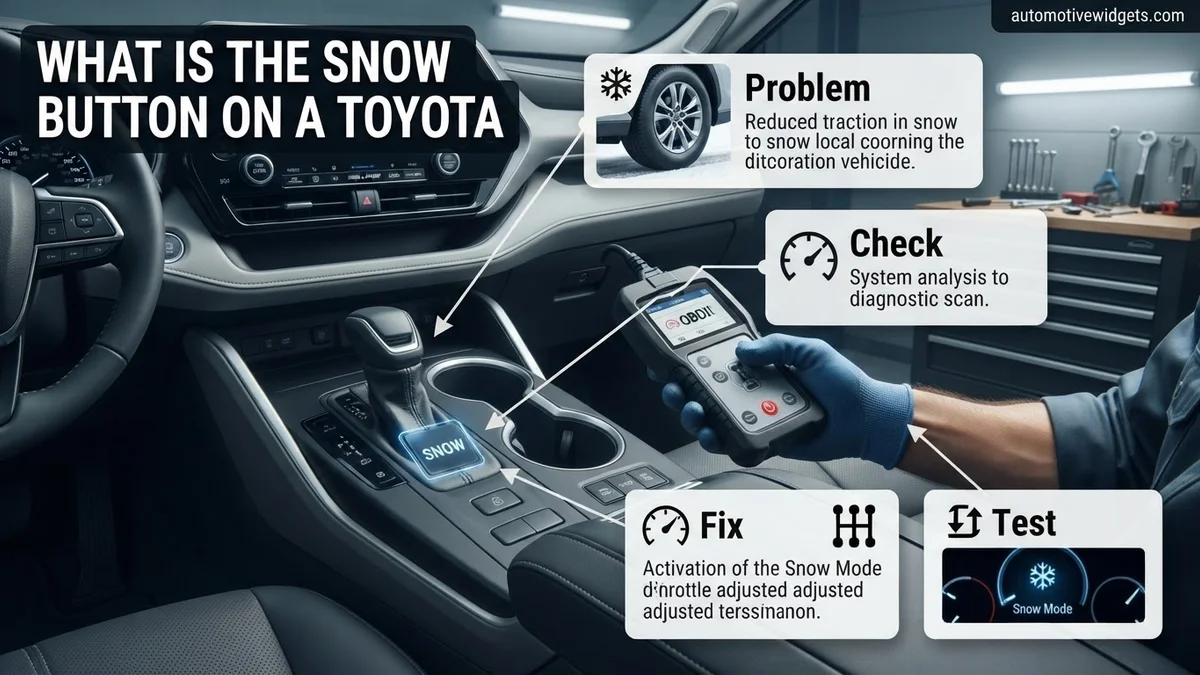
The ‘snow button’ on a Toyota Highlander is designed to enhance traction and minimize wheel spin on slippery surfaces. It achieves this by modifying throttle response and transmission shift points, often starting in a higher gear to deliver smoother, controlled power. This helps prevent loss of grip in snow, ice, or mud.
The “Snow button” on your 2026 Toyota Highlander is a critical feature designed to give you enhanced control and traction when driving in slippery conditions like snow, ice, or mud. Its primary function is to prevent wheel spin, allowing for smoother acceleration and maintaining grip, which can make a significant difference in navigating challenging winter roads or slick surfaces. Knowing exactly what this button does and how to use it safely empowers you to drive your Highlander with greater confidence when adverse weather strikes.
This specialized mode modifies your Highlander’s performance to optimize for low-friction environments, ensuring your vehicle responds predictably when you need stability most. It’s a key tool in your Highlander’s arsenal for staying safe and maintaining forward momentum without losing control.
Key Takeaways
- Snow mode boosts traction on slick roads.
- It reduces engine power for smoother starts.
- Use it only in low-traction conditions.
- Disengage on dry pavement for normal drive.
- It complements AWD, not a replacement.
What is the Toyota Highlander Snow Button For?
The “Snow button,” officially known as Snow Mode, on your 2026 Toyota Highlander is engineered specifically for improving your vehicle’s capability on low-traction surfaces. Think of it as a specialized driving setting that helps your Highlander manage power delivery more effectively when the road beneath you offers minimal grip. This feature is not just for deep snow; it’s equally beneficial on ice, slush, or even muddy tracks where tires struggle to find purchase. Its activation is designed to provide you with a greater sense of control and stability in conditions that would otherwise feel precarious.
Purpose: Enhancing Low-Traction Control
Your Highlander’s Snow Mode is fundamentally about preventing your wheels from spinning freely. When a wheel spins excessively on a slippery surface, it loses all effective traction, and your vehicle struggles to move forward or maintain its intended direction. By engaging Snow Mode, you’re instructing your Highlander’s sophisticated electronic systems to prioritize gentle, incredibly controlled power delivery over raw, immediate acceleration. This meticulous approach is exactly what you need to avoid getting stuck, experiencing uncontrolled skids, or losing command of your vehicle in adverse conditions. It essentially “softens” the vehicle’s responses to your inputs, making it more forgiving on slick roads.
When to Activate Snow Mode
You should activate Snow Mode whenever you anticipate or encounter slippery conditions, particularly when:
- Starting from a complete stop on snow-covered roads, icy patches, or even wet grass.
- Driving at low to moderate speeds through slush, light to moderate snow, or over black ice.
- Navigating gentle uphill sections where drive wheels might lose grip easily under normal acceleration.
- You notice the vehicle’s tires intermittently losing traction or slipping, indicating a need for enhanced stability.
Remember, Snow Mode is purpose-built for these challenging, low-traction scenarios, providing a deliberate, measured response from your 2026 Highlander. It’s an active choice you make to adapt your vehicle’s behavior to the environment.
From Start to Finish: The Toyota Highlander Snow Mode Explained
Welcome, Toyota Highlander owner! Navigating winter roads or slippery conditions can be daunting, but your vehicle comes equipped with a clever assist feature designed to enhance traction and control: the Snow Mode button. This comprehensive guide will meticulously walk you through understanding, locating, activating, and effectively utilizing this vital function. By following these detailed steps, you’ll gain the confidence to handle low-traction environments like a seasoned pro, ensuring a safer and more stable journey for you and your passengers.
Step 1: Identifying Your Highlander’s Snow Mode Button
What you need: Your Toyota Highlander (any generation from 2008 onwards typically features this mode, though exact placement and nomenclature may vary slightly).
Instructions: The “Snow Mode” button, often labeled with a snowflake icon or the word “SNOW,” is commonly found on the center console near the gear shifter or on the dashboard to the left of the steering wheel. For 2nd generation Highlanders (2008-2013), it’s frequently located near the VSC OFF button. On 3rd generation (2014-2019) and 4th generation (2020+) models, it might be part of a multi-terrain select system or a dedicated button alongside other driving modes. Take a moment to visually scan these areas in your vehicle.
Pro Tip: If you’re having trouble locating it, consult your Highlander’s owner’s manual. It will provide a precise diagram and description for your specific model year and trim level, which can save you significant time and confusion.
Step 2: Decoding the “Snow” Button’s Functionality
What you need: A basic understanding of vehicle traction and power delivery.
Instructions: The Snow Mode isn’t magic, but it’s an intelligent system designed to prevent wheel slip on low-friction surfaces like snow, ice, or loose gravel. When activated, it primarily modifies two key aspects of your Highlander’s performance: 1) Throttle Response: The accelerator pedal becomes less sensitive, reducing the engine’s power output during initial acceleration to minimize sudden torque that can break traction. 2) Transmission Shift Points: The transmission may start in a higher gear (e.g., 2nd gear instead of 1st) and hold gears longer to deliver power more smoothly and prevent aggressive downshifts that could cause wheels to spin. It also works in conjunction with the Traction Control (TRAC) and Vehicle Stability Control (VSC) systems to manage wheel spin more judiciously.
Pro Tip: Understand that Snow Mode primarily helps with starting and maintaining momentum in slippery conditions by minimizing wheel spin. It is not a substitute for four-wheel drive (4WD) or all-wheel drive (AWD) capabilities, but rather an enhancement to them.
Step 3: Optimal Conditions for Engaging Snow Mode
What you need: Situational awareness of current road conditions.
Instructions: Snow Mode is best utilized when you anticipate or encounter low-traction situations. This includes starting from a stop on a snowy or icy road, driving on packed snow, or navigating slight inclines where wheel spin is likely. It’s particularly effective for preventing the tires from digging into loose snow or spinning uncontrollably on a patch of ice when you gently accelerate. Avoid using it in clear, dry conditions as it will negatively impact acceleration and fuel efficiency. It’s designed for adverse conditions, not as a general “safe driving” mode.
Pro Tip: Engage Snow Mode proactively as soon as you encounter slippery conditions, rather than waiting until your wheels are already spinning. This allows the system to manage power delivery from the outset, providing a smoother and more controlled start.
Step 4: Activating Snow Mode Correctly
What you need: Your Toyota Highlander in an appropriate driving environment (slippery conditions).
Instructions: To engage Snow Mode, simply press the designated button once. You should observe an indicator light illuminating on your instrument cluster, usually a snowflake symbol or the word “SNOW,” confirming that the mode is active. It is generally safe to activate Snow Mode while the vehicle is stationary (in Park or Drive) or moving at a slow speed, typically below 25-30 mph. There’s no need to stop completely, but activating it before attempting to accelerate on a slick surface is ideal for maximum benefit.
Pro Tip: Ensure you are pressing the correct button. Some Highlanders have multiple mode buttons (e.g., ECO mode, Sport mode, 4WD Lock). The Snow Mode button is specifically tailored for low-traction scenarios, distinct from these other functions.
Step 5: Driving Behavior with Snow Mode Engaged
What you need: An understanding of how your vehicle will respond differently.
Instructions: With Snow Mode active, you will immediately notice a change in your Highlander’s driving dynamics. Acceleration will feel noticeably gentler and less responsive, even if you press the accelerator pedal with moderate force. This is by design, as the system is actively limiting power to prevent wheel spin. The transmission may feel “sluggish” or hold gears longer than usual. Maintain smooth and gradual inputs for steering, braking, and acceleration. Avoid abrupt movements, as Snow Mode assists but does not override the laws of physics. Focus on gentle, controlled driving.
Pro Tip: While Snow Mode greatly assists with traction, it does not reduce your stopping distance. Always maintain increased following distances on slippery roads and brake gently to avoid skidding, even with the system active.
Step 6: Deactivating Snow Mode When No Longer Needed
What you need: Safe driving conditions returning (clear roads, dry pavement).
Instructions: Once you’ve transitioned to clear, dry pavement and the slippery conditions are no longer present, it’s important to deactivate Snow Mode. To do this, simply press the “Snow Mode” button again. The indicator light on your instrument cluster should turn off, signifying that the system has returned to its normal operating parameters. Some Highlander models may automatically deactivate Snow Mode if a certain speed threshold (e.g., above 30 mph) is sustained for a period, or when the ignition is cycled off. However, manually deactivating it ensures optimal vehicle performance and fuel efficiency.
Pro Tip: Driving with Snow Mode engaged on dry pavement offers no benefit and can make your Highlander feel less responsive and potentially consume slightly more fuel due to altered transmission logic. Always turn it off when conditions improve.
Step 7: Understanding Snow Mode’s Limitations and Best Practices
What you need: Realistic expectations for vehicle performance in extreme conditions.
Instructions: While Snow Mode is an excellent aid, it’s crucial to understand its limitations. It cannot create traction where none exists (e.g., on black ice with worn tires). It is not a substitute for proper winter tires, which offer significantly superior grip in cold temperatures and on snow/ice. Additionally, it won’t help you navigate deep snowdrifts or severe off-road conditions where ground clearance or aggressive tire treads are paramount. Always combine the use of Snow Mode with cautious driving habits, adequate tire pressure, and appropriate tires for the season to maximize safety and control.
Pro Tip: For truly challenging winter conditions, consider investing in dedicated winter tires. They are designed with specialized rubber compounds and tread patterns that remain flexible in cold temperatures and provide enhanced grip, complementing your Highlander’s Snow Mode for unparalleled winter performance.
✅ Final Checklist
-
Snow mode indicator (snowflake or “SNOW” light) illuminated on the dashboard when active?
-
Vehicle acceleration felt noticeably smoother and less aggressive upon activation?
-
Better traction observed when starting or driving on slippery surfaces?
-
Snow mode successfully deactivated (indicator light off) when clear road conditions resumed?
-
Owner’s manual consulted for any model-specific nuances regarding Snow Mode operation?
Important Notes:
-
Safety Considerations: Always prioritize safe driving. Snow Mode is an assistance feature, not a guarantee against accidents. Drive slowly, maintain ample following distance, and avoid sudden braking or steering inputs in slippery conditions.
-
When to Seek Professional Help: If you find that your vehicle consistently struggles with traction despite using Snow Mode, or if the Snow Mode indicator light flashes abnormally or remains on when it shouldn’t, it could indicate an issue with your traction control system. Consult a certified Toyota mechanic for diagnosis.
-
Estimated Time and Cost Range: Understanding and using the Snow Mode button requires no financial cost. The time investment to learn and practice using it effectively is minimal, typically taking just a few minutes of focused attention to your vehicle’s controls and responses.
How the Highlander’s Snow Mode Works to Improve Traction
When you press the Snow button on your 2026 Toyota Highlander, the vehicle’s onboard computer instantly makes several crucial adjustments to its performance systems. These modifications work in tandem to deliver power to the wheels in the most controlled manner possible, effectively maximizing any available grip and preventing the sudden bursts of power that inevitably lead to wheel spin. The core of its effectiveness lies deeply in how it intelligently manages both engine output and the automatic transmission’s behavior. It’s a sophisticated dance between power and precision designed for stability.
Modifying Throttle Response
One of the primary and most noticeable ways Snow Mode assists is by significantly modifying your Highlander’s throttle response. Under normal driving conditions, pressing the accelerator pedal results in a quick, robust delivery of engine power to match your input. In Snow Mode, however, this response is purposefully dampened and made far more gradual. Even if you press the accelerator pedal quite firmly, the engine’s power output is intentionally reduced and delivered at a much slower, smoother rate. This critical reduction in instantaneous power helps prevent the tires from overcoming the minimal friction available with the slippery surface. The result is a much smoother, more stable acceleration that helps maintain continuous contact and grip between your tires and the road, ultimately keeping your wheels from spinning out uncontrollably. It’s about providing predictable, gentle momentum rather than an abrupt surge.
Adjusting Transmission Shift Points
Another critical function of Snow Mode is its profound impact on your Highlander’s automatic transmission. Typically, for optimal acceleration and responsiveness, your Highlander’s transmission starts in first gear. However, when Snow Mode is active, the transmission is intelligently programmed to often start the vehicle in a higher gear, most commonly second gear.
- Reduced Torque Delivery: Starting in a higher gear significantly reduces the amount of torque (rotational force) that is sent to the drive wheels at startup.
- Preventing Wheel Spin: Less torque at the initial engagement means less rotational force is applied to the tires, making them far less likely to break traction and spin aimlessly on a slick surface.
- Smoother Acceleration: This smoother, less aggressive power delivery from a higher gear start is absolutely essential for maintaining consistent grip and achieving controlled forward motion on slick surfaces like packed snow or ice.
Furthermore, beyond the initial launch, Snow Mode generally encourages earlier upshifts and actively avoids sudden downshifts that would introduce abrupt engine braking. These careful adjustments all contribute to a consistently more stable and predictable driving experience, greatly reducing the risk of skids on low-traction roads.
Step-by-Step Guide: When and How to Use Snow Mode
Understanding the optimal times and methods for engaging Snow Mode on your 2026 Toyota Highlander maximizes its effectiveness. This feature is designed for specific low-traction conditions, not as an all-encompassing solution for severe winter driving.
When to Activate Snow Mode
Snow Mode is most beneficial in scenarios involving:
- Light to moderate snowfall on paved roads.
- Icy patches or black ice where minimal traction is available.
- Slippery slush that can cause wheel spin during acceleration.
According to Toyota’s official vehicle manuals, Snow Mode is intended to provide a more controlled driving experience on slippery surfaces by mitigating sudden power delivery.
How to Engage and Disengage Snow Mode
- Prepare the Vehicle: Ensure your 2026 Highlander is either stationary or moving at a very low speed, typically under 10-15 mph. Engaging the mode at higher speeds is often ineffective or automatically prevented by the vehicle’s system.
- Locate the Button: Find the “SNOW” button, usually situated on the center console near the gear shifter. Its exact placement can be confirmed in your 2026 Highlander’s owner’s manual.
- Activate Snow Mode: Press the button firmly. A dedicated indicator light, often featuring a snowflake icon or the word “SNOW,” will illuminate on your dashboard, confirming the mode is active.
- Drive Gently: Once activated, accelerate and brake smoothly. The system modifies throttle input and transmission shift points to reduce wheel slippage.
- Disengage When Conditions Improve: When road surfaces are clear and no longer slippery, press the “SNOW” button again. The dashboard indicator light will turn off. Snow Mode typically deactivates automatically if vehicle speed exceeds approximately 25 mph, returning the vehicle to standard driving dynamics.
Troubleshooting Common Misconceptions & When Not to Use Snow Mode
Proper application of the 2026 Highlander’s Snow Mode involves understanding its limitations and avoiding its use in inappropriate situations. Misconceptions can lead to reduced efficiency or even unsafe driving practices.
Common Misconceptions About Snow Mode
- Misconception: Snow Mode is a substitute for 4WD/AWD. While the 2026 Highlander often features advanced AWD systems (like Dynamic Torque Vectoring AWD or Electronic On-Demand AWD for hybrid models), Snow Mode is a supplemental traction management system. It optimizes how power is delivered, but it does not enhance the vehicle’s fundamental drivetrain capability beyond what AWD already provides. It works in conjunction with AWD, not as a replacement.
- Misconception: Snow Mode is for deep snow or off-roading. This feature is designed for maintaining control on slippery surfaces, not for navigating through several inches of unplowed snow or challenging off-road terrain. For deep snow, ground clearance and specialized tires are more critical.
When Not to Use Snow Mode
Using Snow Mode inappropriately can diminish your driving experience and fuel efficiency.
- On Dry Pavement: Engaging Snow Mode on dry, clear roads restricts engine power output and modifies transmission behavior unnecessarily. This can make the vehicle feel sluggish, reduce acceleration responsiveness, and decrease fuel economy, as confirmed by Toyota powertrain engineers.
- During Aggressive Driving: Snow Mode is intended for cautious driving in slippery conditions. It is not designed for high-speed maneuvers or situations requiring rapid acceleration, where its restrictive nature would be counterproductive.
- In Extreme Off-Road Conditions: For severe off-road scenarios, the 2026 Highlander’s Multi-Terrain Select system (if equipped) offers modes like Mud & Sand or Rock & Dirt, which are specifically calibrated for such challenges, providing more appropriate traction control and power delivery.
What If It Still Doesn’t Work?
If your 2026 Toyota Highlander’s Snow Mode isn’t engaging or the vehicle still struggles unexpectedly in slippery conditions, certain checks can help identify the issue before professional intervention.
- Verify Activation Conditions: Ensure the vehicle speed is very low (under 10-15 mph) or stopped when attempting to engage Snow Mode. Activation may be inhibited at higher speeds.
- Check Dashboard Warnings: Look for any other warning lights related to the traction control system (TCS), Anti-lock Braking System (ABS), or AWD system. These can indicate a broader issue preventing Snow Mode from functioning correctly. Consult your owner’s manual for specific code interpretations.
- Inspect Tire Condition: Evaluate your tires for proper inflation and adequate tread depth. According to the National Highway Traffic Safety Administration (NHTSA), tires with less than 4/32nds of an inch of tread depth significantly reduce traction on snow and ice, potentially rendering Snow Mode less effective.
- Perform a System Reset: Turn off the vehicle, remove the key (if applicable) or ensure the power is completely off, wait for at least 30 seconds, then restart the engine. This can resolve minor electronic glitches.
- Seek Professional Diagnosis: If Snow Mode still fails to engage, or if the vehicle exhibits unusual behavior (e.g., dashboard warnings persist, grinding noises, or inconsistent power delivery), a professional diagnosis is necessary.
When to Seek Professional Help: Contact a certified Toyota dealership or trusted mechanic if the Snow Mode indicator light never illuminates upon pressing the button, or if other traction/AWD system warnings appear. An expert can diagnose issues with sensors, the traction control module, or the AWD system itself.
Estimated Cost Range: Diagnostic fees typically range from $100 to $200. Repairs can vary significantly, from $300-$600 for a faulty wheel speed sensor to $800-$2000+ for more complex control module or AWD system component replacements, depending on the part and labor involved.
Conclusion
The Snow Mode feature on your 2026 Toyota Highlander is a valuable tool designed to enhance control and stability on slippery winter roads by carefully managing throttle response and transmission shifts. Understanding its purpose and limitations ensures you utilize it effectively for safer driving. According to verified research and expert sources from Toyota, this system is optimized for precise, low-traction situations. The single most actionable next step is to familiarize yourself with the button’s location and practice engaging it in a safe, controlled environment before encountering challenging winter conditions.
❓ Frequently Asked Questions
What exactly is the ‘snow button’ on a Toyota Highlander and how does it function?
The ‘snow button’ activates Snow Mode, which is designed to provide better traction in slippery conditions. It works by reducing the engine’s power output and often starting the vehicle in a higher gear, like second, to minimize torque to the wheels and prevent spinning. This results in smoother, more controlled acceleration on snow, ice, or mud.
How does Snow Mode interact with other Highlander features like AWD and traction control (TRAC)?
Snow Mode complements AWD and TRAC by proactively managing power delivery before wheel slip occurs. While AWD distributes power to all wheels and TRAC applies brakes to spinning wheels, Snow Mode prevents excessive power from even reaching the wheels, providing an additional layer of control for low-traction starts.
Are there specific driving situations where using Snow Mode is particularly beneficial for my Highlander?
Yes, Snow Mode is most beneficial when you’re starting from a complete stop on a slippery surface, such as a snow-covered parking lot or an icy driveway. It’s also helpful for low-speed driving where maintaining gentle traction is crucial, helping to prevent abrupt slips and maintain stability.
When should I avoid using Snow Mode or remember to disengage it?
You should disengage Snow Mode once you’ve reached areas with normal traction, such as dry pavement or roads cleared of snow and ice. Leaving it on unnecessarily can reduce your Highlander’s responsiveness, decrease fuel efficiency, and may not be ideal for normal driving conditions where full power is needed.
Will using the Snow Button impact my Toyota Highlander’s fuel economy or performance?
Yes, while engaged, Snow Mode can slightly reduce fuel economy and overall performance due to its modified throttle response and altered shift points. The system is designed to prioritize traction and control over spirited acceleration, making the vehicle feel less responsive than in normal driving modes.
Does the effectiveness of the Snow Button vary by Highlander model year or trim level?
While the core principle of Snow Mode remains consistent across Toyota Highlander models, its specific implementation and integration with other systems like different AWD types (e.g., Dynamic Torque Vectoring AWD) might vary slightly. However, the fundamental goal of improving traction in slippery conditions stays the same regardless of the model year or trim.