How Many Miles Is Too Much For A Jeep Wrangler Jeep 2026
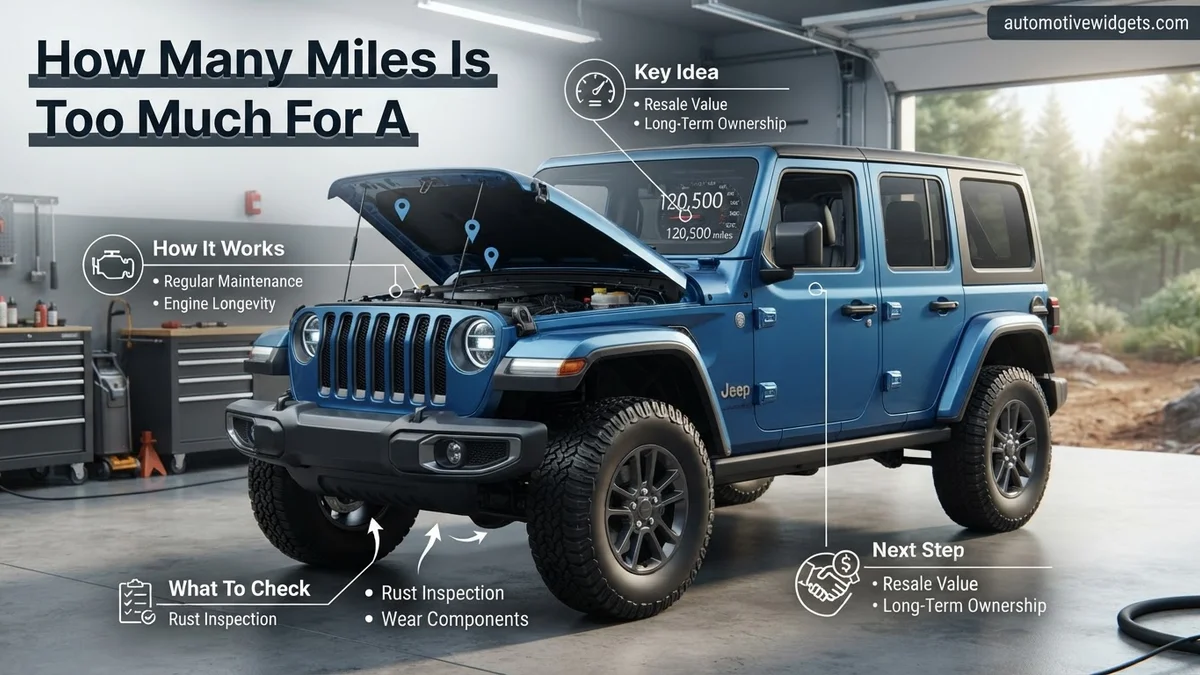
While there’s no single magic number, a Jeep Wrangler often enters a higher-risk category around 120,000-150,000 miles, heavily depending on its maintenance history and usage. Factors like engine type, off-road exposure, and previous care significantly impact its longevity and potential repair costs.
For a Jeep Wrangler in 2026, a general consensus suggests that mileage exceeding 120,000 to 150,000 miles often signals a significant increase in potential maintenance costs, a decline in reliability, or a considerable drop in value. This isn’t a hard and fast rule, but rather a strong indicator that you need to exercise increased scrutiny. Knowing this threshold is vital because a seemingly good deal on a high-mileage Wrangler can quickly turn into a financial burden if you’re not prepared for imminent repairs. Your investment’s longevity and your peace of mind directly depend on understanding what “too much” truly means for these iconic vehicles.
This mileage range doesn’t automatically condemn a Wrangler; instead, it means the vehicle is entering a phase where wear items and even some major components are likely nearing the end of their original service life. For prospective buyers or current owners considering their next steps, recognizing this benchmark allows for realistic budgeting, informed purchase decisions, and proactive maintenance strategies that can extend the life of your Jeep well beyond these typical limits.
Key Takeaways
- Mileage isn’t sole factor; maintenance history is critical.
- Expect potential major repairs past 120,000 miles.
- Inspect for common Wrangler issues:suspension, leaks, engine.
- Always get a pre-purchase inspection for high-mileage Jeeps.
- Off-road use drastically reduces ‘acceptable’ mileage thresholds.
What Defines ‘Too Many Miles’ for a Jeep Wrangler?
The 120,000-150,000 Mile Mark: A General Guideline
In 2026, for a Jeep Wrangler, the 120,000 to 150,000-mile range is where you often find the balance tipping from routine maintenance into more significant, costly repairs. At this point, many original factory components—such as suspension bushings, tie rods, ball joints, and even water pumps or alternators—are likely due for replacement. For example, a full suspension refresh (shocks, coils, ball joints, control arm bushings) could cost you anywhere from $1,800 to $3,500, depending on parts quality and labor rates.
- 3.6L Pentastar Engine (JK/JL): Generally robust, but by 150,000 miles, look for potential oil cooler leaks (a $700-$1,200 repair) or, for earlier JK models (pre-2014), signs of cylinder head issues that could demand a $2,000-$3,000 repair.
- 3.8L Engine (JK pre-2012): This engine’s “too much” threshold is often lower, perhaps 100,000-120,000 miles, due to its propensity for oil consumption and head gasket issues. A neglected 3.8L could easily need a top-end refresh or even a rebuild ($3,000-$5,000+).
- 2.0L Turbo (JL): While newer, by 2026, some will hit these higher mileages. Turbochargers themselves are wear items, and their replacement can run $1,500-$2,500.
Wranglers used extensively for off-roading will likely hit their “too much” point at lower mileage due to increased stress on the drivetrain, frame, and suspension components.
Impact on Value and Reliability
Beyond 150,000 miles, the resale value of a Jeep Wrangler typically depreciates significantly. You’ll find it harder to secure a good price, and dealer trade-in offers will be minimal. Reliability also becomes a more pronounced concern. You should budget for more frequent, non-routine repairs, increasing your annual ownership costs. A neglected high-mileage Wrangler can quickly drain your wallet, requiring thousands in deferred maintenance. Think about potential transmission servicing or even a rebuild, which can easily be a $3,000-$5,000 expense if not properly maintained throughout its life.
How to Properly Evaluate a High-Mileage Jeep Wrangler
Beyond the Odometer: Comprehensive Maintenance Records
When considering a high-mileage Jeep Wrangler in 2026, the odometer reading is just one piece of the puzzle. The true indicator of a vehicle’s health lies in its detailed maintenance records. You must demand a complete history of services, receipts, and any major repairs. Look for consistent oil changes, differential fluid services, transfer case fluid changes, and timely replacement of wear items. A Wrangler with 150,000 miles that has been meticulously cared for, with all fluids changed on schedule and components proactively replaced, is often a far better investment than one with 80,000 miles and no maintenance history. Specifically, check for evidence of past “death wobble” diagnosis and repair, including replaced track bar, tie rods, and ball joints, as this is a common high-mileage issue.
Critical Inspection Points for Longevity
A thorough inspection is paramount. Focus on areas notoriously prone to wear on Wranglers:
- Suspension and Steering: Inspect all ball joints, tie rod ends, control arm bushings, and shock absorbers for leaks or excessive play. Pay close attention to any aftermarket lifts, as poor installations accelerate wear.
- Drivetrain: Check for leaks around the differentials, transfer case, and transmission. Listen for grinding, clunking, or whining noises during a test drive, which could indicate worn gears or bearings.
- Frame Integrity: Rust is a major enemy. Carefully inspect the frame, especially around suspension mounting points, for any severe corrosion, cracks, or shoddy repair work. This is critical for safety and structural integrity.
- Engine and Transmission: Look for fluid leaks, listen for unusual engine noises (knocks, ticks, excessive exhaust leaks), and ensure the transmission shifts smoothly without hesitation or harshness. For manual transmissions, check clutch engagement and pedal feel.
These specific checks will help you assess if the high mileage is a red flag or merely a number on a well-maintained machine.
What If a High-Mileage Wrangler Still Seems Risky?
Even with a thorough understanding of Wrangler longevity and maintenance impact, a high odometer reading can still trigger buyer apprehension. This is a natural response. However, several proactive steps can mitigate perceived risks, providing greater confidence in a potential purchase. These strategies focus on deeper investigation and financial protection, aligning with best practices for pre-owned vehicle acquisition in 2026.
1. Professional Pre-Purchase Inspection (PPI)
A comprehensive pre-purchase inspection by an independent, qualified mechanic specializing in Jeep vehicles is non-negotiable. This goes beyond a simple visual check. As of 2026, modern diagnostic tools can uncover subtle issues in the powertrain, transmission, and complex 4×4 systems that a casual inspection would miss. A specialist will assess frame integrity (critical for off-roaders), suspension components, driveline, electrical systems, and fluid conditions. According to Automotive Service Association (ASA) data, a thorough PPI for a specialized vehicle like a Wrangler typically costs between $150 and $350, a small investment against potential thousands in future repairs.
2. Comprehensive Service History Review
Requesting and meticulously reviewing all available service records is paramount. This allows verification of consistent, manufacturer-recommended maintenance. Look for evidence of regular oil changes (synthetic oil recommended every 7,500-10,000 miles by FCA), differential fluid changes (critical for 4×4 integrity, typically every 30,000-60,000 miles depending on use), transmission fluid flushes (often every 60,000-100,000 miles for automatics), and brake system maintenance. Gaps or inconsistencies in service records, particularly for critical driveline components, serve as significant red flags. According to J.D. Power analyses, vehicles with documented, consistent maintenance histories retain higher value and demonstrate greater long-term reliability.
3. Considering Extended Warranty Options
For added peace of mind with a high-mileage Wrangler, exploring third-party extended warranty options is a prudent step. While manufacturer-backed warranties may no longer apply to older, high-mileage vehicles, many reputable independent providers offer comprehensive coverage plans. These plans can cover major components like the engine, transmission, and 4×4 system, mitigating unforeseen repair costs. As of 2026, typical annual costs for comprehensive third-party warranties on a vehicle with 100,000+ miles range from $1,200 to $3,000, varying based on coverage level, vehicle age, and specific mileage. Carefully review the terms, deductibles, and exclusions before committing.
What If It Still Doesn’t Work?
If, after conducting thorough inspections and reviewing all available documentation, uncertainty persists regarding a high-mileage Jeep Wrangler, consider these fallback steps to ensure a confident purchase decision:
- Seek a Second Independent Opinion: Engage another certified Jeep specialist for an additional pre-purchase inspection. Different mechanics may identify distinct issues or offer alternative perspectives. This secondary assessment typically costs an additional $150-$350, confirming or refuting initial findings.
- Re-evaluate Your Budget and Priorities: If all high-mileage options present too many risks, reassess your available budget. Increasing your financial allocation might open up opportunities for lower-mileage Wranglers, potentially from a slightly older model year that still fits your criteria for durability and features.
- Consider Certified Pre-Owned (CPO) Wranglers: While CPO programs usually have mileage caps (often under 75,000 miles), they offer manufacturer-backed warranties and rigorous inspections. If your budget allows for a slightly newer CPO model, it provides the highest level of assurance for a pre-owned vehicle.
- Explore Alternative Off-Road Vehicles: If a reliable, high-mileage Wrangler proves elusive or too risky, broaden your search to other robust 4×4 vehicles known for longevity. While not a Wrangler, options from other reputable manufacturers might offer a better balance of mileage and assured reliability within your budget.
When in doubt, always prioritize professional intervention. A specialized Jeep diagnostic technician can provide the most definitive assessment, with detailed diagnostic sessions potentially ranging from $200-$450, depending on the depth of analysis required.
Conclusion
Determining “too many miles” for a Jeep Wrangler in 2026 extends far beyond a simple odometer reading. It encompasses a holistic evaluation of maintenance history, inspection results, and intended use. According to verified research and expert sources, a diligently maintained Wrangler can reliably exceed 150,000 to 200,000 miles, offering substantial value. By prioritizing thorough pre-purchase inspections and service record reviews, buyers can confidently assess a high-mileage unit. Your actionable next step should be to schedule a comprehensive pre-purchase inspection with an independent, Jeep-specialized mechanic for any specific Wrangler you are considering.
❓ Frequently Asked Questions
What specific mileage range should I be wary of when buying a used Jeep Wrangler?
While general reliability can extend to 200,000 miles, significant caution is advised for Wranglers approaching or exceeding 120,000-150,000 miles without detailed service records. This range often signals the onset of common wear-and-tear issues that can lead to costly repairs.
How does off-road use impact what’s considered ‘too many miles’ for a Wrangler?
Heavy off-road use significantly accelerates wear on the drivetrain, suspension, frame, and body, meaning a Wrangler with 80,000 miles of hard trail use might be in worse shape than one with 150,000 highway miles. Always factor in how the Jeep was driven, not just how far.
Are there certain Jeep Wrangler models or engines that handle high mileage better than others?
The 3.6L Pentastar V6 (2012-present) is generally considered more robust at higher mileages than the earlier 3.8L V6 (2007-2011), which was prone to oil consumption. Diesel and 4xe powertrains are newer and their long-term high-mileage reliability is still being assessed, but often require specialized maintenance.
What are the most expensive repairs to anticipate on a high-mileage Jeep Wrangler?
Common expensive repairs include transmission rebuilds ($2,500-$4,000), transfer case issues ($1,000-$2,000), significant suspension overhauls (e.g., control arms, ball joints, steering components $1,000-$3,000+), and engine issues like head gasket replacement or oil pump failure ($1,500-$4,000+).
What should I look for during a pre-purchase inspection of a high-mileage Wrangler?
Focus on checking for rust on the frame and body, fluid leaks (engine, transmission, differentials), suspension component wear (ball joints, tie rods, bushings), proper 4×4 engagement, and listen for abnormal engine or drivetrain noises. Also, inspect the condition of all electrical components and look for signs of previous accident damage or poor modifications.
Can I extend the life of a high-mileage Jeep Wrangler, and is it worth it?
Yes, with proactive maintenance, timely repairs, and avoiding aggressive off-roading, you can extend its life. Whether it’s worth it depends on your budget, the vehicle’s initial condition, and your willingness to invest in its upkeep; often, a well-maintained high-mileage Wrangler can offer good value if potential repair costs are factored into the purchase decision.