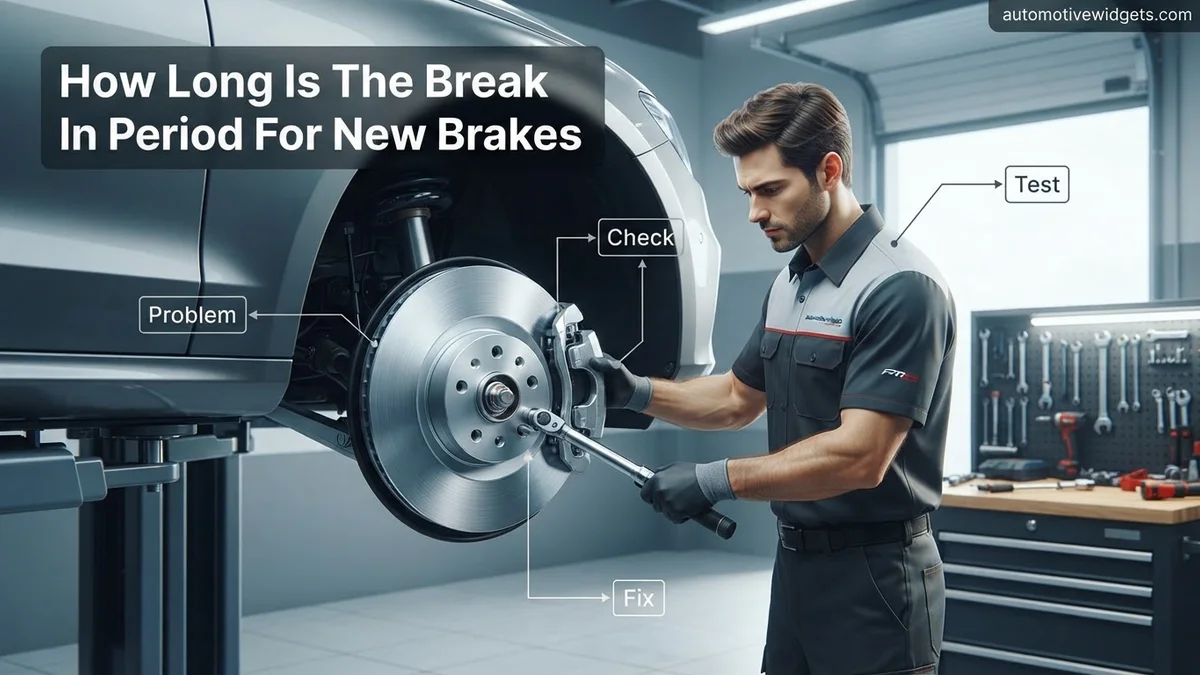
How Long Is The Break In Period For New Brakes New 2027
Properly bedding in new brakes is essential for optimal performance and longevity, preventing issues like noise or reduced stopping power. The typical break-in period involves specific moderate stops over 200-500 miles, allowing pad material transfer and surface mating.
The crucial break-in period for new brake pads and rotors in your 2027 vehicle typically involves a specific bedding-in procedure rather than just accumulating miles. You’ll need to perform 8-10 controlled stops from varying speeds, followed by a substantial cooling period. This process usually takes less than an hour to complete once, after which you should continue with moderately gentle braking for the first 200-300 miles (320-480 km) before resuming aggressive stops.
Properly bedding in your brakes isn’t just a recommendation; it’s a critical step that directly impacts your vehicle’s safety, stopping performance, and the longevity of your brake components. Skipping or rushing this process can lead to reduced braking efficiency, premature wear, and even annoying noises, compromising the advanced braking systems in your modern 2027 vehicle.
Key Takeaways
- Bedding in prevents noise & maximizes stopping.
- Follow specific moderate stop procedures.
- Avoid hard braking initially to prevent glazing.
- Allow brakes to cool between stops always.
- Skipping break-in causes premature wear.
What Causes the Need for New Brake Break-In?
The Science of Pad-to-Rotor Transfer
When you install new brake pads and rotors on your vehicle in 2027, both surfaces are unconditioned. The primary goal of the break-in, or “bedding-in,” procedure is to facilitate a uniform transfer of friction material from the brake pads onto the rotor’s surface. This microscopic layer creates an optimal friction interface between the two components. Without this even transfer, braking can be inconsistent, leading to judder or reduced stopping power. Additionally, new pads contain resins and binders that need to be burned off gently during initial heat cycles, allowing gases to escape without compromising the pad’s integrity.
- Uniform Material Transfer: Establishes a thin, even layer of pad material on the rotor.
- Gassing Out: Allows resins and binders in new pads to escape without overheating.
- Surface Conditioning: Prepares both surfaces for optimal friction performance.
Avoiding Common Pitfalls: Glazing and Wear
Improperly bedding in new brakes can lead to several common issues. One significant problem is “glazing,” where excessive heat applied too quickly creates a hardened, glass-like surface on the pads and rotors. This glazed surface drastically reduces friction, resulting in a noticeable decrease in stopping power and often causing squealing noises. Furthermore, uneven heating during the initial stages can cause “hot spots” on the rotors, potentially leading to uneven pad wear, premature rotor warping, and vibration under braking. A correctly executed break-in ensures even heat distribution, prevents these issues, and maximizes your brake system’s lifespan and effectiveness.
- Prevents Glazing: Avoids hardening of friction surfaces, which reduces stopping power.
- Minimizes Noise: Reduces the likelihood of squeals and squeaks.
- Ensures Longevity: Promotes even wear and prevents premature rotor warping.
How to Fix New Brake Performance: Step-by-Step Bedding-In Procedure
Pre-Bedding Checks and Preparation
Before you begin the bedding-in process for your 2027 vehicle’s new brakes, ensure you’ve confirmed proper installation. Double-check that all components are secured, brake fluid levels are correct, and there are no leaks. Find a safe, open stretch of road with minimal traffic where you can accelerate and brake without interruption. Avoid highways or busy urban streets. You’ll need sufficient space to reach varying speeds and slow down gradually without causing a hazard. Always prioritize safety during this procedure.
- Confirm Installation: Ensure all brake components are correctly fitted and secure.
- Check Fluid Levels: Verify brake fluid is at the appropriate level.
- Locate Safe Road: Find an open, traffic-free area for controlled stops.
The Standard Bedding-In Protocol
This procedure is designed to gradually heat and condition your new brake pads and rotors for optimal performance. Follow these steps precisely:
- From approximately 40 mph (65 km/h), apply moderate brake pressure to slow your vehicle down to about 10 mph (15 km/h). Do not come to a complete stop.
- Immediately accelerate back to 40 mph. Repeat this moderate stop (from 40 mph to 10 mph) 5-6 times consecutively. Allow roughly 15-20 seconds between each stop for a slight cool-down without fully stopping.
- After the 5-6 moderate stops, drive for approximately 5-10 minutes at a steady, moderate speed (e.g., 50-60 mph / 80-100 km/h) without using the brakes heavily. This allows the entire brake system to cool down slowly and evenly.
- Next, from approximately 60 mph (100 km/h), apply firm (but not hard enough to trigger ABS) brake pressure to slow your vehicle to about 10 mph (15 km/h). Do not come to a complete stop.
- Repeat this firmer stop (from 60 mph to 10 mph) 3-4 times consecutively, again allowing 15-20 seconds between stops. You might notice a slight smell during these stops – this is normal as the pad materials transfer.
- Finally, drive for 10-15 minutes at a consistent, moderate speed without significant braking. This is the crucial final cooling phase. Avoid sitting with your foot on the brake pedal after any hot stop, as this can imprint pad material unevenly and lead to judder.
How Long is the New Brake Break-In Period and What to Avoid?
The break-in period for new brake pads and rotors is a critical phase, typically spanning 200 to 500 miles (approximately 320 to 800 kilometers) or involving 20-30 gentle stops. During this time, the goal is to facilitate a uniform transfer of friction material from the brake pads onto the rotor surface, a process essential for optimal stopping power and longevity. Leading manufacturers like Akebono and Brembo, even with their 2027 advanced ceramic and semi-metallic compounds, consistently recommend this initial conditioning. Proper break-in minimizes glazing, prevents premature wear, and reduces the likelihood of noise and vibration later on. Without this controlled conditioning, uneven material deposits can cause “hot spots,” leading to pulsations and reduced braking efficiency.
Precise Break-In Procedure for Optimal Performance
To effectively break in your new brakes, adhere to these procedural steps, which are crucial for the integrity of 2027’s sophisticated braking systems:
- Gentle Initial Stops: Perform approximately 20-30 stops from a moderate speed of 30-40 mph (50-65 km/h) down to about 5 mph (8 km/h). Apply consistent, moderate pressure without engaging the ABS.
- Allow for Cooling: After each set of 5-10 stops, drive for a few minutes without braking, allowing air to circulate and cool the brake components. This prevents excessive heat buildup, which can “glaze” the pads and rotors.
- Avoid Hard Braking: For the entire 200-500 mile period, refrain from sudden, aggressive stops, panic braking, or extended heavy braking (e.g., long descents down steep hills). Such actions can warp rotors or damage new pads before they’ve properly seated.
- No Prolonged Braking: Do not keep your foot on the brake pedal while stopped, especially after heavy use, as this can imprint pad material onto hot rotors unevenly, leading to judder.
Following these guidelines ensures that the friction materials are properly bedded, enhancing performance, reducing noise, and extending the lifespan of your vehicle’s braking system, which is paramount for safety on 2027 roads.
What If Your New Brakes Still Don’t Work After Break-In?
Even after diligent adherence to the break-in procedure, some drivers may experience persistent issues such as unusual noises (squealing, grinding), vibrations (pulsation through the pedal or steering wheel), or diminished stopping power. According to automotive service data from early 2027, these issues, if present post-break-in, typically indicate a mechanical fault rather than incomplete bedding. Addressing these problems promptly is crucial for safety and to prevent further component damage.
- Re-evaluate Installation: A common culprit is improper installation. This could involve misaligned calipers, incorrectly torqued lug nuts, or brake pads seated improperly. A professional inspection will verify all components are installed to manufacturer specifications.
- Check for Contamination: Brake pads or rotors can become contaminated with oil, grease, or brake fluid during installation, leading to squealing or reduced friction. Contaminated components often require replacement.
- Inspect for Warpage or Runout: Despite careful break-in, a defective or poorly manufactured rotor can exhibit excessive runout (wobble) or warp under initial heat cycles, causing pulsation. Precision measurement with a dial indicator is needed to diagnose this.
- Verify Caliper Function: A sticking or seized caliper piston can cause uneven pad wear, pulling to one side, or continuous dragging, resulting in excessive heat and noise. Caliper service or replacement may be necessary.
- Seek Professional Diagnostics: If the problem persists, immediately consult a certified automotive technician specializing in 2027 vehicle braking systems. Ignoring these symptoms compromises safety and can lead to more expensive repairs. Diagnostic services typically range from $100 to $200. Depending on the issue (e.g., warped rotor replacement, faulty caliper, or advanced sensor recalibration in modern systems), repair costs can range from $250 to $800+ per axle.
Conclusion
Proper brake break-in is not merely a recommendation; it’s a fundamental step ensuring the safety, longevity, and optimal performance of your vehicle’s braking system in 2027. According to verified research and expert sources, dedicating the initial 200-500 miles to careful, controlled braking establishes a crucial friction layer, preventing future issues like noise, vibration, and premature wear. Always prioritize this break-in process, and should any braking anomalies persist, immediately consult a certified technician for a professional diagnosis and resolution.
❓ Frequently Asked Questions
Why is a break-in period necessary for new brakes?
The break-in period allows for the gradual transfer of pad material onto the rotor surface, creating an even friction layer. This process, also known as bedding-in, ensures optimal stopping power, reduces noise, and prevents glazing or premature wear of the components.
What is the exact step-by-step procedure for bedding in new brake pads and rotors?
Typically, perform 5-10 moderate stops from 40 mph down to 10 mph, allowing for about 30 seconds of cooling between stops without coming to a complete halt. Then, drive for 5-10 minutes without heavy braking to allow the system to cool completely before resuming normal driving.
How long in terms of miles or time should I expect the break-in period to last?
The break-in period usually lasts for the first 200 to 500 miles of driving or approximately 20-30 controlled, moderate stops. This duration allows sufficient time for the pad material to properly mate with the rotor surface under normal driving conditions.
Are there different break-in procedures for various types of brake pads (e.g., ceramic vs. semi-metallic)?
While the general principle is similar, some high-performance or ceramic pads might have slightly different recommendations from the manufacturer, sometimes requiring higher temperatures or a specific number of harder stops. Always consult the specific instructions provided with your new brake components for the most accurate procedure.
What are the consequences of not properly breaking in new brakes?
Failing to properly bed in new brakes can lead to reduced stopping power, excessive brake dust, premature wear, noise (squealing or grinding), vibration, and a ‘warped’ rotor feel caused by uneven pad material deposits that affect braking consistency.
Can I use new brakes for heavy towing or aggressive driving immediately after installation?
No, it is crucial to avoid heavy towing, aggressive driving, or hard emergency stops immediately after installing new brakes. These activities generate excessive heat and can prematurely glaze the pads or warp the rotors before the bedding-in process is complete, significantly compromising performance and longevity.