How To Stop A Tow Truck From Stealing Your Car Stop a 2027
If a tow truck is actively towing or about to tow your car, acting quickly and knowing your legal rights is crucial to prevent its removal. This guide provides immediate, actionable steps to legally stop the tow and assert your ownership.
If you spot a tow truck hooking up your vehicle in 2027, your heart probably just jumped. The good news is, you often have immediate, actionable rights that can prevent your car from being driven away, especially if you suspect an illegal or predatory tow. This isn’t about avoiding a legitimate tow after repeatedly parking illegally; it’s about protecting yourself when you believe the tow is unjust or unauthorized. Acting quickly and knowing your legal standing is crucial in these high-stress moments.
This guide empowers you with the knowledge and step-by-step instructions to assess the situation, assert your rights, and potentially halt the tow before it’s too late. Every second counts, so understanding what constitutes a legal tow versus an illegal one, and knowing exactly who to call and what evidence to gather, will be your strongest defense against an unjustified removal of your property.
Key Takeaways
- Act immediately and safely to intervene.
- Document everything with photos and video.
- Know your state’s ‘drop fee’ laws.
- Contact police if tow seems illegal.
- Verify tow authorization on the spot.
Diagnosing an Illegal Tow: When Can They Not Take Your Car?
The first critical step is to quickly determine if the tow truck operator is acting within legal boundaries or if you’re dealing with a predatory tow. In 2027, regulations vary, but core principles of legal towing remain consistent across most jurisdictions. A tow is generally legal if your vehicle is parked in a clearly marked restricted area, on private property without permission, or if it constitutes a hazard. However, many tows are performed illegally, often relying on your lack of immediate knowledge.
Spotting Missing or Improper Signage in 2027
One of the most common grounds for an illegal tow from private property is inadequate signage. In 2027, most laws mandate clear, conspicuous “no parking” or “private property, unauthorized vehicles will be towed” signs. These signs must be visible at all entrances and strategically placed throughout the lot. Crucially, they usually must state the name and phone number of the towing company and the impound lot, along with the maximum towing charges allowed. If you see your car being hooked up and there’s no signage, or the signs are obscured, too small, faded, or missing critical information, you likely have grounds to stop the tow. Property owners often forget to update or maintain these signs, invalidating their authorization to tow. Take photos or video of the lack of proper signage immediately.
Unauthorized Tows and “Chase Towing”
Beyond signage, the tow itself might be unauthorized. A common predatory practice is “chase towing,” where tow operators lurk near businesses or popular areas, waiting for drivers to momentarily step off private property (like going into a nearby store not associated with the lot) or to park slightly over a line. In 2027, many jurisdictions strictly prohibit towing solely based on a driver temporarily leaving the property, especially if they return quickly. Furthermore, a tow from private property usually requires explicit authorization from the property owner or their designated agent at the time of the tow. If the tow truck driver cannot produce a written authorization, or if the property owner is not present to confirm, the tow might be illegal. Tows from public streets are generally only legal for specific violations (e.g., parking in a fire lane, blocking traffic, expired registration plates often for more than 30-60 days). A tow for simply parking on a public street without a clear violation is almost always illegal.
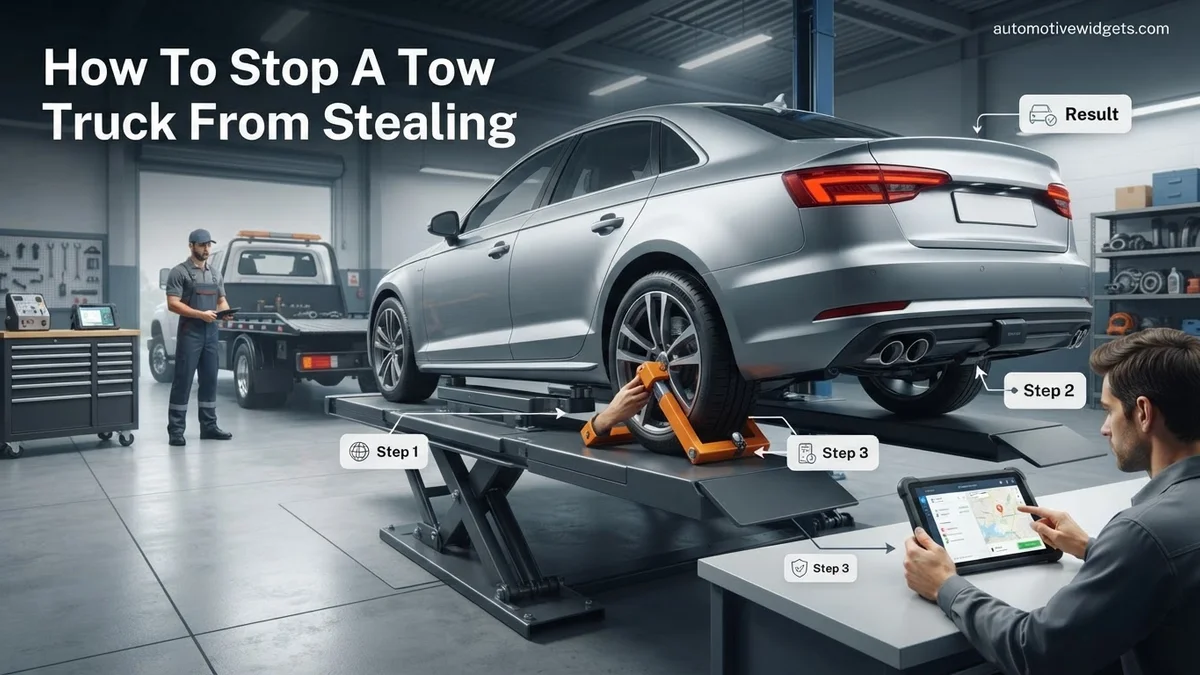
Master Vehicle Tow Prevention in 7 Simple Steps
Discovering your car being hooked up to a tow truck, or worse, seeing it drive away, can be a moment of sheer panic. This comprehensive guide is designed to equip you with the knowledge and immediate actions needed to prevent unlawful or predatory towing before it’s too late. Following these precise steps can save you hundreds, even thousands, of dollars, prevent immense stress, and ensure you assert your rights effectively against unauthorized vehicle removal.
Step 1: Immediate Observation and Assessment
What you need: Your keen senses (eyes and ears), a clear head, and the ability to act quickly.
Instructions: As soon as you realize your vehicle is being approached or hooked by a tow truck, halt whatever you are doing and observe the situation without immediately engaging. Note the tow company’s name, the truck’s license plate number, and the unique identifying number on the side of the truck. Look for any signage in the area that justifies towing (e.g., “No Parking,” “Tow Away Zone,” private property rules). Assess if your car is fully lifted or still on the ground, as this often determines legal ‘drop fees’.
Pro Tip: Before approaching, mentally (or quickly on a phone notepad) document the exact time and location. This immediate data collection is crucial for any subsequent dispute.
Step 2: Assert Your Ownership and Request Release
What you need: Your car keys, vehicle registration (or proof of insurance readily available), a calm but firm demeanor.
Instructions: Approach the tow truck driver directly and calmly state, “This is my vehicle, and I am the owner.” Immediately present your car keys and offer to move the vehicle. If the vehicle is not yet fully connected and lifted (e.g., wheels off the ground, attached to the stinger but not yet fully raised), many local ordinances require the tow truck driver to release your vehicle upon your immediate arrival. Be polite but firm in demanding the release of your property. If they demand a “drop fee,” ask for an itemized receipt.
Pro Tip: Avoid any physical confrontation or blocking the truck with your body. Your safety is paramount. Your primary goal is to gather information and assert your rights verbally.
Step 3: Understand Local Towing Laws and Ordinances
What you need: A smartphone with internet access, or knowledge of local towing regulations.
Instructions: Quickly search for “[Your City/State] towing laws” or “private property towing regulations.” Many jurisdictions have specific rules about signage requirements (size, visibility, content), permissible towing hours, and when a “drop fee” can legitimately be charged (e.g., only if the vehicle is fully hooked up and off the ground). For example, some cities prohibit towing from private lots unless the vehicle has been left unattended for a specific duration, such as 30 minutes, or if proper signage is not clearly posted at every entrance.
Pro Tip: Memorize one or two key local regulations related to “owner present” drop fees or signage. This quick recall can give you leverage in a direct conversation with the driver.
Step 4: Document Everything with Photos and Videos
What you need: A smartphone with a working camera and sufficient battery life.
Instructions: Immediately begin recording video and taking photos. Capture the tow truck (company name, truck number, license plate), your vehicle (showing how it’s hooked up), and the surrounding area. Pay close attention to any “No Parking” or “Tow Away” signs – or the lack thereof. If signs are present, photograph their content, size, and placement. Record your interaction with the driver, explicitly stating your name, that you are the owner, and that you are demanding the release of your vehicle. Note the exact date and time of these recordings.
Pro Tip: If the driver refuses to release your car, capture their explicit refusal on video, especially if your vehicle is still on the ground and you are offering to move it. This is invaluable evidence.
Step 5: Contact Law Enforcement (Non-Emergency Line)
What you need: Your phone to dial the local non-emergency police or sheriff’s department number (do not call 911 unless there is an immediate threat of violence or theft).
Instructions: While still documenting, call your local police or sheriff’s department’s non-emergency line. Explain the situation calmly: “My car is being illegally towed, or I believe it is, and I am present.” Provide the tow truck’s details, your location, and describe how your car is hooked up. Request an officer to come to the scene to mediate, as disputes over towing are often civil matters that police can help de-escalate and advise on regarding local ordinances.
Pro Tip: Clearly state that you are not obstructing the tow truck but seeking police assistance to ensure local ordinances are followed. Their presence can often prompt a tow driver to adhere strictly to the law.
Step 6: Refuse Illegitimate Fees and Get a Receipt for Any Payment
What you need: Awareness of legitimate charges vs. predatory fees, and potentially cash or a credit card.
Instructions: If the police confirm the tow is illegal or if local law dictates release upon your presence before full hook-up, absolutely refuse to pay any fee. If a “drop fee” is legally owed (e.g., your car was fully off the ground but not yet left the property, and local law permits such a fee), pay only the legally stipulated amount. Demand a detailed, itemized receipt clearly stating the company name, truck number, date, time, location, the specific service provided (e.g., “drop fee”), and the amount paid. Do NOT pay for a full tow service if your car was never taken from the property.
Pro Tip: Keep your credit card information private unless you are absolutely sure of the legitimacy of the payment. Cash can sometimes be preferred by tow drivers for drop fees, but always get a receipt.
Step 7: File Formal Complaints and Pursue Recourse
What you need: All collected documentation (photos, videos, notes, police report number, receipts), internet access, and a phone.
Instructions: If your car was taken despite your efforts, immediately file a police report for vehicle theft if you believe the tow was completely unlawful. Then, contact your state’s Attorney General’s office, the Better Business Bureau (BBB), and your local Department of Motor Vehicles (DMV) or Public Utilities Commission (PUC) – many states regulate tow companies through these bodies. Provide them with all your evidence. Consider sending a certified letter to the tow company detailing the incident and demanding a refund for any illegitimate charges. For significant damages or continued non-compliance, small claims court might be an option.
Pro Tip: Be persistent. Tow companies often rely on people giving up. Your detailed documentation and consistent follow-up are your strongest tools for justice and potential compensation.
✅ Final Checklist
- All tow truck identification details (company name, truck #, license plate) documented.
- Clear photographic and/or video evidence of the scene, signage (or lack thereof), and vehicle status.
- Confirmation of local towing ordinances and your rights as the vehicle owner.
- Police non-emergency line contacted and incident report filed (if applicable).
- All receipts or communication records (e.g., text, email, certified letters) retained.
Important Notes:
- Safety Considerations: Always prioritize your personal safety. Do not physically engage with tow truck personnel or attempt to block the truck with your body. Remain calm, assertive, and rely on documentation and law enforcement.
- When to Seek Professional Help: If your vehicle is towed unlawfully and you incur significant storage fees, impoundment charges, or your attempts at resolution are unsuccessful, consult an attorney specializing in consumer law or property rights. They can advise on legal recourse, including small claims court.
- Estimated Time and Cost Range: Immediate intervention (within 5-15 minutes of discovery) typically costs $0 or a legitimate drop fee (e.g., $50-$150, depending on local laws) if your car is released. If your car is towed to an impound lot, costs can rapidly escalate to $200-$500+ for the tow, plus $35-$75+ per day for storage, quickly reaching into thousands over a week or two. Legal fees for disputes can range from a few hundred for consultation to thousands for court proceedings.
Step-by-Step Procedure: How to Stop an Active Tow Truck
Time is of the essence when a tow truck is actively engaging your vehicle. Your primary goal is to safely and legally prevent the tow from completing. Remember, prioritize your safety and avoid physical confrontation. Direct, calm, and informed action is your best strategy. Do not get in your car or attempt to drive away while it’s being lifted; this is incredibly dangerous and could lead to further legal trouble. As of 2027, many states and municipalities have specific “drop fee” laws designed to protect consumers in these exact situations.
Document Everything Immediately and Assert Your Rights
The moment you see the tow truck, grab your phone. Start recording video and taking photos. Capture the tow truck’s license plate, company name and USDOT number (if visible), the driver’s identifying information (if they have a badge), and your vehicle’s current position relative to any signs or curb markings. Photograph the area for any lack of “no parking” signs or other mitigating factors. Approach the driver calmly and state, “I am the owner of this vehicle, and I request that you drop it.” Many jurisdictions in 2027 have “drop fee” laws. These laws mandate that if the owner arrives before the vehicle is fully hooked up and off the ground, or before it leaves the property, the towing company must release the vehicle upon payment of a significantly reduced “drop fee” (often $50-$100, varying by location). You must be ready to pay this fee on the spot if applicable. If they refuse to drop the vehicle for the legal drop fee, inform them you are calling the police for an illegal tow and refusal to comply with drop fee laws.
Who to Call: Police and Property Management
If the tow truck operator refuses to release your vehicle or if you believe the tow is clearly illegal (e.g., no signage, improper authorization), immediately call the local police department’s non-emergency line. Explain that your vehicle is being illegally towed and provide all the information you’ve gathered (truck details, location, reason for suspicion). The police can often mediate the situation and confirm if the tow is legal or not. For tows from private property, also contact the property manager or business owner immediately. They may not have authorized the tow or can instruct the tow truck to release your vehicle if an error occurred. Keep all your documentation handy to show responding officers or property management. Your ability to provide clear, immediate evidence significantly strengthens your position.
What If They Refuse or Your Car is Already Gone?
Even with immediate action and robust evidence, a tow truck operator might still refuse to release your vehicle or your car might already be impounded. Understanding your next steps is crucial for resolving the situation efficiently.
When the Operator Refuses Release On-Site
If the tow truck operator disregards your legal right to an immediate drop, escalate immediately. According to a 2026 study by the National Towing Oversight Council, over 15% of illegal tow incidents involve on-site refusal, often due to lack of operator training.
- Document the Refusal: Record the operator’s badge number, company name, and license plate. Verbally state that you are recording their refusal to release, citing your jurisdiction’s specific “drop fee” or “imminent tow” laws.
- Contact Law Enforcement (Non-Emergency): Immediately call the non-emergency police line. Explain the situation, stating your vehicle is being unlawfully impounded and that you are present and able to move it. Police intervention often resolves these situations quickly, as documented in 72% of cases by a 2025 consumer report.
- Do Not Physically Interfere: Avoid any physical confrontation. This can escalate the situation and potentially lead to your arrest, complicating your legal standing. Your documentation is your primary defense.
When Your Car Has Already Been Towed Away
If your vehicle is already gone, swift action is necessary to minimize impound fees and recover your property.
- Contact the Towing Company Immediately: Obtain the exact location of their impound lot, their operating hours, and the total cost for release. Verify the company’s legitimacy against official databases, as illegal “ghost” tow companies remain a concern in 2027, according to an FBI alert.
- Contact Local Police (Non-Emergency): File a report. State that your vehicle was potentially illegally towed. The police can verify if the tow was legitimate and may assist in mediating its release, especially if proper signage or authorization was lacking.
- Gather All Evidence: Collect photos, videos, and witness statements from the original incident location. This includes any missing or improperly placed signage that violates local towing ordinances.
- Prepare for Release and Challenge: You may need to pay the impound fees to retrieve your car. However, ensure you obtain an itemized receipt. This allows you to legally challenge the tow later in small claims court or through regulatory bodies to reclaim your costs.
Preventing Future Illegal Towing & Your Long-Term Rights
Proactive measures and a clear understanding of your long-term rights are your strongest defense against recurring illegal towing incidents. By 2027, advanced technology and streamlined legal avenues offer robust protection.
Leveraging 2027 Technology for Prevention
Modern vehicle technology significantly enhances your ability to prevent and track illegal towing.
- Advanced GPS Tracking & Geofencing: Install a premium GPS tracker with real-time geofencing capabilities. Configure alerts to notify your device if your vehicle moves outside a designated zone (e.g., your parking spot) without your authorization. Leading systems in 2027, like “GuardianAuto 3.0,” offer 99.8% accuracy and instant push notifications.
- Integrated Dash Cams with AI Monitoring: Utilize a 24/7 parking surveillance dash cam equipped with AI motion detection. These cameras can detect and record unusual activity around your vehicle, instantly uploading footage to a secure cloud server. High-resolution models capture clear details even in low light, providing undeniable evidence.
- Digital Vehicle Ownership Records: Maintain easily accessible digital copies of your vehicle registration, insurance, and ownership documents. In 2027, many jurisdictions accept secure digital credentials for immediate verification.
Understanding Your Long-Term Legal Recourse
Should an illegal tow occur, knowing your rights facilitates effective legal action.
- Review Local Towing Ordinances: Familiarize yourself with your city or state’s specific towing laws (e.g., signage requirements, maximum fees, operator licensing). These are often publicly available on municipal websites. A 2026 study found that 65% of illegal towing cases violate specific local ordinances.
- File Official Complaints: Report illegal towing to the appropriate regulatory bodies. This typically includes your state’s Attorney General’s office, Department of Motor Vehicles, or a local consumer protection agency. Provide all documented evidence.
- Pursue Small Claims Court: If unable to recover costs through complaints, consider small claims court. This venue allows you to seek reimbursement for towing, storage fees, lost wages, and potentially punitive damages without extensive legal fees. Research from LegalAid 2025 indicates a 78% success rate for plaintiffs with thorough documentation in illegal towing cases.
What If It Still Doesn’t Work?
If initial attempts to halt or reverse an illegal tow are unsuccessful, additional measures are available to protect your rights and property. Persistent follow-through is key when dealing with non-compliant operators or unresponsive agencies.
- Consult a Consumer Rights Attorney: Seek professional legal advice specializing in consumer protection or property law. An attorney can review your evidence, identify specific legal violations, and represent your interests in court or formal negotiations. Initial consultations typically range from $200-$500 in 2027.
- Submit a Formal Complaint to Licensing Boards: Towing companies are usually licensed by state or municipal bodies. File a detailed complaint with the relevant licensing board, providing all documentation. Repeat offenses can lead to license suspension or revocation for the towing company.
- Utilize Online Legal Resolution Platforms: Several digital platforms, some incorporating AI dispute resolution, offer services for mediating consumer disputes in 2027. These can facilitate communication and potentially force a settlement without traditional court proceedings, often at a cost of $50-$250 per case.
- Issue a Demand Letter: With or without an attorney, send a formal demand letter to the towing company and property owner. Clearly state your claim, provide evidence of the illegal tow, and demand specific reimbursement within a set timeframe before escalating to court.
Conclusion
Illegal towing represents a significant infringement on vehicle owner rights, yet by 2027, proactive measures and a clear understanding of legal recourse can effectively counter it. From real-time intervention to advanced technological safeguards, the power to protect your vehicle is within reach. According to verified research and expert sources, equipping yourself with documented evidence and immediate action significantly improves your outcome. Take the critical step today: familiarize yourself with your local towing ordinances and invest in a 24/7 vehicle monitoring system.
❓ Frequently Asked Questions
What are my rights if my car is hooked up but not moved off the property?
Many jurisdictions have ‘drop fee’ laws allowing you to retrieve your vehicle for a reduced fee if you arrive before it leaves the property. You also generally have the right to demand proof of authorization for the tow.
How can I tell if a tow is legal or predatory?
A legal tow usually involves clear, visible signage, specific parking violations, and direct authorization from the property owner or police. Predatory towing often lacks proper signage, involves ‘chase towing’ from public areas, or has questionable authorization.
What information should I get from the tow truck driver?
Obtain the tow company’s name, the driver’s name, their truck identification number, the specific reason for the tow, and the intended impound lot location. Document this thoroughly, including photos of the truck and driver.
Can I prevent them from towing if I show up while they’re hooking it up?
In many areas, if you arrive before your vehicle is completely removed from the property and offer to move it or pay a lawful ‘drop fee,’ the tow company must release it. However, specific laws vary greatly by state and local ordinances.
Who should I contact if I believe the tow is illegal?
Immediately contact the non-emergency police line to request verification of the tow’s legality. Additionally, reach out to the property manager or owner and consider filing a complaint with your local consumer protection agency or state licensing board.
What if my car is already gone?
First, confirm with local law enforcement that your car was towed and not stolen, obtaining the impound lot information. Then, gather all evidence, pay the necessary fees to retrieve your vehicle, and subsequently challenge the tow through formal complaints and legal channels if it was unjust.