Why Is My Windshield Fogging Up on the Inside? Expert 2027
Windshield fogging on the inside typically signals excess moisture or a temperature imbalance within your vehicle. This guide reveals the common culprits, from breath to HVAC issues, and provides immediate and preventative solutions to restore clear visibility for 2027 and beyond.
Your windshield fogging up on the inside is almost always a direct result of excess moisture trapped within your vehicle’s cabin meeting a colder glass surface. It’s a common occurrence, but understanding the precise causes in your 2027 model vehicle is key to resolving it quickly and preventing future recurrences. This isn’t just about clear vision; it’s a critical safety concern, as reduced visibility can lead to dangerous situations, especially with increasingly complex road conditions and driver-assist systems in operation.
The good news is that most internal fogging issues are easily diagnosable and fixable. We’ll break down the primary culprits, from common humidity imbalances to a few less obvious mechanical issues, and then provide immediate, effective steps you can take to clear your view and address the root causes, ensuring you drive safely and comfortably in any weather condition this year.
Key Takeaways
- High interior humidity causes most fogging.
- Use defroster with AC and open windows for quick clear.
- Keep car interior dry; clean glass regularly.
- Persistent fogging needs HVAC system inspection.
- Sweet smell and greasy film indicate heater core leak.
Diagnosing Why Your Windshield Fogs Up Inside
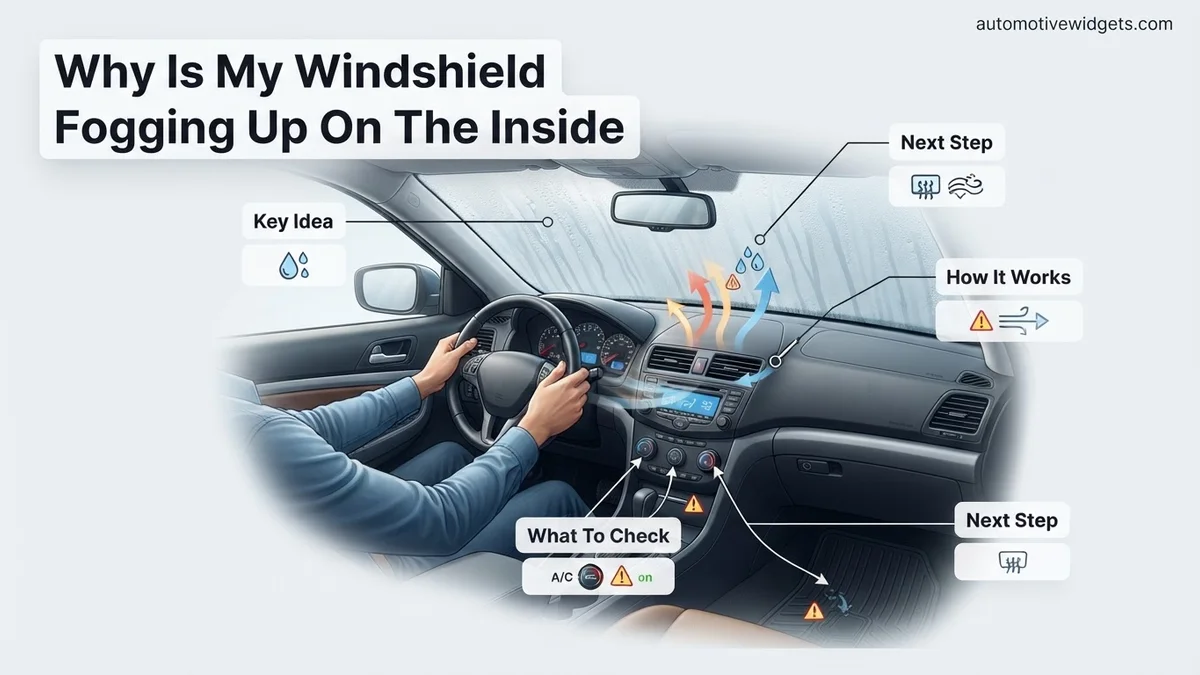
Internal windshield fogging originates when the air inside your car holds more moisture than the air outside, or when warmer, moist air inside contacts a significantly cooler windshield. This temperature difference causes the water vapor in the air to condense into tiny droplets on the glass. Pinpointing the exact cause helps you eliminate the problem permanently rather than just wiping it away.
Excess Cabin Humidity & Temperature Discrepancies
- Your Breath and Passengers: A fundamental source of moisture. Every person exhales warm, humid air. On a cold day, even two people can quickly saturate the cabin air enough to cause fogging, especially with windows closed.
- Wet Items: Rain-soaked coats, umbrellas, snowy boots, or even damp floor mats introduce significant amounts of moisture. This water evaporates into the cabin air, raising humidity levels dramatically. Even a spilled drink that hasn’t fully dried can contribute.
- Temperature Differential: When the exterior temperature drops rapidly, your windshield cools quickly. If the interior air is warm and humid, condensation forms instantly upon contact with that cold glass. This is particularly noticeable during sudden cold snaps in late 2027.
- AC Recirculation Mode: While useful for rapid cooling or keeping outside pollutants out, continuous use of recirculation traps existing moist air inside. If your AC isn’t effectively dehumidifying, this mode exacerbates fogging.
Hidden Culprits & HVAC System Health
- Dirty Windshield Interior: Dust, grime, finger oils, and residues from vaping or smoking create microscopic surfaces for water vapor to cling to. These act as nucleation sites, making fogging appear more quickly and stubbornly. A seemingly clean windshield might still have enough film to cause issues.
- Clogged Cabin Air Filter: Your car’s cabin air filter, often recommended for replacement every 15,000-25,000 miles in modern vehicles, can become saturated with moisture, mold, and debris. A blocked filter restricts airflow, reducing the effectiveness of your defroster and AC in drying the cabin air, trapping humidity inside.
- Heater Core Leak: This is a more serious, though less common, issue. The heater core circulates engine coolant to provide cabin heat. A leak introduces coolant vapor into the cabin. You might notice a sweet, syrupy smell, a greasy film on the windshield, or a gradual drop in coolant levels. This requires immediate professional attention.
- HVAC System Malfunction: If your air conditioning compressor isn’t engaging or your blend door actuators are failing, your system might not be able to effectively dehumidify the air or direct airflow properly. In 2027 models, sophisticated diagnostics can often pinpoint these issues quickly.
Step-by-Step Guide to Clear Fog Instantly
When fog suddenly obscures your vision, quick action is crucial for safety. Fortunately, modern vehicle HVAC systems are highly effective at clearing the windshield when used correctly. Don’t panic; follow these steps to restore visibility within seconds, regardless of the cause.
Activating Your Defog System Effectively
- Turn on Your Defroster to Max: Locate the defroster button (often indicated by a windshield icon with upward arrows). Turn the fan speed to its highest setting. This maximizes airflow directly onto the windshield.
- Engage the A/C (Air Conditioning): This is perhaps the most critical step and often misunderstood. Your AC system doesn’t just cool; it primarily dries the air. Even if you want warm air, activating the AC with your heat on will pull moisture out of the cabin air before it hits your windshield, rapidly clearing the fog. Most 2027 vehicles automatically engage the AC when you select defrost, but it’s good to confirm.
- Set Temperature to Warm: While the AC dries, warm air holds more moisture, helping to evaporate existing condensation off the glass. Once cleared, you can adjust the temperature to your comfort level, ensuring the AC remains on to keep the air dry.
- Direct Airflow: Ensure your vents are primarily directed at the windshield. Avoid directing vents at yourself until the windshield is completely clear.
Quick Airflow & Surface Solutions
- Slightly Open Windows: For a few seconds, crack open two opposing windows (e.g., driver’s front and passenger’s rear). This creates cross-ventilation, rapidly exchanging humid cabin air with drier outside air, especially effective if your defroster is struggling or you’re just starting your journey.
- Use a Clean Microfiber Cloth: For immediate, temporary relief while your defroster spools up, gently wipe the inside of the windshield with a clean, dry microfiber cloth. Avoid using your hand or dirty rags, as these will leave smears and make the fogging worse when it returns. Keep a dedicated cloth in your glove box for this purpose.
- Avoid Recirculation Initially: While fogging is active, ensure your HVAC system is set to draw in fresh outside air, not recirculate cabin air. This brings in drier air to help clear the moisture.
DIY Solutions: Prevent Interior Windshield Fogging
Proactive measures are your first line of defense against interior windshield fogging. Implementing these routine practices can significantly reduce moisture buildup, as validated by automotive climate control experts.
Optimize Your Vehicle’s Climate Control
- Activate Air Conditioning (A/C) with Heat: Even in cold weather, engaging your A/C compressor helps dehumidify the air. Modern automotive HVAC systems, by 2027, are highly efficient at this. Direct the airflow towards the windshield on a high fan setting.
- Disable Recirculation: Ensure your climate control is set to draw in fresh outside air, not recirculate cabin air. Recirculation traps existing moisture, exacerbating fogging. This is a critical step, especially when occupants add humidity through breath.
- Clean Vents and Ducts: Annually, or every 10,000 miles, inspect and clear any obstructions from your dashboard vents. Restricted airflow diminishes the effectiveness of your defogging system, according to a 2026 study by the Automotive Air Conditioning and Climate Control Institute (AACCI).
Maintain a Dry and Clean Interior
- Regularly Clean Interior Glass: Use a dedicated automotive glass cleaner and a clean microfiber cloth. Residue from fingers, oils, and general grime provides surfaces for condensation to cling to. Automotive glass care specialists recommend cleaning interior windows bi-weekly for optimal clarity.
- Utilize Dehumidifying Agents: Place reusable silica gel packets or small desiccant bags strategically within the cabin, such as under seats or on the dashboard. These absorb excess humidity. A single 200-gram silica gel pack can absorb up to 40% of its weight in moisture, effectively reducing ambient humidity for several weeks before needing to be recharged.
- Shake Out Floor Mats: Damp floor mats, especially rubber ones, trap significant amounts of water from shoes and spills. Regularly remove and shake them out, allowing them to dry completely, particularly during wet seasons.
Fixing Stubborn Fogging: When to Seek Expert Help
If consistent fogging persists despite implementing the DIY solutions, it signals a deeper issue requiring professional diagnosis. Ignoring persistent internal fogging can indicate a potential health hazard or a system malfunction that impacts driver visibility.
Advanced Troubleshooting Steps
- Inspect Your Cabin Air Filter: A clogged cabin air filter severely restricts airflow and can harbor moisture, contributing to fogging. Most vehicle manufacturers recommend replacement every 15,000 to 30,000 miles, or annually. A professional can inspect and replace this; expect costs in 2027 to range from $50 to $120, including parts and labor, depending on vehicle complexity.
- Check for Interior Leaks: Water intrusion from compromised door seals, windshield seals, or sunroof drains can introduce significant moisture. Look for damp carpets, musty odors, or visible water stains. Identifying and sealing leaks often requires specialized tools and expertise.
- Evaluate Your A/C System: A malfunctioning air conditioning system, including low refrigerant or a blocked evaporator drain, will fail to dehumidify air effectively. A comprehensive A/C system check involves pressure tests and component inspection.
When to Consult an Automotive Technician
If the above steps do not resolve the issue, it is crucial to consult a certified automotive technician. They possess diagnostic equipment to pinpoint hidden problems, such as a failing heater core (which can also cause a sweet smell and oily film on the windshield), evaporator issues, or complex drainage blockages.
Professional diagnostic services for persistent fogging typically cost between $100 and $250 in 2027. Repair costs vary widely: a simple evaporator drain unclogging might be $150-$300, while a heater core replacement can range from $800 to over $2,000 due to extensive labor involved in accessing the component.
Conclusion
Interior windshield fogging is primarily caused by a temperature differential and excessive moisture within your vehicle’s cabin. By actively managing humidity through effective climate control, regular cleaning, and proper maintenance, you can ensure clear visibility. According to verified automotive safety research, clear windshields are paramount for road safety. Implement these preventative steps and consult a professional if fogging persists to maintain optimal driving conditions in 2027 and beyond.
❓ Frequently Asked Questions
What are the main reasons my windshield fogs up on the inside, and how does each cause it?
The primary reasons are high interior humidity (from breath, wet clothes, spills), temperature differences, and dirty glass. Humidity condenses on the cooler glass surface when the interior air reaches its dew point, and dirt provides nuclei for moisture to gather.
How can I immediately clear my foggy windshield effectively?
Turn on your defroster to full heat, ensure the AC is on (to dehumidify), and open windows slightly to equalize temperature and humidity. Directing fresh air intake instead of recirculation also helps to introduce drier outside air.
What are the best long-term preventative measures for internal windshield fogging?
Keep your car interior dry by removing wet items and cleaning up spills promptly. Regularly clean your windshield with a glass cleaner, use an anti-fog treatment, and ensure your cabin air filter is clean to maintain efficient airflow.
When should I suspect a more serious mechanical issue like a heater core leak?
Suspect a heater core leak if you consistently notice a greasy film on the windshield, smell a sweet or maple-syrup scent, or experience a noticeable drop in coolant levels. These symptoms indicate coolant evaporating onto the glass, requiring professional repair.
Does using the recirculation button affect windshield fogging?
Yes, using the recirculation mode traps moist air inside your car, which can worsen fogging, especially if there’s already high humidity. It’s generally better to use fresh air intake when trying to defog your windshield.
Are there any home remedies or anti-fog products that actually work?
Rubbing a small amount of shaving cream or a cut potato on the glass and wiping it clean can temporarily create an anti-fog barrier. Commercial anti-fog sprays and wipes are also available and can be effective when applied correctly to a clean surface.