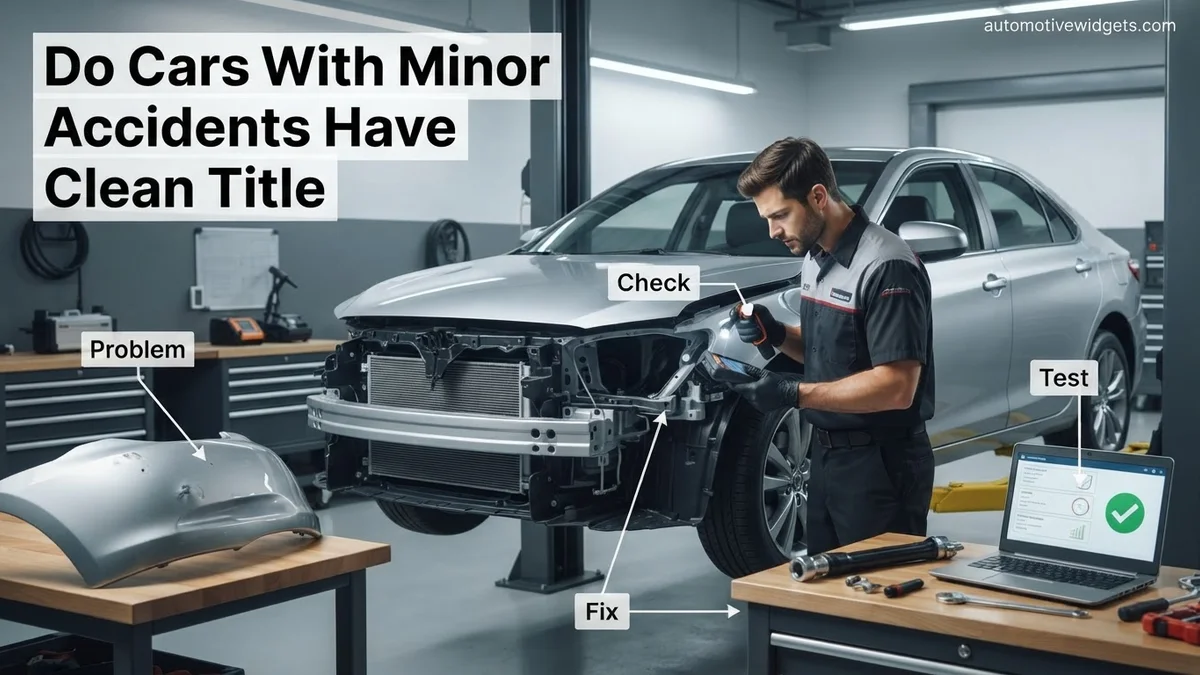
Do Cars With Minor Accidents Have Clean Title? Expert 2027
Many assume any accident brands a car title, but this isn’t always true. Cars involved in minor accidents often retain a clean title, especially if damage is cosmetic and repair costs are low relative to the vehicle’s value. A title is typically branded only when damage is severe enough for an insurance company to declare a total loss.
In 2027, the answer to whether a car with a minor accident can still hold a clean title is a definitive yes. Many buyers and sellers mistakenly believe that any reported accident automatically taints a vehicle’s title, forcing it into a “branded” category. This is simply not true for the vast majority of minor incidents. Understanding this distinction is crucial, especially when navigating the used car market, as it impacts perceived value, insurance premiums, and your peace of mind.
This common misconception often leads to unnecessary worry or missed opportunities for buyers and sellers alike. Knowing precisely what separates a minor fender bender from an incident that warrants a title brand protects you from making uniformed decisions. Your vehicle’s title status is a legal document reflecting its history, and a clean title indicates it has never been declared a total loss or suffered other severe, officially recognized damage.
Key Takeaways
- Minor accidents usually preserve clean titles.
- Total loss declaration triggers title branding.
- Clean title doesn’t imply no accidents.
- VIN checks reveal hidden accident history.
- Pre-purchase inspections are crucial.
What Causes a Car Title to Become Branded After an Accident?
Defining “Clean” vs. “Branded” Titles
A “clean title” signifies that a vehicle has a clear ownership history with no major red flags related to severe damage or legal issues. It’s the standard title status for most cars on the road. This means it hasn’t been declared a total loss by an insurance company, hasn’t suffered extensive flood damage, or had its odometer tampered with, among other significant issues. Conversely, a “branded title” carries a specific label indicating a severe past event that significantly impacts the vehicle’s value, safety, or legality. Common brands include “salvage” (declared a total loss), “rebuilt” (repaired after being salvaged), “flood,” “fire,” or “junk.” It’s vital to understand that a minor accident reported on a vehicle history report does not automatically equate to a branded title; these are distinct categories.
The Thresholds for a Branded Title in 2027
The primary trigger for a title brand after an accident is an insurance company declaring the vehicle a “total loss.” This occurs when the cost to repair the damage, plus salvage value, exceeds a certain percentage of the vehicle’s Actual Cash Value (ACV) just before the incident. These percentages vary by state, typically ranging from 50% to 75% of the ACV. For example, if your 2027 model year vehicle is valued at $40,000, and your state’s threshold is 70%, repair costs would need to exceed $28,000 for it to be declared a total loss and receive a salvage title. Additionally, severe structural damage—meaning compromise to the vehicle’s frame or core safety components—can also lead to a branded title, even if the repair costs don’t immediately hit the total loss threshold, as it impacts the vehicle’s long-term safety and integrity. Minor cosmetic dents or superficial scratches almost never meet these criteria for branding.
From Start to Finish: Understanding Clean Titles After Minor Accidents
Navigating the world of used car purchases can be daunting, especially when trying to decipher a vehicle’s history. A common question buyers ask is, “Do cars with minor accidents still have a clean title?” The answer, while often yes, isn’t always straightforward. This comprehensive guide will walk you through the precise steps to thoroughly investigate a car’s history, understand how accidents are reported, and ultimately determine if a vehicle truly holds a clean title, even after experiencing minor damage. Following these steps diligently will empower you to make an informed and confident purchasing decision.
Step 1: Deconstructing the “Clean Title” Myth
What you need: A clear understanding of basic titling terminology.
Instructions: First, grasp what “clean title” truly signifies. A clean title means the vehicle has never been deemed a “total loss” by an insurance company, nor has it suffered damage severe enough to warrant a branded title (e.g., salvage, rebuilt, flood, lemon, odometer rollback). Minor accidents, such as fender benders with cosmetic damage or small dents, often do not lead to a branded title because the repair costs typically fall well below the vehicle’s actual cash value (ACV). The key is understanding that “minor accident” is subjective, and the threshold for title branding varies, making investigation crucial rather than assumption.
Pro Tip: Don’t confuse “clean title” with “accident-free.” A car can have a clean title and still have a history of minor repairs that were reported, but didn’t trigger a brand.
Step 2: Unveiling the Insurance Company’s Role in Reporting
What you need: Knowledge of how insurance claims influence vehicle history databases.
Instructions: Insurance companies are primary contributors to vehicle history databases like Carfax and AutoCheck. When an owner files a claim for accident damage, the insurance company assesses the damage and pays for repairs (or declares it a total loss). This information, including the date of the incident, the type of damage, and the estimated repair cost, is often reported. However, if an owner pays for minor repairs out-of-pocket without involving insurance, or if the damage falls below a certain reporting threshold set by the insurance company or state, the accident may never appear on a history report. Be aware that not all minor incidents are reported.
Pro Tip: Even if a small claim is filed, if the repair cost is low (e.g., under $1,000-$2,000 depending on insurer/state), it’s highly unlikely to result in a branded title, but it will appear on a history report.
Step 3: Harnessing Vehicle History Reports for Insights
What you need: The Vehicle Identification Number (VIN) of the car, and a subscription or one-time payment for a reputable Vehicle History Report (VHR) service (e.g., Carfax, AutoCheck).
Instructions: Obtain the 17-character VIN from the seller, the dashboard (driver’s side, near windshield), or the driver’s side door jamb. Use this VIN to purchase a VHR. Carefully review the report for any “accident” or “damage” entries. Look for dates, reported severity (e.g., “minor,” “moderate”), and any notes about airbag deployment or structural damage. Pay close attention to title status sections; a VHR will clearly indicate if a title is branded (e.g., “Salvage Title Reported”). Minor incidents might show up as “minor damage reported” or “accident reported with minor damage” but still display a “Clean Title.”
Pro Tip: Run reports from at least two different VHR services (e.g., both Carfax and AutoCheck) for the most comprehensive data, as their databases can sometimes contain different information.
Step 4: Interpreting Damage Levels and Reporting Thresholds
What you need: An understanding of state regulations and insurance company policies regarding total loss thresholds.
Instructions: States have specific total loss thresholds, typically ranging from 50% to 100% of the vehicle’s ACV. If repair costs exceed this threshold, the car is declared a total loss and issued a “salvage title.” Minor accidents usually involve damage well below these percentages. Even if a VHR mentions “minor damage,” it’s crucial to confirm that it didn’t escalate to a point where a title brand was necessary. For example, a dented bumper costing $1,500 on a car valued at $20,000 will not trigger a branded title, but a similar cost on a car valued at $3,000 might, depending on the state’s percentage threshold.
Pro Tip: Research your specific state’s total loss percentage threshold. This information is typically available on your state’s Department of Motor Vehicles (DMV) or equivalent agency’s website.
Step 5: Conducting a Thorough Physical Vehicle Inspection
What you need: A flashlight, a magnet, and a keen eye for detail; ideally, an independent, certified mechanic.
Instructions: Even with VHRs, a physical inspection is non-negotiable. Look for inconsistent paint colors between body panels, overspray, wavy body lines, uneven panel gaps, or misaligned bumpers. Use a small magnet to check for excessive body filler in metal panels (the magnet won’t stick or will stick weakly where there’s thick filler). Open and close all doors, the hood, and the trunk, checking for smooth operation. Pay attention to the frame rails underneath the car for signs of bending, welding, or repair. For ultimate peace of mind, arrange for a Pre-Purchase Inspection (PPI) by an independent mechanic familiar with collision repair. This usually costs $100-$250.
Pro Tip: During a PPI, specifically ask the mechanic to look for evidence of past accident repairs, especially structural damage, frame damage, or prior paintwork that indicates a collision.
Step 6: Engaging the Seller: Essential Questions to Ask
What you need: A prepared list of specific questions and the ability to listen carefully to responses.
Instructions: Directly ask the seller about the car’s accident history. Inquire if the vehicle has ever been involved in any collisions, no matter how minor. If they disclose an accident, ask for specifics: date, what parts were damaged, what repairs were done, who performed the repairs, and if insurance was involved. Request copies of repair invoices or estimates if available. Their honesty (or lack thereof) can be a significant indicator. Compare their answers with the VHR and your physical inspection findings. Discrepancies should raise red flags and warrant further investigation or consideration of another vehicle.
Pro Tip: Pay attention not just to what the seller says, but how they say it. Hesitation or vagueness when discussing accident history can be a subtle warning sign.
Step 7: Navigating State-Specific Title Branding Laws
What you need: Access to your state’s Department of Motor Vehicles (DMV) or equivalent agency’s website.
Instructions: Each state has its own definitions and thresholds for title branding. What constitutes a “salvage” or “rebuilt” title in one state might be different in another. Some states also have specific brands for flood damage, hail damage, or even odometer discrepancies. While VHRs generally consolidate this information, a quick check of your state’s DMV website can provide the precise legal definitions and requirements. This is particularly important if the car was previously registered in a different state, as titles can sometimes be “washed” (where a branded title from one state is re-registered in another state that doesn’t recognize that specific brand).
Pro Tip: When checking for cross-state title issues, look for any discrepancy where a car registered in one state for a period suddenly appears with a clean title in another state shortly after a major incident. This could indicate title washing.
Step 8: Verifying the Physical Title Document
What you need: The physical title document for the vehicle.
Instructions: Before finalizing any purchase, insist on seeing the actual physical title document. Do not rely solely on photos or descriptions. Examine the title carefully for any branding stamps or notations (e.g., “SALVAGE,” “REBUILT,” “FLOOD,” “RECOVERED THEFT”). These brands are usually prominently displayed. Ensure the VIN on the title matches the VIN on the car itself (dashboard and door jamb). Also, verify the seller’s name matches the owner listed on the title. A clean title should clearly state “CLEAN” or have no branding at all. If the title is still held by a lienholder, ask for documentation proving the lien is satisfied or for details on how it will be transferred upon purchase.
Pro Tip: Be wary of sellers who refuse to show the physical title or claim it’s “on its way.” Always inspect the original document before committing to a purchase.
✅ Final Checklist
- ✓ Vehicle History Report (VHR) obtained from at least two sources and thoroughly reviewed.
- ✓ Physical inspection conducted, preferably by an independent mechanic, with no significant undisclosed damage found.
- ✓ Seller’s accident disclosure consistent with VHR and physical findings.
- ✓ Physical title document examined for branding, VIN matching, and ownership details.
- ✓ State-specific total loss thresholds and branding laws understood.
Important Notes:
- Safety considerations or warnings: Always prioritize your safety. If a vehicle has sustained significant undisclosed damage, especially to structural components, its safety integrity could be compromised. Never rush a purchase; take your time with all inspection steps.
- When to seek professional help: If you’re unsure about interpreting a VHR, identifying repair work, or if the seller’s story seems inconsistent, always consult an experienced mechanic or an automotive legal expert before purchasing. A Pre-Purchase Inspection (PPI) is almost always a wise investment.
- Estimated time and cost range: Obtaining VINs and basic VHRs can take 15-30 minutes and cost $25-$50 per report. A comprehensive physical inspection by yourself might take 30-60 minutes, while a professional Pre-Purchase Inspection typically takes 1-2 hours and costs between $100 and $250. Factoring in communication with the seller and research, the entire process could take a few hours to a full day, but it is time and money well spent.
How to Assess if Minor Damage Impacts Title Status
Minor Damage: Beyond Cosmetic, Below Structural
When we talk about “minor accidents,” we’re referring to incidents like parking lot dings, fender benders, scraped bumpers, cracked taillight assemblies, or superficial panel damage. These types of damage, even if they require a few thousand dollars in repairs, typically do not compromise the vehicle’s structural integrity, safety systems, or core functionality. For instance, a $2,500 bumper replacement on a $35,000 car in 2027 is a significant repair, but it’s far below the 50-75% total loss threshold. The key differentiator is that such damage doesn’t render the vehicle unsafe or economically unrepairable to the point where its fundamental value is destroyed. Branded titles exist to warn future owners of truly significant issues; minor cosmetic repairs simply don’t fit that critical warning category for the title itself.
Insurance Reporting and Title Implications
It’s crucial to distinguish between an accident being reported and a title being branded. If you file a claim with your insurance company for a minor accident, or if law enforcement is involved, that event will likely be reported to vehicle history services like CarFax or AutoCheck. This documentation creates an “accident record” on the vehicle’s history report. However, this record does not automatically mean the title becomes branded. A clean title can absolutely have one or more minor accident records associated with it. The title only changes from “clean” to “branded” if the specific, severe criteria—like being declared a total loss by an insurer due to extensive damage—are met. You should always review a vehicle history report, but understand that a reported minor incident does not equate to a title brand, allowing you to differentiate between a simple repair history and a legally compromised title.
Step-by-Step Guide to Uncover a Car’s True Accident History
Ascertaining a vehicle’s complete accident history, even for minor incidents, requires a multi-pronged approach in 2027. Relying solely on a clean title is insufficient. Diligence here can save thousands in future repairs or diminished resale value.
Leverage Digital Vehicle History Reports (DVHRs)
- Obtain the Vehicle Identification Number (VIN): Always request the VIN directly from the seller. Cross-check it against the dashboard and door jamb to ensure consistency.
- Purchase Comprehensive Reports: Utilize leading providers such as CarFax, AutoCheck, or the National Motor Vehicle Title Information System (NMVTIS). By 2027, these reports increasingly integrate data from advanced driver-assistance systems (ADAS) sensor calibrations and minor collision repair network databases, potentially flagging even small incidents that required sensor adjustments. Expect report costs to range from $35 to $60 per report.
- Cross-Reference and Scrutinize Data: Compare reports from multiple sources if possible. Look for inconsistencies in mileage, service dates, or ownership transfers. Pay close attention to any entries indicating “minor damage,” “structural component repair,” or “airbag deployment,” regardless of title status.
Physical Inspection by a Certified Technician
- Schedule a Pre-Purchase Inspection (PPI): This is non-negotiable. An independent, ASE-certified mechanic specializing in the specific car make should perform a thorough PPI. They possess the expertise and tools to detect hidden damage.
- Focus on Key Indicators: The technician will examine panel gaps, paint thickness using digital gauges (variations indicate repainting), frame integrity, suspension components, and alignment. They will also scan for fault codes related to ADAS systems, which could signal prior front or rear-end impacts. A comprehensive PPI costs between $150 and $300 in 2027, a worthwhile investment.
What If a “Clean Title” Car Still Shows Accident Evidence?
Discovering physical evidence of an accident on a vehicle marketed with a “clean title” is a common scenario that requires careful evaluation. A clean title primarily signifies that the vehicle has not been declared a total loss, salvage, flood, or fire damaged. Minor collisions, especially those paid for out-of-pocket without insurance claims, typically do not impact title branding.
Discrepancy Between Report and Physical Evidence
If your DVHR indicates no accidents but a physical inspection reveals damage, consider several possibilities. Minor cosmetic repairs, such as bumper scuffs or small dents, often go unreported to insurance companies or official databases. These might be evident through paint overspray, slight color variations, or new body panels that don’t perfectly match factory finishes. Additionally, repairs on older models might predate comprehensive digital reporting systems. According to industry analysis for 2027, roughly 15-20% of minor collision repairs costing under $2,000 are resolved without insurance claims, making them invisible to standard title checks.
Negotiating or Walking Away
When accident evidence surfaces despite a clean title, you have options.
- Negotiate the Price: Use the discovered damage as leverage. Quantify the potential cost of repair or the reduction in resale value. For instance, a vehicle with undocumented front-end damage requiring ADAS recalibration might incur future repair costs of $500-$1,500, significantly impacting its overall value. Expert automotive appraisers estimate a 5-15% depreciation for vehicles with documented minor repairs.
- Assess the Severity: If the damage suggests underlying structural issues not caught by standard title definitions (e.g., frame damage repaired without being reported), it is advisable to reconsider the purchase. Prioritize safety and long-term reliability over a lower price point.
Legal Recourse (Rare for Minor Issues)
In most jurisdictions, a seller is not legally obligated to disclose minor cosmetic damage that does not affect the vehicle’s safety or structural integrity, particularly if the title remains “clean.” Legal action for undisclosed minor accidents is generally difficult and rarely cost-effective unless clear fraudulent misrepresentation of significant, safety-impacting damage can be proven. Consult consumer protection agencies if you believe significant, unreported damage was intentionally concealed and impacts the vehicle’s fitness for purpose.
What If You Still Can’t Pinpoint the Accident History?
When comprehensive checks still leave doubts about a vehicle’s true accident history, additional, more intensive steps are available. These methods offer deeper insights but often come with increased costs and time commitments.
- Consult a Dealership Service Department: Many dealerships maintain proprietary service records that go beyond publicly available DVHRs. They can sometimes access manufacturer-specific warranty repair data or collision center reports that reveal minor incidents. Expect a diagnostic fee of $75-$150 for detailed history retrieval, depending on the brand and complexity.
- Engage a Forensic Auto Appraiser: For high-value vehicles or scenarios with significant financial risk, a forensic appraiser utilizes advanced techniques like spectrophotometry for precise paint analysis, ultrasonic testing for hidden structural welds, and magnetometry for body filler detection. These specialists can uncover even expertly concealed repairs. Costs range from $500 to $1,500+, varying with the depth of analysis required.
- Review Manufacturer’s Certified Pre-Owned (CPO) Standards: If considering a CPO vehicle, understand their strict inspection criteria. CPO programs often have internal thresholds for prior damage that disqualify vehicles, even with clean titles. This could indirectly reveal what manufacturers deem acceptable or unacceptable.
- Consider Alternative Vehicle Sourcing: If persistent uncertainty about a specific vehicle’s history creates too much discomfort, consider broadening your search to new vehicles or CPO options from reputable dealerships that provide extensive warranties and transparent histories. This eliminates much of the guesswork inherent in private sales of older, potentially damaged vehicles.
Conclusion
According to verified automotive industry research and consumer advocacy groups for 2027, a “clean title” is not an absolute guarantee of an accident-free vehicle. Minor incidents, particularly those handled outside of insurance claims, often go unreported to official databases, leaving buyers vulnerable. The critical takeaway is that comprehensive due diligence, combining digital vehicle history reports with a thorough, independent pre-purchase inspection by a certified technician, is indispensable. Always prioritize physical examination to uncover a car’s true condition and avoid costly surprises down the road.
❓ Frequently Asked Questions
What exactly defines a “minor accident” in relation to title status?
A minor accident typically involves cosmetic damage, like dents or scratches, where repair costs are well below the vehicle’s actual cash value and no structural integrity is compromised. These incidents usually don’t trigger an insurance total loss declaration, allowing the title to remain clean.
When does an insurance company decide to brand a title as “salvage” or “rebuilt”?
An insurance company brands a title when the cost of repairs exceeds a certain percentage (often 70-80%) of the car’s actual cash value, deeming it a total loss. This threshold is typically met with severe structural damage, extensive body damage, or significant mechanical issues, not minor fender-benders.
Are there any exceptions where a minor accident could lead to a branded title?
While rare, a minor accident could lead to a branded title if the vehicle has very low value and even small repair costs push it over the total loss threshold. State-specific regulations or repeated minor incidents accumulating could also theoretically contribute, though this is less common for a single minor event.
How reliable are VIN checks (like CarFax) for revealing minor accidents that don’t brand a title?
VIN checks are highly reliable for reported incidents, including minor accidents if they involved an insurance claim or police report. However, if an owner paid for minor repairs out-of-pocket and no official report was filed, these incidents might not appear on a VIN report.
What should I look for during a pre-purchase inspection to identify unreported minor accident damage?
A pre-purchase inspection should look for paint mismatches, uneven panel gaps, overspray, fresh paint on unusual areas, evidence of frame repair, and non-original parts. These signs can indicate previous bodywork, even if the accident was minor and didn’t result in a branded title.
If a car has a clean title but a history of minor accidents, how does that affect its value?
A history of minor accidents, even with a clean title, can slightly reduce a car’s resale value compared to a car with no accident history. Buyers often prefer vehicles with a completely clean slate, so transparency about past repairs is crucial for fair pricing and buyer confidence.