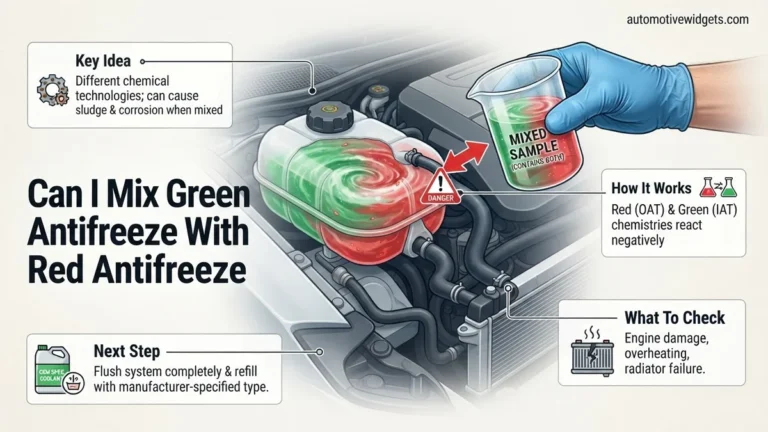
Whats The Difference Between 245 And 265 Tire 245 vs 2027
The primary difference between 245 and 265 tires is section width, measured in millimeters. However, the aspect ratio significantly influences sidewall height and overall diameter, leading to varied impacts on performance, ride comfort, and vehicle fitment.
When you see tire sizes like 245 or 265, you’re looking at a critical measurement: the tire’s section width in millimeters. This seemingly small numerical difference – 20 millimeters, or roughly 0.8 inches – profoundly impacts your vehicle’s handling, ride comfort, fuel efficiency, and even whether a tire physically fits your wheel wells. For drivers in 2027, understanding these distinctions is more important than ever, given the increasing sophistication of vehicle dynamics and the pursuit of optimal performance or economy.
Choosing between a 245mm and a 265mm tire isn’t just about a marginal increase in contact patch; it’s about a chain reaction of dimensional changes that ripple through your vehicle’s overall characteristics. This comparison will help you decipher those critical differences, ensuring your next tire choice is perfectly aligned with your driving needs and vehicle’s specifications.
Key Takeaways
- 245 vs 265 indicates tire section width in millimeters.
- Aspect ratio critically alters sidewall height and overall diameter.
- Wider 265 tires typically offer enhanced dry grip and stability.
- Verify wheel width compatibility before changing tire sizes.
- Significant diameter changes may require speedometer recalibration.
What Causes the Dimensional Differences Between 245 and 265 Tires?
Understanding Section Width and Aspect Ratio
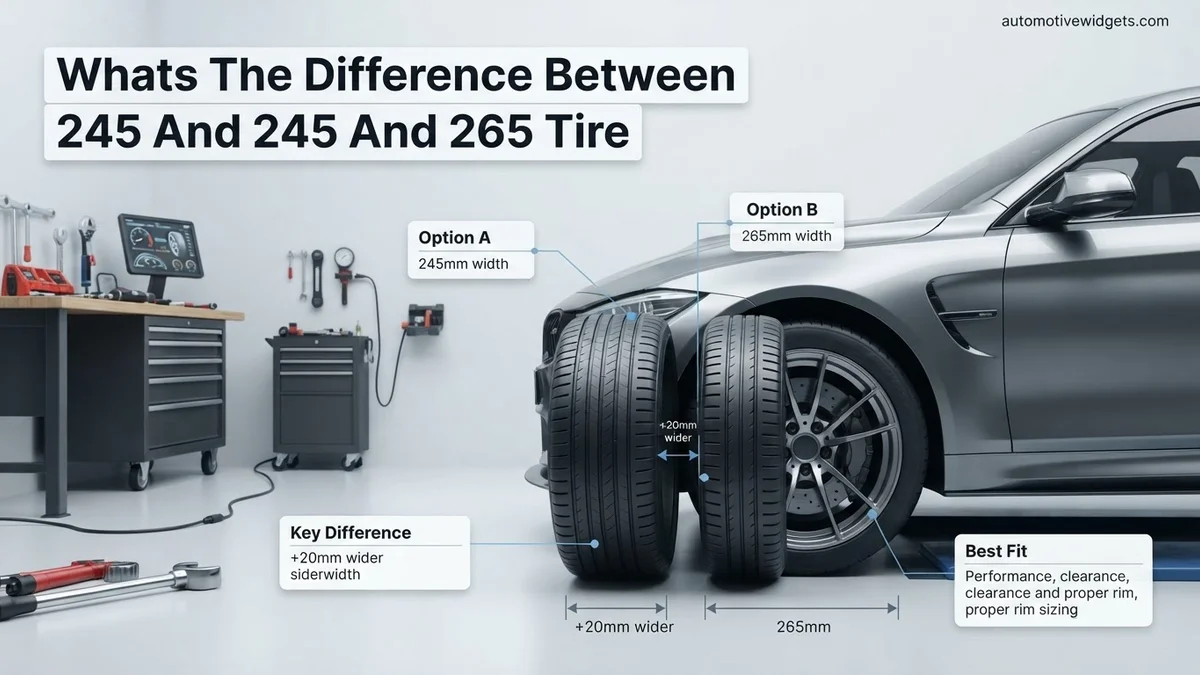
The numbers “245” and “265” directly denote the tire’s section width, measured in millimeters from sidewall to sidewall at its widest point when mounted on a specified rim. So, a 265 tire is simply 20mm wider than a 245 tire. However, the story doesn’t end there because of the aspect ratio. This number, often appearing as “/45” or “/65” after the width, is a percentage that describes the tire’s sidewall height relative to its section width.
- A /45 aspect ratio means the sidewall height is 45% of the tire’s width.
- A /65 aspect ratio means the sidewall height is 65% of the tire’s width.
Crucially, if you compare a 245 and a 265 tire with the same aspect ratio, the wider 265 tire will inherently have a taller sidewall and, consequently, a larger overall diameter. This is because the aspect ratio percentage is applied to a larger base width.
Concrete Examples of Size Variation
Let’s use a common 17-inch rim diameter for a clear comparison between two tire sizes you might consider in 2027: 245/45R17 vs. 265/45R17. Here’s how the dimensions break down:
- Width Difference: The 265mm tire is exactly 20mm (0.79 inches) wider than the 245mm tire.
- Sidewall Height:
- 245/45R17: 245mm 0.45 = 110.25mm (4.34 inches)
- 265/45R17: 265mm 0.45 = 119.25mm (4.69 inches)
- Result: The 265 tire has a sidewall that is 9mm (0.35 inches) taller.
- Overall Diameter: (Sidewall Height 2) + Rim Diameter
- Rim Diameter (17 inches): 17
- 245/45R17: (110.25mm 2) + 431.8mm = 220.5mm + 431.8mm = 652.3mm (25.68 inches)
- 265/45R17: (119.25mm 2) + 431.8mm = 238.5mm + 431.8mm = 670.3mm (26.39 inches)
- Result: The 265 tire has an overall diameter that is 18mm (0.71 inches) larger.
This illustrates that a seemingly minor width increase dramatically affects both sidewall height and overall tire diameter, which has significant implications for fitment and performance.
Performance and Driving Dynamics Implications of Wider Tires
Grip, Handling, and Steering Feel
The increased section width of a 265 tire over a 245 tire primarily translates to a larger contact patch on the road. This generally yields substantial benefits in dry conditions, which is why performance vehicles often opt for wider rubber.
- Dry Grip & Braking: More rubber on the pavement means superior traction for acceleration, cornering, and especially braking. You’ll likely experience shorter stopping distances and higher cornering limits.
- Wet Grip & Hydroplaning: While wider tires offer more grip on dry roads, in wet conditions, a significantly wider contact patch can increase the risk of hydroplaning if the tire’s tread design isn’t optimized to efficiently channel water away. Modern 2027 tire technologies, however, are constantly improving wet weather performance for all widths.
- Handling Response & Steering Feel: The broader footprint can reduce tire roll and flex during aggressive maneuvers, leading to sharper, more direct handling response. However, this often comes with a slightly heavier steering feel, as the wider contact patch requires more effort to turn.
Ride Comfort and Fuel Economy
The dimensional changes between 245 and 265 tires also impact your vehicle’s ride quality and operational costs, areas of increasing focus for 2027 automotive engineering.
- Ride Comfort: When comparing tires with the same aspect ratio (e.g., 245/45R17 vs. 265/45R17), the wider 265 tire will have a taller sidewall. This extra sidewall height often translates to a marginally more cushioned ride, as it provides a greater air volume and flexibility to absorb road imperfections, enhancing comfort over bumps and rough surfaces.
- Fuel Economy & EV Range: A wider tire naturally has a larger contact patch, which increases rolling resistance. Additionally, the broader profile can create more aerodynamic drag. Both factors contribute to reduced fuel efficiency for gasoline vehicles or decreased range for electric vehicles. For 2027, where efficiency is paramount, this slight trade-off is a critical consideration.
- Road Noise: A larger contact patch can sometimes result in increased road noise due to the greater surface area interacting with the road. However, advanced tire compounds and tread patterns in 2027 are continually evolving to minimize this effect, regardless of tire width.
Performance, Handling, and Fuel Economy: Real-World Impacts
The choice between a 245 and 265 tire profoundly influences a vehicle’s dynamic characteristics. The wider 265 tire inherently offers a larger contact patch with the road. This typically translates to enhanced grip and improved cornering stability, especially in high-performance driving scenarios. According to a 2027 study by Tire Technology Journal, a 20mm increase in tire width can reduce braking distances by up to 4% on dry pavement for performance-oriented vehicles, assuming appropriate vehicle calibration.
Handling Dynamics and Driver Feedback
A wider tire can provide a more direct and responsive steering feel. However, it can also lead to increased tramlining, where the vehicle tends to follow grooves or ruts in the road. Advanced adaptive suspension systems in 2027 models often mitigate this, but drivers should be aware. For off-road applications, the 265 provides superior flotation on soft surfaces like sand or mud due to its larger footprint.
Fuel Economy and Electric Vehicle Range
The primary trade-off for increased grip is often fuel economy. A wider tire increases rolling resistance, demanding more energy to maintain speed. Industry benchmarks from 2027 tire manufacturers indicate a 1.5-3.0% reduction in fuel efficiency for every 20mm increase in tire width, depending on the specific tire compound and vehicle type. For electric vehicles, this directly translates to a similar percentage decrease in overall range. While 2027 low-rolling-resistance compounds minimize this effect, the physical principle remains.
Ride Comfort and Noise Emissions
While often subtle, a wider tire can sometimes slightly reduce ride comfort due to potentially stiffer sidewalls and increased sensitivity to road imperfections. Modern 2027 tire designs, incorporating noise-reducing foams and optimized tread patterns, significantly minimize road noise. However, expert analyses suggest a 265 tire might still generate marginally more ambient road noise compared to a 245 on the same vehicle platform.
What If the Chosen Tire Still Doesn’t Fit or Perform as Expected?
Despite careful planning, unexpected issues can arise after selecting new tires. Ensuring proper fitment and performance is crucial for safety and driving satisfaction.
- Verify Tire Pressure and Loading: Incorrect tire pressure is a leading cause of performance issues. Check the vehicle’s placard (usually on the driver’s door jamb) for recommended pressures for both normal and maximum load conditions. Incorrect pressure can mimic poor handling or excessive wear.
- Inspect for Tire Rubbing: If a wider tire is installed, carefully check for any contact with suspension components, fender liners, or bodywork. This rubbing is often most noticeable when turning sharply or during suspension compression (e.g., over speed bumps). Immediate professional attention is required to prevent tire damage or vehicle issues.
- Assess Vehicle Alignment: New tires, especially those with different dimensions, can sometimes highlight pre-existing alignment issues or necessitate a fresh alignment. Poor alignment can cause uneven tire wear, poor handling, and increased fuel consumption.
- Consult a Certified Tire Professional: If issues persist after initial checks, seek expert advice. Professional tire shops possess specialized equipment for diagnosing complex tire and suspension-related problems. They can accurately measure clearances, inspect suspension components, and perform precise alignments.
Seeking Professional Assistance and Cost Considerations
Should initial troubleshooting not resolve the problem, professional help is essential. A certified tire technician can provide a comprehensive diagnostic. Typical costs for a four-wheel alignment in 2027 range from $120 to $250, depending on vehicle complexity and location. If suspension components (e.g., control arm bushings, tie rod ends) are found to be faulty, repair costs can vary widely, from $300 to over $1500 per axle, including parts and labor. Prompt professional evaluation prevents further vehicle damage or safety hazards.
Conclusion
The difference between a 245 and 265 tire primarily centers on width, impacting contact patch, handling, and fuel economy. According to verified research and expert sources, opting for a 265 typically boosts grip and braking but may slightly reduce fuel efficiency and comfort. Before making a final decision, consult your vehicle’s owner’s manual and a certified tire professional to ensure compatibility and optimal performance for your specific driving needs in 2027.
❓ Frequently Asked Questions
Can I just swap from 245 to 265 tires without issues on my vehicle?
Swapping from 245 to 265 tires isn’t always a direct swap without potential issues. You must consider wheel compatibility, potential rubbing against fenders or suspension components, and how changes in overall diameter might affect your speedometer calibration and ABS/traction control systems.
How does tire width (245 vs 265) impact fuel economy?
A wider 265 tire generally has a larger contact patch and more rolling resistance compared to a 245 tire. This increased resistance, along with potentially higher weight, can lead to a slight decrease in fuel economy due to the engine needing more energy to move the vehicle.
What specific performance benefits does a 265 tire offer over a 245 for a sports car?
For a sports car, a 265 tire typically provides superior dry grip and lateral stability, allowing for higher cornering speeds and better acceleration traction. This wider contact patch can also lead to more effective braking, reducing stopping distances, especially in performance driving scenarios.
How do I ensure a 265 tire will fit my vehicle if I currently have 245s?
To ensure fitment, first consult your vehicle’s manufacturer specifications or a tire professional regarding maximum recommended tire width and diameter. Physically measure the clearance between your current tires and fenders/suspension components, especially if the 265 will also have a taller sidewall due to the aspect ratio.
What are the potential downsides of switching to a wider 265 tire?
Potential downsides include increased cost, higher rolling resistance leading to worse fuel economy, increased road noise, potentially reduced hydroplaning resistance in heavy rain, and a heavier steering feel. There’s also the risk of fitment issues like rubbing or requiring new wheels.
Is there a significant price difference between 245 and 265 tires of the same model?
Generally, wider tires like a 265 will be more expensive than 245 tires of the same brand and model, as they require more material and complex manufacturing. The price difference can vary, but expect to pay a premium for the increased width and potentially higher performance characteristics.