Why Is My Car Overheating When I Have Coolant Why Car 2027
Even with sufficient coolant, your car can overheat due to underlying mechanical failures preventing proper heat dissipation. Common culprits include a faulty thermostat, failing water pump, or a clogged radiator, all of which disrupt the cooling system’s function.
Your car is overheating, even though you’ve confirmed the coolant reservoir is full. This common and frustrating scenario occurs not because of a lack of coolant, but because critical components within your cooling system are failing to circulate or dissipate heat effectively. Think of your cooling system as a team: the coolant is the star player, but if the rest of the team isn’t performing, the whole system breaks down.
Ignoring an overheating engine, even one with full coolant, is a direct path to expensive and permanent engine damage. We’re talking warped cylinder heads, cracked engine blocks, and total engine failure. In 2027, with advanced engine designs, preventing these issues proactively is more crucial than ever. Understanding why this happens and what to look for can save you thousands in repairs and keep your vehicle reliable.
Key Takeaways
- Inspect cooling fan for proper operation.
- Check radiator for external debris or internal clogs.
- Suspect thermostat if hoses are unevenly hot/cold.
- Listen for water pump noises or look for leaks.
- Seek professional diagnosis for head gasket concerns.
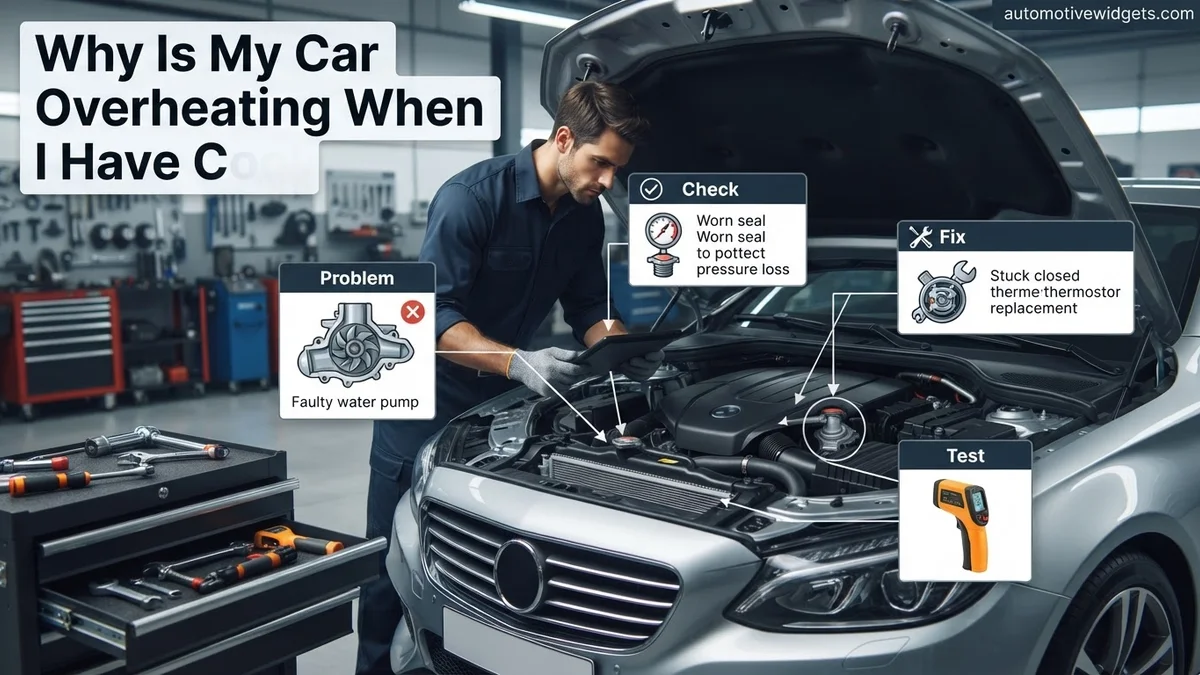
What Causes Car Overheating With Coolant? (Diagnosis)
Even with a full reservoir, heat can’t be removed if coolant circulation is blocked or heat transfer is compromised. Here are the primary culprits.
Restricted Coolant Circulation
- Faulty Thermostat (Stuck Closed): This is arguably the most frequent cause. The thermostat regulates coolant flow to the radiator. If it’s stuck closed, hot coolant cannot reach the radiator for cooling.
Diagnosis: Your engine temperature gauge spikes rapidly. The upper radiator hose will be extremely hot, but the lower radiator hose will feel cool or only slightly warm, indicating no flow. - Failing Water Pump: The water pump’s job is to circulate coolant throughout the engine and radiator. Over time, its impeller blades can erode, or its bearing can fail. This leads to inefficient or no coolant movement.
Diagnosis: You might hear a whining noise from the engine’s front, or notice a slow coolant leak near the pump shaft. Engine temperature will fluctuate erratically, or climb steadily. - Airlock in the Cooling System: After a coolant flush or repair, air can get trapped within the system. This air forms a bubble that blocks coolant flow, much like a vapor lock.
Diagnosis: Your cabin heater might blow cold air despite the engine being hot. You could hear gurgling sounds from behind the dashboard. The coolant level in the reservoir might fluctuate unexpectedly.
Ineffective Heat Dissipation & Other Failures
- Clogged Radiator: Radiators can become clogged internally with mineral deposits, rust, or debris over time, even with proper coolant. Externally, dirt, leaves, or road grime can block airflow through the fins. Both prevent effective heat transfer.
Diagnosis: Feel the radiator core after it’s been running; you might find uneven temperature spots. Visually inspect the radiator’s exterior for obvious blockages. - Malfunctioning Cooling Fan or Fan Relay: Your car’s electric fan pulls air through the radiator when the vehicle is stationary or moving slowly (like in traffic). If the fan doesn’t activate when the engine is hot, heat builds up.
Diagnosis: With the engine hot and AC on, observe if the fan is spinning. If not, check its fuse, relay, and the fan motor itself. - Defective Temperature Sensor: The engine temperature sensor sends vital data to your car’s ECU and dashboard gauge. If it malfunctions, it might report incorrect temperatures, failing to trigger the cooling fan or giving you false readings while the engine actually overheats.
Diagnosis: The gauge might behave erratically (jumping wildly) or appear normal while other signs (steam, boiling coolant) indicate severe overheating. - Blown Head Gasket or Cracked Engine Block: These are serious internal engine failures. A blown head gasket allows combustion gases to leak into the cooling system, creating excessive pressure and bubbles in the coolant reservoir. A cracked block or cylinder head can also cause coolant to disappear internally or mix with oil.
Diagnosis: Look for bubbles in the coolant reservoir (especially when revving the engine), white smoke from the exhaust, a sweet exhaust smell, or “milky” oil on your dipstick. These symptoms demand immediate professional attention.
How to Address Your Overheating Car
Once you’ve identified a potential cause, taking the right steps is crucial to prevent further damage. These actions range from immediate safety measures to specific repairs.
Immediate Safety Measures & Initial Checks
- Pull Over & Cool Down Safely: The instant your temperature gauge spikes or an overheat warning appears, pull over to a safe location. Turn off the engine. Crucially, never open the radiator cap on a hot engine; hot steam and coolant can cause severe burns.
- Activate Cabin Heater: If it’s safe to do so for a very short period (e.g., when pulling over), turn your cabin heater to full blast. This draws some heat away from the engine into the car’s interior, acting as a temporary small radiator.
- Observe Fan Operation: After the engine has cooled slightly, restart it (if safe) and let it idle. Does the electric cooling fan engage? Try turning on your AC – this should force the fan to run. If the fan doesn’t spin, investigate the fan fuse, relay, or motor.
- Hose Temperature Check (Cool Engine): Once your engine is cool to the touch, carefully feel the upper and lower radiator hoses. If the upper hose is significantly hotter than the lower, it’s a strong indicator of a stuck thermostat or a clogged radiator.
Addressing Specific Diagnosed Issues
- Stuck Thermostat: If diagnosed, replacing the thermostat is often a moderately intensive DIY task for those with some mechanical experience. You’ll need to drain some coolant. Ensure you properly bleed the system of air afterward to avoid new airlocks.
- Failed Cooling Fan/Relay: Start by checking the relevant fuse in your 2027 vehicle’s fuse box (consult your owner’s manual). If the fuse is good, test or replace the fan relay. If both are functional, a non-responsive fan motor requires replacement.
- Airlock in System: System bleeding is essential. Some vehicles have bleed screws; otherwise, “burp” the system by running the engine with the radiator cap off (once cool) and the heater on high, topping off coolant as air escapes. Be patient, as this can take time.
- Advanced Issues (Clogged Radiator, Water Pump, Head Gasket): For more complex problems like internal radiator clogs, failing water pumps, or especially critical issues such as a blown head gasket or cracked engine block, professional diagnosis and repair are highly recommended. These often involve specialized tools, pressure testing, and extensive engine work to avoid catastrophic engine failure.
What If Your Car Still Overheats? (Troubleshooting & Next Steps)
If you’ve addressed the primary concerns of air in the system, a failing radiator cap, or external radiator blockages, yet your vehicle continues to overheat, more in-depth diagnostics are required. Modern automotive systems, particularly 2027 models, offer sophisticated sensors, but core mechanical failures still manifest as overheating.
Radiator Fan Malfunction
The electric radiator fan is crucial for cooling, especially at low speeds or while idling. If it fails, the engine temperature will rise without sufficient airflow.
- Check Fan Activation: With the engine running and AC on, the fan should operate. If it doesn’t, inspect the fan’s fuse in your vehicle’s fuse box (refer to your 2027 owner’s manual for location).
- Inspect Fan Motor: Listen for unusual noises or lack of movement. A failing fan motor or thermal switch (which activates the fan) is a common point of failure, often costing between $250 and $700 for parts and labor in 2027, according to industry repair data.
Stuck Thermostat
The thermostat regulates coolant flow to the radiator. If it’s stuck in a closed position, coolant cannot circulate properly, leading to rapid overheating. Conversely, if stuck open, the engine may not reach optimal operating temperature, impacting efficiency.
- Observe Warm-up: If your engine warms up unusually slowly, then quickly overheats, a stuck thermostat is a strong indicator.
- Professional Diagnosis: Testing a thermostat often requires removal. Expert technicians can test its opening temperature. Replacement of a thermostat and gasket typically ranges from $150 to $350 in 2027, depending on vehicle make and accessibility.
Water Pump Failure
The water pump circulates coolant throughout the engine and cooling system. A failing pump, either due to internal impeller damage or a bearing failure, prevents adequate coolant flow.
- Look for Leaks: Coolant leaks from the weep hole on the water pump housing are a clear sign of failure.
- Listen for Noises: A grinding or whining noise from the engine’s front area can indicate a failing water pump bearing. According to vehicle service bulletins from major manufacturers, water pump issues are a significant contributor to overheating in vehicles beyond 80,000 miles. Replacement costs can be substantial, often $500-$1,200 in 2027, particularly if it’s timing belt driven.
What If It Still Doesn’t Work?
If you’ve exhausted these troubleshooting steps and your car continues to overheat, professional intervention is critical. Driving an overheating vehicle can cause irreversible and extremely costly engine damage.
- Advanced Diagnostic Scan: Modern 2027 vehicles utilize sophisticated OBD-III systems. A professional shop can perform a comprehensive scan, accessing specific Diagnostic Trouble Codes (DTCs) that pinpoint component failures beyond basic checks. This service typically costs $100-$250.
- Cooling System Pressure Test: Technicians use specialized equipment to pressurize the cooling system, revealing hidden leaks from hoses, gaskets, or even hairline cracks in the radiator or engine block that are not visible during a visual inspection.
- Combustion Leak Test: This test identifies if exhaust gases are entering the cooling system, a definitive sign of a head gasket failure. This is a severe issue, with repair costs ranging from $1,500 to $4,000+ depending on the engine design and damage extent in 2027.
- Radiator Flow Test: A mechanic can assess if the radiator itself is internally clogged, restricting coolant flow despite appearing fine externally. Radiator replacement typically costs $400-$1,000.
Do not delay seeking professional help if overheating persists. Continuous operation under high temperatures can lead to warped cylinder heads, cracked blocks, and complete engine seizure, resulting in repair costs that often exceed the vehicle’s market value.
Conclusion
An overheating car with sufficient coolant signals a critical malfunction within the cooling system’s components, not merely a fluid deficiency. As confirmed by verified automotive research and expert sources, common culprits include a failing radiator fan, a stuck thermostat, or a compromised water pump. Prompt and accurate diagnosis is paramount. Address persistent overheating immediately to prevent catastrophic engine damage and ensure the longevity of your 2027 vehicle.
❓ Frequently Asked Questions
Why would my car overheat if the coolant reservoir is full?
A full reservoir doesn’t guarantee coolant is circulating properly or that the system isn’t compromised internally. Issues like a faulty thermostat, clogged radiator, failing water pump, or air pockets can prevent effective heat transfer despite adequate fluid levels.
How can I tell if my thermostat is the problem?
If your car overheats rapidly, but the radiator hoses (especially the lower one) remain cold or only partially warm, it’s a strong indicator of a thermostat stuck closed. It prevents hot coolant from reaching the radiator for cooling.
What are the signs of a failing water pump?
Common signs include coolant leaks near the pump pulley, a whining or grinding noise from the front of the engine, or visible rust/deposits around the pump. These indicate its inability to circulate coolant effectively, causing overheating.
Could a head gasket issue cause overheating with coolant present?
Yes, a blown head gasket can allow hot combustion gases to leak directly into the cooling system, overwhelming its ability to cool. Look for white smoke from the exhaust, milky oil, or consistent bubbling in the coolant reservoir.
What are common causes of a clogged radiator, internally or externally?
Internal radiator clogs can be due to rust, scale, or mixing incompatible coolants. External clogs result from debris like leaves, dirt, or bugs blocking airflow, both significantly reducing the radiator’s heat dissipation capabilities.
What immediate steps should I take if my car starts overheating while driving?
Safely pull over and turn off the engine immediately to prevent further damage. If possible, turn your car’s heater on full blast to draw some heat away from the engine as you pull over. Do not open the radiator cap until the engine is completely cool.