When Should You Get Transmission Fluid Change An 2027
Determining when to change your transmission fluid is crucial for vehicle longevity and performance. While owner’s manuals provide baseline intervals, factors like driving conditions and transmission type significantly influence the actual need, with severe use often requiring more frequent service to avoid costly repairs.
For most modern vehicles in 2027, your transmission fluid typically requires changing every 30,000 to 100,000 miles or every 2 to 7 years, depending heavily on your vehicle type, driving conditions, and manufacturer recommendations. Skipping this often-overlooked maintenance item can lead to premature transmission failure, resulting in repair costs that easily run into thousands of dollars. Understanding the right time to service your transmission fluid is paramount to extending the life of your vehicle and maintaining its performance.
Properly maintained transmission fluid ensures smooth gear shifts, protects internal components from wear, and helps regulate temperature. Knowing when to act not only saves you money in the long run but also keeps your driving experience consistent and reliable, preventing sudden breakdowns that could leave you stranded.
Key Takeaways
- Consult owner’s manual for specific vehicle recommendations.
- Automatic transmissions need fluid changes more often.
- Severe driving conditions halve typical service intervals.
- Recognize warning signs like rough shifting or burnt fluid.
- Regular maintenance prevents expensive transmission failures.
Diagnosing When Your Transmission Fluid Needs Changing in 2027
Consult Your Owner’s Manual First
The single most authoritative source for your vehicle’s transmission fluid change schedule is its owner’s manual. Manufacturers like Toyota, Honda, Ford, and others develop specific maintenance guidelines based on their transmission designs and fluid types. These recommendations supersede any general advice you might find. Always cross-reference your manual, especially for newer vehicles that often feature “lifetime” fluids – a term that typically means the fluid is designed to last the expected life of the vehicle, not necessarily your ownership period. Many experts still advise proactive changes for longevity beyond the warranty.
General Service Intervals by Transmission Type
While your manual is king, general guidelines for vehicles in 2027 provide a good starting point:
- Automatic Transmissions (Conventional): For normal driving conditions, expect changes every 60,000 to 100,000 miles or 5-7 years. For severe service (e.g., frequent towing, heavy loads, extreme temperatures, stop-and-go city driving), this interval drastically shortens to every 30,000 to 60,000 miles or 2-4 years. Some continuously variable transmissions (CVTs) may have unique intervals, sometimes as low as 30,000 miles.
- Manual Transmissions: These generally have longer intervals because they operate under less stress. Expect changes every 75,000 to 100,000 miles or 5-7 years for normal driving. Severe conditions might reduce this to 50,000 to 75,000 miles or 3-5 years.
- Dual-Clutch Transmissions (DCTs): Often found in performance vehicles, DCTs may have specific synthetic fluid requirements and intervals ranging from 40,000 to 60,000 miles or 3-5 years, irrespective of perceived driving conditions due to their high-performance nature.
From Start to Finish: Transmission Fluid Change Timing Explained
Understanding when to change your vehicle’s transmission fluid is critical for maintaining its health and longevity. Often overlooked, transmission fluid plays a vital role in lubricating gears, cooling components, and enabling smooth, efficient shifting. Neglecting this maintenance can lead to costly repairs or even complete transmission failure. This comprehensive, step-by-step guide will demystify the process, empowering you to make informed decisions about your vehicle’s service schedule and avoid common pitfalls, ensuring your transmission operates reliably for years to come.
Step 1: Consult Your Owner’s Manual – The Ultimate Authority
What you need: Your vehicle’s owner’s manual (physical copy, digital PDF, or accessible via the manufacturer’s website).
Instructions: Locate the “Maintenance Schedule” or “Service Intervals” section within your owner’s manual. This is the most accurate and manufacturer-recommended source for determining when your specific vehicle requires transmission fluid changes. Pay close attention to distinguishing between “normal” and “severe” driving conditions, as these will significantly alter the recommended intervals. Look for specific mileage or timeframes (e.g., every 60,000 miles or 5 years, whichever comes first).
Pro Tip: Never assume generic service intervals found online apply universally. Vehicle manufacturers use specific transmission designs and fluid types, making the owner’s manual your definitive guide. Deviating from these recommendations can void warranties or lead to premature wear.
Step 2: Identify Your Transmission Type and Its Specific Needs
What you need: Your vehicle’s owner’s manual or a quick search using your VIN (Vehicle Identification Number) to confirm transmission type.
Instructions: Modern vehicles come with various transmission types, each with unique fluid change requirements.
- Automatic Transmissions (AT): Typically require fluid changes every 30,000 to 100,000 miles, depending on the manufacturer and driving conditions.
- Continuously Variable Transmissions (CVT): These are highly sensitive to fluid quality. Intervals are often tighter, usually every 30,000 to 60,000 miles. Using the exact OEM-specified CVT fluid is crucial.
- Manual Transmissions (MT): Generally more forgiving, with intervals ranging from 30,000 to 100,000 miles or even longer, as the fluid primarily lubricates gears and doesn’t handle torque conversion as actively.
Pro Tip: CVTs are particularly vulnerable to incorrect fluid types. Always use the manufacturer-specified fluid for your CVT. Generic or “multi-vehicle” fluids can cause irreparable damage and void warranties.
Step 3: Evaluate Your Driving Conditions – Normal vs. Severe
What you need: An honest assessment of your typical driving habits and environment.
Instructions: Manufacturers often list “severe” driving conditions that necessitate more frequent fluid changes. These include:
- Frequent short trips (less than 5-10 miles) where the engine and transmission don’t reach operating temperature.
- Driving in extremely hot climates (consistently above 90°F / 32°C).
- Driving in extremely cold climates (consistently below 0°F / -18°C).
- Frequent stop-and-go city driving or heavy traffic.
- Towing a trailer, using a roof-top carrier, or carrying heavy loads regularly.
- Driving on dusty, muddy, or rough roads.
If your driving falls into any of these categories, consider reducing your fluid change intervals by 25-50% compared to the “normal” schedule.
Pro Tip: Most drivers unknowingly fall into the “severe” category due to daily commutes involving heavy traffic or short trips. When in doubt, err on the side of caution and follow the more frequent “severe” maintenance schedule.
Step 4: Visually Inspect the Fluid (Automatic Transmissions with Dipstick)
What you need: Your vehicle’s owner’s manual (for checking procedure), clean white rags or paper towels, rubber gloves, and a level surface for your vehicle. Ensure the engine is at operating temperature.
Instructions:
- Park your car on a level surface and engage the parking brake.
- With the engine running and at normal operating temperature (typically after a 10-15 minute drive), shift through all gear positions (P, R, N, D, L/1/2) pausing briefly in each, then return to Park.
- Locate the transmission dipstick (usually red or yellow handle, sometimes labeled “ATF”).
- Remove the dipstick, wipe it clean with a rag, reinsert it fully, then remove it again.
- Observe the fluid level: It should be between the “hot” or “full” marks.
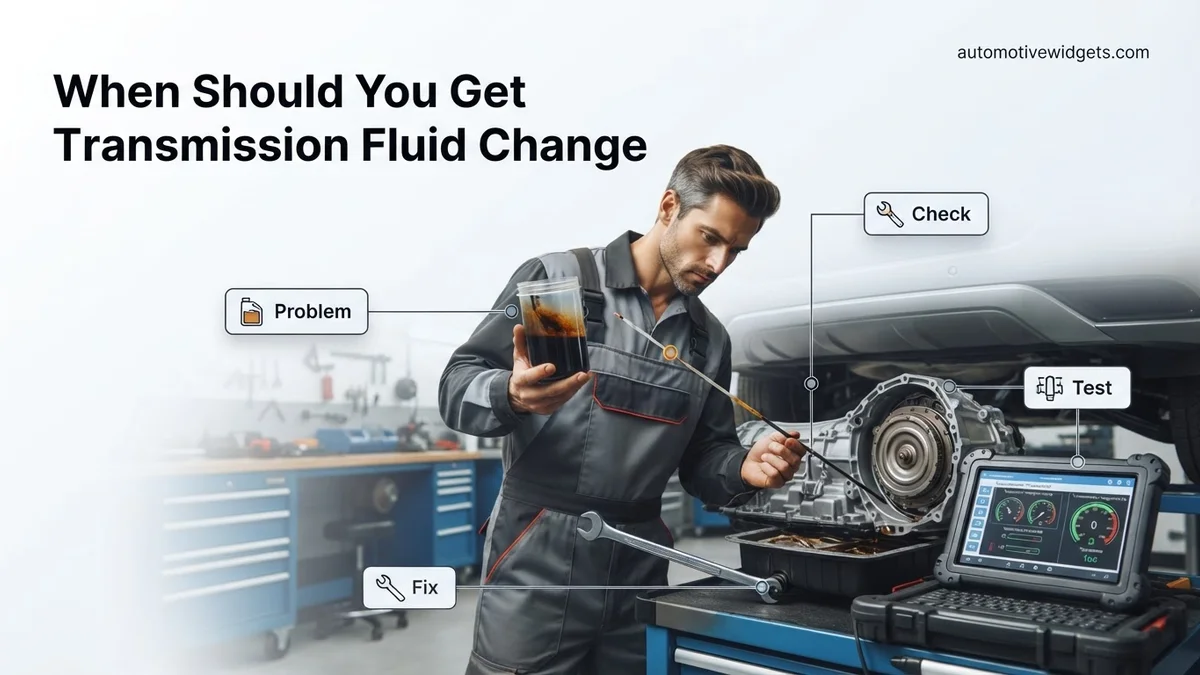
- Inspect the fluid’s color and smell: New fluid is usually bright red or reddish-brown and has a sweet smell. Old fluid will become dark brown or black and may smell burnt. Black fluid with a burnt odor is a strong indicator that a change is overdue.
Pro Tip: If the fluid looks milky or foamy, it could indicate water contamination, which is a severe issue requiring immediate professional attention. A burnt smell usually means excessive heat and wear, often a sign that component damage is occurring.
Step 5: Listen for Warning Signs from Your Transmission
What you need: Your senses and an awareness of your vehicle’s normal operational sounds and feel.
Instructions: Pay close attention to how your transmission shifts. Red flags indicating potential fluid degradation or internal issues include:
- Slipping gears: The engine revs up, but the car doesn’t accelerate proportionally, or it feels like the gears are “lost” between shifts.
- Hard or jerky shifts: Shifts feel abrupt, clunky, or unusually forceful, especially when cold.
- Delayed engagement: A noticeable pause or hesitation when shifting from Park to Drive or Reverse.
- Unusual noises: Whining, grinding, or clunking sounds coming from the transmission area.
- Loss of power or responsiveness: The vehicle feels sluggish or less powerful than usual.
These symptoms often worsen as the transmission fluid loses its lubricating and cooling properties.
Pro Tip: Don’t wait for a transmission to fail completely. Even subtle changes in shifting behavior or new noises can be early indicators of trouble. Addressing these issues early, often with a fluid change, can prevent more extensive and costly repairs down the line.
Step 6: Consider Your Vehicle’s Age and Mileage
What you need: Your vehicle’s current odometer reading and manufacturing date.
Instructions: While the owner’s manual is primary, age and mileage act as additional heuristics. Even if your mileage is low, fluid can degrade over time due to heat cycles and chemical breakdown. For example, a vehicle that’s 10 years old with only 40,000 miles might still need a fluid change because the fluid’s additives have broken down over a decade, regardless of light usage. Conversely, a vehicle with 150,000 miles, even with regular changes, might benefit from slightly more frequent checks. Generally, for vehicles past their warranty period, a preventative fluid change every 50,000-75,000 miles is a reasonable guideline if your owner’s manual is unclear or you’ve bought a used car with no service history.
Pro Tip: If you’ve purchased a used vehicle with no clear service records, especially one with higher mileage, a proactive transmission fluid change is often a wise first step. It provides a baseline and ensures you’re starting with fresh fluid.
Step 7: Understand the “Never Change” Myth and Sealed Transmissions
What you need: Awareness that “lifetime fluid” doesn’t mean forever, and sealed transmissions still need service.
Instructions: Some manufacturers claim their transmissions contain “lifetime fluid” or are “sealed for life,” implying no fluid changes are needed. This is misleading; “lifetime” often refers to the expected life of the warranty period or a shorter vehicle lifespan than most owners expect. All fluids degrade.
- Sealed Transmissions: These don’t have a dipstick for easy checking. They still require fluid changes, but the procedure is more complex, often needing specialized tools and precise temperature monitoring for accurate fluid level setting. This usually necessitates professional service.
- No Dipstick?: If your vehicle lacks a transmission dipstick, do not attempt to check or change the fluid yourself without specific knowledge and tools. Refer to your manual or a qualified mechanic.
Pro Tip: For “sealed” or “lifetime fluid” transmissions, plan for a fluid change around 60,000 to 100,000 miles, especially if you drive in severe conditions. Consult a reputable shop familiar with your specific vehicle’s requirements.
Step 8: Decide Between a “Drain and Fill” vs. “Fluid Flush”
What you need: Knowledge of your transmission’s service history and current condition.
Instructions:
- Drain and Fill: This involves draining only the fluid from the pan (typically 30-50% of the total fluid) and replacing it. It’s a gentler option, recommended if the fluid is very old, dark, or has a burnt smell, and the transmission has high mileage with no prior fluid changes. Multiple drain-and-fills over a short period (e.g., every few oil changes) can gradually replace more fluid.
- Fluid Flush: This uses a machine to actively pump out all the old fluid while simultaneously introducing new fluid, typically replacing nearly 100% of the fluid. This is generally recommended for transmissions with a history of regular fluid changes, where the fluid isn’t excessively dirty or burnt.
Choosing the wrong method for an unserviced, high-mileage transmission can sometimes dislodge debris and cause issues.
Pro Tip: If your transmission fluid is extremely dark, burnt-smelling, and has never been changed on a high-mileage vehicle (over 100,000 miles), a full flush might do more harm than good. In such cases, opt for a drain and fill, or even a series of drain and fills, to gradually introduce new fluid and avoid shocking the system with a complete fluid replacement.
✅ Final Checklist
- ✔ Consulted owner’s manual for specific transmission fluid type and service intervals.
- ✔ Accurately assessed your driving conditions (normal vs. severe) and adjusted intervals accordingly.
- ✔ Checked transmission fluid level, color, and smell for signs of degradation (if applicable).
- ✔ Monitored for any unusual shifting behavior, noises, or performance issues from the transmission.
- ✔ Considered vehicle age and mileage as supplementary factors for fluid change timing.
Important Notes:
- Safety Considerations: Transmission fluid can be very hot. Always wear appropriate personal protective equipment (gloves, eye protection) if checking or working on the transmission. Ensure the vehicle is securely supported if you are working underneath it. Spilled fluid is slippery; clean it immediately.
- When to Seek Professional Help: If your vehicle has a sealed transmission with no dipstick, requires specialized fluid, or you’re unsure about the process, it’s best to consult a certified mechanic. If you experience persistent warning signs despite a fluid change, immediate professional diagnosis is crucial.
- Estimated Time and Cost Range:
- DIY (Drain & Fill – if applicable): 1-2 hours. Cost: $50-$150 for fluid and new gasket/filter (if replacing).
- Professional (Drain & Fill): 1-2 hours. Cost: $150-$300.
- Professional (Fluid Flush): 1-3 hours. Cost: $200-$600, depending on vehicle type and fluid required (CVT fluid is often more expensive).
Key Factors Causing Accelerated Transmission Fluid Wear
Beyond Mileage: Vehicle & Environmental Influences
Mileage and time aren’t the only indicators. Several factors accelerate the degradation of your transmission fluid, necessitating earlier changes:
- Vehicle Make, Model, and Year: Newer transmissions, particularly those in luxury or performance vehicles (e.g., certain Audi, BMW, or Porsche models), often use specialized synthetic fluids designed for extended life but might still benefit from proactive changes. Older vehicles typically have more frequent requirements.
- Driving Habits: Aggressive driving, frequent hard acceleration and braking, and persistent stop-and-go traffic create more heat and stress on the transmission. This is a prime example of “severe” driving, even if you’re not towing.
- Climate and Terrain: Driving in extreme heat (like desert regions in summer) or bitter cold puts additional strain on the fluid. Hilly or mountainous terrain also causes the transmission to work harder, generating more heat and speeding up fluid breakdown.
- Towing or Hauling: Regularly towing trailers, boats, or carrying heavy loads is a definitive “severe” condition. The added weight significantly increases transmission temperature and friction, demanding more frequent fluid changes.
Warning Signs You Can’t Ignore
Your vehicle often communicates when its transmission fluid is compromised. Pay attention to these critical indicators:
- Rough or Delayed Shifting: If your car hesitates, clunks, or jerks when changing gears, it could be a sign of worn-out fluid failing to lubricate properly or maintain hydraulic pressure.
- Slipping Gears: The engine revs but the vehicle doesn’t accelerate as it should, or it feels like it’s “losing” a gear. This often indicates insufficient fluid pressure or poor fluid quality.
- Unusual Noises: Whining, grinding, or humming sounds coming from the transmission area, especially when shifting, can point to fluid-related issues or internal component wear.
- Dark or Burnt-Smelling Fluid: If you check your transmission fluid (only on vehicles with a dipstick, and follow manual instructions for hot/cold checks), and it appears dark brown or black instead of its usual reddish-pink, or if it emits a distinct burnt odor, it needs immediate attention. Fresh fluid is typically clear and reddish.
Proven Steps to Fix Your Transmission Fluid Change Schedule
Adhering to a proper transmission fluid change schedule is paramount for your vehicle’s longevity and performance. Establishing and maintaining this schedule requires a methodical approach, primarily guided by manufacturer specifications and driving conditions.
1. Decode Your 2027 Vehicle’s Owner’s Manual
- Locate Maintenance Schedule: For any 2027 model, the primary source for maintenance intervals is the vehicle’s official owner’s manual. This document contains precise specifications for your specific transmission type—whether it’s an automatic transmission fluid (ATF), continuously variable transmission (CVT), or dual-clutch transmission (DCT).
- Identify Fluid Type and Capacity: The manual will also specify the exact fluid type required (e.g., Mercon LV, Dexron VI, specific CVT fluid) and the fluid capacity. Using an incorrect fluid type can lead to severe transmission damage, often voiding warranties.
- Note Severe Service Intervals: Most manuals outline separate, shorter intervals for “severe service” conditions. These include frequent short trips, heavy towing, mountain driving, or driving in extreme temperatures. These conditions accelerate fluid degradation.
2. Adjust for Driving Conditions and Fluid Technology
While manufacturer guidelines are the baseline, real-world conditions in 2027 necessitate slight adjustments. According to the Automotive Maintenance Council, fluid degradation is highly correlated with operational temperature and stress.
- Evaluate Your Driving Profile: If your driving predominantly falls under “severe service” as defined by your manual, consider changing your fluid at the shorter interval. For instance, if normal is 60,000 miles, severe might be 30,000-45,000 miles.
- Consider Fluid Analysis (for older vehicles): For vehicles approaching 100,000 miles without prior service, a transmission fluid analysis from a reputable lab (costing approximately $50-$100) can indicate the fluid’s remaining life and highlight potential internal wear. This can inform the decision to proceed with a change or consider deeper diagnostics.
- Consult a Certified Technician: If unsure, a certified transmission technician in 2027 can review your vehicle’s maintenance history and driving habits to recommend a tailored schedule. They may use specialized diagnostic tools to assess fluid health.
What If Transmission Issues Persist After Fluid Service?
Even after a proper transmission fluid change, some issues might linger, indicating a deeper problem beyond degraded fluid. This scenario requires a systematic troubleshooting approach to prevent further damage and avoid costly repairs.
1. Immediate Post-Service Checks
- Verify Fluid Level and Type: The most common post-service issue is incorrect fluid level (under- or overfilled) or incorrect fluid type. Ensure the fluid is at the manufacturer-recommended level when the transmission is at its operating temperature (as per manual instructions). Confirm the exact fluid specification used matches your vehicle’s requirement.
- Inspect for Leaks: A new fluid change can sometimes highlight pre-existing seal weaknesses, or new leaks might develop if components were not re-sealed properly. Look for fresh red (ATF), green (some CVTs), or brown fluid puddles beneath the vehicle.
- Monitor Transmission Behavior: Pay close attention to persistent hard shifts, slipping, delayed engagement, or unusual noises. If a transmission warning light illuminates, record the exact timing and conditions.
2. Advanced Diagnostics and Professional Intervention
If initial checks yield no obvious answers, professional help is crucial. According to the National Institute for Automotive Service Excellence (ASE), specialized diagnostic tools are often necessary for accurate transmission troubleshooting.
- Perform an Advanced Diagnostic Scan: A standard OBD-II scanner might not detect transmission-specific fault codes. A professional technician will use a manufacturer-grade scan tool to read proprietary codes and monitor live data from transmission sensors.
- Consult a Transmission Specialist: Seek out a shop specializing in transmissions, not just general mechanics. These specialists possess the unique expertise and equipment to diagnose complex internal transmission issues, such as valve body problems, clutch pack wear, or electronic control unit (ECU) malfunctions.
- Consider a Second Opinion: For significant and costly repair recommendations, obtaining a second opinion from another reputable transmission shop is advisable.
When to seek professional help: Immediately if warning lights persist, or if performance issues like severe slipping or grinding occur. Estimated diagnostic costs in 2027 range from $150-$300. Should a rebuild or replacement be necessary, costs can range significantly, from $3,000-$7,000+ depending on the vehicle and transmission type.
Conclusion
Maintaining your transmission’s health through timely fluid changes is a critical, yet often overlooked, aspect of vehicle care. Neglecting this simple service can lead to extensive and costly transmission failures. According to verified automotive engineering standards and expert service recommendations, adhering to your 2027 vehicle’s specific maintenance schedule is non-negotiable. For precise guidance tailored to your driving conditions, consult your owner’s manual or a certified transmission technician immediately.
❓ Frequently Asked Questions
Why is changing transmission fluid important for my vehicle’s health in 2027?
Transmission fluid serves critical functions: lubricating moving parts, cooling the transmission, and facilitating power transfer. Neglecting fluid changes leads to its breakdown, causing increased friction, overheating, premature wear on components, and ultimately, costly transmission failure that could be avoided with proper maintenance.
What are the main differences in change intervals between automatic and manual transmissions?
Automatic transmissions generate significantly more heat and internal friction, leading to faster fluid degradation, often requiring changes every 30,000-60,000 miles. Manual transmissions are mechanically simpler and put less stress on the fluid, allowing for longer intervals, typically 50,000-100,000 miles, though the owner’s manual remains the best guide.
How do severe driving conditions impact the recommended fluid change frequency?
Severe driving conditions—such as frequent towing, persistent stop-and-go city traffic, or operating in extreme temperatures—place immense stress on the transmission system. This heightened stress accelerates fluid degradation, often prompting manufacturers to recommend halving the standard fluid change intervals, for instance, from 60,000 miles down to 30,000 miles.
Are there specific warning signs that indicate an urgent need for a transmission fluid change?
Yes, critical warning signs include delayed or rough shifts between gears, gears slipping out of place unexpectedly, a noticeable decrease in fuel economy, or unusual whining, clunking, or grinding noises. Additionally, if the fluid appears dark, gritty, or emits a strong burnt odor when checked, immediate service is highly advisable to prevent serious damage.
Should I get a transmission fluid flush or just a drain and fill?
A drain and fill typically replaces only about 40-60% of the transmission fluid, leaving older fluid in the torque converter and other components. A fluid flush uses specialized equipment to replace nearly all of the old fluid. While a flush is more thorough, consult your mechanic and vehicle’s manufacturer; flushes can sometimes dislodge harmful debris in older, neglected transmissions, potentially causing issues.
How can I check my transmission fluid level and condition at home?
For most vehicles with a dipstick, ensure the engine is warmed up and running in ‘Park’ on level ground. Locate the transmission dipstick (often red), pull it out, wipe it clean, reinsert fully, then check the fluid level against the ‘hot’ marks. Observe its color (should be reddish-pink), consistency, and smell; dark, gritty, or burnt-smelling fluid signals an issue. Note: many modern vehicles lack a user-serviceable dipstick.