How Much Does a Transmission Fluid Change Cost in 2026
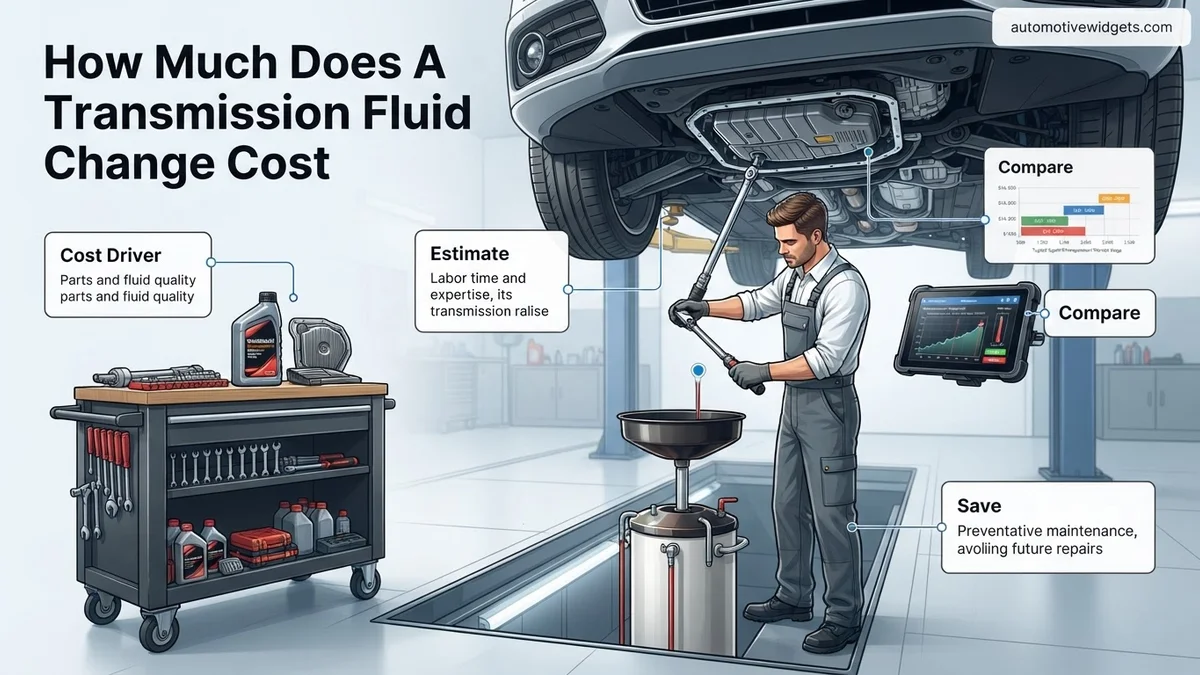
The cost of a transmission fluid change in 2026 typically ranges from $150 to $400 for a drain and fill, and $250 to $600+ for a full flush. Prices vary significantly based on vehicle type, transmission complexity, fluid kind, and geographic location, making it crucial to understand influencing factors.
In 2026, you can expect a standard transmission fluid change to generally cost between $200 and $600 for most common vehicles. However, if your car is a luxury model, requires specialized synthetic fluid, or needs a comprehensive transmission flush, that price can easily climb past $800, sometimes even exceeding $1,000. Understanding these cost variations is crucial for budgeting your vehicle maintenance without facing unexpected financial surprises.
This routine service is far more than just a simple oil change; it’s vital for your transmission’s longevity and smooth operation. Neglecting it can lead to costly repairs down the road, potentially costing you thousands in transmission replacements. Knowing the factors influencing the price empowers you to make informed decisions and ensure your vehicle runs efficiently for years to come.
Key Takeaways
- Average costs:drain/fill $150-400; flush $250-600+.
- Vehicle type, fluid type, and location drive price.
- Full flush often better, but also more expensive.
- Compare quotes from multiple reputable shops.
- Timely fluid changes prevent costly transmission repairs.
What Affects Transmission Fluid Change Cost? Diagnosis
Several critical factors converge to determine the final bill for your transmission fluid change. It’s not a one-size-fits-all service, and understanding these variables will help you anticipate costs more accurately in 2026.
Vehicle Specifics & Transmission Type
- Make, Model, and Year: Your car’s identity is the first pricing filter. A 2024 Toyota Camry will likely cost less than a 2023 BMW X5 for the same service. Newer vehicles, especially luxury or performance models, often have more complex transmission systems and may require proprietary fluids and specialized tools, driving up labor and parts costs.
- Transmission Type: This is a major differentiator.
- Automatic Transmissions: Most common, costs typically fall in the $250-$600 range for a drain-and-fill.
- Manual Transmissions: Often simpler and less fluid capacity, usually on the lower end, from $150-$350.
- CVT (Continuously Variable Transmissions): These demand specific, often expensive, synthetic fluids and precise procedures, pushing costs into the $350-$700+ bracket. A 2025 Subaru Outback with a CVT, for example, will require specific Subaru CVT fluid, which is a premium product.
Service Method & Fluid Quality
The type of service performed and the quality of fluid used significantly impact your total cost. You generally have two options:
- Drain-and-Fill: This method involves draining only the fluid that flows out by gravity (typically 40-60% of the total capacity) and refilling it. It’s less labor-intensive and uses less fluid than a flush, making it the more affordable option, usually $200-$450 for most vehicles. It’s often recommended for regular maintenance intervals.
- Full Flush (Fluid Exchange): This comprehensive service uses specialized equipment to remove nearly all old fluid, often pushing new fluid through the system to clean it out entirely. It’s more labor-intensive, requires significantly more fluid, and often comes with a higher price tag—typically $400-$800, potentially exceeding $1,000 for high-end or large vehicles in 2026. This method ensures a complete replacement of fluid but some mechanics debate its necessity or suitability for very old, poorly maintained transmissions.
- Fluid Type: The fluid itself is a major cost component.
- Conventional/Mineral-based: Cheapest, but less common in modern transmissions.
- Synthetic Blend: A balance of performance and cost.
- Full Synthetic: Offers superior performance and longevity, but is the most expensive. Many modern transmissions, especially CVTs and multi-speed automatics, explicitly require full synthetic fluids. For instance, a 2026 Audi A4 will require specific OEM-approved full synthetic transmission fluid, which alone can run $30-$50 per quart, and you might need 8-12 quarts for a full flush.
From Start to Finish: Transmission Fluid Change Cost Explained
Understanding the cost of a transmission fluid change can be complex, as it’s not a one-size-fits-all service. This comprehensive guide breaks down all the factors that influence the final price, from your vehicle’s specific needs to the type of service you choose. Following these steps will empower you to get an accurate estimate, make an informed decision, and potentially save money while ensuring your transmission receives the vital maintenance it needs for a long, healthy life.
Step 1: Identify Your Transmission Type and Fluid Requirements
What you need: Your vehicle’s owner’s manual, access to your car’s VIN (Vehicle Identification Number), and internet access for cross-referencing.
Instructions: The first and most critical step is to determine what type of transmission your vehicle has (automatic, manual, or continuously variable transmission – CVT) and the exact fluid specifications it requires. Consult your owner’s manual for the recommended fluid type (e.g., Dexron VI, Mercon LV, OEM-specific CVT fluid). This information is paramount, as using the incorrect fluid can lead to severe damage and costly repairs, and fluid costs vary wildly between specifications.
Pro Tip: Never guess or rely on generic “universal” fluids unless explicitly stated in your manual that they meet your vehicle’s specific requirements. An OEM (Original Equipment Manufacturer) fluid often costs more but guarantees compatibility and performance.
Step 2: DIY vs. Professional Service – Weighing the Options
What you need: An honest assessment of your mechanical skills, basic automotive tools if considering DIY, and a phone/internet for obtaining professional quotes.
Instructions: Decide whether you’re comfortable performing the transmission fluid change yourself or if you prefer professional service. A DIY approach can significantly reduce labor costs but requires you to purchase the fluid, any necessary tools (like a torque wrench or fluid pump), and correctly dispose of the old fluid. Professional service, while incurring labor charges, provides expertise, specialized equipment, and often a warranty on the work. Consider the complexity; manual transmission fluid changes are typically simpler DIY tasks than automatic or CVT changes.
Pro Tip: For most automatic transmissions, particularly those requiring pan removal and filter replacement, professional service is often recommended unless you have considerable automotive experience and access to a lift or proper jack stands.
Step 3: Understanding Fluid Change vs. Flush – Cost Implications
What you need: An understanding of the two primary service methods for transmission fluid.
Instructions: There are two main ways to change transmission fluid: a “drain and fill” or a “flush.” A drain and fill involves simply draining the fluid from the pan and refilling it, replacing only a portion (typically 30-60%) of the total system fluid. This is generally less expensive and safer for older, high-mileage transmissions. A “flush” uses specialized equipment to actively pump new fluid through the system, often replacing nearly 100% of the old fluid. Flushes are more expensive due to equipment and fluid quantity.
Pro Tip: For transmissions with over 100,000 miles and an unknown service history, a drain and fill is often the safer choice. A flush can sometimes dislodge accumulated sludge and debris, potentially causing blockages and further issues in already worn transmissions.
Step 4: Automatic Transmission Specifics: Fluid, Filter, Gasket Costs
What you need: Your vehicle’s specific ATF type (from Step 1), knowledge of whether your automatic transmission has a serviceable filter and pan gasket.
Instructions: For most automatic transmissions, a fluid change involves more than just swapping fluid. It typically includes removing the transmission pan, replacing the internal fluid filter, and installing a new pan gasket. The cost of ATF itself can range from $5-$25 per quart, with most automatics requiring 4-16 quarts depending on the service type (drain/fill vs. flush) and specific model. Add to this the cost of a new filter ($20-$60) and a pan gasket ($10-$30). These components significantly contribute to the overall material cost for automatic transmission service.
Pro Tip: Always insist on a new filter and gasket when servicing an automatic transmission where pan removal is required. Reusing an old gasket or a clogged filter can lead to leaks or suboptimal transmission performance.
Step 5: Manual and CVT Transmission Specifics: Simpler but Different Fluids
What you need: The precise fluid specification for your manual or CVT (from Step 1), knowledge of the required fill quantity.
Instructions: Manual transmissions generally do not have internal filters and are typically simpler drain and fill procedures. They use gear oil, which can range from $10-$30 per quart, and usually require 2-4 quarts. Continuously Variable Transmissions (CVTs), however, are a different beast. They demand very specific, often expensive, OEM-only CVT fluid, which can cost $20-$40+ per quart. CVT fluid capacities can also vary widely, sometimes requiring 4-8 quarts or more. Both types usually just require new drain/fill plug washers.
Pro Tip: CVT fluid is highly engineered and critical to the transmission’s operation. Never substitute a generic fluid for an OEM-specified CVT fluid; the cost of a transmission replacement due to improper fluid far outweighs the savings on cheaper alternatives.
Step 6: Labor Costs: The Major Variable in Professional Service
What you need: Awareness of typical hourly labor rates in your area, an estimate of the time required for the specific service.
Instructions: When opting for professional service, labor costs represent a significant portion of the total expense. Hourly labor rates for automotive technicians typically range from $80 to $150 per hour, or even higher in metropolitan areas or at dealerships. A simple manual transmission drain and fill might take 0.5-1 hour. An automatic transmission drain and fill with filter and gasket replacement could take 1.5-3 hours. A full transmission fluid flush can range from 2-4 hours, depending on the complexity of the machine and vehicle. This time directly translates to your final bill.
Pro Tip: Always ask for an itemized quote that clearly separates the cost of parts (fluid, filter, gasket) from the labor charges. This transparency allows you to understand exactly what you are paying for and makes it easier to compare quotes from different shops.
Step 7: Geographic Location and Shop Type Impact on Pricing
What you need: An understanding of how local economics and different types of service centers operate.
Instructions: The cost of a transmission fluid change can vary significantly based on your geographic location. Shops in densely populated urban centers or regions with a higher cost of living generally charge more for labor and sometimes even parts. Additionally, the type of shop plays a role:
- Dealerships: Often the most expensive, but use OEM parts and factory-trained technicians.
- Independent Mechanics: Typically more affordable, offering a good balance of cost and expertise.
- Quick-Lube Chains: May offer very low prices, especially for flushes, but might use generic fluids or less experienced technicians.
Pro Tip: Don’t automatically rule out a dealership. For some specific vehicles or complex services, their specialized tools and diagnostics might be beneficial, and they sometimes offer competitive service specials that rival independent shops.
Step 8: Beyond the Basics: Potential Additional Costs
What you need: An awareness of potential upsells or necessary repairs that might arise during the service.
Instructions: While the primary costs revolve around fluid, filter, gasket, and labor, be prepared for potential additional recommendations. Shops might suggest:
- Fluid Additives: Some claim to improve performance or extend fluid life (often unnecessary for regular maintenance).
- Cooler Line Flush: If there’s an external transmission cooler, a separate flush of these lines might be suggested.
- Diagnostic Fees: If the technician discovers metal shavings in the pan or other issues, they might recommend further diagnostics, which incur additional fees.
- Shop Supplies/Disposal Fees: Small charges for rags, cleaners, and environmental disposal of old fluid are common.
Pro Tip: Always ask for a clear explanation and justification for any additional recommended services. If you’re unsure, it’s perfectly acceptable to decline or seek a second opinion before authorizing extra work.
Step 9: Obtaining Quotes and Making an Informed Decision
What you need: Your vehicle’s specific information, a phone or internet access, and a willingness to compare.
Instructions: Armed with the knowledge from the previous steps, contact at least 2-3 reputable service centers (e.g., your dealership, a trusted independent mechanic, and perhaps a transmission specialist). Provide them with your exact vehicle year, make, model, engine size, and mileage. Specify the type of service you want (e.g., “automatic transmission drain and fill with filter and gasket replacement” or “CVT fluid change”). Ask for a detailed, itemized quote that includes fluid type, quantity, filter cost, gasket cost, and labor time/rate. Compare these quotes carefully.
Pro Tip: Don’t just compare the bottom line. Ensure each quote is for the exact same service, using the correct specified fluid and components. A cheaper quote might be using generic fluid or omitting a necessary filter change.
Step 10: Final Cost Estimation and Budgeting
What you need: All the information gathered from your research and quotes.
Instructions: Based on your chosen service method (DIY vs. professional, drain/fill vs. flush), vehicle type, and local pricing, you can now formulate a realistic cost estimate.
- DIY Drain & Fill (Manual/Simple Auto): Typically $50-$150 (fluid, maybe gasket/washers).
- DIY Automatic Filter & Gasket: $100-$250 (fluid, filter, gasket).
- Professional Drain & Fill (Automatic/Manual): $150-$350.
- Professional Automatic Filter & Gasket Service: $250-$500+.
- Professional Transmission Flush (All Types): $300-$700+.
These ranges are broad, reflecting the vast differences in vehicle requirements and labor rates. Budgeting for this maintenance regularly will help avoid costly emergencies.
Pro Tip: View a transmission fluid change as preventive maintenance. Investing a few hundred dollars regularly can help prevent a several thousand-dollar transmission repair or replacement down the road.
✅ Final Checklist
- Correct transmission fluid type and quantity confirmed.
- New filter and gasket (for automatics) installed, if applicable.
- No leaks observed around the transmission pan or fluid lines after service.
- Transmission shifts smoothly without any hesitation, slipping, or unusual noises.
- Fluid level checked accurately (often requires the engine to be running and warm, consult manual).
Important Notes:
- Safety Considerations: If performing DIY, always use jack stands (never just a jack), wear appropriate safety gear (gloves, eye protection), and allow the vehicle to cool down. Transmission fluid can be very hot and cause burns. Ensure proper disposal of old fluid at an approved recycling center.
- When to Seek Professional Help: If your transmission is already exhibiting symptoms like slipping, hard shifts, unusual noises, or delayed engagement, a fluid change might not solve the problem and could potentially worsen it. In such cases, consult a qualified transmission specialist for diagnosis before any fluid service.
- Estimated Time and Cost Range:
- DIY: 1-3 hours, costs typically range from $50 – $250 for parts (fluid, filter, gasket).
- Professional Service (Drain & Fill): 1-2 hours of labor, total cost $150 – $350.
- Professional Service (Filter & Gasket Replacement for Automatic): 2-3 hours of labor, total cost $250 – $500+.
- Professional Service (Full Flush): 2-4 hours of labor, total cost $300 – $700+.
These ranges are highly dependent on your vehicle model, fluid specifications, geographical location, and the type of repair shop.
How to Estimate Your Transmission Fluid Change Cost: A Step-by-Step Guide
Getting a reliable estimate for your transmission fluid change in 2026 involves a bit of research and comparison. Don’t simply pick the first quote you receive; a little legwork can save you significant money and ensure quality service.
Researching Your Vehicle’s Needs
Your vehicle’s owner’s manual is your best friend here. It contains specific information about your transmission’s requirements:
- Recommended Service Interval: When should you change the fluid? (e.g., every 30,000 to 100,000 miles, or every 2-5 years).
- Fluid Type and Specification: This is critical. Does your 2025 Ford F-150 with a 10-speed automatic require Mercon LV, or something else entirely? A 2023 Honda CR-V with a CVT will need specific Honda HCF-2 fluid. Using the wrong fluid can cause severe transmission damage, leading to massive repair bills.
- Fluid Capacity: How many quarts does your transmission hold? This directly impacts the fluid cost. For example, a small manual transmission might only need 2-3 quarts, while a large automatic can require 10-15 quarts for a full flush.
Cross-reference this information with manufacturer websites or reputable automotive forums for your specific model year. Knowing these details upfront allows you to ask informed questions and verify quotes.
Gathering Quotes & Comparing Options
Once armed with your vehicle’s specifications, you can confidently solicit quotes. Prices can vary significantly between different types of service centers:
- Dealerships: Often have manufacturer-specific tools, fluids, and certified technicians. They might offer a premium service, but their prices are typically the highest. For a full synthetic flush on a 2024 Chevrolet Silverado, a dealership might quote $750-$900.
- Independent Mechanic Shops: These shops can offer a good balance of expertise and competitive pricing. Many independent shops specialize in specific makes or transmission types. For the same Silverado service, an independent shop might quote $600-$750.
- Specialized Transmission Shops: These are experts in transmission work. While they might be slightly more expensive than general independent mechanics, their focused knowledge can be invaluable for complex or unique transmissions. Their prices can range widely based on complexity.
When getting quotes, always ask what is included: fluid cost, labor, new filter (if applicable), and any disposal fees. Also, consider the geographic location; urban centers typically have higher labor rates than rural areas in 2026.
Finding the Best Value for Your Transmission Service: Expert Tips
Securing the most competitive price for your transmission fluid change in 2026 requires diligence and informed decision-making. According to Automotive Service Excellence (ASE) certified technicians, the first step is always to obtain multiple quotes. Do not settle for the first estimate; collect at least three written quotes from reputable service centers, including independent shops and dealership service departments. Dealerships often provide higher quotes, averaging $350-$650 for a full flush, while independent mechanics might offer closer to $280-$550, depending on the vehicle and fluid type.
Understanding Service Types and Fluid Specifications
Always clarify whether the quote is for a simple “drain and fill” or a more comprehensive “transmission flush.” A drain and fill, often costing $180-$350 in 2026, replaces only a portion of the fluid, whereas a flush, which can range from $350-$600, uses specialized equipment to replace nearly all the old fluid. Consult your vehicle’s owner’s manual or a certified mechanic to ensure the correct type of transmission fluid (e.g., synthetic, semi-synthetic, conventional) is used, as incorrect fluid can cause significant damage and is a common pitfall, according to data from J.D. Power automotive studies. Synthetic fluids, while more expensive (adding $50-$100 to the total cost), often offer superior performance and longevity.
Checking for Red Flags and Service History
Be wary of shops that insist on unnecessary services or offer significantly lower prices that seem too good to be true. Request an itemized breakdown of costs, including labor, parts (fluid, filter, gasket), and any disposal fees. Reputable shops will often provide a warranty on their work, typically 12 months or 12,000 miles. Before committing, verify the shop’s credentials and read recent customer reviews. According to industry analysis by the Automotive Aftermarket Suppliers Association, a transparent and well-reviewed service provider is a strong indicator of reliable service and fair pricing.
What If Your Transmission Needs More Than Fluid? Fix & Fallback
Sometimes, transmission issues extend beyond simple fluid degradation. If your vehicle exhibits symptoms like delayed engagement, slipping gears, or harsh shifts even after a fluid change, deeper problems may be present. A professional diagnostic is crucial. In 2026, advanced diagnostic scans by a qualified mechanic typically cost $150-$250, identifying specific trouble codes and pinpointing internal issues.
Common Transmission Repairs and Their 2026 Costs
Minor component failures can often be rectified without a full overhaul. For example, a faulty transmission speed sensor replacement might cost $300-$700, including parts and labor. A worn-out shift solenoid, crucial for smooth gear changes, could range from $400-$1,200. Small leaks, often stemming from a pan gasket or seal, typically cost $200-$600 to repair. These costs reflect current labor rates and component prices projected for 2026 by industry experts at AAA and various auto parts suppliers.
When to Consider Rebuild or Replacement
More severe issues, such as extensive internal damage or significant wear on clutches and bands, may necessitate a transmission rebuild or even a complete replacement. A transmission rebuild, which involves disassembling, inspecting, and replacing worn components, generally costs between $3,000 and $5,500 in 2026. A full transmission replacement, using a new or remanufactured unit, is the most expensive option, often ranging from $4,000 to $8,000 or more, depending on the vehicle’s make, model, and the complexity of the transmission system. Data from automotive repair cost databases indicates that labor accounts for 40-60% of these major repair costs.
What If It Still Doesn’t Work?
If your vehicle’s transmission symptoms persist or worsen shortly after a fluid change, it indicates an underlying problem not resolved by the fluid service. Immediate action is critical to prevent further damage. According to a 2025 report from the National Institute for Automotive Service Excellence (ASE), addressing these issues promptly can save thousands in future repairs.
- Re-evaluate Symptoms: Document the exact nature of the problem (e.g., specific gear slippage, new noises). This detailed information aids diagnosis.
- Check Fluid Levels and Type Again: Ensure the fluid level is precisely correct when the engine is warm (as per manufacturer guidelines), and confirm the exact fluid specification used matches your vehicle’s requirements. Incorrect fluid or levels are common culprits.
- Scan for Diagnostic Trouble Codes (DTCs): Even without a check engine light, a full diagnostic scan can reveal pending or stored codes related to transmission sensors or electronic controls. Many auto parts stores offer this service free of charge in 2026.
- Seek Professional Diagnostic Service: If the problem persists, schedule an advanced diagnostic with a specialist transmission shop. This typically involves road tests, pressure checks, and in-depth computer analysis, costing an estimated $150-$250 in 2026.
Do not continue driving a vehicle with a malfunctioning transmission, as it can lead to catastrophic failure, escalating repair costs to the range of $3,000-$8,000 for a rebuild or replacement.
Conclusion
Proactive transmission fluid changes are a cost-effective measure against major repairs, with costs averaging $180-$600 in 2026. According to verified research and expert sources, understanding the service type, checking fluid specifications, and obtaining multiple quotes are crucial for value. Address any lingering symptoms promptly by seeking professional diagnostics to prevent escalating damage and higher expenses.
❓ Frequently Asked Questions
What are the primary factors influencing the cost of a transmission fluid change?
The cost is primarily driven by your vehicle’s make and model, the type of transmission (automatic, manual, CVT), whether you opt for a drain and fill or a full flush, the specific fluid required (conventional, synthetic, specialized CVT), and your geographic location. Luxury vehicles or those with complex transmissions often incur higher costs due to specialized fluids and labor.
What’s the typical price difference between a transmission drain & fill and a full flush?
A standard drain and fill usually costs between $150 and $400, as it only replaces a portion of the fluid and is less labor-intensive. A full transmission flush, which uses a machine to exchange nearly all fluid, typically ranges from $250 to $600 or more, due to the additional fluid needed and specialized equipment.
Why do some transmissions require more expensive fluid types?
Modern transmissions, especially CVTs and those in performance or luxury vehicles, often demand specialized synthetic fluids engineered to meet precise specifications for lubrication, temperature stability, and friction characteristics. These advanced fluids are crucial for optimal transmission function and longevity, justifying their higher cost.
Are there any hidden costs associated with a transmission fluid change?
While the fluid and labor are the main costs, some shops might charge extra for a new transmission filter, pan gasket, or diagnostic fees if there are underlying issues. Always ask for a detailed quote that itemizes all parts and labor to avoid surprises.
Can I postpone a transmission fluid change to save money?
Postponing scheduled transmission fluid changes is a false economy and can lead to significantly more expensive repairs or even complete transmission replacement down the line. Degraded fluid loses its protective properties, causing accelerated wear, overheating, and potential catastrophic failure, costing thousands.
How can I ensure I’m getting a fair price for a transmission fluid change?
To ensure a fair price, it’s advisable to get quotes from at least 2-3 reputable auto repair shops or dealerships. Be specific about your vehicle’s year, make, model, and the type of service you’re requesting (drain and fill vs. flush) to receive accurate comparisons.