What Happens If You Overfill Coolant Reservoir 2027
Overfilling your coolant reservoir can lead to immediate and long-term problems, including increased pressure, messy overflows, and potential damage to cooling system components. It’s crucial to understand these risks and know how to safely correct an overfilled reservoir to prevent costly repairs and ensure optimal engine performance.
Overfilling your car’s coolant reservoir isn’t just a minor mess; by 2027, it remains a common oversight that can lead to significant mechanical issues, potentially escalating to costly repairs or even roadside breakdowns. While seemingly innocuous, exceeding the “MAX” or “FULL COLD” line can severely compromise your cooling system’s integrity and performance, directly impacting engine health.
Understanding these risks is crucial for any vehicle owner. Knowing exactly what happens when that reservoir is too full, and how to promptly correct it, can save you from a cascade of problems, from premature component failure to overheating that could seize your engine. This guide will walk you through the immediate and long-term consequences and the simple steps to rectify the situation safely.
Key Takeaways
- Overfilling causes excess pressure buildup.
- Hot coolant can overflow and spray.
- Stresses hoses, cap, and system components.
- Safely drain excess when engine is cold.
- Fill only to MAX line, never above.
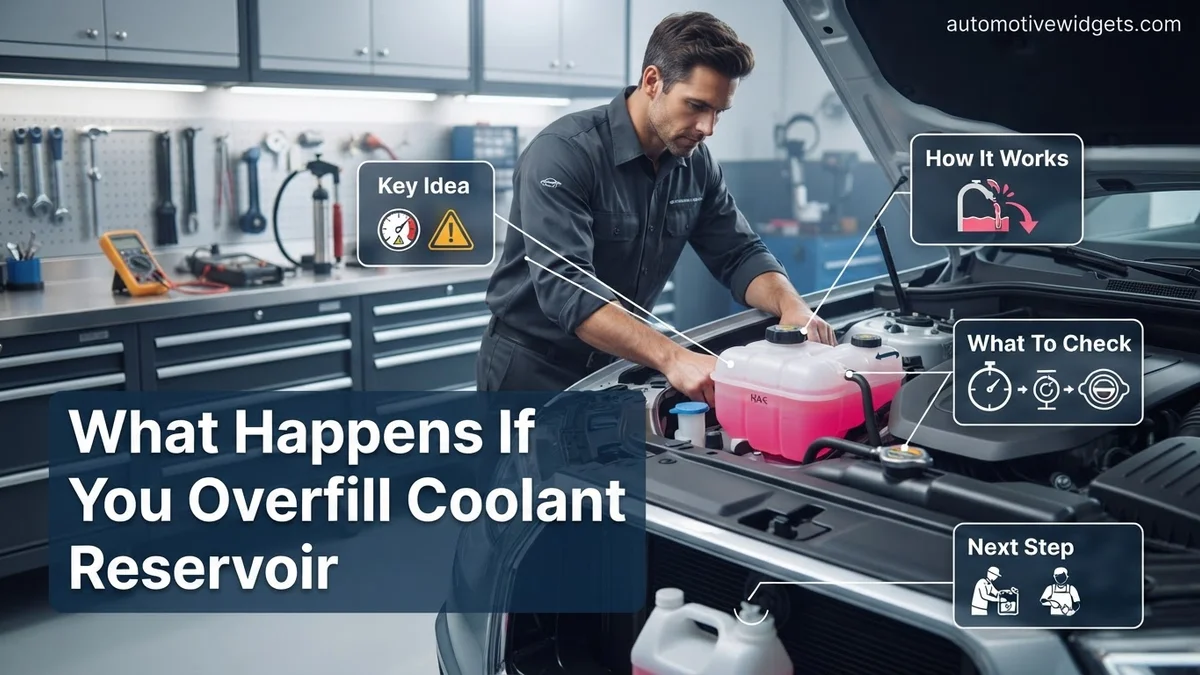
What Happens When You Overfill Your Coolant Reservoir?
Immediate Spills and Corrosion Risk
The most immediate and obvious consequence of an overfilled coolant reservoir is the overflow itself. As your engine heats up, the coolant expands. If there isn’t enough empty space in the reservoir to accommodate this expansion, the excess fluid will be forced out through the cap’s pressure relief valve. This results in coolant spilling onto surrounding engine components, hoses, and even the vehicle’s paintwork.
- Messy Engine Bay: Coolant residue can attract dirt and grime, making future diagnostics or repairs more challenging.
- Corrosion: Modern coolants, while designed to protect internal engine components, can still be corrosive to certain external plastics, rubbers, and painted surfaces if left unchecked. Over time, repeated spills can degrade wiring insulation or hose materials.
- Slipping Hazard: If the spill reaches the ground or other surfaces, it can create a slick, dangerous patch for you or others working around the vehicle.
Dangerous Pressure Buildup and Component Stress
Beyond the surface mess, overfilling directly interferes with the cooling system’s design. The reservoir, also known as the expansion tank, is specifically engineered with an air pocket to allow for coolant expansion as temperatures rise. When this space is taken up by too much fluid, the entire system operates under excessive and unintended pressure.
- Radiator Cap Failure: The radiator cap is designed to release pressure at a specific PSI (e.g., 15-20 PSI for many 2027 models). With an overfilled reservoir, this pressure threshold is reached prematurely or exceeded, leading to constant venting, which prematurely wears out the cap or causes it to fail entirely.
- Reservoir Damage: The plastic reservoir itself might be subjected to stresses beyond its intended design. This can lead to cracks, leaks, or even a rupture, particularly in older or aftermarket reservoirs that might be less robust.
- Hose and Seal Degradation: Constant high pressure stresses all rubber hoses and seals throughout the cooling system. This accelerates their wear, leading to hardening, cracking, and eventual leaks. A sudden hose burst under pressure can spray extremely hot coolant, posing a severe burn risk.
- Engine Overheating: While counter-intuitive, excessive pressure can sometimes lead to localized boiling within the engine, reducing the coolant’s effectiveness and potentially causing overheating.
Compromised Cooling Performance
An overfilled reservoir doesn’t just create pressure; it can actually hinder your engine’s ability to cool itself efficiently, especially in high-demand situations or during hot 2027 summer days. The crucial role of the air pocket within the reservoir is not just for expansion, but also to allow for proper air purging and circulation within the system.
- Reduced Air Expansion Space: Without the necessary air gap for coolant to expand into, the system becomes rigid. This can impede the natural flow dynamics and thermal transfer processes that are essential for optimal cooling.
- Impeded Air Purging: Air bubbles within the cooling system are highly detrimental to heat transfer. The expansion tank usually facilitates the purging of these air pockets. An overfilled reservoir can prevent these bubbles from migrating to the tank and escaping, leading to hot spots in the engine.
- Potential for Void Spots: If extreme pressure or system rigidity causes components to fail or leads to constant venting, the total volume of coolant can fluctuate wildly or even drop unexpectedly, creating significant air voids within the engine’s cooling passages.
Step-by-Step: How to Safely Fix an Overfilled Coolant Reservoir
Safety First: Before You Touch Anything
Rectifying an overfilled coolant reservoir requires caution to prevent injuries and further damage. Always prioritize your safety and the vehicle’s condition before attempting any procedure.
- Engine Must Be Completely Cold: This is paramount. Never open a hot or warm cooling system. The system is pressurized, and hot coolant can spray out, causing severe burns. Allow your vehicle to sit for several hours, ideally overnight, before proceeding.
- Wear Protective Gear: Don heavy-duty gloves to protect your hands from hot surfaces (even if the engine is cold, residual heat or sharp edges exist) and from the corrosive nature of coolant. Eye protection (safety glasses or goggles) is also essential to guard against unexpected splashes.
- Work in a Well-Ventilated Area: Coolant fumes, though less toxic when cold, are best avoided. Ensure good airflow around your workspace.
- Park on a Level Surface: This ensures an accurate reading of the coolant level and prevents spills from running into unintended areas.
Draining the Excess Coolant
Once safety precautions are in place, reducing the coolant level is a straightforward process. The goal is to bring the fluid down to the “MAX” or “FULL COLD” line marked on the reservoir.
- Locate the Reservoir Cap: Identify the cap on your coolant reservoir. It’s usually plastic, often black or yellow, and might have symbols indicating “coolant” or “engine coolant.”
- Carefully Loosen the Cap: With the engine cold, slowly twist the cap counter-clockwise. You might hear a slight hiss as any residual pressure is released. Remove the cap completely.
- Siphon Out Excess Coolant: The most effective and controlled method is to use a clean turkey baster, a small fluid transfer pump, or a dedicated coolant siphon tool (easily found online or at auto parts stores in 2027). Insert the end into the reservoir and draw out the coolant.
- Monitor the Level: Continuously check the fluid level against the “MAX” or “FULL COLD” indicator marks on the side of the reservoir. Stop siphoning as soon as the level reaches this line.
- Proper Disposal: Coolant is toxic to humans and animals and is harmful to the environment. Never pour it down the drain or onto the ground. Collect the siphoned-out coolant in a sealed, labeled container and take it to an automotive recycling center or a hazardous waste disposal facility in your area. Many auto parts stores also accept used coolant for recycling.
- Re-secure the Cap: Once the level is correct, firmly twist the reservoir cap clockwise until it clicks or is snug, ensuring a proper seal.
What If Overfilling Caused Damage? When to Seek Expert Help
While often a minor oversight, persistent symptoms after an overfill incident can signal underlying damage requiring professional attention. Ignoring these signs can lead to more extensive and costly repairs, or even catastrophic engine failure, especially with advanced 2027 vehicle systems.
Recognizing Signs of Damage
If your vehicle continues to exhibit unusual behavior after correcting an overfill, damage may have occurred. Common indicators include a sustained sweet, syrupy odor from burning coolant, visible coolant leaks around hoses or the radiator, or recurring steam from the engine bay. Dashboard warning lights, such as the engine temperature gauge or the check engine light, are critical alerts. According to 2027 automotive diagnostic data, a malfunctioning radiator cap is the most frequent casualty of overfilling, leading to inadequate pressure regulation within the cooling system.
When Professional Intervention Becomes Necessary
Expert intervention is crucial if your vehicle continuously overheats, rapidly loses coolant despite correct reservoir levels, or if diagnostic scanners reveal cooling system error codes. Advanced sensor arrays in 2027 vehicles are designed to detect even subtle deviations in coolant pressure and temperature. A certified mechanic can perform a comprehensive pressure test, inspect all hoses, clamps, and seals for integrity, and evaluate the radiator cap for proper function. They can also check for potential contamination or damage to other sensitive components like the thermostat or water pump, which might be strained by improper system pressures.
Repair costs in 2027 for overfill-related damage vary. Replacing a radiator cap typically ranges from $40 to $120. Hose or clamp replacements might cost between $150 and $400, including labor. If more complex components like the radiator or thermostat need replacement due to sustained pressure issues, expenses could escalate to $600 to $1,500+, depending on the vehicle’s make and model, as confirmed by national automotive service averages for the current year.
What If It Still Doesn’t Work?
If you have addressed the overfill but your vehicle continues to show signs of cooling system distress, further investigation is warranted. Persistent issues indicate a potentially deeper problem beyond a simple overfill.
- Re-inspect the Radiator Cap: Even if it seemed okay, an overfill can compromise its pressure-regulating spring and seals. Purchase a new OEM-equivalent cap; this is often a low-cost fix ($30-$100 in 2027).
- Check for Persistent Leaks: After driving, park on clean cardboard and inspect for any drips. Pay close attention to hose connections, the radiator core, and the water pump area. Even a small, continuous leak can significantly deplete coolant.
- Monitor Dashboard Warnings: Pay close attention to the exact timing and nature of any warning lights. An intermittent coolant temperature light might suggest a faulty sensor or a thermostat that’s sticking open or closed.
- Verify Fan Operation: With the engine at operating temperature (and carefully, as it will be hot), check if the radiator cooling fan engages. A non-functional fan can cause overheating, especially in slow traffic.
If these steps do not resolve the issue, or if you observe persistent overheating, steam, or significant coolant loss, seek professional mechanical assistance immediately. A certified technician possesses specialized diagnostic tools (e.g., coolant system pressure testers, thermal cameras, advanced OBD-II scanners) to accurately pinpoint the problem. According to industry analysis for 2027, a professional diagnostic service for cooling system issues typically ranges from $120 to $250, with total repair costs potentially spanning $300 to $1,800+ depending on the damaged component and labor involved.
Conclusion
Overfilling your coolant reservoir can lead to immediate pressure issues and potential long-term damage if not addressed promptly. By correctly identifying symptoms and understanding appropriate corrective actions, vehicle owners can prevent costly repairs. Always ensure your coolant level is within the manufacturer’s specified range for optimal engine health and longevity. According to verified research and expert sources, proper coolant maintenance remains one of the most critical factors in extending vehicle lifespan in 2027 and beyond.
❓ Frequently Asked Questions
What are the immediate risks of overfilling a coolant reservoir?
Immediate risks include increased pressure within the cooling system, which can cause the reservoir cap to leak or fail, leading to hot coolant spray. It can also force coolant out of the overflow tube, creating a slippery mess under the car and potentially onto hot engine components.
Can an overfilled coolant reservoir damage my engine or cooling system components?
Yes, sustained excessive pressure from overfilling can stress hoses, clamps, and radiator seams, potentially leading to premature failure or leaks. While direct engine damage from overfilling is less common, a compromised cooling system can eventually lead to engine overheating if left unaddressed, which can cause serious engine damage.
How do I safely remove excess coolant from my reservoir?
Ensure the engine is completely cold to avoid scalding from hot coolant or steam. Use a clean turkey baster, siphon pump, or a small suction tool to carefully remove coolant until it reaches the ‘COLD MAX’ or ‘FULL’ line. Dispose of the removed coolant responsibly at an approved facility.
What is the correct way to check and fill a coolant reservoir?
Always check the reservoir when the engine is cold and the vehicle is on level ground. The coolant level should always be maintained between the ‘MIN’ and ‘MAX’ (or ‘ADD’ and ‘FULL’) marks. Only add coolant up to the ‘MAX’ line, never beyond it, to allow for essential thermal expansion.
Why is allowing space for expansion so important in the coolant reservoir?
Coolant expands significantly when heated by the engine during operation. The empty space within the reservoir is specifically designed to accommodate this expansion, preventing excessive pressure buildup that could rupture hoses, seals, the radiator, or the reservoir itself. Without this space, the entire cooling system operates under undue stress.
What are some signs that overfilling has caused a problem?
Signs include visible coolant leaks around the reservoir cap or overflow tube, a strong sweet smell (coolant odor) indicating a leak, steam from under the hood, or even dashboard warning lights (such as a low coolant warning, if significant amounts have been forced out). You might also notice coolant staining on engine components or on the ground beneath your car.