How Much Does It Cost To Rebuild A Carburetor How Much 2027
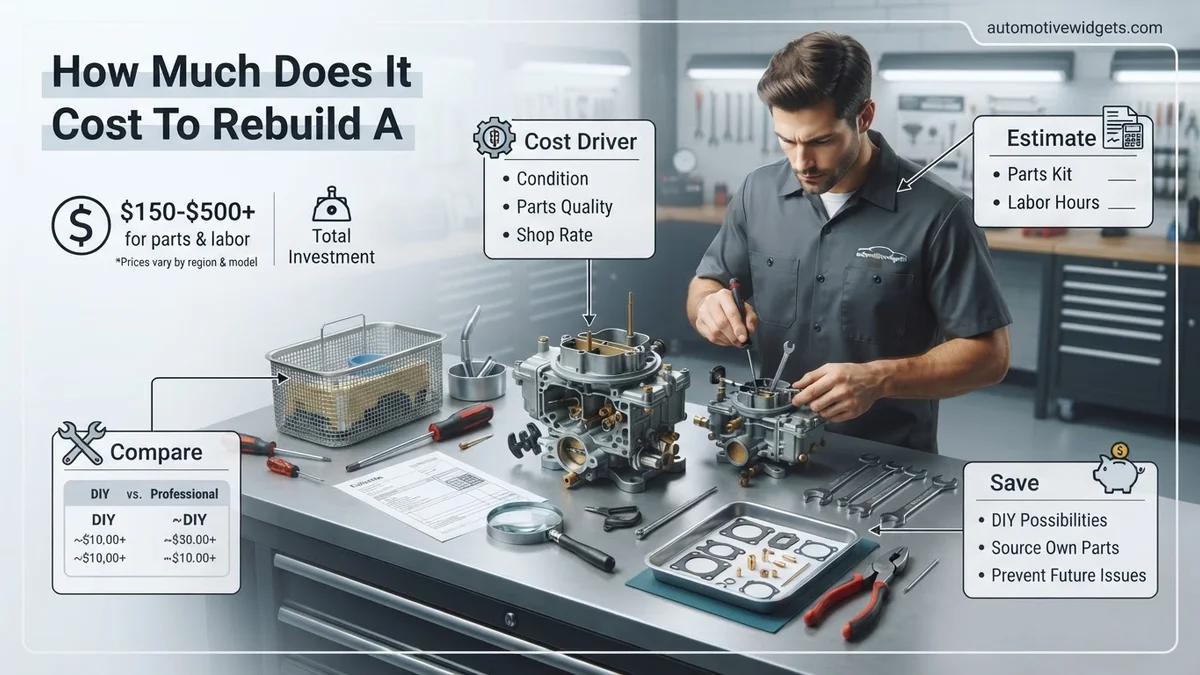
Rebuilding a carburetor professionally in 2027 typically costs between $150 and $600, with variations based on complexity and regional labor rates. DIY options are significantly cheaper, requiring only a $30-$100 kit, while new or remanufactured units can range from $200 to over $1000.
When your classic ride or older utility vehicle starts sputtering, idling roughly, or consuming fuel like a tanker, a carburetor rebuild often comes to mind. In 2027, getting a carburetor professionally rebuilt typically costs between $300 and $750, encompassing both parts and labor. This range accounts for various factors, from simple single-barrel units to complex multi-barrel setups that require more specialized attention.
Understanding these costs upfront is crucial for making informed decisions. Knowing the potential expense helps you weigh a professional rebuild against tackling a DIY project or opting for a full carburetor replacement. This financial clarity ensures you avoid unexpected workshop bills and can confidently plan the necessary maintenance for your carbureted engine, keeping it running smoothly without breaking the bank.
Key Takeaways
- Professional rebuilds cost $150-$600.
- DIY rebuild kits run $30-$100.
- Carburetor type and labor impact cost.
- Compare rebuild vs. new unit price.
- Factor specialty tools for DIY savings.
What Causes Carburetor Rebuild Costs to Vary?
Carburetor Type and Vehicle Application
The inherent design of your carburetor plays a significant role in its rebuild cost. Simpler single-barrel carburetors, commonly found on older basic engines or some lawn equipment, inherently require less labor and feature more affordable rebuild kits. Their reduced number of components and more straightforward assembly translate directly to lower service charges.
Conversely, complex multi-barrel units—think performance 4-barrels like Holleys or sophisticated OEM designs such as Rochester Quadrajets—are more expensive to rebuild. These carburetors feature multiple circuits, vacuum secondaries, and often intricate choke mechanisms. More components mean higher-priced specialized rebuild kits, and the increased complexity demands more diagnostic and labor time from a qualified technician. Furthermore, carburetors on classic or vintage vehicles can command higher prices due to the potential scarcity of specific parts and the need for specialized knowledge from mechanics who understand these older systems.
Initial Condition and Regional Labor Rates
The state of your carburetor before the rebuild is a major cost driver. A unit suffering from light gumming due to old fuel or minor gasket leaks simply needs a thorough cleaning and a standard rebuild kit. This scenario represents the lower end of the cost spectrum. However, if your carburetor exhibits significant issues like heavy corrosion, seized butterfly valves, stripped threads, or worn throttle shafts, the rebuild process becomes far more involved. Extensive damage might necessitate specialized services such as ultrasonic cleaning, machining new parts, or heli-coiling threads, all of which add substantial cost and time to the project.
Labor rates also fluctuate based on geographic location. In 2027, skilled automotive technicians in high-cost-of-living metropolitan areas might charge between $120 and $160 per hour. In contrast, shops in rural or lower-cost regions typically have hourly rates ranging from $90 to $120. These regional differences directly impact the final labor portion of your rebuild bill, easily creating a difference of $100 or more for the same amount of work.
From Start to Finish: Carburetor Rebuild Costs Explained
Embarking on a carburetor rebuild can be a rewarding way to restore your engine’s performance, but understanding the potential costs involved is crucial. This comprehensive guide will walk you through all the factors that influence the total expense, from parts and tools to labor and specialized services. By following these detailed steps, you’ll gain a clear picture of what to expect financially, helping you decide whether to tackle the job yourself or opt for professional assistance, and how to budget effectively for either choice.
Step 1: Initial Diagnosis and Viability Check
What you need: Basic hand tools (screwdrivers, wrenches), flashlight, shop rags, a detailed service manual for your specific vehicle or equipment, and keen observation skills.
Instructions: Before considering costs, you must first determine if your carburetor is a good candidate for a rebuild. Begin by visually inspecting the carburetor for obvious signs of severe damage such as a cracked housing, warped casting, or heavily corroded linkage that is beyond simple cleaning. Check for excessive play in the throttle shaft (side-to-side movement) which often indicates worn bushings and can significantly increase rebuild costs. A functioning choke mechanism and an intact float bowl are also good indicators of rebuild viability. If major structural damage is present, a complete replacement might be more economical.
Pro Tip: Don’t overlook the simple things. Sometimes, a fuel delivery issue blamed on the carburetor is actually a clogged fuel filter, a weak fuel pump, or contaminated fuel. Always rule out these less expensive culprits before committing to a full carburetor rebuild.
Step 2: Identifying Your Carburetor Type and Model
What you need: The carburetor itself (often requiring removal), a flashlight, a wire brush (gentle), your vehicle’s or equipment’s service manual, and internet access for cross-referencing.
Instructions: The cost of a rebuild kit varies dramatically based on the carburetor’s make, model, and application. Locate the identification numbers or tags on the carburetor body, usually stamped on the base, side, or float bowl. These numbers can be subtle and might require careful cleaning to reveal. Once found, use your service manual or online resources (e.g., specific manufacturer parts websites, classic car forums) to positively identify the exact carburetor. Common manufacturers include Holley, Edelbrock, Carter, Rochester, Weber, and various Japanese brands for smaller engines. Incorrect identification will lead to purchasing the wrong kit, wasting time and money.
Pro Tip: Take multiple clear photos of the carburetor from different angles before and during removal, paying special attention to any identifying marks. These photos can be invaluable if you need to consult with parts suppliers or experienced mechanics.
Step 3: Sourcing the Rebuild Kit
What you need: Your identified carburetor model number, internet access, phone, or transportation to local parts stores.
Instructions: Once you’ve accurately identified your carburetor, research available rebuild kits. A standard kit typically includes all necessary gaskets, O-rings, needle and seat assemblies, accelerator pump diaphragm or cup, and sometimes specific springs or check balls. Prices for these kits can range widely: a basic small engine kit might be $15-$40, while a complex vintage automotive carburetor kit could be $50-$150, or even more for high-performance or rare applications. Compare prices from multiple suppliers (online retailers, specialty carburetor shops, local auto parts stores) and pay attention to the kit’s contents and brand reputation. Opt for a reputable brand to ensure part quality and accurate fitment.
Pro Tip: Read reviews for specific kits. A cheaper kit might save a few dollars upfront but could lead to headaches if parts are ill-fitting or of poor quality. Look for kits that explicitly state they are for your exact carburetor model, not just a general range.
Step 4: Considering Additional Parts and Components
What you need: Your carburetor, the service manual’s exploded diagrams, a small ruler or caliper, and a magnifying glass.
Instructions: Beyond the standard rebuild kit, your carburetor might require individual components that are not included. Common additional parts include new floats (if the old one is saturated or damaged), main jets (if corroded or you’re tuning for different conditions), accelerator pump nozzles, power valves, and especially throttle shaft bushings. Worn throttle shaft bushings are a frequent issue, causing vacuum leaks and rough idle; replacing them can cost an additional $30-$100+ depending on the carburetor and whether you do the work yourself or send it out for machining. Inspect all components meticulously during disassembly. If any part shows significant wear, corrosion, or deformation, budget for its replacement.
Pro Tip: Don’t try to reuse old, worn-out parts simply to save a few dollars. A thorough rebuild means replacing anything that is not in optimal condition. Neglecting worn components like a sticky power valve or a leaky float can negate all the effort and cost of the rebuild.
Step 5: Tools and Supplies for the Rebuild
What you need: Standard hand tools (screwdrivers, wrenches), specialized small tools (pick sets, jet wrenches), carburetor cleaner, compressed air, small parts trays, clean shop rags, safety glasses, and chemical-resistant gloves.
Instructions: While many tools are likely already in your garage, a carburetor rebuild often benefits from specific items. A good quality set of precision screwdrivers that fit jet slots perfectly is crucial to avoid damaging soft brass jets. A pick set helps remove small O-rings and gaskets. Carburetor cleaner (spray or dip-type) is essential for removing varnish and deposits, costing $10-$30 per can or gallon. Compressed air is vital for clearing passages. Budget approximately $20-$100 for these consumables and specialized small tools, depending on what you already own and the quality you choose. If you’re buying a complete new set of basic tools, this cost will be higher.
Pro Tip: Always use non-chlorinated carburetor cleaner for parts that will be soaking or for extensive cleaning, as chlorinated cleaners can damage certain plastics and rubber components. Ensure adequate ventilation when using any strong chemical cleaners.
Step 6: Time Investment (DIY vs. Professional Labor)
What you need: Your time, patience, a clean workspace, and mechanical aptitude for a DIY approach; research for reputable local mechanics or carburetor specialists for professional help.
Instructions: Your greatest “cost” might be your time. A first-time DIY carburetor rebuild, especially for a complex automotive unit, can easily take 4-8 hours, including disassembly, cleaning, reassembly, and initial adjustments. Small engine carburetors might be 1-3 hours. If you opt for professional service, labor rates typically range from $75 to $150 per hour. A professional rebuild of an average automotive carburetor might cost $200-$500 in labor alone, on top of parts. This doesn’t include removal and reinstallation time if the shop has to do it. Weigh your mechanical skill level, available time, and the complexity of your carburetor before deciding to DIY or outsource.
Pro Tip: For complex or rare carburetors, professional services might seem expensive but can save you from costly mistakes or endless frustration. A reputable specialist often has the right tools, knowledge, and experience to get it right the first time.
Step 7: Professional Cleaning and Machining Services (Optional but Recommended)
What you need: A disassembled carburetor, contact information for local machine shops or carburetor specialists.
Instructions: Even with extensive home cleaning, some carburetors benefit greatly from professional services. Ultrasonic cleaning, which uses high-frequency sound waves to clean intricate passages, can cost $50-$150 and is incredibly effective at removing stubborn deposits from areas you can’t reach. If your carburetor has significant throttle shaft wear, professional re-bushing and shaft replacement might be necessary, adding $100-$300 to the total cost. This service is crucial for eliminating vacuum leaks and restoring smooth throttle operation. While optional, these services can make the difference between a mediocre rebuild and one that performs like new, especially for vintage or performance applications.
Pro Tip: When seeking professional cleaning or machining, ask about their experience with your specific carburetor type. A specialist who frequently works on Holleys might be less experienced with a vintage Stromberg, for instance. Get an upfront estimate for the work.
Step 8: Final Assembly & Tuning Considerations
What you need: Clean workbench, service manual, fresh fuel, vacuum gauge, timing light (if applicable), tachometer.
Instructions: After rebuilding, the carburetor needs to be reinstalled and properly tuned for optimal performance. This isn’t just a cost factor in terms of time, but potentially in diagnostic tools if you don’t own them. Incorrect tuning can lead to poor fuel economy, rough idle, and reduced power, necessitating further adjustments or professional help. Factor in the cost of fresh fuel and potentially new fuel lines or filters if they are old or clogged. If you’re performing the tuning yourself, ensure you have a vacuum gauge for mixture adjustments and potentially a timing light for engine timing, which directly impacts carburetor performance. Professional tuning can add another $50-$150 to your overall expense, depending on complexity.
Pro Tip: Always make only one adjustment at a time when tuning and note down the original settings. This allows you to revert if the change doesn’t improve performance and helps you isolate the effect of each adjustment.
✅ Final Checklist
-
All old gaskets, O-rings, and check balls have been thoroughly removed and replaced with new ones from the kit.
-
All fuel and air passages are clear and free of debris, confirmed by compressed air.
-
The float level has been carefully checked and set according to the manufacturer’s specifications.
-
Throttle shaft has minimal play and moves smoothly without binding.
-
All fasteners are tightened to their specified torque values (do not overtighten small brass components).
Important Notes:
- Safety Considerations: Always wear appropriate personal protective equipment, including safety glasses and chemical-resistant gloves, when handling carburetor cleaners and fuel. Work in a well-ventilated area, away from open flames or ignition sources. Dispose of used cleaners and rags responsibly.
- When to Seek Professional Help: If you encounter significant corrosion, stripped threads, severely warped castings, or if you lack the necessary tools or confidence, it’s wise to consult a professional carburetor specialist. Attempting a complex rebuild without proper knowledge can lead to irreparable damage.
- Estimated Time and Cost Range:
- DIY Rebuild (Small Engine/Simple Carb):
- Time: 1-3 hours (initial rebuild), plus 1-2 hours for tuning.
- Cost: $15 – $75 (kit & basic consumables).
- DIY Rebuild (Automotive/Complex Carb):
- Time: 4-8 hours (initial rebuild), plus 2-4 hours for tuning.
- Cost: $50 – $250 (kit, additional parts, specialized cleaners). Add $50-$150 for optional ultrasonic cleaning.
- Professional Rebuild Service (Shop labor + Parts):
- Time: N/A (done by professional, usually 1-3 days turnaround).
- Cost: $250 – $800+ (includes kit, labor, cleaning, and potentially minor machining; does not include removal/reinstallation from vehicle). Highly specialized or rare carburetors can exceed $1000.
- DIY Rebuild (Small Engine/Simple Carb):
How to Budget for Your Carburetor Rebuild: Parts & Labor Breakdown
Professional Labor: The Largest Expense
When budgeting for a professional carburetor rebuild in 2027, be aware that labor will likely constitute the single largest portion of the total cost. Expert automotive technicians specializing in carburetion typically command hourly rates ranging from $100 to $150. The actual time spent on a rebuild can vary significantly, usually falling between 2 and 5 hours. A basic single-barrel carburetor, without significant issues, might take a skilled technician 2-3 hours to fully disassemble, clean, reassemble with new parts, and perform initial adjustments. However, a more complex 4-barrel unit, especially one requiring extensive cleaning to remove stubborn deposits or addressing minor repairs beyond the standard kit, could easily consume 4-5 hours of shop time.
Furthermore, this labor estimate often doesn’t include the time required for removal and reinstallation of the carburetor from your vehicle, which can add another 1 to 2 hours of labor. Therefore, the labor component alone can range from approximately $200 (2 hours at $100/hr) for a very simple job to upwards of $750 (5 hours at $150/hr plus R&I) for a complex or problematic unit. Many shops provide a flat-rate quote for carburetor rebuilding services, which bundles these estimated labor hours into a single price.
Components: Rebuild Kits and Additional Parts
The core of any carburetor rebuild is the rebuild kit itself. As of 2027, a quality rebuild kit typically costs between $45 and $120, depending on the carburetor make and model. These kits are comprehensive, usually containing all essential gaskets, seals, O-rings, a new accelerator pump diaphragm or plunger, and often new needle and seat assemblies for the float bowl. They provide the fundamental components needed to refresh the carburetor’s sealing surfaces and critical fuel delivery parts.
However, it’s common for carburetors to require components beyond what’s included in a standard kit. Frequently replaced items include new floats (which can be plastic or brass, costing $20-$50), specific jets for tuning (around $10-$30 each), or a new choke pull-off or vacuum diaphragm (typically $30-$80). For carburetors with significant wear, parts like throttle shafts or throttle body bushings might be necessary. These less common, specialized components can add an extra $50 to $200 or more to the parts total, particularly if they are rare, vintage, or performance-oriented parts. Always discuss potential additional part costs with your mechanic to avoid surprises.
Fixing Your Carburetor: Professional vs. DIY vs. Replacement Costs
Deciding between rebuilding your carburetor yourself, hiring a professional, or purchasing a new unit involves weighing costs against skill and time. Each option presents distinct financial implications in 2027.
DIY Rebuild Costs: Parts and Tools
For the mechanically inclined, a do-it-yourself (DIY) rebuild offers the lowest monetary outlay. According to data from aftermarket parts suppliers like CarterTech and Holley, a comprehensive rebuild kit for most common carburetors, including gaskets, O-rings, needles, and jets, typically ranges from $50 to $150 in 2027. Essential tools, such as basic wrenches, screwdrivers, carburetor cleaner, and compressed air, might add another $30 to $80 if not already owned. This approach requires several hours of dedicated labor and a meticulous understanding of carburetor assembly, making it suitable for experienced hobbyists.
Professional Rebuild Costs: Labor and Expertise
Opting for a professional rebuild ensures expert execution but comes with a higher price tag. Automotive service centers specializing in vintage or small engine repair typically charge for 3 to 5 hours of labor for a standard carburetor rebuild. With average shop rates for specialized technicians projected at $130 to $200 per hour in 2027, the labor cost alone could range from $390 to $1,000. This figure does not include the rebuild kit, which the shop will supply, adding another $70 to $180 depending on the carburetor’s complexity and parts availability. Total professional rebuild costs generally fall between $460 and $1,180.
New or Remanufactured Carburetor Costs: The Purchase Option
Sometimes, replacing the entire carburetor is the most pragmatic solution. A new, direct-fit replacement carburetor can cost anywhere from $350 to $900 for common vehicle or equipment applications in 2027. Performance or specialized carburetors for classic cars or heavy-duty industrial engines may exceed $1,200. Remanufactured units, which are factory-reconditioned carburetors that meet original equipment specifications, offer a more economical alternative, typically ranging from $280 to $750. This option often includes a warranty, providing peace of mind and reducing the risk of immediate failure after installation.
What If a Rebuild Isn’t Worth It? Expert Tips for Your Next Steps
While rebuilding is often cost-effective, there are scenarios where it may not be the optimal solution. Automotive experts advise a careful assessment of the carburetor’s condition and the vehicle’s overall value before committing to a rebuild.
Assessing Beyond Repair: When to Consider Replacement
According to engine diagnostics specialists at the Automotive Service Excellence (ASE) Institute, a rebuild becomes less viable if the carburetor housing exhibits severe corrosion, cracks, or stripped threads. These structural damages cannot be rectified with a standard rebuild kit. Furthermore, if key components like the throttle shaft or choke plate are excessively worn or seized, their replacement can be prohibitively expensive or impossible due to parts scarcity, especially for older, less common units. In such instances, the cost of specialized machining or sourcing rare parts can quickly exceed the value of a new replacement carburetor, making a rebuild economically unsound.
Alternatives: New Unit or Vehicle Reassessment
If a rebuild is deemed impractical, two primary alternatives exist. The first is to purchase a new or high-quality remanufactured carburetor. As discussed, this option provides a factory-fresh or factory-restored component with a warranty, often simplifying installation and ensuring reliable operation. The second, more significant consideration is the overall condition and value of the vehicle or equipment. For older assets with multiple impending issues, investing hundreds of dollars in a carburetor, even a new one, might not be a wise allocation of resources. Automotive valuation reports from Kelley Blue Book and Edmunds suggest evaluating the total repair cost against the vehicle’s current market value in 2027. If repairs approach or exceed 75% of the vehicle’s value, it may be more prudent to consider upgrading or replacing the entire unit.
What If It Still Doesn’t Work?
Even after a meticulous rebuild, sometimes a carburetor may not perform as expected. This can be frustrating but does not always mean another rebuild is necessary. Follow these diagnostic steps before seeking further professional assistance:
- Re-inspect Vacuum Lines and Connections: Even a tiny vacuum leak can drastically affect carburetor performance. According to engine repair manuals from Haynes and Chilton, re-check every hose, gasket, and seal for proper seating and integrity.
- Verify Float Level and Fuel Delivery: Incorrect float height or a sticking needle valve can cause rich or lean conditions. Double-check the float level specification for your specific carburetor model and ensure the fuel filter and fuel pump are functioning correctly, delivering consistent pressure and volume.
- Examine Ignition System Components: A rough-running engine often attributed to the carburetor can, in fact, stem from ignition issues. Confirm spark plug condition, wire integrity, distributor timing, and coil functionality.
- Check for Air Leaks at Manifold Gaskets: An intake manifold leak can mimic carburetor problems. Use a spray bottle with soapy water around manifold junctions while the engine is running to detect bubbles indicating a leak.
- Seek Specialized Diagnostic Service: If these steps fail, professional diagnostic help is advisable. An ASE-certified technician with specialized equipment can accurately pinpoint the issue. Diagnostic services typically cost between $175 and $350 in 2027.
Conclusion
Rebuilding a carburetor in 2027 offers a cost-effective solution to common engine performance issues, typically ranging from $50 for DIY parts to over $1,100 for professional service. The decision hinges on your mechanical aptitude, available time, and the extent of damage. According to verified research and expert sources, carefully assess the carburetor’s condition and the overall value of your vehicle or equipment. Your actionable next step is to evaluate these factors, consulting specific rebuild kit availability and professional labor rates in your region to make an informed decision on rebuilding versus replacing.
❓ Frequently Asked Questions
What primary factors influence the total cost of rebuilding a carburetor?
The total cost is heavily influenced by the carburetor’s complexity (single vs. multi-barrel), the vehicle’s make and model, regional labor rates, and the extent of damage or corrosion requiring more than just a standard rebuild kit.
What should I expect to be included in a professional carburetor rebuild service?
A professional rebuild typically includes disassembly, thorough cleaning of all components, replacement of gaskets, O-rings, needles, and jets from a rebuild kit, reassembly, and often basic adjustment or testing.
When is a DIY carburetor rebuild advisable, and when should I opt for professional help?
DIY rebuilding is advisable if you have mechanical experience, the necessary tools, and patience for detail. Professional help is recommended for complex carburetors, if you lack experience, or when diagnosing underlying issues beyond a standard kit.
How does the type of carburetor (e.g., single-barrel vs. four-barrel) affect rebuilding costs?
Multi-barrel carburetors (like four-barrel) are significantly more complex than single-barrel units, requiring more time, potentially more expensive kits, and greater expertise, thus increasing both parts and labor costs.
What are the common signs that a carburetor needs rebuilding, and how do they impact cost?
Signs include rough idle, poor fuel economy, stalling, hard starting, or black exhaust. If these issues stem from simple worn gaskets, cost is low; if severe internal corrosion or damaged hard parts exist, the cost can rise significantly or make replacement more viable.
Are there any hidden costs or considerations when planning a carburetor rebuild?
Hidden costs might include specialty tools for DIY, unexpected broken bolts during removal, needing to replace individual components not in a standard kit (e.g., floats, throttle shafts), or additional diagnostic time if the issue isn’t solely the carburetor.