How Long Can You Drive With Bad Wheel Bearings? Expert 2026
Driving with bad wheel bearings is extremely dangerous and unpredictable. There is no ‘safe’ duration or mileage, as continued use rapidly escalates the risk of catastrophic failure, including wheel detachment, loss of steering control, or even fire. Immediate professional attention is essential.
Let’s be unequivocally clear: there is no safe duration for driving with a bad wheel bearing. Even a short trip can escalate into a catastrophic failure, making it one of the most unpredictable and dangerous mechanical issues your vehicle can experience. In 2026, with advanced vehicle systems, the fundamental physics of a failing bearing remain the same, meaning ignoring this problem isn’t just risky – it’s an immediate threat to your safety and potentially the lives of others on the road.
You need to understand that this isn’t a problem that will simply inconvenience you later; it’s a ticking time bomb. Continuing to drive with a compromised wheel bearing can lead to sudden wheel detachment, complete loss of steering control, or even a vehicle fire. The practical implication is simple: if you suspect a bad wheel bearing, your car needs professional attention immediately. Do not postpone this repair for any reason.
Key Takeaways
- Never drive longer than absolutely necessary.
- Immediate repair prevents catastrophic failure.
- Listen for hums, growls, clicks, and grinding.
- Vibrations and loose steering signal danger.
- Professional inspection is crucial for safety.
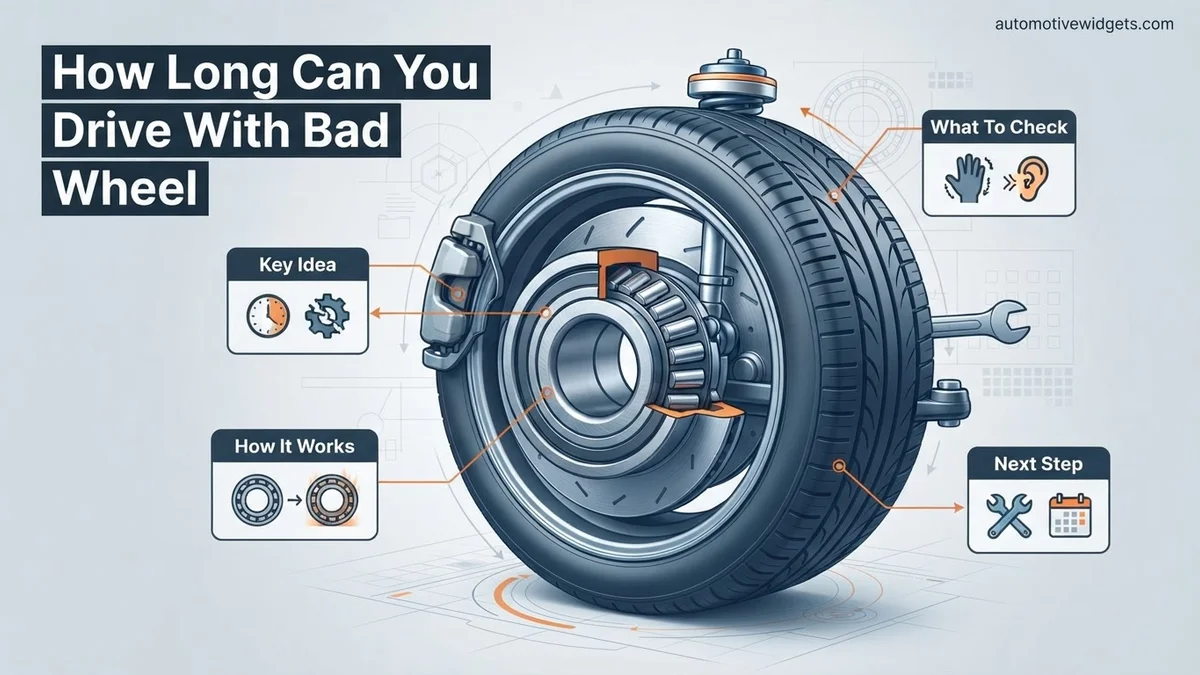
The Critical Danger: How Long Can You Drive with Bad Wheel Bearings?
No Safe Mileage or Time
The stark reality is that there is absolutely no reliable answer to “how long” you can drive with a bad wheel bearing. It’s not a matter of miles or days. A bearing that is merely noisy today could seize or disintegrate entirely within the next few blocks or on your next highway exit ramp. Modern vehicle engineering in 2026 provides incredible safety margins, but a failing wheel bearing fundamentally compromises the connection between your wheel and your vehicle’s suspension. This means its failure is entirely unpredictable. Even a slightly worn bearing is under immense stress, especially during turns, braking, or hitting a pothole, any of which can trigger immediate, complete failure.
Catastrophic Consequences
Driving with a bad wheel bearing isn’t just about a strange noise; it’s about risking your life. The consequences of continuing to drive are severe and can occur without warning:
- Wheel Detachment: The most extreme outcome is the wheel separating from your vehicle entirely. This results in an instant loss of control, especially at speed, leading to severe accidents.
- Loss of Steering Control: As the bearing fails, the wheel can wobble uncontrollably, making steering impossible. You will lose the ability to safely navigate or avoid obstacles.
- Brake Failure: A severely compromised wheel bearing can cause uneven rotor wear or even mechanical interference, drastically reducing braking effectiveness or causing complete brake failure at that wheel.
- Vehicle Fire: Extreme friction from a seized bearing generates immense heat. This heat can ignite lubricants, tires, or nearby components, leading to a dangerous vehicle fire.
- Extensive Damage: Even if a full detachment doesn’t occur, a failing bearing can destroy suspension components, axles, and brake systems, turning a relatively inexpensive repair into thousands of dollars in damage.
Do not underestimate the danger. The cost of a tow and repair pales in comparison to the cost of an accident or injury.
Identifying Bad Wheel Bearing Symptoms & Progression
Early Warning Signs (Sound and Feel)
Recognizing the early symptoms of a failing wheel bearing is crucial for preventing a dangerous situation. Your vehicle usually tries to tell you there’s a problem long before total failure. Listen and feel for these initial indicators:
- Humming or Growling Noise: This is often the first sign. You’ll typically hear a low-pitched hum or growl that gets louder with speed. It might change pitch or intensity when you turn, often getting louder when turning towards the bad bearing (e.g., a bad left front bearing might hum louder on a right-hand turn as weight shifts).
- Road Noise Amplification: Sometimes, it’s mistaken for tire noise, but a bad bearing will produce a distinct, metallic-sounding hum or rumble that doesn’t go away on different road surfaces.
- Subtle Vibration: You might feel a slight vibration through the steering wheel, floorboard, or accelerator pedal, especially at certain speeds. This usually starts subtly and worsens over time.
These early signs are your immediate call to action. Ignoring them allows the problem to escalate rapidly.
Worsening Conditions and Impending Failure
If the early warnings are ignored, the symptoms will become much more pronounced and alarming, signaling that catastrophic failure is imminent. This progression highlights the increasing danger:
- Loud Grinding Noise: The humming will turn into a much harsher, metallic grinding sound, indicating significant internal damage to the bearing. This noise will be constant and very noticeable.
- Increased Vibration: The vibration will intensify, becoming more pronounced through the steering wheel and the entire vehicle. You might feel the car shaking noticeably, especially at higher speeds.
- Loose or Sloppy Steering: A severely worn bearing introduces play into the wheel assembly. You might feel looseness in the steering, almost like the wheel isn’t securely attached. There could be excessive play when you try to wiggle the wheel from side to side when the vehicle is jacked up.
- Uneven Tire Wear: The instability caused by a bad bearing can lead to rapid and uneven tire wear, often showing feathering or cupping patterns on the affected tire.
- Pulling to One Side: As the bearing degrades further, it can cause the vehicle to pull consistently to one side, requiring constant steering correction.
At this stage, your vehicle is extremely unsafe to drive. Every mile driven significantly increases the risk of a dangerous incident, potentially involving other drivers. Immediate towing and repair are the only safe options.
The Proven Fix: Immediate Action & Professional Repair
Once you detect the telltale signs of a failing wheel bearing, immediate professional attention is paramount. Driving minimally and at reduced speeds to the nearest qualified service center is the only responsible course of action. Delaying repair escalates risk and potential cost significantly.
Immediate Steps and Professional Diagnosis
- Minimize Driving: Restrict vehicle use to essential trips only, such as directly to a repair facility. Avoid highways and high speeds.
- Professional Assessment: A certified technician will lift the vehicle and physically check each wheel for play (side-to-side and up-and-down movement). They will also rotate the wheel by hand to listen for grinding or roughness, confirming the faulty bearing. Advanced diagnostic tools may be used to identify specific issues, especially with integrated ABS sensors.
The Repair Process and Cost in 2026
Repair typically involves replacing the faulty wheel bearing. Depending on the vehicle, this could be a press-in bearing requiring specialized tools or a complete hub assembly replacement. As of 2026, the average cost for a single wheel bearing replacement ranges from $350 to $750 per wheel. This variation accounts for vehicle make, model, labor rates, and parts complexity (e.g., integrated ABS sensors). Labor typically takes 1.5 to 3 hours per wheel. Ignoring this repair can lead to much higher expenses, potentially exceeding $2,000 if multiple components are damaged.
Catastrophic Consequences: What Happens Next If Unfixed
Ignoring a bad wheel bearing guarantees progressive deterioration, leading to severe mechanical failures and critical safety hazards. The initial noise and vibration are merely warnings of an impending catastrophic event.
Escalating Damage to Vehicle Components
A failing wheel bearing generates excessive heat and friction. This directly impacts surrounding components. The brake rotor can warp due to uneven heat distribution, leading to pulsating brakes and reduced stopping power. ABS sensors, often integrated within the hub assembly, can be damaged or destroyed, disabling critical safety features. Prolonged wobble can stress and damage constant velocity (CV) joints, steering knuckles, and even transmission components in extreme cases. According to industry data, secondary damage from a neglected wheel bearing can increase repair costs by 300% or more.
The Ultimate Danger: Wheel Detachment
The most severe consequence of a completely failed wheel bearing is total wheel separation from the vehicle. When the bearing seizes or disintegrates, the wheel assembly can literally detach. This typically occurs at speed, resulting in immediate loss of vehicle control, severe damage to the vehicle’s fender and suspension, and an extremely high risk of a multi-vehicle collision or rollover. Vehicle manufacturers and safety organizations uniformly classify a failing wheel bearing as a critical safety defect requiring immediate attention to prevent loss of life.
What If It Still Doesn’t Work?
If you’ve had a wheel bearing replaced but still experience persistent noise, vibration, or handling issues, it indicates either a misdiagnosis, an incomplete repair, or a secondary problem. This is a rare occurrence with proper diagnosis but warrants further investigation.
- Re-Evaluate Diagnosis: Request the shop to re-inspect all wheel bearings. Sometimes, other bearings (e.g., on the opposite side or another axle) may also be failing, or the noise source was misidentified.
- Check Related Components: Other suspension or steering components like tie rods, ball joints, or CV joints can mimic bearing noise when worn. Have these thoroughly inspected for excessive play or damage.
- Wheel and Tire Integrity: Inspect tires for abnormal wear patterns, out-of-round conditions, or internal damage. A bent wheel can also cause vibration that feels similar to a bad bearing.
- Alignment Check: If the bearing failure was severe, it could have affected suspension geometry. A wheel alignment check can identify and correct any deviations.
If symptoms persist, seek a second opinion from a different certified mechanic. The diagnostic fee for a comprehensive re-evaluation in 2026 typically ranges from $100 to $200, which is a worthwhile investment to pinpoint the actual issue and avoid further costly repairs or safety risks.
Conclusion
Driving with a bad wheel bearing is a significant safety risk that escalates quickly from an audible annoyance to a catastrophic failure. According to verified research and expert sources, immediate professional inspection and repair are non-negotiable once symptoms appear. Prioritize your safety and the longevity of your vehicle; schedule a diagnostic appointment without delay.
❓ Frequently Asked Questions
What are the immediate and escalating risks of driving with a bad wheel bearing?
Initially, you face increased noise and vibration, impacting comfort. As it worsens, risks escalate to loss of steering control, uneven tire wear, wheel detachment, and even wheel lock-up or fire due to excessive friction, leading to severe accidents.
What factors can accelerate the failure of a bad wheel bearing?
Factors like driving at high speeds, carrying heavy loads, hitting potholes, making sharp turns frequently, and braking hard can significantly accelerate the wear and eventual catastrophic failure of an already compromised wheel bearing.
How can I tell which wheel bearing is bad if I hear a noise?
Often, the noise gets louder when you turn the car, with the sound intensifying on the opposite side of the turn if that bearing is bad (e.g., turning right makes a left-side bearing louder). A mechanic can definitively diagnose it using specialized tools or by lifting the vehicle.
Can a bad wheel bearing damage other car components?
Yes, a failing wheel bearing can cause damage to other components. It can lead to uneven tire wear, put undue stress on the CV joint or axle, damage the wheel hub, and even cause issues with the braking system due to excessive heat or wobbling.
Is a bad wheel bearing something I can fix myself?
While some experienced DIYers might attempt it, wheel bearing replacement often requires specialized tools like a hydraulic press or hub puller, precise torque specifications, and experience. For safety and proper function, professional installation is strongly recommended.
What should I do if I suspect I have a bad wheel bearing?
If you suspect a bad wheel bearing, your top priority should be safety. Drive as little as possible, avoid high speeds and sharp turns, and schedule an immediate inspection with a trusted mechanic. Do not delay professional diagnosis and repair.