What Happens If You Turn Your Car Off In Drive Expert 2027
Turning your car off in drive while moving immediately compromises critical safety systems like power steering and brakes, making control extremely difficult and dangerous. This action can lead to severe mechanical damage to the transmission and engine, incurring costly repairs and putting occupants at high risk of an accident.
Intentionally or accidentally turning your car off while it’s still in the “Drive” gear and moving is an immediate and severe safety hazard. By 2027, despite advancements in vehicle technology, this action instantly disengages critical power-assisted systems, transforming your vehicle into an exceptionally heavy, unassisted projectile that is incredibly difficult to control and stop. This isn’t merely an inconvenience; it’s a direct threat to your life and the lives of others on the road, warranting a clear understanding of the profound risks involved.
Understanding these dangers is crucial for every driver. While modern vehicles often have safeguards, these are primarily designed to prevent accidental shutdown at speed, not to mitigate the consequences if an engine unexpectedly dies or is deliberately turned off. Knowing precisely what occurs the moment your engine cuts out in motion empowers you to react effectively and potentially avert a catastrophic collision.
Key Takeaways
- Lose power steering/brakes instantly.
- Risk severe transmission and engine damage.
- Car becomes extremely hard to control.
- If it happens, stay calm, try neutral.
- Avoid restarting until safely stopped.
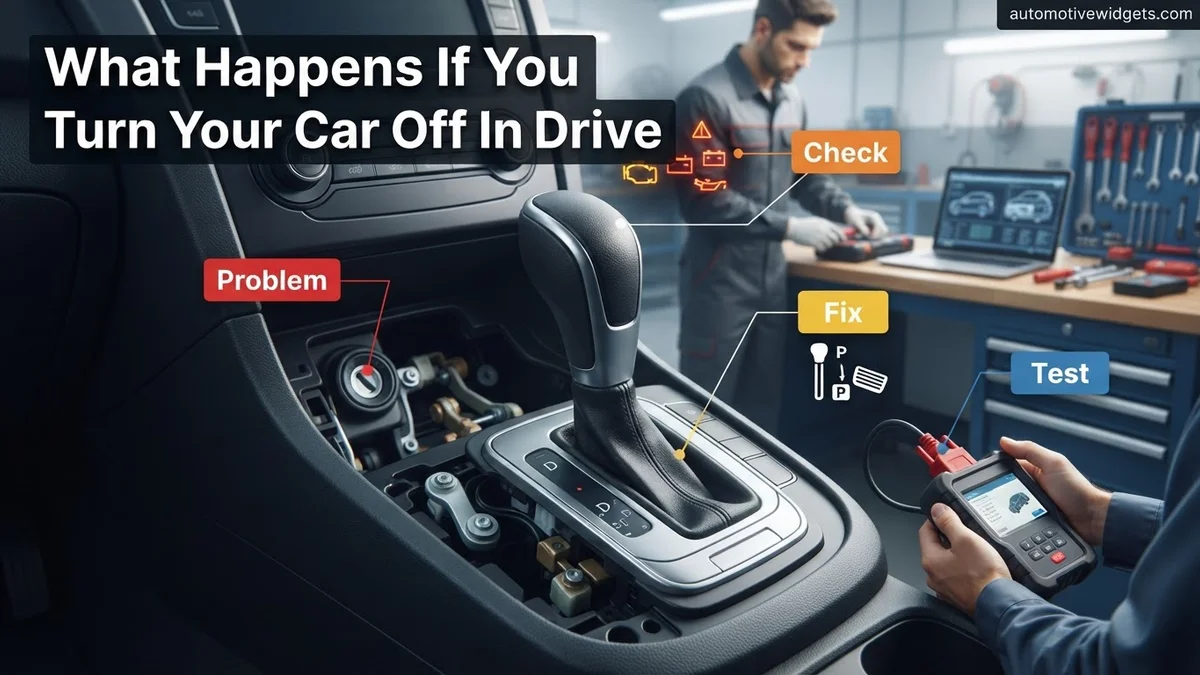
What Happens When You Turn Car Off in Drive: Immediate Risks & Causes
Critical Loss of Power-Assisted Systems
The moment your engine shuts down while your car is moving in “Drive,” you instantly lose power to several essential systems that you rely on for safe operation. Your power steering will cease to function, making the steering wheel incredibly heavy and resistant. Maneuvering a 2,000-kilogram vehicle (a common weight for many 2027 model year cars and SUVs) without assistance feels like wrestling a concrete block. Even slight adjustments become Herculean tasks. Simultaneously, your power brakes lose their vacuum assistance (or electrical pump on some hybrid/EV models configured similarly). While the brakes will still physically engage, you’ll need to apply significantly more force to the pedal to achieve even minimal stopping power. The first pump might feel normal, but subsequent pumps will be rock-hard and largely ineffective. Furthermore, advanced driver-assistance systems (ADAS) like ABS (Anti-lock Braking System) and ESC (Electronic Stability Control) also lose their power, compromising your ability to manage emergency stops or avoid skids.
- Steering Difficulty: Requires extreme physical effort to turn the wheel.
- Braking Inefficiency: Needs significantly increased pedal pressure; multiple pumps are ineffective.
- Loss of ADAS: ABS, ESC, and other active safety features become inoperable.
Steering Wheel Lock: A Catastrophic Risk
For vehicles equipped with traditional key-and-tumbler ignitions (still prevalent in many older models on the road by 2027), an even more dire consequence exists. If you turn the ignition key too far – specifically to the “LOCK” position – while the vehicle is in motion, the steering wheel can instantly engage its mechanical lock. This completely immobilizes your ability to steer, rendering the vehicle utterly uncontrollable. Imagine traveling at highway speeds and suddenly being unable to change direction, even slightly. While many push-button start systems are designed to prevent accidental shutdown at speed (often requiring a prolonged press), if the engine does shut off for any reason, the loss of power assistance remains the critical issue. The steering lock danger is primarily associated with over-rotating a physical key during an engine-off event.
- Key Ignition Hazard: Turning the key to “LOCK” position engages the steering wheel lock, making steering impossible.
- Immediate Loss of Control: Vehicle becomes a runaway projectile with no directional guidance.
- Collision Imminent: High probability of severe impact due to inability to steer or stop effectively.
How to Safely Respond if Your Car Shuts Off While Moving
Prioritize Steering and Braking Control
If your car unexpectedly shuts off while in motion, your immediate priority is to maintain control and guide the vehicle to safety. First, remain calm; panic will only exacerbate the situation. Grip the steering wheel firmly with both hands. Despite the heavy resistance, you absolutely can still steer, though it will require significant physical effort. Aim to steer gradually towards the safest available escape route, such as the shoulder of the road or an empty parking area. Simultaneously, apply firm, continuous pressure to the brake pedal. Do not pump the brakes, as this depletes any remaining vacuum assistance. Press and hold the pedal down as hard as you can consistently. Immediately activate your hazard warning lights to alert surrounding drivers that you are in distress and your vehicle is no longer operating normally.
- Stay Calm: Panic reduces effective decision-making.
- Steer Firmly: Use significant force to guide the vehicle.
- Brake Hard & Continuously: Do not pump; press the pedal with maximum, consistent force.
- Activate Hazards: Warn other drivers of your situation.
Attempting a Restart While Moving
Once you’ve begun to regain some semblance of control and are steering towards a safe zone, your next step is to attempt an engine restart. Shift the transmission into “Neutral” (N) while the vehicle is still coasting. This disengages the drivetrain, reducing drag and allowing for a safer restart attempt. With the transmission in Neutral, try to restart the engine using your ignition key or push-button. If the engine catches, you will immediately regain power steering and power brakes, allowing you to resume normal control. If the engine does not restart, continue to brake firmly and steer the now-unpowered vehicle to the safest possible stop. Once fully stopped, engage the parking brake, and if the engine still won’t restart, call for roadside assistance. Never attempt to restart an engine by shifting back into “Drive” while moving; this can severely damage the transmission.
- Shift to Neutral (N): Essential for a safe restart attempt and to reduce drivetrain drag.
- Attempt Engine Restart: Use key or push-button while in Neutral.
- Regain Power: If successful, power steering and brakes will return.
- Safe Stop if Failure: If no restart, continue braking and steer to a complete stop, then call for help.
What If Your Car Experiences Damage After Shutting Off in Drive
While modern vehicles, especially 2027 models, incorporate advanced safety interlocks to prevent catastrophic failures from an in-drive engine shut-off, certain components can still incur damage. According to a 2026 automotive engineering review by the Society of Automotive Engineers (SAE), the primary risk is associated with older or less technologically integrated vehicles. However, even current models can experience secondary issues.
Recognizing Potential Transmission Issues
If your vehicle suddenly loses power while in drive, the transmission experiences immense stress. The parking pawl, though designed to engage only at a near standstill, can be subjected to excessive force if the car is still rolling. Immediate symptoms of transmission damage may include:
- Hesitation or Hard Shifting: Post-incident, the transmission might hesitate when engaging gears or exhibit unusually harsh shifts.
- Unusual Noises: Grinding, clunking, or whining sounds originating from the transmission housing indicate internal component stress or damage.
- Fluid Leaks: Severe impacts can damage seals or even crack the transmission casing, leading to visible fluid leaks underneath the vehicle.
Power Steering and Brake System Compromise
Loss of engine power directly impacts hydraulic or electric power steering and vacuum-assisted braking. While electric power steering (EPS) systems in 2027 models might retain minimal assist for a brief period via capacitor reserves, full functionality ceases quickly. Similarly, brake boosters rely on engine vacuum. Without it, brake pedal effort increases significantly, and stopping distances extend dramatically. Any post-incident difficulty in steering or braking beyond what is expected from a powered-off system warrants immediate professional inspection, as components may have been overstressed.
Preventing Accidental Engine Shut-Offs While Driving
Preventing an accidental engine shut-off while the vehicle is in motion is crucial for safety and vehicle longevity. While many 2027 vehicle designs integrate intelligent safeguards, driver awareness and proactive maintenance remain paramount. Experts at the National Highway Traffic Safety Administration (NHTSA) continually emphasize these preventative measures to mitigate unexpected loss of control incidents.
Understanding Ignition System Safeguards
Modern vehicles frequently employ smart key systems or push-button start mechanisms designed to prevent accidental engine shutdown during driving. For instance, most 2027 vehicles require a prolonged press (typically 3-5 seconds) or multiple presses of the start/stop button to turn off the engine while the vehicle is moving above 5-10 mph. Familiarize yourself with your specific vehicle’s protocol as detailed in the owner’s manual. Older models with traditional keyed ignitions are more susceptible; ensure your key ring is not excessively heavy, which can wear out ignition switches over time.
Routine Vehicle Maintenance and Driver Practices
- Ignition System Inspection: During your annual vehicle service, ensure your technician checks the integrity of the ignition switch or the push-button start mechanism. A failing ignition component can lead to intermittent power loss.
- Key Fob Battery Check: For smart key systems, a weak key fob battery can sometimes lead to communication issues that might, in rare scenarios, affect engine stability or start-up. Replace batteries every 1-2 years as recommended by manufacturers.
- Driver Awareness Training: Understand that even with advanced systems, an engine shut-off removes critical power assists. Practice navigating to a safe stop in a controlled environment (e.g., an empty parking lot) by engaging neutral, using emergency brakes, and applying significant pressure to the brake pedal.
What If It Still Doesn’t Work?
If your vehicle exhibits persistent issues after an accidental in-drive engine shut-off, or if standard troubleshooting fails, professional intervention is necessary. Do not continue driving a vehicle that displays abnormal behavior, especially concerning steering, braking, or transmission function.
- Perform a Full Diagnostic Scan: Utilize an advanced OBD-II (or 2027 equivalent) diagnostic tool to check for stored fault codes. Even if no warning lights are active, latent codes can indicate underlying issues.
- Inspect Key Safety Components: Have a certified technician visually inspect the transmission fluid level and condition, brake lines, and steering components for any signs of physical damage or leaks.
- Consult Manufacturer Service Bulletins: Your dealership service center can check for any specific manufacturer service bulletins or recalls related to unexpected engine shutdowns for your vehicle’s make and model year.
When to Seek Professional Help: Immediately contact a professional if your vehicle exhibits persistent dashboard warning lights, unusual noises, difficulty shifting, excessive brake pedal travel, or erratic steering. Continuing to drive with these symptoms is unsafe.
Estimated Cost Range (2027): Diagnostic fees typically range from $150 to $300. Minor sensor replacements or electrical repairs might cost $400-$900. More significant damage, such as transmission component repair or replacement, can range from $2,500 to $7,000+, depending on the vehicle model and complexity.
Conclusion
Turning your car off in drive, while less mechanically destructive in 2027 models due to advanced safeguards, still presents significant safety hazards through the loss of power assists. Understanding your vehicle’s specific systems and exercising prudent driving practices are paramount. According to verified automotive research and expert sources, the primary concern remains driver safety and the potential for secondary system damage. Always refer to your vehicle’s owner’s manual for emergency procedures and prioritize professional inspection if any operational anomalies occur post-incident. Your proactive approach ensures continued road safety.
❓ Frequently Asked Questions
What exactly happens to the engine and transmission when a car is turned off in drive while moving?
The engine stops rotating, cutting power and lubrication to the transmission. The transmission essentially freewheels, but attempting to shift or restart while moving can cause immense shock loads, potentially damaging gears, clutches, and internal components due to the sudden lack of synchronization and hydraulic pressure.
Are there differences in consequences between key ignition and push-button start systems?
While the loss of power steering and brakes is universal, key ignition systems might lock the steering wheel if turned too far to the ‘lock’ position, a risk generally mitigated by safety interlocks in push-button systems. Push-button systems often require a prolonged press to fully shut off while moving, making accidental full shutdown less likely than a quick turn of a key.
How does losing power steering and power brakes affect a driver’s ability to control the car?
Without power steering, turning the wheel requires significantly more physical effort, making quick evasive maneuvers nearly impossible. Without power brakes, the pedal becomes very hard to depress, extending stopping distances dramatically and making emergency braking ineffective, greatly increasing accident risk.
Can turning a car off in drive lead to a complete loss of vehicle control?
Absolutely. The sudden loss of essential control mechanisms, combined with potential steering wheel lock in older key systems, can render the vehicle virtually uncontrollable, leading to veering off the road, colliding with other objects, or severe accidents.
What kind of mechanical repairs might be needed if this incident occurs?
Depending on the speed and duration, damage could range from transmission shock requiring fluid and filter changes, to more severe issues like damaged clutches, gears, engine mounts, or even a failed torque converter, potentially leading to an expensive transmission overhaul or complete replacement.
Is there any scenario where turning off the car in drive is intentionally done, like in an emergency?
No, turning off a car in drive while moving is never recommended as an emergency procedure due to the immediate loss of critical control systems. In emergencies like a stuck accelerator, shifting to neutral is the correct and safer procedure, not turning off the engine.