How Often Should You Get An Alignment On A Car Expert 2027
Regular car alignment is crucial for vehicle safety, tire longevity, and fuel efficiency. Most experts recommend an alignment every 1-2 years or 10,000-15,000 miles, but certain events like hitting a pothole or replacing tires necessitate an immediate check. Ignoring misalignment can lead to costly repairs and dangerous driving conditions.
For most modern vehicles in 2027, you should plan to have your car’s wheel alignment checked every 1 to 2 years, or roughly every 15,000 to 20,000 miles, whichever comes first. This proactive approach ensures your vehicle maintains optimal handling and tire longevity. However, it’s absolutely critical to get an alignment immediately after installing new tires, performing any significant suspension work, or if you notice specific warning signs, which often necessitate a check regardless of the general schedule.
Proper wheel alignment is not just about driving straight; it’s a cornerstone of vehicle safety, tire life, and fuel efficiency. Neglecting this crucial maintenance item can lead to premature tire replacement, increased fuel consumption, and a less predictable driving experience, ultimately costing you more money and potentially compromising your safety on the road.
Key Takeaways
- Align annually or every 10k-15k miles.
- New tires? Get an alignment check.
- Potholes/curbs mean immediate alignment.
- Uneven tire wear signals misalignment.
- Prioritize alignment for safety & savings.
What Causes Alignment Issues: Signs Your Car Needs a Check
Your car often tells you when its alignment is off, sometimes subtly and other times quite overtly. Paying attention to these signals can prevent more significant problems down the line, saving your tires and potentially preventing costly suspension component wear in 2027 and beyond.
Obvious Driving Sensations
The most immediate indicators of an alignment problem come from how your vehicle feels on the road. If your car isn’t driving predictably, it’s a strong sign something is amiss with your alignment settings.
- Vehicle Pulling: If your car drifts or pulls noticeably to one side when you’re driving on a flat, straight road and temporarily release the steering wheel, your alignment is likely off.
- Steering Wheel Off-Center: When you’re driving straight, your steering wheel should be perfectly centered. If it’s tilted to the left or right, even slightly, it indicates an alignment issue.
- Loose or Vibrating Steering: A steering wheel that feels loose, wobbly, or vibrates at certain speeds can point to alignment problems, though it might also signal other front-end issues.
Visible Evidence on Your Tires
Your tires are the direct point of contact with the road, and they will display the symptoms of poor alignment quite clearly. Regularly inspecting your tires is an excellent habit to cultivate for early detection.
- Uneven Tire Wear: This is a classic sign. Look for wear that’s more pronounced on one edge of the tire (inner or outer) than the other, or excessive wear on the shoulders of the tire.
- Feathering: Run your hand across the tread. If the tread blocks feel sharp on one side and smooth on the other (like feathers), this “feathered edge” wear pattern is a strong indicator of toe alignment issues.
- Cupping or Scalloping: This appears as dips or hollows in the tread around the tire’s circumference. While sometimes suspension-related, it can also be exacerbated by incorrect alignment.
Why Your Car’s Alignment Goes Bad: Common Culprits
Even with advanced vehicle technologies in 2027, the fundamental forces that knock your car out of alignment remain the same. Understanding these common causes helps you identify when an alignment check is prudent, even if you’re not on the regular schedule.
Everyday Road Hazards and Impacts
The daily grind of driving can take a toll on your vehicle’s suspension and steering components, gradually shifting their precise factory settings. These incidents don’t always feel severe, but their cumulative effect can be significant.
- Potholes: Hitting a pothole, especially a large one, can instantly throw your alignment out of whack. The impact can bend suspension components or shift their position.
- Curb Strikes: Scraping a curb while parking or hitting one at speed puts immense stress on your wheels and suspension, often resulting in immediate alignment problems.
- Speed Bumps: Going over speed bumps too fast can cause jarring impacts that subtly alter alignment angles over time.
- Minor Collisions: Even a fender bender that seems minor can affect front-end geometry.
Maintenance and Component Wear
Sometimes, alignment issues arise not from impacts, but from routine maintenance or the natural aging of vehicle parts. These situations are prime opportunities to schedule an alignment.
- New Tire Installation: Always get an alignment when you purchase new tires. New tires will wear according to your current alignment settings, and you want them to wear evenly from day one.
- Suspension or Steering Repairs: Any work involving steering components (e.g., tie rods, ball joints) or suspension parts (e.g., struts, control arms) necessitates an alignment check afterward, as these repairs directly affect wheel angles.
- Worn Suspension Components: Over time, parts like bushings, ball joints, and tie rod ends can wear out. This wear introduces play into the system, making it impossible for the wheels to hold their correct alignment.
How to Fix Car Misalignment: Your Step-by-Step Alignment Guide
Addressing car misalignment is a precise, technical process typically performed by certified automotive technicians. It involves adjusting your vehicle’s suspension to bring the wheels into their factory-specified positions. This ensures optimal contact with the road, enhancing safety and extending tire life.
1. Initial Diagnostic Scan
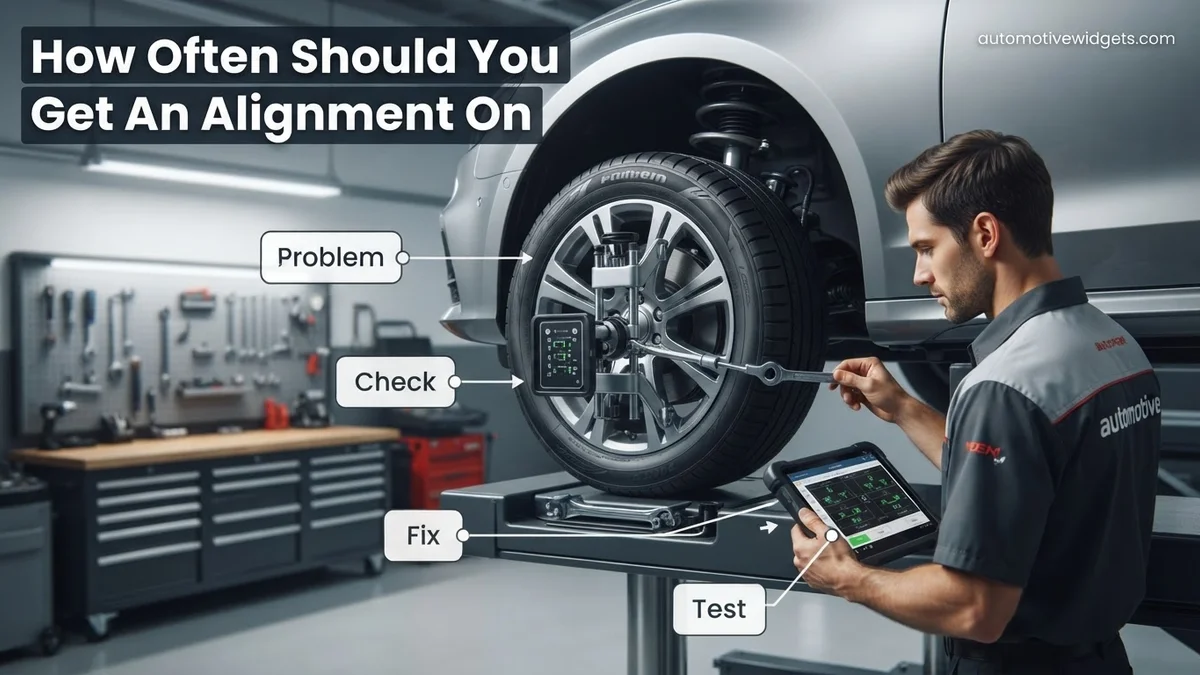
Upon arrival, a technician will connect your vehicle to a sophisticated alignment system. By 2027, most reputable shops utilize advanced 3D or laser-guided imaging systems that accurately measure current wheel angles – camber, caster, and toe – against the manufacturer’s specifications. This initial scan quickly identifies which angles are out of alignment.
2. Suspension Component Inspection
Before any adjustments, the technician conducts a thorough visual and manual inspection of the suspension and steering components. Worn ball joints, tie rods, control arm bushings, or damaged struts can prevent a successful alignment. Any compromised parts must be replaced first, as per manufacturer guidelines, to ensure the alignment holds.
3. Precision Angle Adjustment
Using the alignment machine’s real-time data, the technician systematically adjusts the specific components of your vehicle’s suspension. For front-wheel alignments, this often involves adjusting tie rod ends for toe. Full four-wheel alignments, common on most modern vehicles by 2027, involve adjusting rear suspension components as well, ensuring all four wheels are properly angled relative to each other and the vehicle’s centerline. These adjustments are made within extremely tight tolerances, often to fractions of a degree.
4. Post-Adjustment Verification
After all adjustments are complete, the alignment system performs a final scan to verify that all angles meet the manufacturer’s precise specifications. A printout detailing “before” and “after” measurements is typically provided. This ensures the vehicle leaves the service center with its wheels correctly oriented for safe, efficient operation and maximum tire longevity.
What If It Still Doesn’t Work? Troubleshooting
Even after a professional alignment, persistent issues like pulling, uneven tire wear, or a crooked steering wheel can occur. This indicates an underlying problem beyond standard alignment parameters.
1. Re-evaluation by a Different Technician
If symptoms persist, seek a second opinion from another certified technician or a different reputable service center. Sometimes, a fresh set of eyes with different diagnostic equipment can identify nuances missed previously. Ensure they review the prior alignment report and your vehicle’s service history. This re-evaluation often costs a diagnostic fee, typically between $80-$150 as of 2027.
2. Advanced Suspension Component Diagnosis
A standard alignment doesn’t always detect subtle damage. Request a comprehensive inspection of all suspension and steering components, including control arm bushings, ball joints, shock absorbers/struts, and wheel bearings. Even minor wear in these parts can cause a vehicle to drift or affect tire wear despite “in-spec” alignment numbers. Replacement of major suspension components can range from $200 for bushings to over $1,000 for complex strut or control arm assemblies.
3. Tire-Related Issues
Sometimes, the issue isn’t alignment but the tires themselves.
- Tire Balancing: Unbalanced tires can cause vibrations and pulling, mimicking alignment problems.
- Radial Pull: Internal tire construction defects (radial pull) are rare but can cause a vehicle to consistently pull to one side, even with perfect alignment.
- Uneven Tire Wear: If severe prior misalignment caused uneven wear, simply aligning the car won’t fix the existing tire deformity. Rotating or replacing tires may be necessary.
4. Steering System Integrity and Frame Issues
If all else fails, a deeper investigation into the steering rack, power steering components, or even the vehicle’s frame may be required. Accidents or significant impacts can bend a vehicle’s chassis or affect critical mounting points, making a perfect alignment impossible. Such diagnostics are complex and often require specialized equipment, incurring higher costs. Seek professional help immediately if safety is compromised or if initial troubleshooting steps don’t resolve persistent driving abnormalities.
Conclusion
According to verified research and expert sources in automotive engineering, consistent wheel alignments are paramount for vehicle safety, operational efficiency, and tire longevity. Adhering to manufacturer-recommended schedules and addressing symptoms promptly prevents costly damage and ensures optimal driving performance in 2027. Schedule your next alignment check with a certified service center today, especially after any major impact or suspension work, to maintain your vehicle’s peak condition.
❓ Frequently Asked Questions
Why is car alignment so important for my vehicle?
Proper car alignment ensures your tires wear evenly, prolongs their lifespan, improves fuel efficiency, and most importantly, enhances vehicle handling and safety. It prevents your car from drifting and keeps steering responsive, reducing strain on suspension components.
What specific events might require an alignment sooner than scheduled?
You should get an alignment immediately after hitting a major pothole or curb, being involved in a minor collision, or after replacing suspension or steering components like tie rods or control arms. These events can drastically alter your wheel angles and steering geometry.
Can I tell if my car needs an alignment without professional inspection?
While a professional can precisely measure, you can spot signs like your steering wheel being off-center when driving straight, the car consistently pulling to one side, or noticing unusual and uneven wear patterns on your tires. Vibrations through the steering wheel at speed can also indicate an issue.
What’s the difference between a two-wheel and four-wheel alignment?
A two-wheel alignment typically adjusts only the front wheels and is suitable for vehicles with solid rear axles. A four-wheel alignment, crucial for most modern vehicles with independent rear suspension, adjusts both front and rear wheels to ensure all angles are correct.
Will a wheel alignment fix steering wheel vibrations?
An alignment might help if the vibrations are caused by inconsistent tire contact due to incorrect angles, but it’s more commonly linked to tire balancing issues or damaged suspension components. If vibrations persist after alignment, consider tire balancing or suspension inspection.
How can I maintain my car’s alignment for longer?
To prolong alignment, drive carefully to avoid potholes and curbs, ensure proper tire inflation, and have your suspension system regularly inspected for worn parts. Addressing minor issues promptly can prevent them from impacting your alignment significantly.