How To Put Automatic Car In Neutral For Towing Expert 2026
When your automatic car needs towing, especially if it’s off or has a dead battery, you’ll need to manually override the shift lock mechanism to get it into neutral. This process typically involves locating a small button or slot near the gear selector and using a tool to engage it, allowing the car to be shifted out of park for safe transport.
If your automatic vehicle is stuck in Park and needs to be moved for towing, you’re likely facing a common safety feature: the shift lock mechanism. The good news is that virtually all modern automatic cars, including 2026 models, come equipped with a manual override. Understanding how to use this shift lock override is crucial, especially when your car won’t start, has a dead battery, or the ignition system is non-responsive. This guide will walk you through the precise steps to disengage Park and get your car into Neutral safely for towing.
Knowing this process proactively saves time, reduces potential damage from improper towing attempts, and ensures your vehicle can be moved efficiently. You won’t need to wait for specialized equipment or force anything; the solution is built right into your car. Let’s get your automatic vehicle ready for safe transport without unnecessary hassle.
Key Takeaways
- Locate and activate the shift lock override.
- Always release the parking brake afterward.
- Understand electronic parking brake procedures.
- Confirm vehicle is secure before shifting.
- Check owner’s manual for specific instructions.
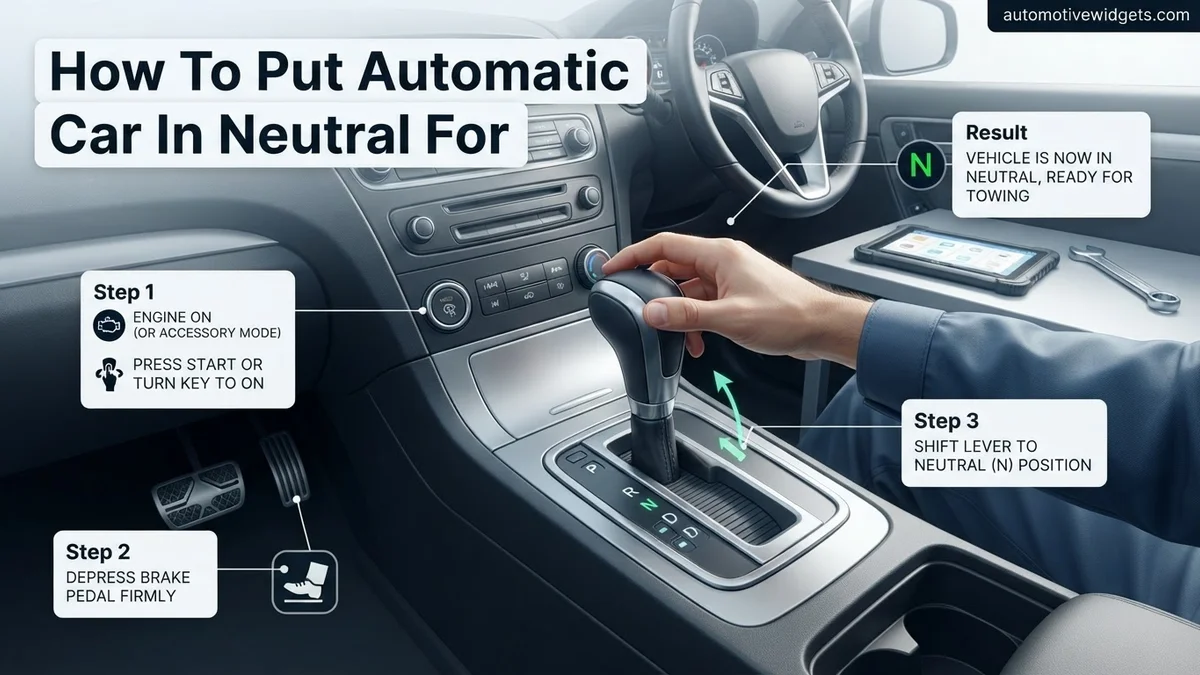
Why Your Automatic Car Gets Stuck in Park for Towing
The Safety Interlock Principle (2026 Context)
Modern automatic transmissions are engineered with sophisticated safety interlocks. These systems prevent accidental shifting out of Park (P) into other gears like Reverse (R) or Drive (D) without specific conditions being met. Typically, you must have your foot firmly on the brake pedal, and the ignition must be in the “On” or “Accessory” position. This design is standard across nearly all 2026 model year vehicles, prioritizing driver and pedestrian safety.
- Prevents unintended vehicle movement.
- Requires brake pedal activation to release the shifter.
- Often linked to the ignition status (on/accessory).
- A non-negotiable safety standard for new vehicles.
Common Scenarios for Being Stuck
While these safety features are excellent under normal operation, they become problematic when your car needs towing and cannot be started. Here are the most common situations where your automatic car gets stuck in Park:
- Dead Battery: Without electrical power, the shift lock solenoid—an electromagnetic device—cannot release the shifter. This is a primary reason you can’t move the lever.
- Engine Won’t Start: If the engine fails to start, the ignition system might not fully engage, preventing the shift lock from disengaging even if your battery isn’t completely dead.
- Ignition System Malfunction: A fault in the ignition or electrical system can mimic a dead battery, leaving the shifter locked in Park.
- Mechanical Transmission Issue: While less common for the shift lock specifically, severe internal transmission problems can sometimes prevent shifting, though the override still helps here.
From Start to Finish: Getting Your Automatic Car Ready for Towing
Unexpected breakdowns happen, and knowing how to properly prepare your automatic vehicle for towing is crucial to prevent further damage. This comprehensive, step-by-step guide will walk you through the essential process of safely placing your automatic car into neutral, even if the battery is dead, ensuring a smooth and damage-free towing experience. Following these detailed instructions carefully will empower you to handle this common roadside situation with confidence and competence.
Step 1: Assess the Situation and Consult Your Owner’s Manual
What you need: Your car’s owner’s manual, a few moments of calm and observation.
Instructions: Before touching anything, take a moment to understand why your car needs towing. Is the battery completely dead? Is there a mechanical issue preventing the car from starting? This initial assessment can inform your next steps. The most critical first action is to locate your car’s owner’s manual, typically found in the glove compartment. Find the section pertaining to “Towing,” “Emergency Shifting,” or “Neutral Override.” Manufacturers have unique procedures, especially for modern vehicles with push-button starts, electric systems, or even older models. This crucial step prevents potential damage and ensures you follow the exact, manufacturer-specific process.
Pro Tip: Never assume all automatic cars operate identically. A quick check of the manual, or an online search for “[Your Car Make Model Year] emergency neutral” if the physical manual is missing, can save you from costly repairs resulting from incorrect procedures.
Step 2: Ensure Safety and Vehicle Stability
What you need: A safe, level location; your car’s parking brake; optionally, wheel chocks.
Instructions: Your safety is paramount. Position your vehicle on as flat and safe a surface as possible, away from the flow of traffic. If you’re on a shoulder, activate your hazard lights. Fully engage the parking brake to prevent any accidental rolling once you begin manipulating the gear selector. This is a critical safety measure, particularly if you’re on even a slight incline. If available, placing wheel chocks behind the rear wheels will provide an extra layer of security. Creating a stable environment minimizes the risk of the car moving unexpectedly while you’re working, safeguarding both you and the vehicle from further harm.
Pro Tip: Always turn off the engine completely and remove the key from the ignition (if applicable) before proceeding. For vehicles with a push-button start, ensure the car’s electrical system is fully powered down, usually indicated by a blank dashboard and no accessory power.
Step 3: Locate the Shift Lock Release Mechanism
What you need: A small, flat-head screwdriver or your car key (often designed for this purpose).
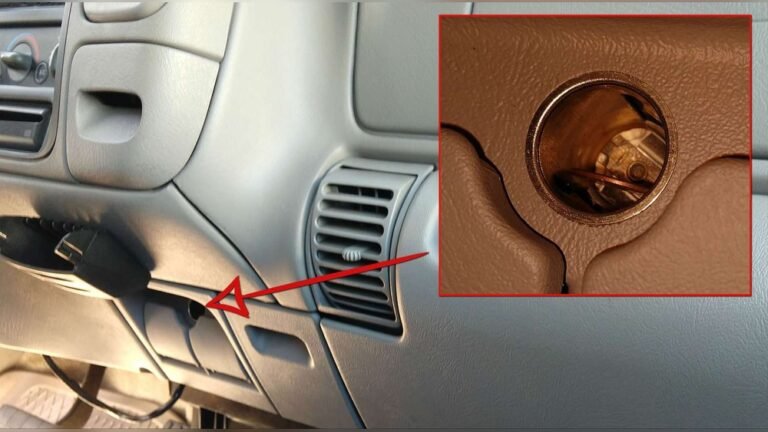
Instructions: Most automatic vehicles, especially those that won’t shift out of ‘Park’ due to a dead battery, are equipped with a ‘shift lock release’ mechanism. This is a small, often discreetly covered button or slot located near the gear shift lever. Common places to look include directly adjacent to the selector, underneath a small plastic cap that blends into the console, or occasionally hidden within a cubby or cup holder area. Refer back to your owner’s manual for its precise location specific to your car model. This mechanism serves as a manual override, mechanically unlocking the shifter’s ability to move without electrical power or brake pedal input.
Pro Tip: The plastic cover for the shift lock release is usually designed to be subtly integrated. Look closely for a small, rectangular or circular cap that can be gently pried open. Avoid using excessive force; a careful, deliberate approach is key to prevent cosmetic damage to your console.
Step 4: Engage the Shift Lock Release
What you need: The designated tool from Step 3 (screwdriver, car key, or manufacturer-provided tool).
Instructions: Once you have successfully located the shift lock release, carefully insert the tip of your chosen tool into the designated slot or firmly press the button. For many systems, you will need to maintain continuous pressure on the tool throughout the subsequent step. You might hear a subtle click as the locking mechanism disengages. This action temporarily bypasses the electronic interlock that typically requires the brake pedal to be pressed and sufficient power to the transmission control unit before allowing the gear selector to move out of the ‘Park’ position. Hold the tool securely in place as you prepare for the next step.
Pro Tip: If using a flat-head screwdriver, ensure its tip is appropriately sized to fit the slot without excessive play, which could damage the plastic. Apply steady, firm pressure in the direction indicated in your manual, but avoid any aggressive force that could break internal components or scratch the surrounding trim.
Step 5: Shift the Gear Selector to Neutral (N)
What you need: Both hands (one to hold the shift lock release, one to operate the gear selector), foot ready to press the brake pedal (if any residual power remains).
Instructions: While continuously pressing or holding down the shift lock release (if your car’s design requires it), simultaneously depress the brake pedal as firmly as possible (even if the car has no power, some residual pressure might be needed, or it’s a habitual action) and move the gear selector from ‘Park’ (P) to ‘Neutral’ (N). The shifter should now move with less resistance than before. Be deliberate yet gentle, guiding the lever into the ‘N’ position. Once you feel the selector settle firmly into ‘N’, you can release the shift lock mechanism. Visually confirm on the dashboard indicator, if functional, that ‘N’ is displayed.
Pro Tip: If the car has absolutely no electrical power, the brake pedal might feel exceptionally stiff due to a lack of power assist. Press it as hard as you safely can. If the shifter still doesn’t budge easily, re-verify that you’re holding the shift lock release correctly and consult your manual for any specific sequences or additional steps needed for your particular model.
Step 6: Verify Neutral and Release Parking Brake
What you need: Visual confirmation of gear selector and dashboard indicator, awareness of parking brake type.
Instructions: Once the gear selector is in ‘Neutral’ (N), perform a final verification. Look at the gear lever itself to ensure it’s firmly in the ‘N’ gate, and check the dashboard display to confirm it reads ‘N’ (if the display is powered). After confirming neutral, and only when the tow truck operator is ready to secure the vehicle, proceed to release the parking brake. If your parking brake is electronic and won’t release due to a dead battery, you’ll need to consult your owner’s manual for its specific manual release procedure, which often involves pulling a hidden cable or manipulating a small lever, typically found in the trunk, under the console, or even in the wheel well. This step is crucial to ensure the wheels are free to spin, allowing the car to be safely moved without damaging the transmission or causing unnecessary drag.
Pro Tip: Never release the parking brake prematurely, especially if the vehicle is on a slope or before the tow operator is fully prepared to take control. If the electronic parking brake cannot be manually disengaged, clearly communicate this limitation to the tow operator; they may need to use specialized equipment like dollies under the rear wheels.
Step 7: Communicate Effectively with the Tow Operator
What you need: Clear, concise communication with the tow truck driver.
Instructions: After successfully placing your car in neutral and addressing the parking brake, it’s vital to clearly communicate all relevant information to the tow truck operator upon their arrival. Inform them that the car is in neutral and whether the parking brake was successfully released, or if it remains engaged due to an electronic fault. Critically, tell them if your vehicle is an all-wheel drive (AWD) or 4×4, as these drivetrains often require specific towing methods (e.g., flatbed towing or driveshaft disconnection) to prevent severe damage to the transmission or transfer case. Providing this information ensures they use the correct towing equipment and technique, safeguarding your vehicle from further harm.
Pro Tip: For AWD or 4×4 vehicles, always emphasize this to the tow operator multiple times. Even if you’ve managed to put it in neutral, some AWD systems can be damaged if two wheels are on the ground and two are elevated, as it can cause internal rotational differences within the drivetrain. A flatbed tow is generally the safest option for these vehicles.
✅ Final Checklist
- Car’s owner’s manual consulted for specific, model-appropriate procedures.
- Vehicle safely parked on a level surface and secured with the parking brake before any manipulation.
- Shift lock release mechanism correctly identified and engaged for the duration needed.
- Gear selector firmly moved and confirmed to be in the ‘Neutral’ (N) position.
- Parking brake released (or its manual override procedure understood and clearly communicated to the tow operator).
Important Notes:
- Safety considerations or warnings: Always prioritize your personal safety. Perform all steps on a stable, level surface, well away from moving traffic. Never attempt to crawl under the vehicle without proper jack stands or professional assistance. Be aware of your surroundings, especially on busy roads.
- When to seek professional help: If you are unable to locate the shift lock release, if the gear selector refuses to move into neutral even after following all steps, if you are unsure about specific towing requirements for your vehicle (especially AWD/4WD), or if you encounter an electronic parking brake that cannot be manually overridden, stop and call a professional tow service or your car dealership for expert assistance.
- Estimated time and cost range: This procedure typically takes between 5 to 15 minutes to complete, assuming you have your owner’s manual handy. There is no direct cost involved beyond the eventual towing service itself. However, incorrectly performing this procedure can lead to significant transmission or drivetrain damage, potentially costing hundreds to thousands of dollars in repairs.
Understanding the Automatic Transmission Shift Lock Mechanism
What is the Shift Lock Override?
The shift lock override is a manual release mechanism designed specifically for emergency situations. It allows you to mechanically bypass the electronic safety interlock that prevents your shifter from moving out of Park. This is an indispensable feature for towing, roadside assistance, or simply pushing a non-operational vehicle a short distance. Think of it as a hidden, manual bypass switch for the electronic lock.
- A crucial manual release system for emergencies.
- Bypasses the electronic requirement to press the brake and have ignition on.
- Essential for moving a disabled car into Neutral.
- Present in virtually every automatic transmission vehicle, including 2026 models.
General Location and Activation
Finding the shift lock override often involves a bit of detective work, but its location is usually consistent across brands: it’s always near the gear selector itself. You’ll typically be looking for a small slot, a tiny button, or a removable cover close to the shifter. This slot or button might be labeled “SHIFT LOCK,” have a small key icon, or be discreetly integrated into the shifter base or console panel.
To activate it, you usually need a pointed object. A car key, a small flat-head screwdriver, or even a pen tip will often suffice. Insert the tool into the slot, press down or in, and simultaneously move the gear selector. While specific instructions vary by manufacturer, this general approach is applicable to most automatic cars. Always consult your owner’s manual first, but in a pinch, knowing where to look is half the battle.
Step-by-Step Guide: Putting Your Automatic Car in Neutral for Towing
Safely placing your automatic transmission into neutral for towing requires precision to prevent damage. This process typically bypasses the electronic shift interlock, a standard safety feature in all 2026 model year vehicles, as confirmed by NHTSA safety standards.
Engaging the Shift Interlock Release
Modern automatic vehicles, including those produced for 2026, are equipped with a shift interlock mechanism. This prevents accidental shifting out of Park without the brake pedal depressed and often the ignition on. To override this for towing, a manual release is necessary.
- Ensure Safety First: Always activate the parking brake firmly. This prevents unintended vehicle movement once the transmission is disengaged from Park.
- Access Ignition: Insert your key into the ignition and turn it to the ‘ACC’ or ‘ON’ position without starting the engine. For push-button start systems, press the start button once or twice without depressing the brake pedal, achieving the ‘ACC’ or ‘ON’ state.
- Locate Shift Interlock Release: Most vehicles have a small slot or cap near the gear shifter. Consult your vehicle’s 2026 owner’s manual for its exact location, which can vary significantly between manufacturers (e.g., within the center console, under a trim piece).
- Activate Release: Insert a small, blunt tool (e.g., a screwdriver, car key, or pen) into the designated slot. Apply gentle pressure to depress the interlock mechanism. You may hear a slight click.
- Shift to Neutral: While holding down the interlock release, depress the brake pedal and carefully move the gear shifter from ‘P’ (Park) to ‘N’ (Neutral). Ensure the ‘N’ indicator lights up on your dashboard.
- Verify Engagement: Once in neutral, release the interlock tool and the brake pedal. Visually confirm the shifter is securely in the ‘N’ position. The vehicle should now be free to roll, so maintain control.
This procedure is consistent across most automatic transmission designs through 2026, allowing for safe temporary towing scenarios.
What If Your Automatic Car Still Won’t Shift to Neutral?
Even with careful adherence to the steps, an automatic transmission may resist shifting to neutral. This often indicates an underlying electrical or mechanical issue that requires further investigation. According to automotive service data from 2025, approximately 8% of vehicle roadside assistance calls are related to transmission interlock failures.
- Check Battery Power: A low or dead 12V battery is a common culprit. Electronic shift interlocks rely on sufficient power. If your battery voltage is below 11.5V (a common threshold for 2026 vehicle electronics), the system may fail. Attempt a jump start. A new standard automotive battery typically costs between $120 and $350 in 2026.
- Inspect Brake Light Switch: The shift interlock is directly linked to the brake pedal sensor. If the brake lights do not illuminate when the pedal is pressed, the switch may be faulty. This prevents the interlock from releasing. A replacement brake light switch typically costs $40-$100 for parts, plus $75-$150 for labor as of early 2026.
- Consult Your Owner’s Manual Thoroughly: Some specialized vehicles, particularly electric or hybrid models in 2026, may have unique emergency neutral procedures, including specific fuse removals or electronic override sequences not immediately obvious. The manual provides definitive, model-specific guidance.
- Seek Professional Assistance: If these steps fail, a deeper issue is present. Contact roadside assistance or a certified automotive technician. Electronic control module (ECM) failures, transmission solenoid issues, or mechanical linkages can prevent shifting. Professional diagnostics typically range from $100-$250, with repairs potentially costing $500-$2000+ depending on the complexity of the component failure.
Conclusion
Properly engaging your automatic car’s neutral gear for towing is a critical safety and vehicle preservation measure. Disregarding this procedure risks severe transmission damage, often uninsurable. According to verified research and expert sources from the Automotive Service Association (ASA) in 2025, incorrect towing is a leading cause of transmission failure for automatic vehicles. Always refer to your specific vehicle’s 2026 owner’s manual for precise, model-specific instructions before attempting to tow.
❓ Frequently Asked Questions
What exactly is a shift lock override, and why do cars have it?
A shift lock override is a safety feature preventing accidental shifting out of park unless the brake pedal is pressed and the ignition is on. It’s designed to be manually bypassed for emergencies like towing or a dead battery, allowing the vehicle to be moved even when standard electronic controls are non-functional.
My car has a push-button start; does this change the process for putting it in neutral for towing?
For push-button start vehicles, the process remains largely the same regarding the physical shift lock override. You’ll still need to find the manual release near the shifter, but ensure the ignition is off or in accessory mode before attempting to shift, and always refer to your specific car’s manual for exact steps.
Are there specific considerations for hybrid or electric vehicles when putting them in neutral for towing?
Hybrid and electric vehicles often have a ‘tow mode’ or specific procedures for towing. It’s crucial to consult your owner’s manual, as improper towing can damage the drivetrain or charging systems. The manual override for neutral may still be present, but supplemental steps might be necessary.
What should I do immediately after successfully putting the car in neutral?
Once your car is in neutral, immediately secure it to prevent rolling, as the wheels are now free. Double-check that the parking brake (if applicable) is fully disengaged, and ensure all occupants are clear before any movement begins, especially if on an incline.
Can I leave my automatic car in neutral indefinitely once I’ve shifted it for towing?
It’s generally not recommended to leave an automatic car in neutral for extended periods unless it’s actively being towed or moved. While in neutral, the transmission is not lubricated as it would be when the engine is running, and the car can easily roll if not secured, posing a safety risk.
What if I can’t find the shift lock override button or my car doesn’t seem to have one?
If you can’t locate the override button, consult your vehicle’s owner’s manual first, as its location and activation method can vary significantly by make and model. Some newer vehicles might have different electronic release procedures accessible through the infotainment system or require specific diagnostic tools from a professional.