How to Tie Down a Refrigerator in a Pickup Truck 2026
Transporting a refrigerator incorrectly can result in severe compressor damage or dangerous shifts on the road. Securing the appliance upright using heavy-duty ratchet straps and protective moving blankets is essential for safe transit. Follow this step-by-step method to protect both your refrigerator and your vehicle.
Transporting a refrigerator in a pickup truck bed requires strict adherence to upright positioning, heavy-duty ratchet straps anchored to factory tie-downs, and thick moving blankets to prevent cosmetic and mechanical failure. If you secure the appliance incorrectly, a sudden highway stop can send a 250-pound refrigerator crashing into your cab or tumbling onto the asphalt.
As of 2026, modern appliance designs and lightweight truck beds mean you must take extra precautions against shifting loads. By following the precise loading and strapping protocols detailed below, you will protect both your investment and everyone sharing the road with you.
Key Takeaways
- Always transport a refrigerator in the upright position whenever possible to prevent compressor oil contamination.
- Gather heavy-duty ratchet straps, moving blankets, twine, and a sturdy wooden pallet before starting.
- Position the refrigerator against the cab of the truck for maximum stability during transit.
- Hook ratchet straps securely to factory truck bed anchors, avoiding fragile plastic exterior handles.
- Drive slowly, take wide turns, and avoid sudden braking to prevent cargo shifting.
Why Improperly Secured Refrigerators Fall and Cause Damage
The Physics of Truck Bed Shifts
When you drive a pickup truck, the bed experiences constant vertical bouncing and lateral G-forces during turns. A refrigerator has a high center of gravity because its heavy compressor sits near the bottom, but the overall mass is tall and narrow. If you rely on cheap bungee cords or twine, the physics of a 30 mph corner will easily snap them. You must counteract forward momentum, rearward sliding, and sideways tipping simultaneously.

Common Points of Failure During Transit
Transport failures usually happen because of specific mistakes made during the loading process. Avoiding these common traps keeps your appliance stable:
- Using worn-out or frayed ratchet straps with a rating under 500 pounds.
- Attaching straps to weak sheet metal instead of welded truck bed anchors.
- Leaving the doors unlocked, allowing them to swing open and catch the wind.
- Failing to block the rolling wheels or leveling feet of the refrigerator.
Transporting a Fridge Made Easy: Your Essential Action Plan
Transporting a major appliance in the open bed of a pickup truck requires precision, the right gear, and strict adherence to safety protocols. A refrigerator is heavy, top-heavy, has delicate internal components, and can easily become a lethal projectile or suffer catastrophic cosmetic and mechanical damage if not secured correctly. This comprehensive guide walks you through the exact process of prepping, loading, and tightly securing your refrigerator so it arrives at your destination in pristine working condition, without shifting, tipping, or scratching your vehicle.
Step 1: Prep and Clean the Refrigerator
What you need: All-purpose cleaner, microfiber towels, packing tape, and zip ties or rubber bands.
Instructions: Before you even think about lifting the appliance, you must prepare its interior and exterior. Unplug the refrigerator at least 24 hours in advance to let it defrost completely, and wipe up any standing water inside to prevent mold and mildew during transit. Remove all loose shelving, crisper drawers, and door bins, wrapping them separately in moving blankets or bubble wrap. Next, firmly tape the refrigerator doors shut using heavy-duty packing tape to prevent them from swinging open unexpectedly while driving. Finally, coil and tape the power cord securely to the back of the unit so it does not drag or get caught under the base.
Pro Tip: Never leave loose glass shelves inside the fridge during transport, as even minor road vibrations will cause them to shatter against each other.
Step 2: Inspect and Clean the Truck Bed
What you need: Broom, heavy-duty moving blankets, and cardboard sheets.
Instructions: Sweep the truck bed thoroughly to remove any rocks, gravel, or debris. Sharp stones or metal fragments trapped under a heavy appliance can easily puncture the metal casing or scratch the refrigerator finish. Once the bed is clean, lay down two thick moving blankets across the floor where the refrigerator will sit, extending them slightly up the tailgate or front wall of the bed to provide a buffer. If you are worried about the floor being uneven, lay down a thick piece of flat cardboard over the blankets to distribute the weight evenly and provide extra friction against sliding.
Pro Tip: Inspect your truck bed’s factory tie-down anchors to ensure they are solid, unrusted, and firmly bolted to the frame before loading.
Step 3: Load the Refrigerator Upright
What you need: Appliance dolly, heavy-duty ratchet straps, and at least two strong helpers.
Instructions: Whenever possible, transport a refrigerator in an upright, vertical position to keep the compressor oil from flowing into the cooling lines. Secure the appliance to an appliance dolly using the dolly’s built-in strap, tilting it back carefully with the help of your assistants. Wheel the dolly up a secure loading ramp into the truck bed. Position the refrigerator flat against the cab wall of the truck bed, as this is the most stable location and prevents forward momentum during sudden stops. Once positioned, unstrap the dolly, pull it out, and tilt the refrigerator gently back into its final resting spot on the moving blankets.
Pro Tip: If your truck bed is too shallow and you are forced to lay the fridge on its side, you must let it sit upright for 24 hours after unloading before plugging it in.
Step 4: Attach the Primary Ratchet Straps
What you need: Two heavy-duty 1-inch or 2-inch ratchet straps (minimum 500-pound working load limit).
Instructions: Throw the first ratchet strap over the middle section of the refrigerator body. Hook each end of the strap securely into the lower truck bed anchor points on opposite sides. Crank the ratchet handle to take up the slack, ensuring the strap sits squarely across the middle of the refrigerator doors to keep them compressed tight. Repeat this process with the second strap, crossing it diagonally or placing it across the upper third of the appliance for maximum stability. Tighten both straps until they are firm and bite into the appliance exterior slightly, but do not over-tighten to the point of denting the metal side panels.
Pro Tip: Never hook your ratchet straps to flimsy sheet metal or decorative trim; always attach them directly to structural truck bed tie-downs.
Step 5: Secure the Top Against Tipping
What you need: An extra ratchet strap or heavy-duty cam buckle straps.
Instructions: Because refrigerators are tall and top-heavy, the upper portion has a natural tendency to sway or lean backward and forward during acceleration and braking. Take an additional strap and loop it around the upper handles or the top frame of the refrigerator. Anchor this strap to the upper or forward truck bed hooks, pulling it taut to anchor the top half firmly against the front cab wall of the truck. This creates a triangulation effect, ensuring that even if you hit a massive pothole, the top of the appliance cannot pivot or tip over.
Pro Tip: Twist your loose strap tails two or three times before securing them to prevent annoying, loud wind-whipping noises and strap fraying while driving on the highway.
Step 6: Perform the Ultimate Shake Test
What you need: Physical leverage and your own upper body strength.
Instructions: Walk up to the secured refrigerator and grab it firmly by the sides or top frame. Push, pull, and rock the appliance back and forth with moderate to heavy force. The refrigerator should feel completely locked into place, and the entire body of the pickup truck should move when you attempt to shake the unit. If the refrigerator shifts, slides, or wobbles independently of the truck bed, your straps are too loose. Immediately release the ratchets, readjust the positioning, and crank down the tension until zero independent movement is detected.
Pro Tip: Check your tie-down setup using the “two-finger rule”—if you can slide more than two fingers easily under the taut sections of the strap, you need to tighten them further.
Step 7: Monitor During Transit
What you need: A planned route with a safe shoulder to pull over.
Instructions: Once you hit the road, drive conservatively. Avoid sharp cornering, rapid acceleration, and slamming on your brakes. Plan to drive the speed limit and take turns wider than normal. Crucially, pull over into a safe parking lot or highway shoulder after driving the first 5 miles. Get out and visually inspect your straps and the refrigerator position. Nylon webbing naturally stretches and settles under road vibrations, meaning your straps may have loosened up slightly during the initial leg of your journey. Re-tighten the ratchets as needed before continuing.
Pro Tip: Keep an eye on your rearview mirror periodically to watch for any unusual swaying or shifting of the appliance in the open bed.
✅ Final Checklist
- Refrigerator interior is completely defrosted, dry, and free of loose shelves
- Doors are securely taped shut and the power cord is safely stowed
- Refrigerator is positioned upright against the cab wall on protective blankets
- At least two heavy-duty ratchet straps are tightly secured to truck bed anchors
- Refrigerator successfully passes the physical “shake test” with zero independent movement
Important Notes:
- Always wear steel-toe boots and heavy work gloves when lifting heavy appliances to prevent crushing injuries.
- If the refrigerator is exceptionally massive or you lack physical assistance, hire professional movers to avoid personal injury or property damage.
- Estimated time for prep and loading: 45 to 60 minutes. Cost range: $15 to $30 if you need to purchase new ratchet straps and moving blankets.
What Causes Refrigerator Shifting and Compressor Failure During Transport
The Dangers of Laying a Refrigerator Flat
You might be tempted to lay a refrigerator on its side to clear a truck cap or lower your wind resistance, but this creates a massive risk for internal damage. Refrigerators rely on a sealed system containing cooling refrigerant and compressor oil. When you tip the unit past 45 degrees, oil flows out of the compressor and into the cooling lines. If you plug the unit in before that oil settles back down—which can take up to 24 hours—the compressor will run dry and burn out permanently.
Protecting the Exterior Finish and Mechanical Components
Road vibration causes bare metal and rough straps to chew through appliance paint and dent stainless steel panels. To prevent cosmetic disaster and mechanical shocks, you need to isolate the unit:
- Wrap the entire refrigerator body in thick quilted moving blankets, securing the fabric with packing tape so it does not flap in the wind.
- Place a rubber non-slip mat underneath the refrigerator feet to stop initial sliding before the straps are even tightened.
- Ensure your ratchet straps press against the protective blankets rather than making direct contact with the refrigerator walls.
Step-by-Step Guide: How to Fix and Secure a Refrigerator in a Pickup Truck
Securing a heavy appliance requires methodical execution to prevent costly transit damage. Follow this procedure developed from logistics and transport safety guidelines.
Positioning and Initial Prep
- Clean the interior thoroughly and remove all loose shelves, drawers, and crisper bins to eliminate internal shifting hazards.
- Tape the refrigerator doors firmly shut using heavy-duty painter’s tape or professional stretch wrap to prevent the doors from swinging open during transit.
- Center the refrigerator directly against the cab wall of the truck bed to distribute the load evenly and prevent forward momentum during braking.
- Place a thick, high-density rubber moving mat or folded heavy blanket directly beneath the appliance base to maximize friction and absorb road vibrations.
Applying the Restraints
- Thread heavy-duty ratchet straps rated for at least 1,500 pounds through the factory-designed handles or sturdy lower structural frame members.
- Anchor the strap hooks securely to the built-in factory tie-down anchors located at the floor level of the truck bed.
- Crank the ratchets evenly on both sides, applying firm tension without crushing the outer shell or compressor housing.
- Check the appliance stability by giving it a firm push at the top; the entire truck bed should rock slightly before the refrigerator shifts.
What If It Still Shifts? Troubleshooting Strap Tension and Road Safety
Even with careful preparation, a tall appliance can sometimes wobble or creep when navigating rough roads. Address ongoing stability issues with these corrective measures:
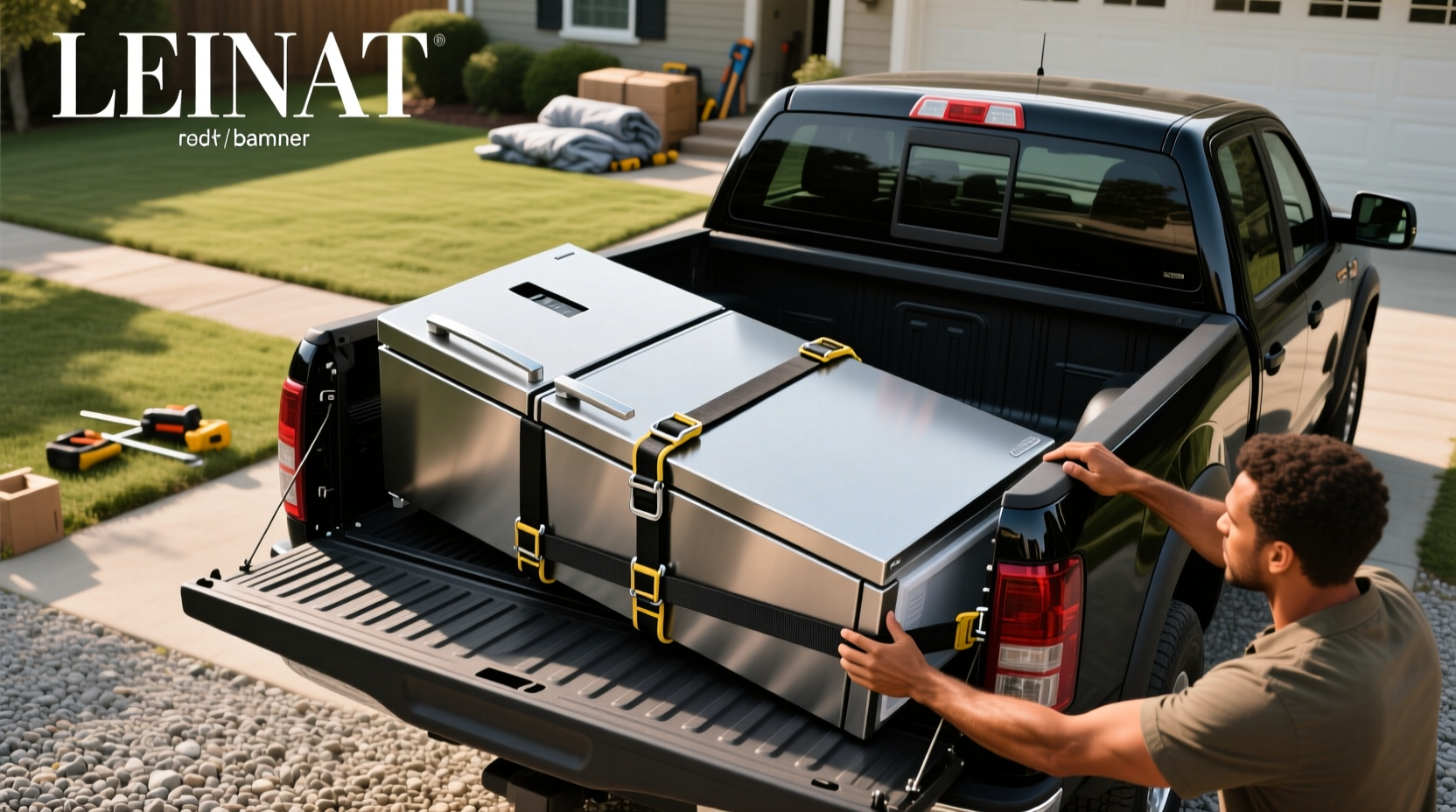
- Add a secondary diagonal cross-strap: If the appliance tilts side-to-side, loop an extra ratchet strap in an “X” pattern across the front panel to restrict lateral movement.
- Check strap slip: Nylon webbing often stretches slightly during the first five miles of driving. Pull over immediately to re-tighten the ratchets after a brief road test.
- Incorporate wooden bracing: Wedge 2×4 lumber cut-to-fit between the appliance base and the tailgate to physically block backward sliding motion.
- Hire professional transport: If the refrigerator exceeds standard weight limits or your vehicle lacks proper anchor points, contract a local moving service. Professional transport typically costs between $150 and $350 depending on distance.
Conclusion
Transporting a refrigerator safely in a pickup truck in 2026 demands proper weight distribution, upright positioning, and high-strength ratcheting restraints to prevent structural damage. According to verified research and automotive safety experts from the Federal Motor Carrier Safety Administration (FMCSA), unsecured cargo remains a leading cause of preventable highway hazards. Your immediate next step is to inspect your truck bed anchor points and test your ratchet straps for fraying before loading the appliance.
❓ Frequently Asked Questions
How do I secure a refrigerator if it must be laid on its side?
If laying it down is your only option, place it on the side indicated by the manufacturer (usually the hinge side) and wait at least 24 hours before plugging it in to let the oil settle back into the compressor.
What are the best anchor points to use in a pickup truck bed?
Use the factory-installed tie-down loops located at the corners of the truck bed floor. Avoid using side rails unless they are rated for heavy cargo loads.
How do I prevent the ratchet straps from scratching the refrigerator surface?
Wrap thick moving blankets or cardboard completely around the refrigerator before applying any straps to cushion the pressure points.
Can I use bungee cords instead of ratchet straps to hold the fridge?
No, bungee cords stretch and lack the necessary tension to hold a heavy appliance securely during sudden stops or sharp turns.
How long should I wait to plug in the refrigerator after moving it upright?
Even when transported upright, it is best to wait at least 2 to 4 hours before plugging in the appliance to allow internal fluids to stabilize.
What driving precautions should I take with a refrigerator in the truck?
Drive well below the speed limit on bumpy roads, accelerate and brake very gradually, and take wide turns to minimize lateral g-forces on the appliance.