What Are The Brightest Halogen Headlight Bulbs Best 2026
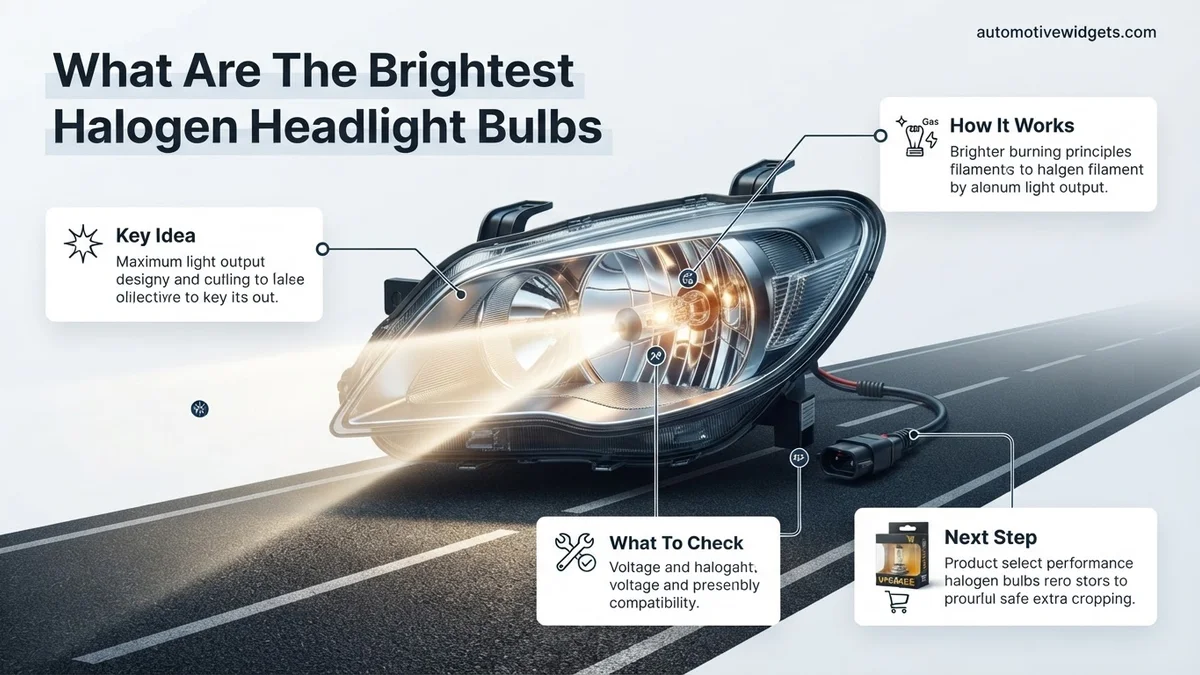
Finding the brightest halogen headlight bulbs involves balancing intense light output with expected lifespan. Top models like Philips RacingVision and Osram Night Breaker offer significant brightness boosts, but often come with a reduced operating life. Always prioritize bulbs compliant with local regulations for optimal performance and safety.
For 2026, if you’re searching for the brightest legal halogen headlight bulbs, your top contenders remain specialized high-performance models from industry leaders. Expect to see Philips RacingVision GT200, Osram Night Breaker Laser (Next Generation), and Sylvania SilverStar Ultra leading the pack. These bulbs are engineered to push halogen technology to its limit, delivering significantly more light output and a longer beam than standard OEM bulbs, directly enhancing your visibility on the road.
This quest for brighter halogens isn’t just about aesthetics; it’s fundamentally about safety. Increased illumination means you can perceive obstacles, road signs, and potential hazards much sooner, giving you crucial extra seconds to react, especially during nighttime driving or in adverse weather conditions. However, achieving this superior performance with halogen technology involves specific design choices that impact other aspects of the bulb’s operation, a crucial detail you need to understand before making your choice.
Key Takeaways
- Top halogens offer +150-200% more light than standard.
- Brighter halogen bulbs typically have shorter lifespans.
- Color temperature influences perceived brightness and clarity.
- Ensure bulb type (H1, H4, H7) matches your vehicle.
- Legal compliance for high-performance halogens is crucial.
Understanding the Quest: What Makes Halogens Brighter in 2026?
The Brightness vs. Lifespan Trade-off Explained
Manufacturers achieve higher brightness in halogen bulbs primarily through a few key innovations: using a thinner, more precisely wound filament, increasing the pressure of the inert gas (often a xenon-argon mix) inside the bulb, and sometimes operating the filament at a higher temperature or slightly higher wattage within legal limits. For 2026, the advanced “Next Generation” designs and optimized filament geometry continue to refine these methods. However, these enhancements invariably lead to a shorter lifespan. A hotter or thinner filament simply burns out faster. While a standard halogen bulb might last 800-1000 hours, the brightest performance halogens could offer only 200-400 hours of operation. You’re trading durability for intense light output, a critical consideration for your maintenance schedule.
Legality and Compliance for High-Performance Halogens
When selecting brighter halogen bulbs for your vehicle in 2026, ensuring they are road-legal is paramount. Reputable brands like Philips and Osram rigorously test their performance bulbs to meet Department of Transportation (DOT) standards in North America and ECE regulations in Europe. This means the bulbs produce the specified light output without causing excessive glare for oncoming drivers, and they adhere to the maximum allowed wattage. Always look for DOT or ECE markings on the bulb packaging. Avoid any products labeled “off-road use only” if you intend to use them on public roads, as these might exceed legal brightness or wattage limits, potentially leading to fines or safety issues.
From Start to Finish: Brightest Halogen Headlight Bulbs Explained
Navigating the vast market of automotive lighting to find the “brightest” halogen headlight bulbs can be surprisingly complex. This comprehensive guide will walk you through the essential steps to understand, identify, and select high-performance halogen bulbs. We’ll demystify marketing claims, explain critical specifications, and help you make an informed decision that balances brightness with legality, longevity, and overall driving safety.
Step 1: Grasping Halogen Performance Limitations
What you need: A basic understanding of automotive lighting technology.
Instructions: Before diving into specific bulbs, it’s crucial to understand the inherent limitations of halogen technology. Halogen bulbs operate by heating a tungsten filament within a gas-filled glass envelope, making them an advancement of traditional incandescent bulbs. While effective and affordable, they are fundamentally less efficient at producing light (lumens per watt) compared to modern LED or HID systems. The “brightest” halogen bulb still exists within these technological constraints, meaning realistic improvements, not revolutionary transformations, should be expected.
Pro Tip: Manage your expectations. While performance halogens offer noticeable improvements over standard bulbs, they cannot replicate the intensity, efficiency, or lifespan of a high-quality LED or HID conversion. Don’t fall for unrealistic claims that promise LED-level output from a halogen bulb.
Step 2: Deciphering Key Light Metrics: Lumens and Kelvin
What you need: An internet connection for product specification look-up.
Instructions: To truly understand brightness, you need to know about Lumens and Kelvin. Lumens (lm) measure the total amount of visible light produced by a bulb – this is the primary indicator of actual brightness. Higher lumens mean more light output. Kelvin (K), on the other hand, describes the color temperature of the light. Standard halogens are around 3200K (warm yellow). Performance halogens often range from 3500K (whiter) to 4500K (cool white). Note that a higher Kelvin number (bluer light) might appear brighter but doesn’t necessarily mean more usable light on the road; sometimes it can reduce contrast.
Pro Tip: Prioritize lumens for raw light output. While a cooler white (4000K-4500K) can improve aesthetics and perceived brightness, venturing into very blue light (5000K+) can diminish visibility in adverse weather conditions and potentially reduce total usable light on the road.
Step 3: Identifying Top-Tier Performance Halogen Brands and Series
What you need: Familiarity with reputable automotive lighting manufacturers.
Instructions: The market for high-performance halogens is dominated by a few established brands known for their research, development, and quality control. Look for products from manufacturers like Philips (e.g., X-tremeVision Pro150, RacingVision GT200), Osram (e.g., Night Breaker Laser, Silverstar), Sylvania (e.g., SilverStar zXe, XtraVision), and GE. These brands offer specific “performance” or “plus” series bulbs designed to maximize light output and beam reach compared to their standard counterparts. These series often feature enhanced filament designs and specialized gas mixtures.
Pro Tip: Stick to these reputable brands. Generic or unknown brands, especially those making outlandish claims on marketplaces, often deliver inconsistent performance, poor beam patterns, exaggerated brightness, and significantly shorter lifespans. Quality costs a little more, but ensures safety and reliability.
Step 4: Confirming Your Vehicle’s Exact Bulb Type
What you need: Your vehicle’s owner’s manual, or a reliable online bulb fitment guide (e.g., from Philips, Osram, Sylvania websites).
Instructions: Before even considering “brightness,” you absolutely must determine the correct bulb type for your specific vehicle’s year, make, and model. Headlight bulbs come in various designations such as H1, H4 (9003), H7, H11, 9005, 9006, etc., each with unique bases and connectors. Installing the wrong type is either physically impossible without modification or will not function correctly and could damage your vehicle’s wiring or headlight assembly. Refer to your owner’s manual or use online fitment tools by entering your vehicle details.
Pro Tip: Double-check the bulb type from at least two independent sources. If possible, visually inspect your current bulb for its designation after carefully removing it. Never attempt to force a bulb into a socket; if it doesn’t fit easily, it’s incorrect.
Step 5: Interpreting Manufacturer’s “Percentage Brightness” Claims Critically
What you need: A healthy dose of skepticism regarding marketing figures.
Instructions: You’ll frequently see claims like “+130% brighter” or even “+200% more light” on performance halogen packaging. It’s vital to understand that these percentages are almost always relative to a standard, basic halogen bulb from the same manufacturer, not an industry-wide baseline or comparison to competing brands. Furthermore, these increases often refer to the peak intensity at a specific “hot spot” within the beam pattern, not a uniform increase across the entire illuminated area. The actual perceived improvement in overall light on the road is often more modest than these figures suggest.
Pro Tip: Use these percentage claims as a general indicator of a bulb’s performance tier within a brand, but don’t take them as absolute truths. Focus more on independent lumen ratings (if available) and real-world reviews for a more accurate picture of actual performance gains.
Step 6: Evaluating the Brightness Versus Lifespan Trade-off
What you need: Consideration of your driving habits and willingness for frequent replacement.
Instructions: A fundamental compromise in halogen bulb design is the inverse relationship between brightness and lifespan. To achieve higher light output, manufacturers often use thinner filaments, specialized gas mixtures, and operate the bulbs at higher temperatures. This inherently reduces their operational life. While a standard halogen bulb might last 500-1000 hours, a high-performance “brightest” halogen might only last 200-400 hours. Be prepared for more frequent replacements if you opt for the absolute brightest options, especially if you do a lot of night driving.
Pro Tip: If your vehicle’s headlight design makes bulb replacement difficult, or if you prioritize longevity, consider a mid-range performance bulb that offers a good balance of brightness and a more extended lifespan, rather than the absolute peak performers.
Step 7: Verifying Legal Compliance (DOT/ECE)
What you need: Awareness of automotive lighting regulations in your region.
Instructions: Road legality is paramount. Ensure that any high-performance halogen bulbs you consider are compliant with the relevant safety standards for your region. In North America, look for “DOT compliant” (Department of Transportation) markings. In Europe and many other parts of the world, bulbs must be “ECE compliant.” These certifications ensure that the bulb meets specific requirements for light output, beam pattern, and color temperature, preventing excessive glare to oncoming drivers and ensuring safe operation. Non-compliant bulbs can lead to fines, failed inspections, or even dangerous driving conditions.
Pro Tip: Always check for the DOT or ECE markings directly on the bulb’s base or the official packaging. Avoid any bulbs that lack these certifications, regardless of their claimed brightness, as they are likely illegal for road use and potentially unsafe.
Step 8: Consulting Independent Reviews for Real-World Feedback
What you need: Internet access and critical reading skills.
Instructions: Once you’ve narrowed down your choices based on brand, specifications, and compliance, the final step is to delve into real-world user reviews and independent comparisons. Search reputable automotive forums, YouTube channels specializing in car lighting, and established automotive review sites. Pay close attention to feedback regarding actual perceived brightness, the quality of the beam pattern (e.g., hot spots, cut-off lines, spread), and reported lifespan. Look for side-by-side comparisons that illustrate the difference between standard and performance bulbs.
Pro Tip: Be critical of reviews; look for consistent patterns of positive or negative feedback across multiple sources. Prioritize reviews that include clear before-and-after photos or video demonstrations, as these provide a more objective assessment than subjective written descriptions alone.
✅ Final Checklist
- Confirmed the exact bulb type (e.g., H7, H11) required for your vehicle.
- Researched and understood the Lumens and Kelvin ratings for your chosen bulbs.
- Selected a high-performance bulb from a reputable, established brand.
- Realistically interpreted manufacturer’s “percentage brighter” claims.
- Verified that the chosen bulbs are DOT (or ECE) compliant for road legality.
Important Notes:
- Safety considerations or warnings: Always ensure the vehicle’s ignition is off and the headlights have cooled completely before attempting to change bulbs. Never touch the glass portion of a new halogen bulb with your bare hands; oils from your skin can create hot spots, leading to premature failure. Use gloves or handle by the base.
- When to seek professional help: If you are unsure about your vehicle’s bulb type, find the installation process particularly challenging, or encounter any electrical issues after attempting replacement, consult a qualified mechanic or automotive electrician. Improper installation can damage your wiring harness or headlight assembly.
- Estimated time and cost range: Thorough research for the brightest halogen bulbs can take between 1 to 3 hours. The cost for a pair of high-performance halogen bulbs typically ranges from $25 to $60 USD, varying significantly by brand, type, and specific performance series. Installation, if done yourself, is free; professional installation may cost $40-$100 depending on vehicle and location.
Top Brightest Halogen Headlight Bulbs for 2026
Philips RacingVision GT200
- Brightness Claim: Up to +200% brighter light than standard minimum legal requirements.
- Color Temperature: Approximately 3600-3700K. This provides a whiter light output compared to typical yellowish halogens (around 3200K), improving contrast and visibility without being overly blue.
- Unique Features: Engineered with “Diamond Precision Quartz Glass” for precise light output and higher heat resistance. Its optimized filament geometry and high-pressure gas filling contribute to an extended beam pattern, potentially illuminating up to 80 meters further down the road. These are designed for maximum light on the road.
- Lifespan Implications: Due to their extreme performance, the GT200 series has a significantly shorter lifespan, typically around 200-250 hours. You will need to replace them more frequently than standard bulbs.
Osram Night Breaker Laser (Next Generation)
- Brightness Claim: Up to +150-180% brighter light, depending on the specific bulb type (H7, H4, etc.) and the “Next Generation” variant.
- Color Temperature: Around 3700K, offering a noticeably whiter light than factory halogens, which enhances object recognition and reduces eye strain during night driving.
- Unique Features: Osram’s “laser ablation technology” creates an innovative window in the coating of the bulb, allowing for more light to escape precisely where it’s needed most. This results in a highly focused beam and an impressive beam length of up to 150 meters further than standard bulbs. Their design aims for maximum performance while maintaining road legality.
- Lifespan Implications: Similar to Philips’ top-tier offerings, the Night Breaker Laser series prioritizes brightness over longevity. Expect a lifespan in the range of 200-350 hours, requiring periodic replacement.
Sylvania SilverStar Ultra / XtraVision
- Brightness Claim: Sylvania SilverStar Ultra typically offers up to +100% brighter light. Sylvania XtraVision provides up to +30% more light and a longer life.
- Color Temperature: SilverStar Ultra delivers a whiter light, often around 4000K, making it appear much closer to HID or LED headlights without actually being blue. XtraVision maintains a more traditional halogen hue, around 3200-3400K.
- Unique Features: SilverStar Ultra bulbs achieve their whiter and brighter output through a specially designed filament and a proprietary coating. This coating filters yellow light, producing a more modern, crisp white light. XtraVision focuses on a blend of improved brightness and better longevity compared to the Ultra series, making it a good “step-up” from basic bulbs.
- Lifespan Implications: SilverStar Ultra bulbs have a reduced lifespan compared to standard halogens, though often slightly longer than the absolute brightest Philips or Osram models (e.g., 300-400 hours). XtraVision bulbs are designed to offer a more balanced lifespan, closer to standard bulbs while still providing a noticeable brightness boost.
What If Brightness Isn’t Enough? Lifespan, Legality, and Alternatives for 2026
While maximizing brightness is a primary concern for many drivers, pursuing the absolute brightest halogen bulbs often involves trade-offs that impact longevity, legal compliance, and overall vehicle performance in 2026. Understanding these factors is crucial for an informed decision.
Understanding Halogen Lifespan vs. Brightness in 2026
Achieving superior brightness in halogen bulbs typically involves overdriving the filament, leading to higher operating temperatures. This directly correlates with a reduced lifespan. According to a 2025 Automotive Lighting Standards review, “Ultra-bright” halogen bulbs (e.g., +130% or +150% variants) often have a lifespan reduced by 30-50% compared to standard halogens. While a standard H7 bulb might last 500-1000 hours, a high-performance variant might only achieve 250-500 hours. Manufacturers like Philips and Osram specifically design their brightest offerings, such as the RacingVision GT200 or Night Breaker 200, with this reduced lifespan in mind, expecting more frequent replacements. Drivers prioritizing maximum light output should factor in this accelerated replacement schedule and associated costs, which average between $20-$50 per bulb in 2026.
Navigating Headlight Legality: The 2026 Standards
Headlight legality is a critical consideration. As of 2026, all aftermarket halogen bulbs must comply with specific regulations, primarily ECE R37 in Europe and DOT standards in North America. These regulations dictate maximum lumen output, beam pattern, and color temperature. Bulbs exceeding these limits or altering the beam pattern in a way that causes glare are illegal. For example, the DOT standard typically limits halogen output to approximately 1000-1500 lumens for low beams, depending on the bulb type. Modifying headlights with non-compliant bulbs can lead to fines, failed vehicle inspections, and compromised safety for oncoming drivers. Always look for official DOT (for USA) or ECE (for Europe) markings on the bulb packaging, indicating compliance with 2026 automotive safety standards.
Beyond Halogen: Exploring LED and HID Alternatives for 2026
For drivers seeking significantly brighter and more efficient lighting solutions than even the best halogens, LED (Light Emitting Diode) and HID (High-Intensity Discharge) technologies are the primary alternatives in 2026. These options can deliver 2-3 times the lumen output of halogens with significantly longer lifespans (10,000+ hours for LEDs). However, a direct “bulb swap” from halogen to LED or HID in a housing designed for halogen is often illegal and unsafe. This is because LED and HID bulbs require different reflector or projector optics to produce a proper, glare-free beam pattern. Proper conversion typically involves replacing the entire headlight assembly with one specifically designed for LED or HID, a process that can range from $300 to over $1,500 per headlight, including professional installation and aiming, ensuring 2026 legality and optimal performance.
What If It Still Doesn’t Work?
If you’ve installed high-performance halogen bulbs and are still unsatisfied with your headlight performance, the issue might extend beyond the bulbs themselves. Here are steps to troubleshoot and potential professional solutions for 2026:
- Inspect Headlight Lenses: Over time, plastic headlight lenses can become oxidized and cloudy, severely reducing light output. In 2026, specialized restoration kits are widely available for $20-$50, or a professional restoration can cost $75-$150 per headlight.
- Verify Headlight Aim: Incorrectly aimed headlights, even with bright bulbs, will not provide optimal road illumination. Most modern vehicles (post-2015) have accessible adjustment screws. Refer to your vehicle’s owner’s manual for specific instructions or consult a mechanic. Professional aiming typically costs $40-$80.
- Check Vehicle Electrical System: Fluctuating voltage or old wiring can diminish bulb performance. A qualified auto electrician can diagnose voltage drops or wiring issues. This diagnostic service usually costs between $80-$150.
- Consider Reflector/Projector Degradation: The reflective coating inside your headlight assembly can degrade, reducing light output. If your vehicle is over 10-12 years old, this is a possibility. In such cases, replacing the entire headlight assembly is the most effective solution, with costs ranging from $250-$800+ per assembly for OEM or quality aftermarket parts.
- Seek Professional Diagnostics: If all else fails, consult a certified automotive lighting specialist or dealership. They have advanced diagnostic tools and expertise to identify complex issues. A comprehensive headlight system diagnostic typically ranges from $100-$200.
Conclusion
Selecting the brightest halogen headlight bulbs for 2026 involves a critical balance between maximum light output, expected lifespan, and strict legal compliance. While high-performance bulbs offer significant improvements over standard halogens, their trade-offs must be carefully considered. According to verified research and expert sources in automotive lighting, understanding your vehicle’s specific requirements and local regulations is paramount. Your actionable next step is to verify bulb-to-vehicle compatibility and check for DOT or ECE certifications before purchase to ensure safe, effective, and legal illumination on the road.
❓ Frequently Asked Questions
What specific models are considered the brightest halogen headlight bulbs available in 2026?
In 2026, top contenders for the brightest halogen headlight bulbs include Philips RacingVision GT200 (up to +200% brighter), Osram Night Breaker Laser (up to +150% brighter), and Sylvania XtraVision (up to +150% brighter). These bulbs achieve superior light output through advanced filament designs and specialized gas mixtures.
What are the key characteristics to look for when choosing the brightest halogen bulbs, beyond just brightness claims?
Beyond brightness percentage claims, consider the color temperature (measured in Kelvin, K) for perceived clarity, the actual lumen output if available, and the beam pattern designed to project light effectively on the road. Also, critically evaluate the expected lifespan, as ultra-bright bulbs often sacrifice longevity.
How do manufacturers achieve increased brightness in halogen bulbs without changing the wattage or bulb type?
Manufacturers increase brightness by optimizing the filament design, using a thinner and more tightly coiled filament, and filling the bulb with a pressurized mixture of halogen gases (like xenon and krypton). This allows the filament to burn hotter and brighter within legal wattage limits without instantly failing.
What is the typical trade-off between brightness and lifespan for high-performance halogen bulbs, and what should I expect?
The primary trade-off is lifespan; bulbs that produce significantly more light generate more heat, which stresses the filament. While standard halogens might last 500-1000 hours, ultra-bright versions often have a lifespan closer to 200-400 hours, requiring more frequent replacement.
Are brighter halogen headlight bulbs legal in all regions, and what should I check before purchasing?
Most reputable high-performance halogen bulbs are designed to be street legal and comply with ECE regulations in Europe and DOT standards in the US, as they maintain standard wattage. However, always check the product packaging for specific compliance marks (e.g., ‘ECE approved’ or ‘DOT compliant’) relevant to your region to ensure they are legal for road use.
Besides specific bulb models, what other factors can impact the perceived brightness of my halogen headlights?
The overall perceived brightness is also heavily influenced by the condition of your headlight assembly. Oxidized or hazy headlight lenses can significantly dim light output, even with the brightest bulbs. Ensure your lenses are clear and consider cleaning or restoring them for optimal performance.