What Happens If I Drive With My Parking Brake On 2026 Guide
Driving a short distance with your parking brake engaged usually causes minor friction and heat, but doing so for an extended time can warp rotors, glaze brake pads, and damage your braking system. Pull over safely, disengage the brake, and let the components cool down immediately.
Driving with your parking brake engaged forces your rear brakes to fight against your engine, creating intense friction, rapid heat buildup, and potential mechanical failure. Whether you left a traditional hand lever pulled up or forgot to release an electronic parking brake, ignoring that burning smell or warning light can lead to severe component damage by the time you reach your destination in 2026.
This oversight matters practically because replacing warped rotors, boiled brake fluid, or glazed pads can cost hundreds of dollars in unexpected repairs. Knowing exactly what happens to your vehicle and how to respond safely in the first few minutes will prevent minor friction from escalating into a dangerous road emergency.
Key Takeaways
- Pull over safely and disengage the parking brake immediately to minimize friction damage.
- A burning smell or smoke indicates severe overheating of the brake pads and rotors.
- Glazed brake pads lose stopping power and require replacement if performance drops.
- Check your brake fluid levels and test pedal responsiveness before continuing your drive.
- Consult a mechanic if your brakes feel spongy, make grinding noises, or the warning light stays on.
What Happens When You Drive With Your Parking Brake On
When you accelerate against an active parking brake, your braking system undergoes extreme physical stress. The friction materials on your pads or shoes press continuously against the rotors or drums, converting kinetic energy into massive amounts of heat instead of allowing the wheels to spin freely.
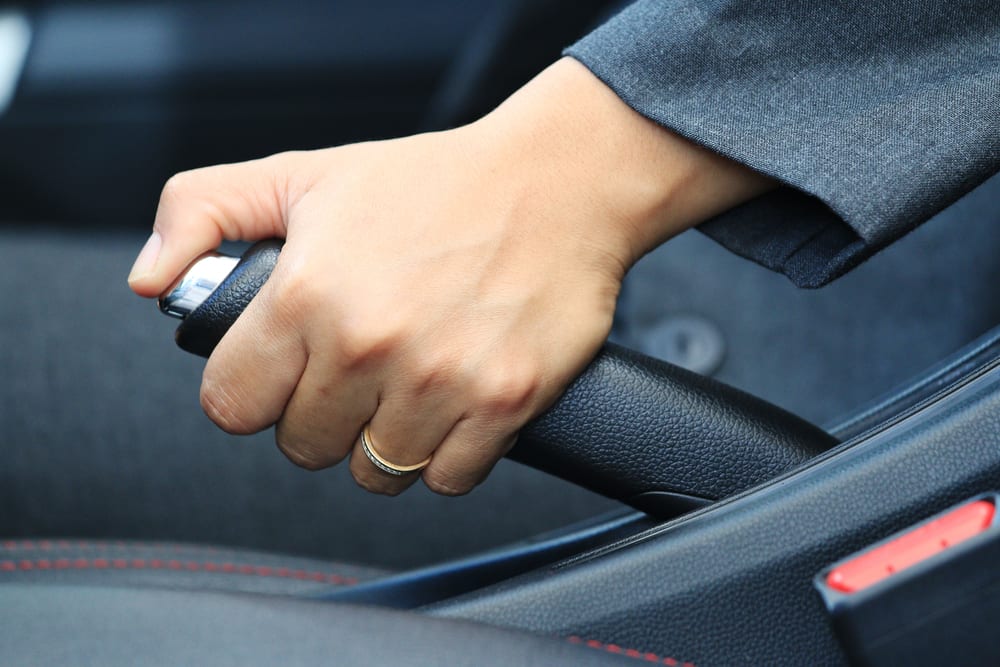
Thermal Breakdown and Glazing
As temperatures skyrocket past normal operating thresholds, critical components begin to fail. Here is what typically happens under heavy thermal stress:
- Brake Pad Glazing: Friction material overheats and melts slightly, creating a smooth, glassy surface that drastically reduces your stopping power.
- Warped Rotors and Drums: Uneven thermal expansion causes metal rotors or drums to warp, resulting in violent steering wheel vibration when you press the brake pedal.
- Boiled Brake Fluid: Extreme heat transfers through the calipers into the hydraulic lines, causing the brake fluid to boil and creating dangerous spongy pedal feel.
- Fluid Leaks and Seal Damage: Rubber dust boots, caliper seals, and wheel cylinder seals can melt or crack, leading to dangerous hydraulic fluid leaks.
Modern Electronic Parking Brakes vs. Traditional Levers
If your 2026 vehicle features an electronic parking brake (EPB), the system usually applies a specific clamping force via an electric motor. While many modern cars automatically disengage the EPB when you shift into drive and press the accelerator, driving manually with a stuck or forced electronic brake causes the same thermal damage as a traditional mechanical hand lever.
Step-by-Step Guide on What to Do Right Now
If you suspect or realize you have been driving with your parking brake engaged, you need to take immediate, controlled action to minimize further damage to your braking system.
Immediate Pull-Over and Cool-Down Steps
Do not panic, but act quickly to get the car out of harm’s way and let the friction-locked components cool down properly.
- Safely Pull Over: Signal, check your mirrors, and pull over to the side of the road in a well-lit, safe location away from fast-moving traffic.
- Disengage the Brake: Fully release the hand lever or press the electronic parking brake switch to ensure the mechanism is completely disengaged.
- Park and Idle: Shift your transmission into Park, leave the engine running for a minute to allow the water pump and cooling system to manage engine load, then turn the car off.
- Let It Cool: Wait at least 15 to 20 minutes. Never pour cold water on hot brake rotors to speed up cooling, as the thermal shock will crack the metal instantly.
Post-Cooling Functional Test
Once the components have cooled to the touch, you need to verify that your brakes are still safe for driving.
- Inspect for Smells and Smoke: A faint burning odor is normal after a brief oversight, but thick smoke or a pungent chemical smell indicates melted components.
- Check for Leaks: Look beneath the rear wheels for any pooling clear or amber-tinted brake fluid.
- Perform a Low-Speed Test: Drive slowly in a safe, empty parking lot and press the brake pedal to ensure normal firm resistance and stopping power before re-entering regular traffic.
How to Fix and Inspect Parking Brake Damage
Driving with your emergency brake engaged requires an immediate, methodical inspection to prevent permanent mechanical failure. Automotive safety experts recommend checking the entire braking system before driving the vehicle again. Use this structured approach to safely inspect and repair the damage in 2026.

Step 1: Cool Down and Safety Check
- Park the vehicle on a flat, level surface and turn off the ignition completely.
- Allow the rear wheels and brake assemblies to cool completely for at least 45 minutes. Never touch hot brake rotors.
- Inspect the wheels visually for heavy black brake dust, discoloration, or a strong burning chemical odor.
Step 2: Fluid and Cable Evaluation
- Check the master cylinder brake fluid reservoir under the hood to ensure fluid levels remain between the minimum and maximum lines.
- Locate the parking brake cables underneath the chassis and check for slack, stretching, or fraying caused by excessive tension.
- Jack up the rear of the vehicle securely, support it with jack stands, and spin the wheels by hand to check for lingering drag or resistance.
What If Your Brakes Still Feel Damaged After Cooling
If you have allowed the system to cool and completed a visual check, but the vehicle still exhibits spongy pedal feel, grinding noises, or weak holding power, deeper mechanical intervention is required. According to automotive service data, driving with the brake engaged can permanently warp rotors or glaze brake pads beyond simple adjustment.
If standard cooling and cable checks do not resolve the issue, take the following fallback steps:
- Cease driving the vehicle immediately to prevent catastrophic brake failure or wheel lockup at high speeds.
- Inspect the brake calipers for stuck pistons or damaged rubber dust boots that may have melted from intense frictional heat.
- Consult a certified professional mechanic if the brake pedal sinks to the floor or if the parking brake lever fails to hold tension.
- Budget for potential component replacement; professional replacement of rear brake pads and warped rotors typically ranges from $250 to $600 depending on the vehicle make and model in 2026.
- Request a complete brake system hydraulic flush if fluid temperatures exceeded normal operating thresholds during the incident.
Conclusion
Driving with your parking brake on creates extreme friction, rapid heat buildup, and premature component wear. Fortunately, catching the mistake early and allowing the system to cool can prevent costly repairs. According to verified research and expert sources from the Automotive Service Association, proactive maintenance and immediate inspection are vital to maintaining total vehicle safety. Always double-check your dashboard indicator lights before accelerating, and schedule a professional inspection if unusual resistance or odors persist.
❓ Frequently Asked Questions
What immediate damage occurs when driving with the parking brake engaged?
The continuous friction generates intense heat that can glaze brake pads, overheat rotors or drums, and boil brake fluid. This drastically reduces your vehicle’s overall stopping power until the system cools down.
What are the primary warning signs that I drove too long with the parking brake on?
Common symptoms include a strong burning odor, visible smoke near the wheels, a dashboard warning light, a sluggish vehicle response, and significantly less resistance when pulling the handbrake lever.
Is it safe to keep driving after noticing smoke from my parking brake?
No, you should pull over immediately in a safe location, turn off the engine, and fully disengage the parking brake. Allow the brakes to cool completely before attempting to drive again.
How can I tell if my brake pads have become glazed?
Glazed brake pads develop a shiny, glass-like surface from extreme heat, which robs them of friction. If your car takes noticeably longer to stop after the incident, the pads need to be replaced.
Can driving with the emergency brake on ruin my tires?
If the rear wheels are completely locked up and dragging instead of rolling, you may develop flat spots on the tread. However, most modern parking brakes only partially restrict wheel movement.
When should I take my car to a professional mechanic after this mistake?
Take your vehicle to a mechanic if you notice persistent grinding noises, fluid leaks near the wheels, a soft or spongy brake pedal, or if the parking brake lever feels completely loose.