Do Front Wheel Drive Cars Only Have Front Brakes? Real 2026
No, front-wheel drive cars do not only have front brakes. Every modern FWD vehicle features a complete four-wheel braking system with brakes on both the front and rear wheels. The common misconception stems from the fact that front brakes handle the vast majority of stopping power due to weight transfer.
No, front-wheel drive (FWD) cars do not only have front brakes. Every modern FWD vehicle on the road in 2026 features a complete braking system equipped on all four wheels. When you press down on your brake pedal, hydraulic pressure engages brakes at both the front and the rear to safely bring your vehicle to a stop.
This setup is essential for vehicle control, safety, and passing state inspections. Believing that your car only stops using its front wheels can lead to neglected maintenance, dangerous driving habits, and unexpected repair bills when rear components eventually seize or wear out.
Key Takeaways
- All FWD cars have physical brakes on all four wheels.
- Front brakes handle 60% to 80% of total stopping force.
- Weight transfer shifts vehicle momentum forward during deceleration.
- Rear brakes prevent the car from spinning and stabilize the rear.
- Power delivery (FWD) is entirely separate from stopping power.
What Causes the FWD Brake Myth and Misconception
The confusion between how a car drives and how it stops is the primary reason this myth persists today. Drivers often conflate the mechanics of acceleration with the physics of deceleration, assuming that whatever wheels pull the car are also responsible for stopping it.
Drive Wheels Versus Brake Wheels
In a front-wheel drive car, the engine and transmission send power exclusively to the front wheels to move the vehicle forward. However, stopping a car requires friction across the entire chassis. Your braking system operates independently from your drivetrain. Even though your rear wheels are just rolling along passively during acceleration, they are actively clamped by brake calipers or shoes every time you slow down.
- Front wheels handle engine power and steering.
- Rear wheels follow along passively during acceleration.
- All four wheels utilize independent brakes to decelerate the vehicle.
The Physics of Weight Transfer
Another reason people think FWD cars only have front brakes is the sheer volume of wear placed on the front components. When you step on the brakes, momentum forces the weight of your car forward. This physical phenomenon is called weight transfer. Because up to 80 percent of your stopping force happens on the front axle, your front brake pads and rotors wear out much faster than the rear ones. You might change your front brakes twice before ever needing to touch the rear set, creating the illusion that the back wheels are entirely brake-free.
How to Inspect Your Front and Rear Brakes Step-by-Step
Checking your own brakes is the easiest way to prove to yourself that your FWD car has a fully functional four-wheel braking system. You do not need to be a professional mechanic to perform a basic visual inspection of your stopping components.
Visual Check Through Your Wheels
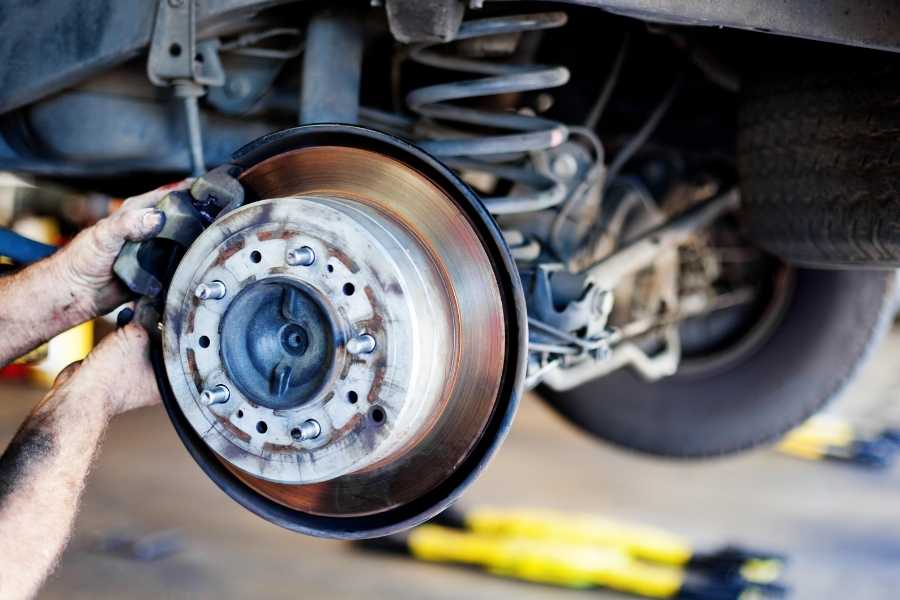
Modern alloy wheels make it simple to look inside and examine your braking hardware. Grab a flashlight and peer through the spokes of both your front and rear wheels to spot the key components.
- Look for the metal rotor disc sitting just behind the wheel spokes on all four corners.
- Locate the brake caliper hugging the outer edge of each rotor.
- Inspect the thickness of the brake pads visible inside the caliper window.
- Check if your rear wheels use smaller disc brakes or traditional drum brakes.
Checking Rear Drum Brakes
Many budget-friendly and compact FWD cars manufactured through 2026 still use disc brakes in the front and drum brakes in the rear. If your rear wheels do not show a visible metal rotor, you have rear drum brakes. In this setup, the braking mechanism is hidden inside a solid metal drum bolted to the wheel hub. While you cannot see the brake shoes without removing the drum cover, you can still feel their effectiveness and check the exterior for fluid leaks or cable damage.
What If Your Rear Brakes Are Not Working Correctly
Ignoring rear brake issues on a front-wheel-drive vehicle drastically reduces your stopping efficiency and increases wear on the front components. When rear brakes fail to engage properly, your vehicle’s weight shifts dangerously forward, lengthening stopping distances. Data from the National Highway Traffic Safety Administration indicates that balanced four-wheel braking is critical for directional stability during panic stops.

Signs of Rear Brake Failure
Identifying rear brake neglect early prevents expensive secondary damage to calipers and rotors. Watch for these distinct indicators:
- Excessive nose-diving when applying the brake pedal firmly at highway speeds.
- A parking lever that pulls up unusually high or fails to hold the car on an incline.
- Unusual squealing, grinding, or a noticeable lack of brake dust accumulation on the rear wheels compared to the front.
Diagnosing Rear Component Issues
If you suspect your rear brakes are not pulling their weight, systematic inspection is required. Lift the rear safely with a jack, secure it with stands, and spin the wheels by hand to check for resistance or dragging.
- Measure the brake pad thickness using a millimeter gauge, ensuring it meets the minimum factory specification of 3mm or higher.
- Inspect rear rotors for deep scoring, rust pitting, or heavy lip formation along the outer edge.
- Check hydraulic lines and wheel cylinders or calipers for active fluid leaks that compromise pressure.
Key Considerations for Maintaining Four-Wheel Braking Systems
Proper maintenance ensures that both front and rear braking systems function harmoniously in modern front-wheel-drive automobiles. Neglecting rear components often leads to frozen caliper slides or seized drums, which ruins overall braking balance. Industry standards from the Automotive Service Association recommend servicing your complete brake assembly at least once a year or every 12,000 miles.
Fluid Flushes and Bleeding
Brake fluid is hygroscopic, meaning it absorbs moisture from the air over time. Water contamination lowers the boiling point of the fluid, leading to spongy pedals and reduced rear brake activation.
- Replace your DOT 3 or DOT 4 brake fluid completely every two years or 24,000 miles to prevent internal corrosion.
- Always bleed the braking system starting from the wheel furthest from the master cylinder and moving closer.
- Verify that the ABS hydraulic modulator is functioning properly without trapped air pockets.
Hardware Lubrication
Sliding pins, abutment clips, and parking brake cables require high-temperature silicone or ceramic grease to move freely. Dry metal-on-metal contact causes uneven pad wear and premature failure.
- Clean all accumulated carbon, rust, and road debris from the caliper brackets using a wire brush.
- Apply a thin layer of brake-safe lubricant to sliding contact points, avoiding the friction surfaces of pads and rotors.
- Inspect rubber dust boots for tears that allow moisture to ruin internal caliper pistons.
What If It Still Doesn’t Work?
If you have serviced the rear brakes, bled the lines, and still experience poor stopping performance or an unbalanced brake pedal, deeper mechanical intervention is required. Persistent issues often point to failing master cylinders, malfunctioning proportioning valves, or electronic stability control faults. Consider these professional fallback steps:
- Scan the vehicle’s computer for diagnostic trouble codes using an advanced OBD-II reader capable of reading ABS and chassis modules.
- Have a certified mechanic perform a dynamic brake pressure test to evaluate hydraulic output to the rear wheels.
- Expect professional repairs for master cylinder replacement or ABS module programming to range between $350 and $900 depending on the vehicle make and model.
- Schedule service immediately if the brake warning light remains illuminated on your dashboard, as driving with compromised brakes violates basic safety protocols.
Conclusion
Front-wheel-drive cars definitely do not rely on front brakes alone; they utilize a sophisticated hydraulic system spanning all four wheels to ensure safe stopping power. According to verified research and expert sources from automotive safety organizations, rear brakes handle up to thirty percent of total stopping force and provide crucial directional stability. Neglecting them jeopardizes your safety on the road. The most actionable next step is to inspect your rear pads and rotors this weekend or schedule a professional brake inspection to verify optimal multi-wheel performance.
❓ Frequently Asked Questions
Do front wheel drive cars only have front brakes or do they use all four?
Front-wheel drive cars definitely use all four wheels for braking. While engine power is only sent to the front wheels, the hydraulic braking system applies clamping force to rotors or drums on every single corner of the vehicle.
Why do people think FWD cars lack rear brakes?
The myth persists because front brake pads and rotors wear out much faster than rear components. Drivers often change front brakes twice as often as rear brakes, leading to the false assumption that rear brakes do not exist or function.
What is brake bias and how does it affect FWD vehicles?
Brake bias refers to the distribution of braking force between the front and rear axles. In passenger cars, bias is heavily weighted toward the front because forward weight transfer increases front tire traction during deceleration.
What happens if the rear brakes on an FWD car fail completely?
If rear brakes fail, stopping distances will increase significantly, and the vehicle may become unstable or prone to fishtailing during emergency stops due to uneven brake balance.
Do rear brakes on FWD cars use pads or shoes?
Depending on the specific make and model year, FWD cars may use disc brakes with pads and rotors on all four wheels, or a hybrid setup featuring front discs and rear drum brakes with brake shoes.
Does emergency braking behave differently on FWD cars?
Emergency braking relies on anti-lock braking systems (ABS) to modulate pressure across all four wheels. While the front tires bear the brunt of the load, the rear wheels still actively maintain directional stability.