How to Know If Your Catalytic Converter Is Bad Expert 2027
Recognizing a failing catalytic converter is crucial to prevent further engine damage and costly repairs. Common signs include reduced engine performance, a rotten egg smell, and a ‘Check Engine’ light. Prompt diagnosis can save you money and ensure your vehicle runs efficiently.
If your vehicle is experiencing a sudden drop in engine performance, emitting a distinct rotten-egg smell from the exhaust, or repeatedly illuminating the Check Engine Light, a failing catalytic converter is a primary suspect. This component, vital for emissions control, can severely impact your vehicle’s efficiency and environmental compliance. Recognizing these critical signs early in 2027 isn’t just about avoiding a costly repair; it’s about maintaining optimal fuel economy, ensuring your vehicle passes increasingly stringent annual emissions tests, and preventing potential damage to other engine components.
A compromised catalytic converter essentially chokes your engine, leading to reduced power output and higher fuel consumption. Ignoring these symptoms can lead to significant problems, including engine misfires or even complete engine failure due to excessive backpressure. Understanding the precise indicators and underlying causes allows you to address the issue promptly, safeguarding both your vehicle’s longevity and your wallet.
Key Takeaways
- Listen for rattling from under your car.
- Watch for reduced engine power and acceleration.
- Note if your car fails emissions tests.
- Check for a distinct rotten egg exhaust smell.
- Pay attention to a ‘Check Engine’ light.
What Causes a Catalytic Converter to Go Bad?
Common Failure Mechanisms
Catalytic converters, engineered to last over 100,000 miles in ideal conditions, often fail prematurely due to several common culprits. The internal ceramic honeycomb structure, coated with precious metals like platinum, palladium, and rhodium, is highly sensitive to contaminants and extreme temperatures. A primary failure mode is “poisoning,” where unburnt fuel, engine oil, or coolants enter the exhaust system. For instance, a persistent oil leak or worn piston rings can lead to oil burning, depositing carbon and ash that coats the catalytic surfaces, rendering them ineffective. Similarly, antifreeze from a leaking head gasket can contaminate the catalyst, causing irreparable damage.
- Catalyst Poisoning: The most frequent cause, typically from engine oil, antifreeze, or excessive fuel additives. Even in 2027, despite cleaner fuels, a rich air-fuel mixture or internal engine leaks remain significant threats.
- Overheating: Extended engine misfires or a very rich fuel mixture can send excessively hot, unburnt fuel into the converter. This causes the internal substrate to melt or become brittle, creating a physical blockage. Drivers in 2027 running heavily modified engines without proper tuning are particularly susceptible.
- Physical Damage: Road debris, impacts from speed bumps, or even rust can physically crack or break the ceramic matrix. A rattling sound often signals internal damage to the converter’s substrate.
- Fuel Contamination: While less common now, leaded fuel was a notorious poison. In 2027, exotic fuel additives or incorrect fuel types could still present a risk if not careful.
Preventative Insights for 2027
Proactive maintenance is your best defense against catalytic converter failure. In 2027, vehicle diagnostic systems are more advanced, but fundamental engine health remains paramount. Ensure your engine is running efficiently, with a properly functioning ignition system and no persistent misfires. Address any oil or coolant leaks immediately to prevent contaminants from reaching the exhaust. Regular oil changes with the manufacturer-recommended synthetic oils are crucial to minimize internal engine wear that could lead to oil burning. Keep an eye on your coolant levels and address any unexplained drops. If your vehicle is due for a tune-up, do not delay, especially if you notice a drop in fuel economy or a rough idle. These small steps can prevent the costly replacement of a catalytic converter, which remains one of the more expensive repairs on modern vehicles due to the precious metals content.
- Timely Engine Maintenance: Adhere strictly to your vehicle’s service schedule, especially spark plug replacements and fuel system cleaning. A well-tuned engine is less likely to produce harmful exhaust gases.
- Address Engine Leaks Immediately: Any oil, coolant, or excessive fuel odors should trigger an immediate inspection. Small leaks can quickly lead to significant converter damage over time.
- Monitor Sensor Data: Modern OBD-II scanners (common in 2027) allow you to monitor O2 sensor data. Fluctuations outside of normal parameters can indicate an underlying issue that will eventually affect the converter.
- Avoid Short Trips: Frequent short drives where the engine doesn’t reach optimal operating temperature can prevent the converter from efficiently cleaning exhaust gases, leading to premature carbon buildup.
How to Diagnose a Bad Catalytic Converter: Step-by-Step
Recognizing Key Symptoms
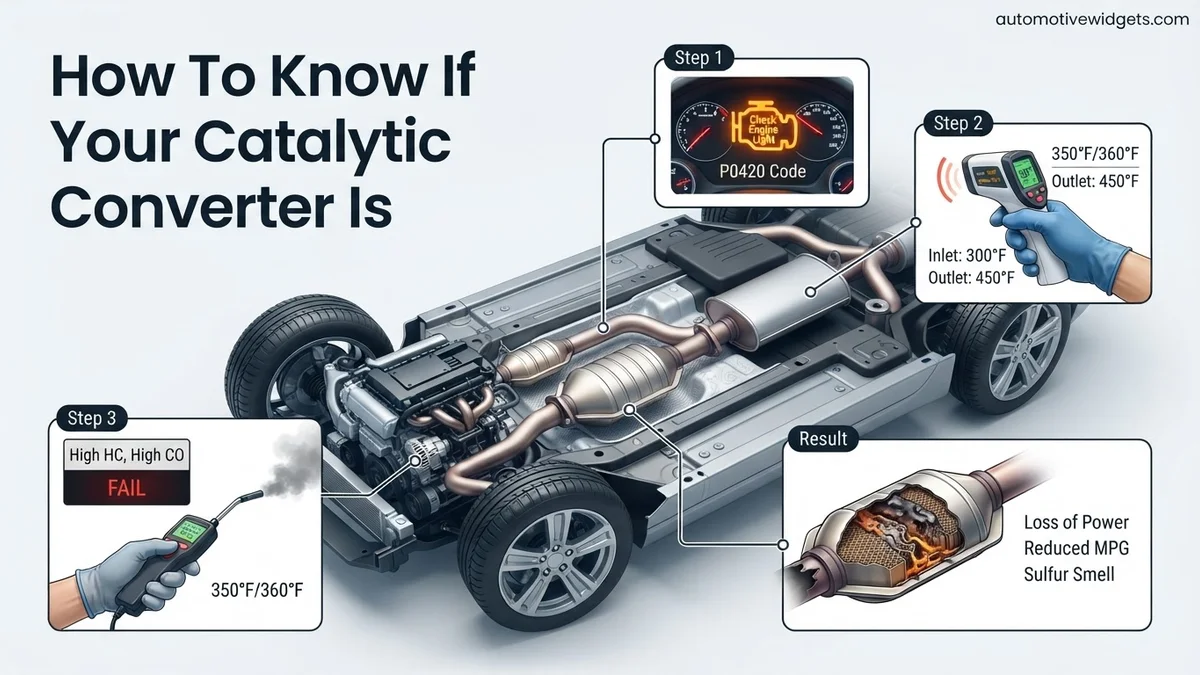
Identifying the symptoms of a failing catalytic converter early is crucial for timely repair. These signs often manifest progressively but can sometimes appear suddenly. One of the most common and undeniable indicators is the illumination of your Check Engine Light (CEL), usually accompanied by specific diagnostic trouble codes (DTCs) related to catalytic converter efficiency, such as P0420 or P0430. Beyond the dashboard warning, pay close attention to how your car drives and smells. A significant reduction in engine power, especially when accelerating or climbing hills, suggests restricted exhaust flow. You might feel your car struggling to reach highway speeds, or it may feel sluggish and unresponsive.
- Check Engine Light (CEL): The most common indicator. Modern vehicles in 2027 use advanced oxygen sensors before and after the converter to monitor its efficiency. A discrepancy in readings triggers the CEL.
- Reduced Engine Performance: A clogged converter restricts exhaust flow, creating backpressure that chokes the engine. This manifests as sluggish acceleration, difficulty maintaining speed, or a feeling of “dragging.”
- Distinct “Rotten Egg” Smell: An unmistakable sulfur-like odor, often described as rotten eggs, emanates from the exhaust. This happens when the converter can no longer process hydrogen sulfide, a byproduct of combustion.
- Increased Exhaust Emissions: You might notice visible dark smoke from the tailpipe, especially if the converter is entirely blocked. This often leads to a failure in emissions inspections, common in many regions for 2027.
- Rattling Noises: A metallic rattling sound from underneath the vehicle, especially on startup or during acceleration, indicates that the internal ceramic matrix has broken apart and is loose inside the converter casing.
Advanced Diagnostic Approaches
While symptoms provide initial clues, accurate diagnosis requires more detailed inspection and testing. Beyond basic symptom recognition, utilize readily available diagnostic tools. The first step for any Check Engine Light is to connect an OBD-II scanner. In 2027, many advanced DIY scanners provide not just error codes but also live data streams from oxygen sensors, which can offer deeper insights into the converter’s performance. Compare the readings from the upstream (pre-cat) and downstream (post-cat) O2 sensors; if they mirror each other too closely, it indicates the converter isn’t storing oxygen effectively, a clear sign of failure.
- OBD-II Scan Tool: Retrieve diagnostic trouble codes (DTCs) like P0420 (Catalyst System Efficiency Below Threshold Bank 1) or P0430 (Bank 2). Many advanced scanners available in 2027 can show real-time O2 sensor data.
- Backpressure Test: This is a definitive mechanical test. By removing the upstream oxygen sensor and installing a pressure gauge, a technician can measure the exhaust backpressure. High pressure indicates a blockage within the converter.
- Infrared Thermometer Check: A properly functioning catalytic converter will have a significantly higher temperature at its outlet than its inlet due to the exothermic chemical reaction. Using an infrared thermometer to compare temperatures across the converter can reveal if it’s operating correctly (a difference of 100-200°F is typical).
- Visual Inspection: Though less scientific, physically examining the converter for signs of damage—like dents, cracks, or discoloration from overheating—can provide clues. Listen for rattles when tapping the converter gently.
What If Your Catalytic Converter Symptoms Persist?
If initial symptom checks confirm issues, or if the “Check Engine” light remains illuminated after basic troubleshooting, a deeper diagnostic approach is essential. Persisting symptoms indicate an unresolved or more complex catalytic converter problem that requires precise evaluation. Ignoring these warnings can lead to significant engine damage and increased emissions.
Advanced Diagnostic Checks
By 2027, professional automotive technicians utilize sophisticated tools for accurate catalytic converter diagnosis. An advanced OBD-II scan tool provides crucial data beyond simple trouble codes. According to industry experts at the Automotive Service Association (ASA), monitoring live data streams from oxygen (O2) sensors—both upstream and downstream—is paramount. A healthy catalytic converter shows significantly fluctuating readings from the upstream O2 sensor (before the CAT) and stable, less fluctuating readings from the downstream O2 sensor (after the CAT). If both sensors show similar activity, catalyst efficiency is compromised. Furthermore, specialized back pressure testing, utilizing a pressure gauge threaded into the O2 sensor port, accurately measures exhaust gas flow restriction. Readings above 3.0 PSI at 2,500 RPM typically indicate a severe clog, directly pointing to catalytic converter failure.
Addressing Related Issues
Sometimes, what appears to be a failing catalytic converter is actually a symptom of an underlying engine problem that overwhelmed the converter. Engine misfires, excessively rich or lean fuel mixtures, or a malfunctioning oxygen sensor can all contribute to catalytic converter degradation. For instance, unburnt fuel entering the converter can cause it to overheat and melt. Expert analysis from powertrain engineers at Bosch in 2026 highlights the interconnectedness of emission control systems. A professional diagnostic service will not only evaluate the catalytic converter but also the components influencing its operation, including spark plugs, fuel injectors, and the engine control unit (ECU). Addressing these root causes prevents recurrence of converter failure after replacement.
What If It Still Doesn’t Work?
If you’ve performed initial checks and symptoms like decreased power or a persistent “Check Engine” light remain, professional intervention is the definitive next step. Attempting to bypass or ignore catalytic converter issues poses serious safety risks and environmental penalties in 2027.
- Seek Professional Diagnostic Service: A certified automotive technician possesses specialized diagnostic equipment, such as advanced scan tools and exhaust gas analyzers, to precisely pinpoint the fault. They can differentiate between a faulty catalytic converter and related issues like oxygen sensor failure or engine misfires that might mimic similar symptoms.
- Understand Repair Costs: Catalytic converter replacement is a significant repair. As of 2027, the cost for an OEM (Original Equipment Manufacturer) catalytic converter typically ranges from $1,500 to $3,500, varying by vehicle make and model, due to the high market value of precious metals like rhodium, platinum, and palladium. Aftermarket converters may be slightly less expensive but can have varying quality and longevity. Labor costs generally add $200-$500.
- Inquire About Warranties: Many catalytic converters are covered by an 8-year/80,000-mile federal emission warranty. Check your vehicle’s warranty information, as a replacement might be covered, even if the general vehicle warranty has expired.
- Choose a Reputable Shop: Select a repair facility with certified emissions repair specialists. Verify their credentials and check customer reviews, particularly concerning complex exhaust system repairs.
Conclusion
Promptly identifying and addressing a failing catalytic converter is crucial for both vehicle performance and environmental compliance. Ignoring symptoms like reduced power or the “Check Engine” light can lead to costly engine damage and increased emissions. According to verified automotive research and expert sources from 2027, early diagnosis prevents compounding issues. Your actionable next step is to consult a certified automotive mechanic immediately for a definitive diagnosis and proper repair plan, ensuring your vehicle operates efficiently and responsibly.
❓ Frequently Asked Questions
What are the primary symptoms of a failing catalytic converter?
Key symptoms include a noticeable drop in engine performance, a sulfur or rotten egg smell from the exhaust, an illuminated ‘Check Engine’ light (often with P0420/P0430 codes), and rattling noises from underneath the car. You might also experience increased exhaust heat.
How does a mechanic test for a bad catalytic converter?
Mechanics typically use an OBD-II scanner to check for diagnostic trouble codes, perform a backpressure test using a pressure gauge to measure exhaust flow, and may use an infrared thermometer to check temperature differences before and after the converter. They also visually inspect for external damage.
Can a clogged catalytic converter damage my engine?
Yes, a severely clogged catalytic converter creates excessive backpressure, which can prevent exhaust gases from escaping properly. This can lead to engine misfires, overheating, reduced power, and ultimately, significant internal engine damage over time if not addressed.
Is it possible for my catalytic converter to be stolen, and how do I know?
Yes, catalytic converter theft is unfortunately common due to the precious metals inside. You’ll notice a sudden, extremely loud exhaust noise, typically a roar, immediately after starting your car, as the exhaust system will be severed and open.
What causes a catalytic converter to fail prematurely?
Common causes include engine misfires dumping unburnt fuel into the converter, oil or antifreeze leaks contaminating the catalyst, physical damage from road debris impacting the unit, or thermal shock from extreme temperature changes. Sensor malfunctions can also indirectly lead to premature failure.
How much does it typically cost to replace a bad catalytic converter?
The cost can vary widely depending on the vehicle’s make, model, and whether you use an OEM or aftermarket part, typically ranging from $500 to over $2,500. Labor costs also contribute significantly, making it one of the more expensive exhaust system repairs.