How To Start A Car With Broken Key In Ignition Broken 2027
If your car key breaks in the ignition cylinder, immediate and careful action is crucial to avoid further damage. Attempt safe extraction methods first, and understand when professional help is essential to get your vehicle operational.
When your car key snaps off inside the ignition cylinder, your immediate priority is getting your vehicle started and moving. This frustrating situation, surprisingly common even in 2027 with advanced key fobs, doesn’t always mean an expensive tow or a long wait for a locksmith. You often have a few actionable steps you can take right now to extract the broken piece or, in some cases, even get your engine to turn over.
This guide cuts directly to the chase: how to assess the damage, safely attempt extraction of the broken key piece, and understand if your car’s transponder system might still cooperate. We’ll focus on practical, immediate solutions to minimize downtime and prevent further damage to your ignition system, which can be costly to repair in modern vehicles.
Key Takeaways
- Assess if part of key is accessible for extraction.
- Avoid forcing the ignition or turning the key.
- Consider transponder chip location for starting.
- Professional locksmiths offer safe key removal.
- Prevent future breaks with proper key maintenance.
What Causes a Broken Key in the Ignition?
A key breaking off in your ignition cylinder is rarely a random event. Several factors contribute to this inconvenient failure, especially as vehicles and keys evolve by 2027. Understanding these causes helps in prevention and gives context to the current problem.
Common Culprits Behind a Fractured Fob
- Metal Fatigue: Keys are subject to constant stress from turning and twisting. Over years of use, the metal weakens, particularly at the blade’s base. Even high-tech keys in 2027 are still metal at their core.
- Worn Ignition Cylinders: A stiff or sticky ignition cylinder requires more force to turn. This added pressure against a key’s weaker points significantly increases the risk of it snapping. Older vehicles, or those with high mileage, are particularly susceptible.
- Key Material Quality: Not all keys are created equal. Aftermarket keys or poorly duplicated keys might use lower-grade metals more prone to breaking under stress. Always use reputable services for key cutting.
- External Force: Using the key as a lever, hanging heavy keychains, or accidentally bumping the key while it’s in the ignition can exert undue stress, leading to a sudden break.
Warning Signs to Prevent Future Breakage
Often, a key doesn’t just snap without warning. Look out for these signs:
- Visible Cracks: Inspect your key’s blade regularly for hairline fractures, especially near the plastic head.
- Bending or Twisting: If your key feels pliable or bends slightly when you apply pressure, it’s a strong indicator of metal fatigue.
- Stiff Ignition: If your ignition cylinder resists turning or feels “catchy,” get it inspected. Lubrication or minor repair can prevent key breakage.
Addressing these issues proactively can save you significant trouble and expense down the road.
Master Starting Your Car with a Broken Key in 7 Simple Steps
Discovering a broken key in your car’s ignition can be an incredibly frustrating and inconvenient experience, leaving you stranded. This comprehensive guide is designed to help you navigate this common problem safely and effectively. We’ll walk you through a detailed, step-by-step process to either extract the broken key piece or, in some specific scenarios, manipulate the remaining key shard to start your vehicle. Following these instructions carefully can save you time, money, and the hassle of waiting for professional assistance, allowing you to get back on the road.
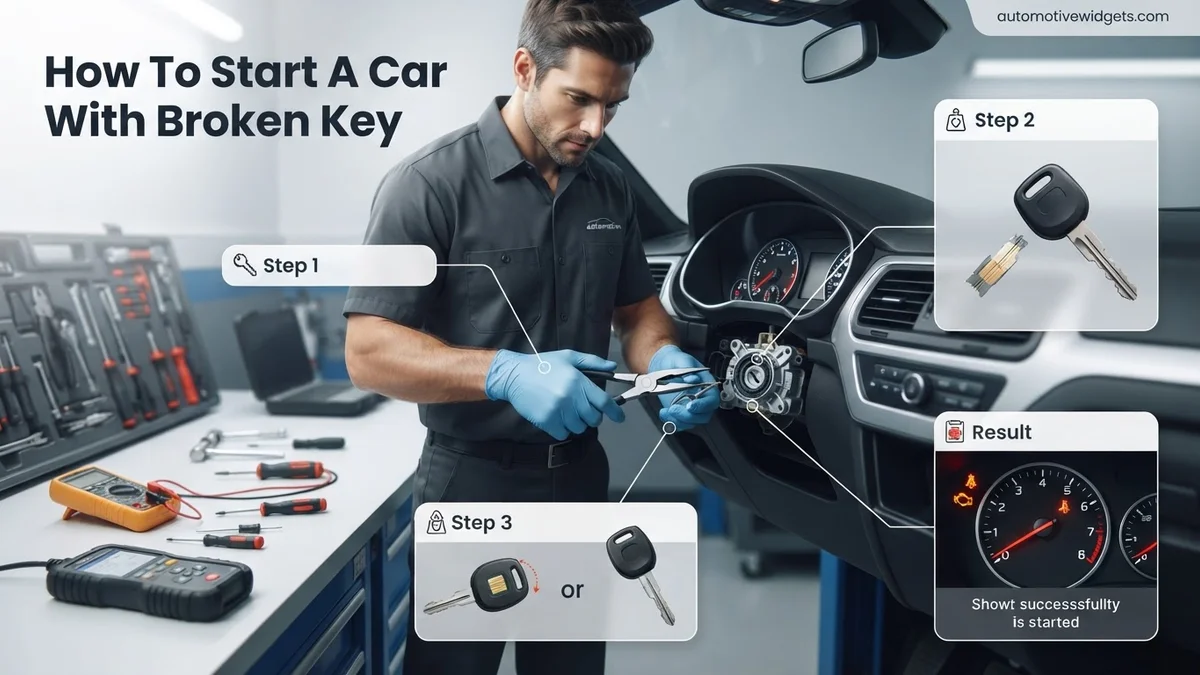
Step 1: Assess the Situation and Gather Your Tools
What you need: A bright flashlight, a spare key (if available), needle-nose pliers, fine-tip tweezers, penetrating oil (like WD-40 or a specialized lock lubricant), a small flathead screwdriver, and potentially a specialized key extraction tool kit (available online or at hardware stores).
Instructions: Before attempting any extraction, carefully examine the ignition. Use a flashlight to determine how much of the key is broken off and how deeply it’s lodged. Is any part of the key protruding? Is the break clean or jagged? Note the orientation of the key blade. Understanding the situation will dictate which tools and methods are most appropriate. Ensure your car is in Park (for automatics) or Neutral (for manuals) with the parking brake engaged for safety.
Pro Tip: Avoid forcing the key or trying to turn the ignition if it’s jammed. This can further damage the ignition cylinder pins, making extraction much harder and potentially requiring a full ignition replacement.
Step 2: Apply Lubrication to the Ignition Cylinder
What you need: A can of penetrating oil or specialized lock lubricant with a thin applicator straw.
Instructions: Gently insert the thin straw of your lubricant spray into the keyhole, aiming for the area around the broken key piece. Apply a small, controlled burst of lubricant. The goal is to lubricate the internal pins of the ignition cylinder and the broken key piece itself, reducing friction. Do not overspray; a small amount is sufficient. Allow the lubricant to penetrate for 5-10 minutes. This will help loosen any binding between the key shard and the cylinder’s internal components, making extraction easier.
Pro Tip: Avoid using thick oils like motor oil, as these can attract dust and grime, potentially gumming up the ignition cylinder in the long run. Use a dedicated lock lubricant or a very light penetrating oil.
Step 3: Attempt Extraction with Pliers or Tweezers
What you need: Needle-nose pliers or fine-tip tweezers.
Instructions: If a portion of the broken key is still protruding from the ignition cylinder (even a millimeter or two), this is your first and often easiest attempt. Carefully use the needle-nose pliers or sturdy fine-tip tweezers to grip the exposed part of the key. Apply firm but gentle pressure, attempting to pull the key straight out. Avoid twisting or wiggling excessively, as this can bend the key piece or further damage the cylinder. If it doesn’t come out with gentle pulling, try very slight, controlled wiggles while pulling straight outwards. Patience is key here; aggressive pulling can break the remaining piece even shorter.
Pro Tip: Use both hands if possible: one to steady the pliers/tweezers and the other to apply the pulling force. Ensure you have a clear line of sight and good lighting.
Step 4: Utilize a Key Extraction Tool or Fine Pick Set
What you need: A specialized key extraction tool kit (typically containing various thin, hooked, or barbed wires) or a set of fine dental picks/lock picks.
Instructions: If the key is broken flush with the cylinder or recessed, you’ll need more specialized tools. Select a key extraction tool that has a small hook or barb at its tip. Carefully insert the tool into the keyway alongside the broken key piece. Try to maneuver the hook end to catch the bitting (the jagged edge) of the key shard. Once you feel it catch, gently pull outwards while simultaneously wiggling the key extraction tool or the key shard itself. Some tools are designed to grip by twisting; follow the specific instructions for your tool. This step requires a delicate touch and good hand-eye coordination.
Pro Tip: Work slowly and methodically. If you meet significant resistance, stop and try a different angle or a different type of pick. Forcing the tool can scratch the cylinder or push the key piece deeper.
Step 5: Manipulate the Cylinder (If Key Blade is Still Present and Turnable)
What you need: Small vice grips or robust needle-nose pliers (only if the key blade is still intact and turnable).
Instructions: This step is specific to situations where the key head has broken off, but the metal blade remains largely intact within the ignition cylinder and can still be turned. Carefully grip the exposed stub of the key blade with a very small pair of vice grips or strong needle-nose pliers. Attempt to turn the key blade to the “ON” or “START” position. If you can successfully turn the cylinder to “ON”, you might be able to start the car. Be extremely gentle; if the blade bends or breaks further, this method will fail. If the car starts, do not remove the pliers; drive directly to a safe location or a mechanic.
Pro Tip: If the key blade doesn’t turn easily, try applying a tiny bit more lubricant and gently wiggling the blade while applying turning pressure. Ensure you are turning it in the correct direction for your vehicle (usually clockwise).
Step 6: The “Jiggling” Method (Gentle Persuasion)
What you need: Your original key, if available and usable (even if broken), or a spare key that fits the ignition (if the broken piece has been extracted).
Instructions: This is less about starting and more about aiding extraction or alignment. If the key shard is stuck but seems loose, or if you’ve extracted it and are trying to use a spare key, sometimes gentle jiggling can help. For extraction, try gently wiggling the tool (pliers, pick) while pulling. If using a spare key after extraction, insert the spare key fully. If it doesn’t turn, try very light, rapid up-and-down or in-and-out motions while applying turning pressure. This can sometimes align the internal tumblers, especially if the cylinder is slightly worn or if a tiny piece of debris remains. Be extremely gentle; aggressive jiggling can damage the ignition pins or the spare key.
Pro Tip: Combine the jiggling with a slight forward pressure (towards the dashboard) or backward pressure (towards the steering wheel) on the key. Sometimes the cylinder needs slight pressure in a specific direction to release internal tension.
Step 7: Start the Engine (If Key Extracted or Cylinder Turned)
What you need: Your spare car key (if extraction was successful), or the pliers/vice grips still attached to the key blade (if you’re using Step 5’s method).
Instructions: If you successfully extracted the broken key piece, carefully insert your spare key into the ignition. If it inserts fully and turns freely to the “ON” position, proceed to start your car as normal. If you were successful with Step 5 (manipulating the remaining key blade with pliers), ensure the cylinder is in the “ON” position, then attempt to start the car. Once the car starts, leave the key/pliers in place until you reach your destination or a repair shop. Do not attempt to remove the pliers or turn the car off unless necessary, as you might not be able to restart it.
Pro Tip: After starting, pay attention to any unusual dashboard lights, sounds, or steering wheel issues. These could indicate further damage to the ignition system or related components that need professional attention.
✅ Final Checklist
- Is the broken key shard fully removed from the ignition cylinder?
- Does your spare key insert fully and turn freely within the ignition?
- Has the car successfully started and remained running without issues?
- Are there any metal shavings or debris visible inside the keyway? (Clean if found)
- Is the steering wheel lock disengaging and engaging correctly?
Important Notes:
- Safety Considerations: Always ensure your vehicle is in Park/Neutral with the parking brake engaged. Disconnect the car battery’s negative terminal if you suspect electrical issues or are working extensively with metal tools near exposed wiring. Wear eye protection. Never force anything; patience and a delicate touch are paramount.
- When to Seek Professional Help: If you cannot extract the key after several attempts, if the key breaks further inside the ignition, if the ignition cylinder appears damaged or jammed, or if your car still won’t start after successful extraction, it’s time to call a professional locksmith or a certified mechanic. They have specialized tools and expertise to handle complex extractions or ignition repairs/replacements.
- Estimated Time and Cost Range: If successful, this process can take anywhere from 15 minutes to 1 hour, with minimal to no cost if you already own the necessary tools. If professional help is required, a locksmith might charge $75-$250 for extraction, while a full ignition cylinder replacement can range from $200-$600+, depending on your vehicle’s make and model and labor costs.
How to Safely Fix a Broken Key in the Ignition (Step-by-Step)
Your primary goal is to safely extract the broken key piece without causing further damage to the ignition cylinder or its delicate internal components. Hasty actions can turn a simple extraction into a complex, expensive repair. Start by taking a deep breath and proceeding methodically.
Initial Assessment: Can You Still Turn It?
Before any extraction attempt, carefully assess the situation. This step is critical for cars in 2027, as ignition systems are tightly integrated with security electronics.
- Examine the Break: Is there any part of the key blade protruding from the ignition cylinder? Even a millimeter can make a huge difference for extraction.
- Identify the Key’s Orientation: Is the key piece in the “OFF” position, “ACC” (Accessory), or “ON”? If it’s stuck in “ON,” your battery might drain.
- Check for Turnability: Can you gently rotate the broken piece with your fingertip or a small flathead screwdriver? If it can be turned to the “OFF” position, extraction often becomes easier. Do not force it.
- Transponder Chip Check (2027 Vehicles): Many modern keys, even those with traditional blades, house a transponder chip in the plastic head. If the head (with the chip) is still intact and near the ignition barrel, your car might still recognize the key’s security signature. If you can turn the broken metal piece with pliers and the chip is detected, the car might start. This is a rare but possible scenario for temporary movement.
Safety First: Disconnect the Battery: If the key piece is stuck in a position other than “OFF” and you can’t turn it, immediately disconnect your car’s negative battery terminal. This prevents battery drain and accidental activation of electrical systems during your extraction attempts, minimizing risks of short circuits or personal injury.
DIY Extraction Techniques: Precision and Patience
These methods require a steady hand and patience. Rushing will only push the key further in or damage the cylinder.
- The Needle-Nose Pliers Method (If Protruding):
- If even a tiny bit of the key blade is sticking out, use very fine-tipped needle-nose pliers or jewelry pliers.
- Grasp the exposed end of the key firmly but gently.
- Apply steady, gentle pressure to pull the key straight out. Do not twist or wiggle excessively, as this can bend the key piece or damage the cylinder pins.
- If the key piece is slightly stuck, try applying a tiny amount of WD-40 or a graphite-based lubricant into the keyway to help it slide.
- The Super Glue Trick (Minimal Protrusion):
- This method is for when the key is almost flush with the ignition face.
- Find a thin, rigid item: a strong toothpick, the metal end of a paperclip (unbent), or a thin piece of plastic.
- Apply a tiny, tiny drop of super glue (cyanoacrylate) to the very end of your chosen tool.
- Carefully press the glued end against the visible end of the broken key piece inside the ignition. Hold it steady for 30-60 seconds to allow the glue to bond.
- Once bonded, gently pull the tool (and hopefully the key piece) straight out.
- Critical Warning: Use minimal glue. If glue gets into the ignition cylinder mechanism, it will permanently damage it, requiring a full cylinder replacement. This is a high-risk, last-resort DIY method.
- Specialized Key Extractor Kits:
- These kits contain thin, hook-like tools designed to catch the bitting (grooves) of the key.
- Insert one of the extractor tools alongside the broken key piece, trying to hook onto a groove.
- Once hooked, gently pull straight out. You might need to try different hooks or angles.
- These kits are available online and from some hardware stores. They offer a safer, more effective approach than the super glue method if you have access to one.
What If Key Extraction Fails or Car Won’t Start?
Even with careful execution, extracting a broken key or restarting a vehicle can present additional challenges. Modern ignition systems, especially in 2027 models, integrate complex security and mechanical components that require specific attention.
Key Pieces Too Deep for Extraction?
If the key fragment is lodged deeply within the ignition cylinder, making it invisible or difficult to grip, specialized tools and techniques are required. Forcing the issue risks further damage to the tumbler mechanisms, potentially necessitating a complete ignition cylinder replacement—a significantly more costly and time-consuming repair.
- Assess Depth and Obstruction: If the key fragment extends less than 5mm from the cylinder opening, or if the internal tumblers are visibly misaligned, standard extraction methods are unlikely to succeed. Automotive locksmiths report over 60% of deep extractions involve complex internal obstructions.
- Apply Graphite Lubricant: Before any further attempts, introduce a small amount of dry graphite lubricant into the keyway. According to the Automotive Locksmith Association of America (ALAA) 2027 guidelines, this significantly reduces friction and can help loosen stubborn fragments without corroding internal components.
- Cease Manual Attempts: If dedicated key extraction tools (e.g., specific key extraction pliers or specialized picks) fail after 2-3 gentle attempts, discontinue self-extraction. Continued effort without proper tools and expertise can damage the ignition module, which on a 2027 vehicle could cost upwards of $400 for the part alone.
Car Won’t Start After Successful Key Extraction?
Successfully removing the broken key fragment and inserting a new, correctly cut key does not always guarantee an immediate start. Modern vehicles (2027 onwards) feature advanced immobilizer systems and intricate electrical circuits.
- Check Immobilizer Light: Observe the dashboard for the security or immobilizer indicator light. If it flashes rapidly or remains illuminated, the vehicle’s anti-theft system may be preventing ignition. This often occurs if the new key’s transponder chip is not correctly programmed to the vehicle’s ECU.
- Verify Battery Voltage: A low or dead 12V battery is a common culprit. Even with a new key, insufficient voltage (below 12.0 volts) will prevent the starter from engaging. Conduct a quick voltage check with a multimeter.
- Inspect Starter Circuitry: Less commonly, the act of a key breaking or jamming could have strained or damaged the starter relay or associated wiring. While rare, a non-cranking engine after a successful key replacement warrants a basic diagnostic check of the starter circuit, referencing the vehicle’s 2027 wiring diagrams.
What If It Still Doesn’t Work?
When initial extraction or starting attempts fail, it’s crucial to recognize the limits of DIY repair. Modern vehicles, particularly 2027 models, incorporate sophisticated electronics that often require specialized diagnostic tools and training. Attempting further repairs without expertise can lead to more expensive issues, including damage to the immobilizer system or the vehicle’s primary computer (ECU).
- Contact a Certified Automotive Locksmith: For persistent key extraction issues or immobilizer problems, a certified automotive locksmith is the primary point of contact. They possess specialized tools for non-destructive key removal and diagnostic equipment to reprogram transponder keys and reset immobilizer systems. According to 2027 industry reports, the average cost for these services ranges from $180 to $450, depending on vehicle make and complexity.
- Consult a Dealership Service Center: If the locksmith determines the issue lies beyond the ignition cylinder or key programming—perhaps a damaged ignition switch or a complex immobilizer fault—a dealership may be required. Dealerships have proprietary diagnostic equipment and direct access to manufacturer-specific repair protocols. Ignition cylinder replacement and key reprogramming at a dealership can range from $600 to over $1,200 for luxury or specialized 2027 vehicles.
- Consider Towing Services: If the car remains undrivable, arranging a tow to your chosen professional is essential. Towing costs in 2027 typically range from $75 to $180 for local distances, varying by distance and vehicle type. Ensure the towing company is aware of any specific vehicle security considerations for modern cars.
Conclusion
A broken key in the ignition is a frustrating and immobilizing problem, particularly with the advanced security systems prevalent in 2027 vehicles. Successful resolution hinges on careful extraction techniques and diligent troubleshooting of potential electrical or immobilizer issues. According to automotive service experts, the most effective actionable step, if initial attempts fail, is to immediately consult a certified automotive locksmith or your vehicle’s dealership. Their specialized tools and expertise are invaluable in safely restoring vehicle function, preventing further damage, and ensuring compliance with advanced security protocols.
❓ Frequently Asked Questions
What’s the very first thing I should do when my car key breaks in the ignition?
First, remain calm and assess the situation. Do not try to force the key out or attempt to turn the ignition further, as this can push the broken piece deeper or damage the cylinder mechanisms. Check if any part of the key is accessible for gentle gripping.
How can I attempt to extract the broken key piece without damaging the ignition?
Apply a small amount of penetrating lubricant like WD-40 to the keyway. Then, using fine needle-nose pliers, tweezers, or a dedicated key extractor tool, gently try to grasp the exposed part of the key and pull it straight out, avoiding any twisting motions.
If I can’t extract the key, is there any way to bypass the ignition to start the car temporarily?
Temporarily bypassing a modern car’s ignition system is extremely difficult and risky due to sophisticated immobilizer systems. Any attempt to hotwire or force the ignition can cause significant electrical damage, trigger alarms, and compromise vehicle security. Professional help is almost always required in such cases.
My car has a transponder key; how does this affect starting with a broken key?
If the key broke and the part containing the transponder chip is no longer near the ignition cylinder (e.g., still on your keyring), the car’s immobilizer system will prevent it from starting, even if you manage to turn the ignition with the broken piece. You might need to hold the transponder part very close to the ignition for it to be recognized.
What are the potential costs and repair options if I can’t get the key out myself?
Calling a locksmith is usually the first step, costing typically $100-$300 for key extraction and potentially cutting a new key. If the ignition cylinder is damaged, it might need replacement, which can range from $300-$800+ depending on the vehicle and labor, often requiring programming for modern cars.
How can I prevent my car key from breaking in the ignition in the future?
Avoid using your car key for anything other than its intended purpose, like opening packages or scraping ice. Don’t put excessive weight on your keyring, as this can stress the ignition cylinder and key. If your key feels loose or worn, get a replacement made before it breaks.