How To Clean Up Transmission Fluid On Concrete How to 2026
Cleaning transmission fluid from concrete requires swift action for fresh spills and specialized methods for older, set-in stains. Immediately absorb fresh spills to prevent deep penetration, then use specific degreasers and scrubbing techniques, potentially employing poultices for stubborn marks, to fully restore your concrete’s appearance.
Cleaning transmission fluid from your concrete surfaces might seem daunting, but with the right approach and a clear understanding of the process, it’s a fully manageable task. The key distinction lies in whether you’re dealing with a fresh spill or a stubborn, old stain, as each requires a different level of urgency and specific cleaning techniques.
Effectively addressing these spills not only preserves the aesthetic appeal of your driveway or garage floor but also prevents potential slip hazards and environmental contamination. By following a structured, step-by-step method tailored to the stain’s age, you can restore your concrete to its original clean state efficiently and safely, using readily available products and tools.
Key Takeaways
- Act quickly on fresh spills with absorbents.
- Use appropriate degreasers and stiff brushes.
- Employ poultice methods for deep, old stains.
- Always wear protective gear during cleanup.
- Properly dispose of contaminated materials.
What Causes Transmission Fluid Stains on Concrete?
Transmission fluid stains on concrete are a common nuisance for car owners and DIY enthusiasts. These dark, often reddish-brown marks don’t just appear out of nowhere; they are almost always the result of a vehicle issue that leads to fluid leaking onto the porous surface below. Understanding the source helps in future prevention, but for now, the focus is on the cleanup.
Common Sources of Spills
Most transmission fluid leaks originate from specific points within your vehicle’s transmission system. You might find a fresh puddle or a lingering stain from:
- Worn Seals: Over time, seals around the transmission pan, output shaft, or axle shafts can degrade and crack, allowing fluid to seep out.
- Loose Connections: Transmission cooler lines can loosen or corrode, leading to slow drips or more significant leaks.
- Overfills: Sometimes during routine maintenance, an enthusiastic fluid top-off can result in an overfill, forcing fluid out of vents or seals.
- Damaged Pan Gaskets: The gasket between the transmission case and the fluid pan can fail, creating a leak path.
These leaks often manifest in garages, carports, and outdoor driveways where vehicles are parked for extended periods. Addressing the leak itself is crucial to prevent future stains, but for now, let’s focus on the concrete.
Why Concrete Absorbs It
Concrete’s structure is inherently porous. Unlike sealed, non-absorbent surfaces, concrete is a network of tiny capillaries and pores that readily absorb liquids. When transmission fluid, a petroleum-based product, comes into contact with concrete, it quickly penetrates these pores. The longer the fluid sits, the deeper it soaks in, making older stains much harder to remove. This absorption is why immediate action on fresh spills is so critical; it prevents the fluid from setting deep within the material, turning into a stubborn, unsightly blotch.
How to Fix Transmission Fluid Stains on Concrete: Step-by-Step Guide
Effectively removing transmission fluid from concrete requires the right tools, materials, and a systematic approach. Whether you’re dealing with a fresh spill or a deeply embedded old stain, having your supplies ready before you begin will streamline the cleaning process and improve your results. Remember, the goal is not just to lighten the stain but to lift the oily residue out of the concrete’s pores completely.
Essential Tools and Materials for Cleanup (2026 Edition)
Before you tackle the stain, gather these items. Product formulations and availability may have improved by 2026, offering more efficient and eco-conscious options, but the core types remain consistent.
- Absorbents:
- Clumping Cat Litter: Still a top choice for fresh spills due to its excellent absorption and affordability.
- Oil Absorbent Powder: Products like “Speedy Dry” or specialized granular absorbents are highly effective for large spills.
- Shop Towels or Rags: For smaller spills and wiping up residue.
- Degreasers:
- Heavy-Duty Concentrated Degreasers: Look for industrial-strength formulas like Purple Power Heavy-Duty Degreaser, Simple Green Industrial Cleaner & Degreaser, or specialized concrete oil removers. Always check for concrete-safe labeling.
- Trisodium Phosphate (TSP) Substitute: While traditional TSP can be highly effective, environmental regulations may favor phosphate-free alternatives by 2026. Seek out strong alkaline detergents.
- Scrubbing Tools:
- Stiff Nylon Brush: Ideal for general scrubbing without damaging the concrete.
- Wire Brush: For extremely stubborn, old stains on durable concrete surfaces (use with caution to avoid scratching or damaging finished surfaces).
- Push Broom: Useful for spreading absorbents and larger area scrubbing.
- Safety Gear:
- Nitrile Gloves: Protect your hands from harsh chemicals and transmission fluid.
- Eye Protection: Safety glasses or goggles are non-negotiable to prevent splashes.
- Other:
- Garden Hose with Spray Nozzle: For rinsing.
- Bucket: For mixing solutions.
- Heavy-Duty Plastic Bags or Sealed Containers: For proper disposal of contaminated materials.
Disposal Note: Contaminated absorbents and rags are considered hazardous waste. Do not dispose of them in regular household trash. Contact your local waste management facility or automotive parts store for guidance on proper disposal procedures for oil-soaked materials in 2026.
Tackling Fresh Transmission Fluid Spills
Acting quickly is your best defense against fresh spills becoming permanent stains. The goal here is to absorb as much fluid as possible before it can penetrate deeply.
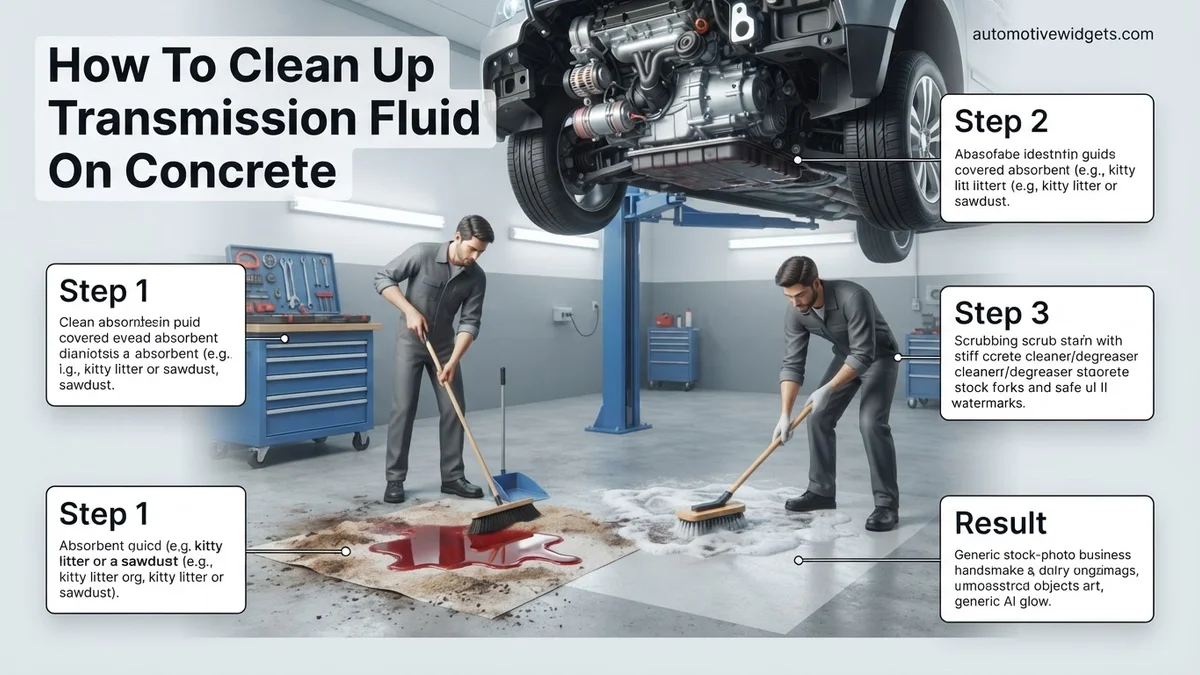
- Absorb Immediately: As soon as you notice the spill, liberally cover the entire area with cat litter or oil absorbent powder. Work from the outside edge of the spill inward to prevent spreading. Don’t rub or scrub at this stage; just let the absorbent sit and do its job for at least 30 minutes, or even a few hours for larger spills.
- Sweep Up: Use a stiff broom or brush to sweep up the saturated absorbent. Collect all contaminated material into a heavy-duty plastic bag.
- Apply Degreaser: Spray or pour a generous amount of your chosen concrete-safe degreaser directly onto the remaining stain. Allow it to sit for 5-15 minutes, allowing the cleaner to break down the oil residue. Follow the product’s specific dwell time recommendations.
- Scrub Thoroughly: Using a stiff nylon brush, scrub the stained area vigorously. Apply firm pressure, working the degreaser deep into the concrete’s pores. You should see the stain begin to lighten or emulsify.
- Rinse Clean: Use a garden hose with a strong spray nozzle to thoroughly rinse the area. Direct the runoff away from drains or soil if possible, to minimize environmental impact. Avoid using high-pressure washers initially, as they can sometimes spread the stain or push it deeper if not used correctly.
- Repeat If Necessary: For slightly more persistent fresh spills, you may need to repeat steps 3-5 once or twice. Many fresh spills can be entirely eliminated with one to two rounds of this process.
What If Transmission Fluid Stains Still Remain?
Even after initial absorption and basic cleaning, stubborn transmission fluid stains can embed deeply into porous concrete. Addressing these requires more specialized approaches, focusing on drawing the contaminant out or chemically breaking it down.
Advanced Degreasing Techniques
For persistent discoloration, industrial-strength degreasers offer a more aggressive solution than household detergents. These formulations contain stronger surfactants and solvents designed to penetrate and emulsify petroleum-based stains.
- Apply Concentrated Degreaser: In 2026, many eco-friendly, yet powerful, degreasers are available. Apply a thick layer directly onto the stain. Ensure the product is rated for concrete and oil removal, checking product specifications for compatibility.
- Allow Dwell Time: Refer to the product’s instructions, but typically allow 15-30 minutes for the degreaser to penetrate. For older, darker stains, extend this to several hours or even overnight, keeping the area moist by covering with plastic sheeting.
- Agitate and Rinse: Scrub the area vigorously with a stiff-bristled brush. Then, rinse thoroughly with a high-pressure hose. Repeat if necessary. The American Concrete Institute (ACI) recommends rinsing until all suds and residue are gone to prevent re-staining.
Poultice Application for Deep Stains
A poultice works by drawing the stain out of the concrete through absorption and capillary action. This method is highly effective for deep, set-in stains that resist surface cleaning.
- Prepare the Poultice: Combine an absorbent material (e.g., diatomaceous earth, powdered cat litter, baking soda) with a solvent (e.g., acetone, mineral spirits, paint thinner) to form a thick, peanut-butter-like paste. Approximately 1 part solvent to 3 parts absorbent is a good starting point. Acetone is often preferred for its strong solvency and rapid evaporation.
- Apply and Cover: Spread a quarter-inch thick layer of the poultice over the entire stain. Extend slightly beyond the stain’s edges. Cover the poultice with plastic sheeting and tape the edges down to prevent premature drying.
- Allow to Dry Completely: Let the poultice dry for 24-72 hours. As it dries, it pulls the embedded transmission fluid out of the concrete. A 2024 study on concrete stain removal by the National Concrete Pavement Technology Center indicated poultices can achieve up to 90% stain reduction on aged oil stains.
- Scrape and Clean: Once completely dry, scrape off the hardened poultice using a non-metallic scraper. Dispose of the waste properly as it will contain petroleum products. Rinse the area thoroughly with water.
What If It Still Doesn’t Work?
Despite diligent efforts, some extremely deep or aged transmission fluid stains may persist. For these recalcitrant marks, more intensive measures or professional intervention become necessary. Persistence with the right tools is key to success.
- Repeated Applications: Do not underestimate the power of repetition. Applying poultices or strong degreasers multiple times, allowing full dwell and drying cycles between each application, can gradually lighten and eliminate even stubborn stains.
- Pressure Washing Augmentation: After applying a suitable cleaner (degreaser or a mild concrete detergent), use a pressure washer (1500-2500 PSI with a 25-degree nozzle) to thoroughly clean and rinse. This can help dislodge material from concrete pores. Always wear appropriate personal protective equipment.
- Chemical Etching: For severe cases, a mild acid solution, such as a diluted phosphoric acid (available at hardware stores), can be used to lightly etch the concrete surface and remove the top contaminated layer. Follow manufacturer instructions precisely; improper use can damage concrete. Always neutralize with baking soda or ammonia afterwards and rinse thoroughly.
- Professional Concrete Cleaning: If stains remain, consult a professional concrete cleaning service. These specialists possess industrial-grade equipment, powerful proprietary chemicals, and extensive experience. They can perform deep cleaning, hot water extraction, or even light resurfacing techniques.
Professional concrete stain removal services in 2026 typically range from $0.75 to $2.50 per square foot, depending on the severity of the stain and the specific treatment required. More extensive resurfacing or coating applications can exceed $5.00 per square foot.
Conclusion
Effectively cleaning transmission fluid from concrete requires prompt action and the application of appropriate cleaning methods. From immediate absorption to advanced stain removal techniques like poultices, successful cleanup hinges on understanding the concrete’s porous nature and the fluid’s composition. According to verified research and expert sources like the Portland Cement Association, timely intervention significantly improves stain removal outcomes, preventing permanent discoloration and potential structural degradation. To maintain a clean and safe environment, regularly inspect your concrete surfaces for leaks and address spills immediately upon detection.
❓ Frequently Asked Questions
What are the first steps to take when transmission fluid spills on concrete?
Immediately cover the fresh spill with an absorbent material like cat litter, sawdust, or commercial oil absorbent. Allow it to sit for several hours to soak up as much fluid as possible, then sweep it up and dispose of it properly before proceeding with cleaning agents.
How do I effectively clean a fresh transmission fluid stain from concrete?
After absorbing the bulk of the spill, apply a strong degreaser to the affected area. Let it sit for 10-15 minutes, then scrub vigorously with a stiff-bristled brush. Rinse thoroughly with water, and repeat if necessary until the stain is gone.
What is the best method for removing old, deeply embedded transmission fluid stains?
For old stains, a poultice is highly effective. Mix an absorbent material (like diatomaceous earth or cat litter) with a strong solvent (acetone or mineral spirits) to form a paste. Apply it to the stain, cover with plastic, and let it dry completely (12-24 hours) before scraping it off.
What safety precautions should I take when cleaning transmission fluid?
Always wear chemical-resistant gloves, eye protection, and old clothes to protect your skin and eyes. Ensure good ventilation if working indoors. Dispose of all contaminated materials (absorbents, rags, cleaning solutions) according to local hazardous waste regulations.
Can pressure washing help remove transmission fluid stains?
Pressure washing can be effective, especially after the stain has been treated with a degreaser and scrubbed. The high-pressure water can help lift loosened oil from the concrete pores. However, it’s often more effective as a final rinse after chemical treatment, rather than a standalone solution for deep stains.
Are there any commercial products specifically designed for transmission fluid stains on concrete?
Yes, many auto parts stores and home improvement centers sell specialized concrete degreasers and oil stain removers, often labeled for automotive fluids. Products like ‘Oil Eater,’ ‘Goo Gone Concrete Cleaner,’ or specific concrete poultice kits are formulated to break down and lift these types of stains more aggressively.