How Much Does It Cost to Replace a Spark Plug 2027 Guide
The average cost to replace spark plugs ranges from $100 to $300 for most vehicles, including parts and labor. This price can fluctuate significantly based on your car’s make, model, engine type, and the specific spark plugs chosen. Labor costs typically make up the larger portion of the total expense.
In 2027, the typical cost to have your spark plugs professionally replaced ranges from $150 to $500 for most passenger vehicles. This estimate includes both the cost of the new spark plugs and the labor charges from the mechanic. The exact price you pay will depend heavily on your vehicle’s specific engine type, the kind of spark plugs required, and where you get the service done.
Knowing this cost range upfront is crucial for budgeting your vehicle maintenance. Spark plugs are vital for your engine’s combustion process, directly impacting fuel efficiency, engine performance, and overall vehicle reliability. Replacing them on schedule can prevent costly engine damage and keep your ride running smoothly for years to come.
Key Takeaways
- Expect $100-$300 for standard spark plug replacement.
- V6/V8 engines cost more due to more plugs/labor.
- Premium plugs (iridium) increase part cost slightly.
- Get multiple quotes; shop labor rates vary widely.
- Delaying replacement can lead to costlier repairs.
What Influences Spark Plug Replacement Cost?
Several key factors contribute to the total bill when you need new spark plugs. Understanding these will help you anticipate costs more accurately for your specific vehicle in 2027.
Engine Configuration & Accessibility
- Cylinder Count: Fewer cylinders generally mean fewer spark plugs and thus lower part costs. A 4-cylinder engine requires four plugs, while a V6 needs six, and a V8 requires eight. More plugs directly increase your parts bill.
- Engine Design: Some engines have easily accessible spark plugs, often taking less than an hour of labor. Others, especially modern V6 and V8 engines, may require technicians to remove the intake manifold or other components to reach the plugs. This significantly increases labor time, potentially from 0.5-1.5 hours for simple jobs to 2-4+ hours for complex ones. Labor rates in 2027 typically range from $100 to $180 per hour.
Spark Plug Type & Quality
The type of spark plug your vehicle uses also plays a role in the total cost. Modern vehicles usually come with long-life plugs, but there are still cost differences:
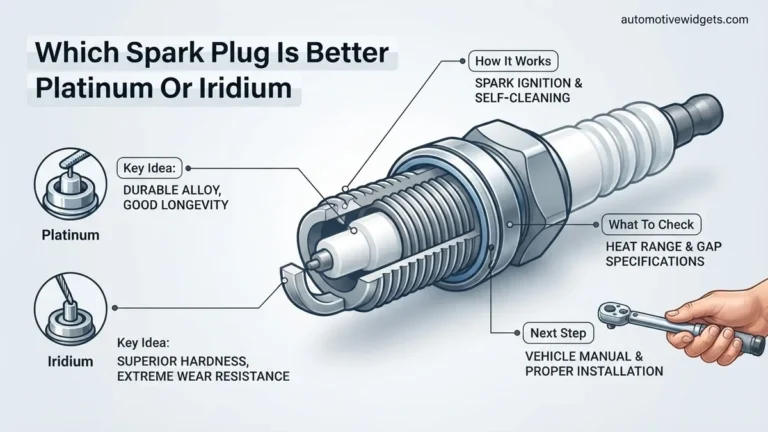
- Standard Copper Plugs: These are the most affordable, often costing $5-$10 per plug. They typically have shorter replacement intervals.
- Platinum or Iridium Plugs: Most newer vehicles specify these. They offer superior durability and performance, lasting much longer. Expect to pay $15-$30 or more per plug for these higher-grade materials. Using the correct type specified by your vehicle manufacturer is non-negotiable for optimal engine function.
From Start to Finish: Spark Plug Replacement Costs Explained
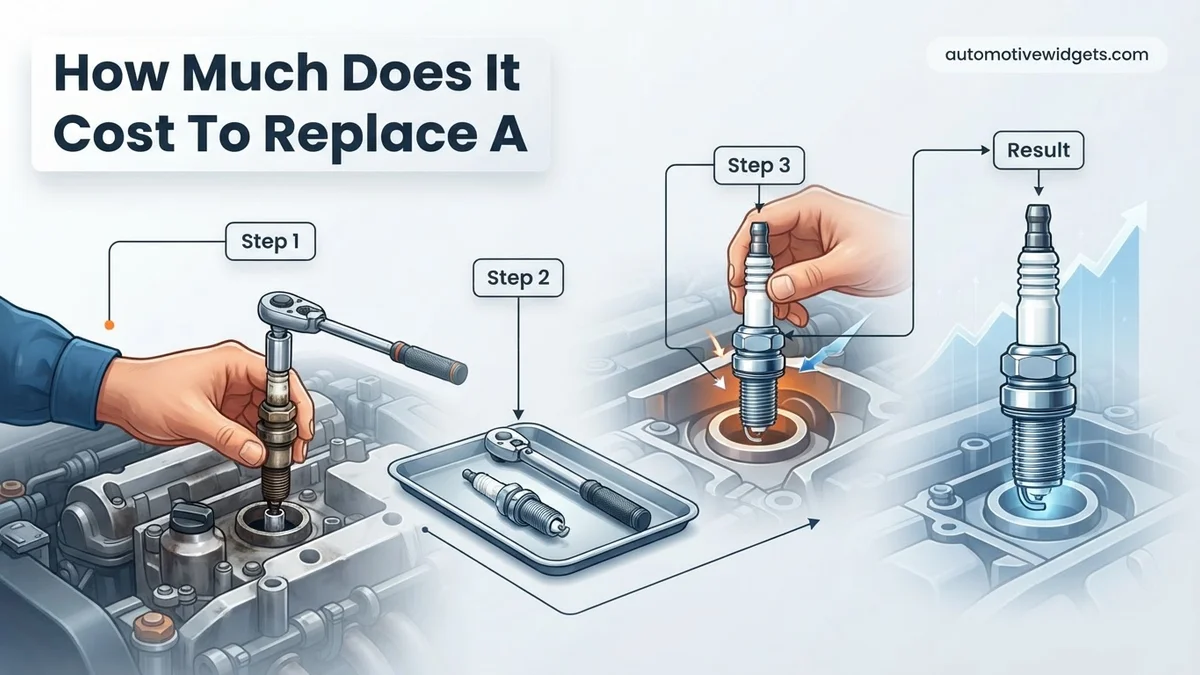
Understanding the cost of replacing spark plugs involves more than just the price of the parts. This comprehensive guide breaks down all the monetary and practical factors, from sourcing the right components to estimating labor for both DIY enthusiasts and those opting for professional service. By following these detailed steps, you’ll gain clarity on the expenses involved and make informed decisions, ensuring your vehicle runs smoothly without unexpected financial surprises.
Step 1: Identify Your Vehicle’s Spark Plug Requirements
What you need: Your vehicle’s make, model, year, and engine size (e.g., 2015 Honda Civic, 1.8L 4-cylinder). Access to your owner’s manual or a reliable online auto parts database (like RockAuto, AutoZone, O’Reilly Auto Parts).
Instructions: The first step to calculating costs is knowing exactly which spark plugs your car needs. Your vehicle’s manufacturer specifies a particular type and heat range of spark plug for optimal performance and longevity. Consult your owner’s manual for the recommended part number or specifications. If unavailable, use an online parts finder by entering your car’s details. Pay attention to the material type (copper, platinum, iridium) and the number of spark plugs required (usually 4, 6, or 8, corresponding to your engine’s cylinders).
Pro Tip: Always stick to the manufacturer’s recommended spark plug type. While cheaper alternatives exist, they can negatively impact fuel efficiency, engine performance, and even lead to misfires or long-term damage, ultimately costing more in the long run.
Step 2: Research Spark Plug Part Costs
What you need: The specific spark plug part number(s) identified in Step 1, internet access for online retailers, or phone access for local auto parts stores.
Instructions: Once you have the part number, you can begin pricing. Spark plugs vary significantly in cost based on their material and brand.
- Copper plugs: $2-$5 each (typically for older vehicles or performance applications needing frequent changes).
- Platinum plugs: $6-$15 each (single or double platinum, offer longer life than copper).
- Iridium plugs: $10-$25 each (the most common type for modern vehicles, offering the longest lifespan and best performance).
Multiply the per-plug cost by the number of cylinders in your engine. For example, an 8-cylinder engine requiring iridium plugs could cost $80-$200 for parts alone. Check multiple sources (online and local) to compare prices and ensure availability.
Pro Tip: Don’t solely go for the cheapest option. Reputable brands like NGK, Denso, Bosch, and AC Delco are generally preferred for their quality and consistency. Counterfeit spark plugs are a real concern online; buy from trusted vendors.
Step 3: Assess Necessary Tools for DIY (One-Time Investment)
What you need: A personal inventory of your existing tools. A budget for purchasing new tools if you plan to DIY.
Instructions: If you decide to replace the spark plugs yourself, you’ll need a few specialized tools. If you don’t already own them, this represents an initial investment.
- Spark plug socket set: $15-$30 (includes various sizes, often 5/8″ and 13/16″, with rubber inserts to protect plugs).
- Ratchet: $20-$50 (3/8″ drive is common).
- Extension bars: $10-$25 (for reaching deep-set plugs).
- Torque wrench: $30-$100 (crucial for tightening plugs to manufacturer specifications, preventing damage).
- Spark plug gap gauge: $3-$10 (though most modern iridium/platinum plugs come pre-gapped).
The total tool cost for a beginner might range from $78 to $215. These tools are reusable for future maintenance tasks.
Pro Tip: A torque wrench is non-negotiable for spark plug replacement. Overtightening can strip cylinder head threads (a very expensive repair), and undertightening can cause plugs to loosen and damage components.
Step 4: Calculate DIY Consumable Costs
What you need: Anti-seize lubricant, dielectric grease, and shop rags or gloves.
Instructions: Beyond the main parts and tools, a few inexpensive consumables are highly recommended for a proper DIY job.
- Anti-seize lubricant: $5-$10 per tube/bottle. Applied to spark plug threads (unless specified otherwise by the manufacturer, especially for some factory-coated plugs) to prevent them from seizing in the cylinder head over time, making future removal easier and preventing thread damage.
- Dielectric grease: $3-$8 per tube. Applied inside the boot of the spark plug wire or ignition coil connector to prevent moisture intrusion, inhibit corrosion, and ensure good electrical contact.
- Shop rags/gloves: $5-$15. Essential for keeping hands clean and cleaning up any incidental spills.
These items typically add another $13-$33 to your DIY material cost. While small, they significantly contribute to the quality and longevity of the repair.
Pro Tip: When applying anti-seize, use a thin, even coat on the threads, avoiding the electrode tip. For dielectric grease, a small dab inside the boot is sufficient; don’t over-apply.
Step 5: Estimate Your Time Investment (DIY “Labor” Cost)
What you need: An understanding of your mechanical skill level and the complexity of your engine’s layout.
Instructions: While you don’t pay yourself an hourly wage, your time has value. For a simple 4-cylinder engine with easily accessible plugs, a DIY replacement might take 1-2 hours for a novice. More complex engines (V6, V8, horizontally opposed) or those with difficult-to-reach plugs (e.g., under the intake manifold) could take 3-6 hours or more. Consider what an equivalent number of hours of your free time is worth to you. If your time is worth $30-$50 an hour, a 3-hour job effectively “costs” you $90-$150 in lost leisure or productive time. This intangible cost should be factored into your DIY vs. professional decision.
Pro Tip: Watch several YouTube videos specific to your vehicle’s make and model before starting. This will give you a realistic idea of the complexity and time commitment involved, including any unexpected steps like removing airboxes or intake manifolds.
Step 6: Obtain Professional Labor Quotes
What you need: Your vehicle information, a phone, and a list of local reputable auto repair shops or mobile mechanics.
Instructions: If DIY isn’t for you, professional labor costs will be your primary expense. Call at least 2-3 local shops for quotes. Labor rates typically range from $80 to $150 per hour. Spark plug replacement is often quoted as a fixed-price job rather than hourly, as shops use labor guides (e.g., Mitchell1, ALLDATA) that specify standard times for repairs.
- 4-cylinder engine: $60-$150 labor (plus parts).
- 6-cylinder engine: $100-$300 labor (plus parts, can be higher if access is difficult, e.g., transverse V6).
- 8-cylinder engine: $150-$400 labor (plus parts).
Be sure to ask if the quote includes parts or if they expect you to supply them. Some shops prefer to use their own sourced parts.
Pro Tip: When getting quotes, ask specifically if they use OEM (Original Equipment Manufacturer) equivalent or aftermarket parts, and if there’s a warranty on the labor and parts. Transparency about included services (e.g., basic inspection) is also helpful.
Step 7: Factor in Potential Additional Costs (Ignition Coils, Wires)
What you need: An understanding of your vehicle’s ignition system (coil-on-plug vs. distributor with wires) and potential wear signs.
Instructions: Sometimes, when spark plugs are replaced, other ignition components are found to be worn or are simply replaced as preventative maintenance.
- Ignition Coils: Modern vehicles often have a “coil-on-plug” system, meaning each spark plug has its own coil. If one coil is failing, it’s often recommended to replace all of them, especially on high-mileage vehicles. Aftermarket coils can range from $30-$80 each, while OEM can be $60-$150 each. A full set for a 4-cylinder might add $120-$320 (aftermarket) or $240-$600 (OEM) to the total.
- Spark Plug Wires: Older vehicles use a distributor and spark plug wires. Wires can degrade over time, leading to misfires. A set of quality spark plug wires can cost $40-$100. Professional labor to replace these is minimal if done concurrently with spark plugs.
These additional parts can significantly increase the overall cost, but doing them at the same time as spark plugs can save on future labor.
Pro Tip: If your vehicle has high mileage (over 100,000 miles) and you’re replacing plugs, consider replacing ignition coils or wires preventatively, especially if any show signs of cracking, fraying, or corrosion. This can prevent a future breakdown and additional diagnostic costs.
Step 8: Compare DIY vs. Professional Total Costs
What you need: All cost estimates gathered from the previous steps.
Instructions: Now, sum up your findings.
- DIY Total: (Spark Plugs Cost) + (Consumables Cost) + (One-time Tool Investment – amortize if you wish) + (Your Time Value).
- Professional Total: (Spark Plugs Cost – if sourced by shop) + (Labor Cost) + (Potential Additional Parts like Coils/Wires).
For a 4-cylinder vehicle, DIY might cost $50-$150 (parts & consumables, excluding initial tool cost), while professional service could be $150-$400. For a complex V6 or V8, DIY could be $100-$300, and professional service $300-$800, potentially more with additional parts. Weigh the monetary savings of DIY against the time commitment, potential frustration, and the peace of mind that comes from a professional job with a warranty.
Pro Tip: If the cost difference between DIY and professional is minimal (e.g., less than $100-$150 for a difficult job), consider the professional option. Their expertise and warranty can be worth the extra expense, especially if you’re not confident in your skills.
✅ Final Checklist
- ✔ Verified correct spark plug type and quantity for your vehicle.
- ✔ Acquired all necessary parts (spark plugs, anti-seize, dielectric grease).
- ✔ Obtained all required tools (spark plug socket, ratchet, torque wrench, extensions).
- ✔ Compared DIY total cost (parts, consumables, tools, time) against professional quotes.
- ✔ Considered potential additional costs for ignition coils or wires.
Important Notes:
- Safety considerations: Always ensure the engine is cool before starting work to avoid burns and to prevent damage to the cylinder head threads. Disconnect the negative battery terminal to prevent accidental electrical shorts. Wear appropriate eye protection and gloves. Never work under a vehicle supported only by a jack; always use jack stands.
- When to seek professional help: If you encounter excessive resistance when removing old plugs, suspect stripped threads, or are unsure about any step, stop and consult a professional. Attempting to force a seized plug can lead to costly engine damage. Also, if your vehicle is still misfiring after a DIY replacement, professional diagnosis is recommended.
- Estimated time and cost range: For a typical 4-cylinder engine, the DIY cost can range from $50 – $150 (parts and consumables only, assuming you have tools), taking 1-2 hours. Professional replacement often costs $150 – $400 (including parts and labor), taking a similar or slightly less amount of shop time. For V6/V8 engines or those with complex access, these ranges can increase to $100 – $300 DIY (2-5 hours) and $300 – $800+ professional (3-6 hours).
How to Budget for Spark Plug Replacement & Get the Best Price
Being prepared and smart about where you get your service can save you money without compromising quality. Here’s how to approach budgeting for spark plug replacement in 2027.
Understanding the Breakdown: Parts vs. Labor
When you get a quote, it’s helpful to know how the cost is divided. Labor often accounts for the larger portion of the total bill, especially for engines with difficult-to-access plugs. For example:
- 4-Cylinder Vehicle (Easy Access): Parts might be $30-$100, while labor could be $100-$200, totaling $130-$300.
- V6/V8 Vehicle (Complex Access): Parts could range from $90-$240, but labor might be $200-$400 or more, bringing the total to $290-$640+.
A 2027 compact sedan with a 4-cylinder engine might cost $180-$250 total. In contrast, a modern V8 truck or SUV could easily hit $400-$600 due to more plugs and increased labor complexity.
Smart Shopping Strategies
You have options when seeking professional spark plug replacement. These tips can help you find a fair price:
- Get Multiple Quotes: Always call at least two or three reputable repair shops or independent mechanics. Ask for an itemized quote that separates parts and labor costs.
- Compare Shop Types: Dealerships often have higher labor rates than independent repair shops. While dealerships might specialize in your vehicle’s make, a trusted independent mechanic can often perform the same service for less.
- Ask About Packages: Sometimes, shops offer discounts when you combine spark plug replacement with other routine maintenance, like an oil change or air filter replacement. Inquire if any such deals are available.
What If Spark Plug Replacement Costs Seem Too High?
In 2027, several factors can elevate spark plug replacement costs beyond standard expectations. Understanding these can help you navigate higher quotes or consider alternatives. Modern vehicles, particularly those with complex engine designs like V6 or V8 configurations, often require more labor due to difficult-to-access spark plugs.
Understanding High Cost Factors in 2027
Certain vehicle models and engine types inherently demand more labor. For instance, some transverse-mounted V6 engines necessitate partial engine disassembly or manifold removal to access rear spark plugs, significantly increasing labor hours. Additionally, the type of spark plug specified by the manufacturer—typically long-life iridium or platinum plugs—comes at a higher material cost. While these plugs offer extended service intervals (e.g., 100,000 miles), their individual unit price can be $15-$30 each in 2027, according to automotive parts suppliers like Bosch and NGK. Dealerships also often charge premium rates, averaging 15-30% higher than independent repair shops, as noted by industry analytics from RepairPal in 2027.
Cost-Saving Strategies and Alternatives
If professional quotes appear excessive, consider obtaining multiple estimates from certified independent mechanics; these shops often offer comparable service quality at a lower labor rate. For mechanically inclined individuals, performing a DIY replacement can yield substantial savings, potentially reducing the total cost by 70-85%. However, this requires specific tools, including a spark plug socket set, torque wrench, and potentially specialized extensions, which can cost $50-$150 to acquire if not already owned. According to ASE-certified technicians, attempting DIY without proper tools or knowledge risks stripping threads or breaking plugs, leading to more expensive repairs. Always verify the required plug type and torque specifications from your vehicle’s 2027 service manual to prevent performance issues or engine damage.
What If It Still Doesn’t Work?
If your vehicle continues to exhibit symptoms like misfires, rough idling, or reduced fuel economy after spark plug replacement, it indicates an underlying issue beyond the plugs themselves. Addressing these promptly is crucial to prevent further engine damage. According to automotive diagnostics experts, spark plugs are often symptomatic, not the sole cause, of ignition system problems.
- Inspect Ignition Coils and Wires: Faulty ignition coils (for coil-on-plug systems) or deteriorated spark plug wires can cause misfires. A diagnostic scan tool can often pinpoint a specific faulty coil. Replacement costs for a single ignition coil typically range from $150-$350 in 2027, including parts and labor.
- Check Fuel Injectors: Clogged or malfunctioning fuel injectors can lead to an improper air-fuel mixture, mimicking spark plug issues. Professional cleaning or replacement of injectors can range from $200-$800 per injector, depending on the vehicle and accessibility.
- Perform a Compression Test: Low compression in a cylinder indicates internal engine wear or damage (e.g., worn piston rings, damaged valves). This is a more serious issue, and diagnostics alone might cost $100-$250, while repairs could range from $1,500 to several thousand dollars in 2027.
- Professional Diagnostic Scan: A certified mechanic can perform an advanced diagnostic scan using specialized equipment to retrieve specific error codes (e.g., P030X for misfires) and analyze live sensor data. This can accurately identify the root cause, with diagnostic fees typically ranging from $100-$250 in 2027.
Conclusion
Replacing spark plugs is a fundamental maintenance task crucial for your vehicle’s performance and efficiency. In 2027, the cost can vary significantly, from $40-$150 for a DIY approach to $250-$800+ for professional service, largely depending on vehicle complexity, plug type, and labor rates. According to verified automotive industry research and expert service centers, timely replacement prevents more severe engine issues and ensures optimal operation. Your actionable next step should be to consult your vehicle’s 2027 owner’s manual or a certified mechanic for specific spark plug recommendations and precise service quotes tailored to your vehicle model.
❓ Frequently Asked Questions
What exactly goes into the cost of replacing spark plugs?
The total cost comprises parts (the spark plugs themselves, which vary by material like copper, platinum, or iridium) and labor. Labor time is a significant factor, depending on engine accessibility and the number of cylinders, influencing overall expense.
How do different types of spark plugs affect the total replacement cost?
Standard copper plugs are cheapest, followed by platinum, with iridium plugs being the most expensive due to their durability and performance. While iridium plugs cost more per unit, their extended lifespan often makes them cost-effective in the long run, reducing replacement frequency.
Can I save money by replacing spark plugs myself?
Yes, performing a DIY spark plug replacement can save you significantly on labor costs, typically $50-$150. However, it requires specific tools, mechanical aptitude, and care to avoid damaging engine components, which could lead to more expensive repairs.
What are the signs that my spark plugs need replacing, justifying the cost?
Common signs include engine misfires, rough idling, poor fuel economy, slow acceleration, and difficulty starting your car. Addressing these symptoms by replacing worn spark plugs improves engine efficiency, preventing potentially costlier catalytic converter damage.
Does vehicle make and model significantly impact spark plug replacement costs?
Absolutely. Luxury or high-performance vehicles, as well as those with complex engine layouts (e.g., horizontally opposed engines or designs requiring intake manifold removal), generally incur higher labor costs due to increased difficulty and time required for access.
How often should spark plugs be replaced, and is it a worthwhile investment?
Replacement intervals vary from 30,000 miles for copper plugs to 100,000 miles or more for iridium plugs; consult your owner’s manual. It’s a crucial, cost-effective maintenance item that ensures optimal engine performance, fuel efficiency, and prevents more severe engine issues down the line.