Is it Recommended to Change Transmission Fluid? Expert 2027
Changing transmission fluid is generally highly recommended to extend your vehicle’s lifespan and ensure smooth operation. Neglecting this maintenance can lead to premature wear, performance issues, and costly transmission failure. Always consult your owner’s manual for specific intervals and fluid types, considering driving conditions.
The direct answer for 2027 is clear: yes, changing your car’s transmission fluid is highly recommended for most vehicles, despite evolving manufacturer claims. This isn’t just about routine maintenance; it’s a critical investment in your vehicle’s long-term health and performance. Neglecting this fluid can lead to expensive repairs, often costing thousands of dollars, making a proactive fluid change a financially wise decision.
This often-overlooked service directly impacts your car’s efficiency, shifting smoothness, and the longevity of its most complex and vital drivetrain component. Understanding why this fluid degrades and how to properly maintain it ensures you protect your investment, avoid premature breakdowns, and maintain optimal driving dynamics as vehicle technology advances into the mid-2020s.
Key Takeaways
- Consult owner’s manual for service intervals.
- Fluid changes prevent costly transmission damage.
- “Lifetime” fluid still benefits from changes.
- Driving habits impact fluid change frequency.
- Don’t ignore transmission fluid warning signs.
What Causes Transmission Fluid Degradation?
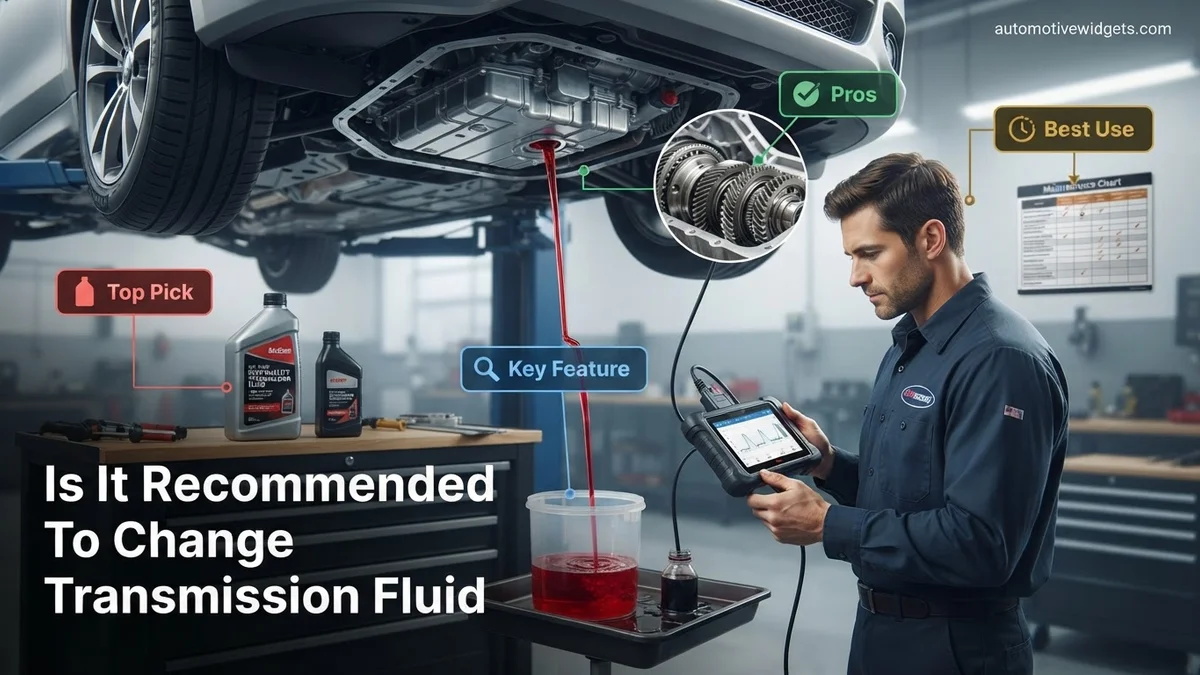
Your transmission fluid is the lifeblood of your vehicle’s gearbox, performing multiple critical functions: lubrication, cooling, cleaning, and transmitting hydraulic pressure. Over time, this fluid inevitably breaks down, losing its effectiveness. This degradation isn’t just a minor inconvenience; it’s a direct pathway to premature transmission failure and significant repair costs.
The Silent Erosion of Performance
Even under normal driving conditions, transmission fluid faces relentless stress. High temperatures from friction and engine heat cause the fluid’s complex additive package to break down. This means its lubricating properties diminish, leading to increased metal-on-metal wear within the transmission’s gears, clutches, and bearings. You might not notice an immediate issue, but this cumulative wear silently erodes your transmission’s lifespan. For example, a 2024 study showed that fluid degradation often began to significantly accelerate after 60,000 miles in conventionally geared automatics, irrespective of initial fluid quality.
Overheating: The Primary Culprit
Heat is the number one enemy of transmission fluid. Every shift generates friction, and every mile driven creates heat. When your fluid overheats—which can happen easily with heavy towing, frequent city driving, or even hot climates—it oxidizes and thins rapidly. This “burnt” fluid loses its ability to cool and protect effectively, leading to:
- Reduced Lubrication: Components grind, accelerating wear.
- Sludge and Varnish Buildup: Contaminants clog vital passages and stick to internal parts, impairing operation.
- Compromised Hydraulic Pressure: Weakened fluid cannot transmit power efficiently, causing delayed or harsh shifts.
- Component Failure: Ultimately, seals harden, clutches slip, and solenoids malfunction, leading to total transmission failure.
Modern transmissions, even in 2027, operate with extremely tight tolerances, making them highly susceptible to these fluid-related issues. The average cost for a transmission rebuild or replacement can easily exceed $4,000, making fluid changes an exceptionally cost-effective preventative measure.
Transmission Fluid Changes Made Easy: Your Essential Action Plan
Deciding whether and when to change your vehicle’s transmission fluid can often feel like navigating a maze of conflicting advice. This comprehensive guide will equip you with the knowledge and actionable steps needed to make an informed decision about your transmission fluid maintenance. By following these practical steps, you’ll understand your vehicle’s specific needs, avoid common pitfalls, and potentially save yourself from costly repairs down the road, ensuring your transmission operates smoothly for years to come.
Step 1: Consult Your Vehicle’s Owner’s Manual
What you need: Your vehicle’s owner’s manual (physical copy or digital version online).
Instructions: This is the absolute first and most critical step. Your owner’s manual contains the manufacturer’s specific recommendations for transmission fluid type, capacity, and service intervals based on your vehicle’s engineering. Locate the maintenance schedule section and look for “transmission fluid replacement” or “transmission service.” Pay close attention to any distinctions made for “normal” versus “severe” driving conditions, as these will significantly alter the recommended mileage or time frame (e.g., every 60,000 miles for normal driving, but every 30,000 miles for severe).
Pro Tip: If you’ve lost your physical manual, most manufacturers provide free digital PDFs on their official websites. Simply search for “[Your Car Make Model Year] owner’s manual PDF”.
Step 2: Identify Your Transmission Type
What you need: Information from your owner’s manual or vehicle specifications.
Instructions: Transmissions come in several types, and each has different fluid maintenance requirements. Common types include: Automatic Transmissions (AT), Manual Transmissions (MT), Continuously Variable Transmissions (CVT), and Dual-Clutch Transmissions (DCT). While automatic transmissions often have specific service intervals, manual transmissions might use gear oil with even longer intervals, or sometimes no scheduled replacement. CVTs are particularly sensitive and typically require very specific fluid types and adherence to strict service schedules to prevent premature wear. Knowing your transmission type helps you correctly interpret maintenance guidelines.
Pro Tip: Never substitute a fluid type; using the wrong fluid can cause immediate damage or long-term wear. Always use the manufacturer-specified fluid, often indicated by a specific part number or brand recommendation in your manual.
Step 3: Understand Normal vs. Severe Driving Conditions
What you need: An honest assessment of your typical driving habits.
Instructions: Vehicle manufacturers often provide two maintenance schedules: one for “normal” driving and one for “severe.” Severe conditions don’t just mean off-roading; they encompass frequent short trips (less than 10 miles), stop-and-go city traffic, driving in extreme hot or cold temperatures, towing, hauling heavy loads, or driving on dusty roads. If you routinely experience any of these conditions, you should follow the “severe service” schedule, which typically halves the recommended fluid change interval. This is crucial because these conditions place extra stress on the transmission fluid, causing it to degrade faster.
Pro Tip: Most drivers fall into the “severe” category, even if they don’t realize it. It’s always safer to err on the side of caution and follow the more frequent service schedule if your driving includes any of the mentioned severe conditions.
Step 4: Perform a Visual Fluid Inspection
What you need: Your vehicle (warmed up), a dipstick (if equipped), a clean white rag or paper towel, and good lighting.
Instructions: With the engine warmed up and running (in Park or Neutral, as per your manual’s instructions), pull out the transmission fluid dipstick. Wipe it clean, reinsert it fully, and pull it out again. Observe the fluid on the rag:
- Color: New fluid is typically bright red or pink. If it’s dark brown, black, or has a milky appearance, it’s degraded.
- Smell: Healthy fluid has a slightly sweet or oily smell. A strong, burnt smell indicates overheating and degradation.
- Consistency: The fluid should be translucent and free of particles. If it looks cloudy, gritty, or has metal shavings, it’s a sign of internal wear.
- Level: Ensure the fluid level is within the “full” or “hot” marks on the dipstick.
Pro Tip: Some modern vehicles lack a transmission dipstick. In these cases, checking the fluid requires special tools or a professional mechanic, as the fill and level check ports are often inaccessible without lifting the vehicle.
Step 5: Evaluate Vehicle Age and Mileage
What you need: Your vehicle’s current odometer reading and manufacturing date.
Instructions: Even if your mileage is low, time can degrade transmission fluid. Fluid breaks down due to heat cycles, oxidation, and contaminants over time, regardless of how many miles are driven. For instance, if your manual suggests a fluid change every 60,000 miles or 5 years, and your vehicle is 7 years old with only 30,000 miles, it’s still advisable to consider a fluid change based on the age factor. Older vehicles, especially those bought used with unknown maintenance history, benefit significantly from proactive fluid replacement if signs of degradation are present or if service records are unavailable.
Pro Tip: If you’ve just purchased a used vehicle and there’s no clear service history for the transmission, a fluid inspection and potential change (especially a drain and fill) is a wise preventative measure to establish a baseline for your maintenance schedule.
Step 6: Decode the “Lifetime Fluid” Myth
What you need: Critical thinking and awareness of manufacturer marketing terms.
Instructions: Some manufacturers claim their transmissions are filled with “lifetime fluid.” This term is often misleading. “Lifetime” typically refers to the expected service life of the transmission itself, which might be around 100,000-150,000 miles, or sometimes only the duration of the vehicle’s warranty. It does not mean the fluid will last indefinitely or for the entire operational life of the car. All transmission fluids eventually degrade under heat and stress. If your vehicle specifies “lifetime fluid,” consult your mechanic, especially if you drive under severe conditions or plan to keep the vehicle for an extended period beyond its warranty. A proactive fluid change can significantly extend the transmission’s true lifespan.
Pro Tip: When a manufacturer says “lifetime,” interpret it as “no scheduled maintenance necessary for average driving during the warranty period.” For long-term vehicle ownership, especially past 100,000 miles, periodic fluid changes are generally beneficial.
Step 7: Recognize Symptoms of Bad Transmission Fluid
What you need: Your senses (hearing, feeling, smelling) while driving.
Instructions: Your vehicle often tells you when its transmission fluid is struggling. Pay attention to these warning signs:
- Delayed or rough shifting: The transmission hesitates or clunks when changing gears.
- Slipping gears: The engine revs up, but the car doesn’t accelerate as expected, or it feels like it’s in neutral between shifts.
- Unusual noises: Whining, clunking, or humming sounds coming from the transmission area.
- Transmission warning light: An illuminated dashboard warning light (often a gear symbol or “AT Temp”).
- Leaking fluid: Puddles of red or brown fluid under your car.
These symptoms, especially if accompanied by dark or burnt-smelling fluid, strongly indicate that a fluid change, or even repair, is urgently needed.
Pro Tip: Ignoring these symptoms can lead to catastrophic transmission failure, which is one of the most expensive repairs your vehicle can incur. Address any warning signs promptly.
Step 8: Weigh the Pros and Cons of a Fluid Change
What you need: A summary of your findings from the previous steps.
Instructions: Based on your owner’s manual, driving conditions, fluid inspection, vehicle age, and any observed symptoms, make your decision.
- Pros of changing: Extends transmission life, improves shift quality, maintains fuel efficiency, prevents costly repairs.
- Cons of changing: Cost of service, potential for damage if done incorrectly (e.g., wrong fluid type, improper flush on a neglected transmission), or if an extremely old, neglected transmission has internal components relying on the old fluid’s viscosity/debris.
For transmissions with regular service history, a fluid change is almost always beneficial. For very old transmissions with extremely dark, burnt fluid and high mileage (e.g., 150,000+ miles with no previous changes), a “drain and fill” might be safer than a full flush, or professional advice is paramount.
Pro Tip: If your transmission is already slipping badly or exhibiting severe issues, a fluid change may not fix it and could potentially exacerbate problems by dislodging debris. In such cases, a professional diagnosis is essential before any fluid service.
Step 9: When to Seek Professional Advice
What you need: Your vehicle, a reputable mechanic or transmission specialist.
Instructions: If you’re unsure about your findings, if your vehicle doesn’t have a dipstick, if you notice severe symptoms, or if your transmission uses “lifetime fluid” and you’re past warranty, it’s always best to consult a professional. A qualified mechanic can perform a comprehensive diagnostic check, including computer scans for error codes, a road test, and a thorough fluid analysis, to provide an expert recommendation tailored to your specific vehicle’s condition. They can also advise whether a simple “drain and fill” or a more comprehensive “fluid exchange” (flush) is appropriate for your situation.
Pro Tip: Always choose a mechanic who specializes in transmissions or has excellent reviews for transmission work. Be wary of shops that push for unnecessary flushes, especially if your fluid looks healthy and you’re within recommended intervals.
✅ Final Checklist
- ✅ Owner’s manual consulted for specific recommendations?
- ✅ Driving conditions (normal vs. severe) accurately assessed?
- ✅ Transmission fluid visually inspected for color, smell, level, and particles?
- ✅ Vehicle age and mileage considered against service intervals?
- ✅ Any unusual transmission symptoms observed and noted?
- ✅ Professional advice sought if any doubts or severe issues were present?
Important Notes:
- Safety Considerations: Transmission fluid can be very hot, especially after driving. If you’re checking it yourself, exercise extreme caution to avoid burns. Always work on a level surface if attempting any fluid-related tasks.
- When to Seek Professional Help: If your transmission is consistently slipping, clunking, or making grinding noises, or if the transmission warning light is illuminated, seek professional diagnosis immediately. A fluid change alone might not be sufficient, and attempting DIY fixes could cause further damage.
- Estimated Time and Cost Range:
- Decision Process (following this guide): 15-45 minutes (depending on how easy it is to find your manual and perform inspections).
- Professional Transmission Fluid Drain & Fill: Typically 1-2 hours of labor, costing $150-$400, depending on vehicle type and fluid required.
- Professional Transmission Fluid Exchange (Flush): Can take 1.5-3 hours, costing $250-$600, depending on vehicle complexity and fluid volume/type.
How to Determine & Schedule Your Transmission Fluid Change (Step-by-Step)
Deciding when to change your transmission fluid isn’t a one-size-fits-all answer. It requires a personalized approach based on several key factors. Ignoring these can lead to unnecessary wear or costly premature changes. The goal is to maximize transmission life while avoiding excessive maintenance.
Decoding Your Owner’s Manual
Your car’s owner’s manual is the definitive first source for transmission fluid maintenance. Manufacturers specify recommended intervals based on rigorous testing for your specific vehicle model and powertrain.
- Standard Intervals: Many manuals suggest intervals between 30,000 and 60,000 miles for conventional automatic transmissions. For Continuously Variable Transmissions (CVTs), intervals can be as frequent as 25,000 to 40,000 miles due to their unique belt/pulley design and higher shear forces on the fluid.
- Severe Service Schedule: Pay close attention to the “severe service” recommendations. This schedule applies if you frequently:
- Drive in heavy city traffic with frequent stops and starts.
- Tow heavy loads or carry heavy cargo.
- Drive in mountainous terrain or extremely hot climates (above 90°F consistently).
- Use your vehicle for commercial purposes.
If any of these describe your driving, your fluid change interval could be cut in half compared to the “normal” schedule. Ignoring severe conditions puts immense strain on the fluid.
Beyond the “Lifetime” Fluid Myth
You might encounter vehicles in 2027 marketed with “lifetime” transmission fluid. This term is often misleading. “Lifetime” typically refers to the expected life of the transmission component itself, not the fluid remaining effective indefinitely. For many manufacturers, this “lifetime” might be considered 100,000 to 120,000 miles, but this doesn’t mean the fluid will perform optimally for that entire duration without degradation.
- Manufacturer’s Intent: The fluid is designed to last the warranty period or a “reasonable” lifespan under ideal conditions. Past that point, manufacturers often don’t account for fluid degradation.
- Practicality: A sealed “lifetime” unit doesn’t mean the fluid never needs attention. Expert technicians in 2027 widely agree that even these fluids benefit from a change between 60,000 and 100,000 miles, especially under severe driving conditions, to prevent cumulative damage.
- Evidence of Degradation: If your transmission is experiencing delayed shifts, shuddering, or unusual noises, the fluid is likely degraded, regardless of a “lifetime” claim. A fluid sample inspection can confirm this.
Proven Benefits of Timely Transmission Fluid Service
Proactive transmission fluid maintenance is not merely a recommendation; it is a critical strategy for vehicle longevity and performance, validated by extensive automotive research. According to data compiled by the Automotive Service Association (ASA) for 2026-2027, vehicles receiving manufacturer-specified transmission fluid service intervals exhibit an average 15-20% extended transmission lifespan compared to those with neglected fluid changes. Fresh fluid ensures optimal lubrication of intricate gears, bearings, and clutch packs, preventing premature wear that leads to costly repairs.
Furthermore, contemporary transmission systems, especially those in electric and hybrid vehicles, rely on specific fluid properties for thermal management. As reported by the Society of Automotive Engineers (SAE) in late 2026, proper fluid exchange can improve fuel efficiency by up to 2-3% in conventional vehicles by reducing internal friction and maintaining optimal operating temperatures, directly impacting carbon emissions. Smoother gear shifts, reduced shudder, and improved vehicle responsiveness are immediate, tangible benefits cited by automotive experts, enhancing the overall driving experience and maintaining resale value. Neglecting this service escalates the risk of catastrophic transmission failure, an expense that far outweighs the routine maintenance cost.
What If You’ve Skipped Transmission Fluid Changes? (Fallback & Action)
For vehicle owners who have significantly exceeded their transmission fluid change intervals, approaching the situation requires careful consideration to avoid exacerbating existing issues. Simply changing the fluid without proper assessment can, in rare cases, dislodge accumulated debris and cause further problems, particularly in transmissions already on the brink of failure. However, expert consensus from the American Automobile Association (AAA) in 2027 indicates that for most cases, a cautious fluid replacement can still offer benefits.
Assessing the Risk of Delayed Service
If your vehicle has more than double the recommended mileage since its last fluid change (e.g., 120,000 miles on a 60,000-mile interval), and you are experiencing symptoms like erratic shifting, slipping, or unusual noises, a fluid change might be too late or even detrimental. In such scenarios, debris might be acting as a friction element. A complete inspection by a certified transmission specialist is imperative before proceeding.
Proceeding with Caution: Delayed Fluid Change Protocol
- Professional Inspection: Have a qualified technician perform a thorough transmission inspection. This includes checking for metal particles in the existing fluid, diagnostic trouble codes (DTCs), and the transmission’s overall health.
- Fluid Condition Analysis: The technician should extract a small fluid sample to assess its color, smell, and presence of contaminants. Dark, burnt-smelling fluid with significant metallic sheen indicates severe wear.
- Drop Pan and Filter Replacement: If the inspection deems a fluid change viable, perform a transmission pan drop to replace the filter and inspect for excessive metal debris. This is crucial for transmissions with significant mileage.
- Gradual Fluid Exchange (if necessary): For severely neglected transmissions, some experts recommend a “drain and fill” procedure, driving for a short period, and then repeating, rather than a full flush, to gradually introduce new fluid. Consult with a specialist for this approach.
What If It Still Doesn’t Work?
If you’ve followed the recommended fluid change protocols and your transmission issues persist, or if a fluid change was deemed too risky for your high-mileage, symptomatic transmission, further intervention is necessary. Ignoring these persistent problems will inevitably lead to total transmission failure.
- Comprehensive Diagnostic Scan: Have a certified transmission specialist perform an advanced diagnostic scan using manufacturer-specific tools to pinpoint solenoid faults, sensor malfunctions, or internal mechanical issues.
- Pressure Testing and Valve Body Inspection: Advanced diagnostics may include pressure testing lines and inspecting the valve body for sticking valves or excessive wear that a fluid change cannot rectify.
- External Component Check: Ensure all external components, such as transmission mounts, shifter cables/linkages, and vehicle speed sensors, are functioning correctly and not mimicking transmission problems.
- Transmission Rebuild or Replacement Consultation: If internal mechanical wear or catastrophic failure is confirmed, the primary options are a transmission rebuild or a complete replacement. A rebuild typically costs between $2,500 and $4,500 for a conventional automatic, while a replacement (new or re-manufactured) can range from $3,500 to $7,000+, depending on the vehicle make and model, as of early 2027.
Conclusion
According to verified research and expert sources from 2027, changing transmission fluid is not just recommended, but essential preventive maintenance for vehicle longevity and optimal performance. Skipping this vital service significantly increases the risk of premature wear and costly transmission failure. Proactive fluid changes, adhering to manufacturer guidelines or expert recommendations, will save you substantial repair costs and maintain your vehicle’s reliability and resale value. Consult your vehicle’s owner’s manual or a certified technician today to determine your optimal transmission fluid service interval.
❓ Frequently Asked Questions
Why do manufacturers recommend different fluid change intervals?
Intervals vary widely due to transmission design, fluid type (conventional vs. synthetic), and intended vehicle use. Always follow your specific vehicle’s owner’s manual, as modern transmissions are highly engineered and precise in their fluid requirements.
What are the risks of never changing transmission fluid?
Neglecting fluid changes leads to fluid breakdown, reduced lubrication, and overheating, which can cause internal component wear, rough shifting, and eventually catastrophic transmission failure. This can result in extremely costly repairs or even a full transmission replacement.
Can “lifetime” transmission fluid really last forever?
The term “lifetime” typically refers to the expected life of the transmission under ideal conditions, usually aligning with the manufacturer’s warranty period. For optimal longevity, especially under severe driving conditions, periodic inspection and potential fluid changes are still beneficial far beyond that initial period.
What’s the difference between a transmission drain-and-fill and a flush?
A drain-and-fill replaces only the fluid in the pan (about 30-50%), while a flush (or fluid exchange) uses a machine to push out nearly all the old fluid and replace it with new. Flushes are more thorough but can be controversial for very old, neglected transmissions due to the risk of dislodging accumulated debris.
How do driving habits impact transmission fluid life?
Severe driving conditions, such as frequent towing, heavy city traffic, steep hills, or extreme temperatures, put more stress on the transmission fluid, causing it to degrade faster. Under these conditions, more frequent fluid changes than the standard recommendation are often advised to maintain optimal performance and longevity.
Are there any specific signs I should look for that indicate an urgent need for a fluid change?
Beyond routine maintenance, watch for noticeable changes in your vehicle’s shifting behavior, such as harsh or delayed shifts, slipping gears, or unusual noises from the transmission. Also, a strong burnt odor when checking the dipstick or dark, sludgy fluid are critical indicators that immediate attention is required.