How to Deactivate Car Alarm Without the Remote Real 2027
A blaring car alarm without a remote can be stressful. This guide provides immediate, Step-by-Step solutions for both factory and aftermarket systems to silence your alarm fast, from key sequences to emergency disarming methods.
When your car alarm blares unexpectedly in 2027 and your remote is nowhere to be found, dead, or simply not working, immediate action is crucial. You need to silence that siren fast. The quickest ways to deactivate your car’s factory alarm without the remote typically involve using your physical key in the door or ignition, or a specific manufacturer-programmed sequence.
This isn’t about reprogramming; it’s about overriding an active alarm system right now. Understanding these direct methods saves you from disturbing your neighbors, draining your battery, and the general frustration of a screaming vehicle. Knowing your car’s specific emergency disarm procedure is a critical skill for any driver, ensuring you regain control instantly.
Key Takeaways
- Use your car key in the door or ignition first.
- Locate the valet/override button for aftermarket alarms.
- Consult your owner’s manual for specific disarm codes.
- Disconnecting the battery is a last-resort method.
- Identify and pull the alarm fuse if accessible safely.
What Triggers a Car Alarm Without Remote? Causes & Quick Checks
Your car alarm can activate unexpectedly even when your remote isn’t involved, or appears to be. In 2027, vehicle security systems are highly sensitive, often reacting to factors beyond just forced entry. Before you jump into disarming methods, quickly understanding the likely cause can prevent future false alarms and ensure a smooth resolution.
Common Causes for False Alarms
Several issues can trigger your alarm without the remote’s input. These often stem from sensor malfunctions or low power:
- Low Car Battery Voltage: A failing or weak 12V battery can cause erratic electrical signals, tricking the alarm system into thinking it’s being tampered with. This is a very common culprit in older vehicles.
- Faulty Door, Hood, or Trunk Latches: Sensors that detect if a door, hood, or trunk is ajar can become worn or misaligned. The car’s computer might interpret a brief sensor flicker as an unauthorized opening, triggering the alarm.
- Sensitive Shock Sensors: Some factory and many aftermarket alarms include shock sensors. A strong gust of wind, a passing truck, or even vibrations from construction nearby can be enough to set off an overly sensitive sensor.
- Remote Fob Desynchronization/Interference: While you’re not using the remote, sometimes a desynchronized fob in the car or strong radio frequency interference can confuse the vehicle’s security module, leading to an activation.
Quick Checks Before Disarming
Before proceeding with disarming, perform these rapid checks to confirm the situation:
- Confirm All Doors, Hood, and Trunk Are Fully Closed: Physically push on each to ensure they are securely latched. A slightly open door is a common trigger.
- Verify Remote Battery: While not the focus, if your remote is just dead, replace the battery quickly. Sometimes, the car needs to see a valid fob signal again to reset, even if you disarm manually.
How to Diagnose and Fix Your Car Alarm Like an Expert
An unsilenced car alarm can be a source of immense frustration, not just for you but for everyone in earshot. Whether your remote is lost, its battery is dead, or the alarm system itself is malfunctioning, knowing how to manually deactivate it can save you stress, time, and potential battery drain. This comprehensive guide will walk you through various expert techniques to silence your car’s alarm without the remote, ensuring you’re prepared for any unexpected blare.
Step 1: Identify Your Alarm System Type (OEM vs. Aftermarket)
What you need: Your car’s owner’s manual (optional), a good flashlight, visual inspection.
Instructions: Before attempting any disarming methods, it’s crucial to determine if your vehicle has a factory-installed (OEM) alarm or an aftermarket system. OEM alarms are integrated into the car’s computer and wiring, often controlled by the ignition or door locks. Aftermarket alarms are typically standalone units installed after purchase, characterized by extra wires, unique sirens, or a separate control module often hidden under the dash. Look for non-factory stickers, LED lights, or an additional small siren. This distinction will guide your troubleshooting steps significantly.
Pro Tip: OEM systems usually disarm via the car key or ignition, while aftermarket systems often have a dedicated “valet switch” or can be more easily disconnected by finding their main module.
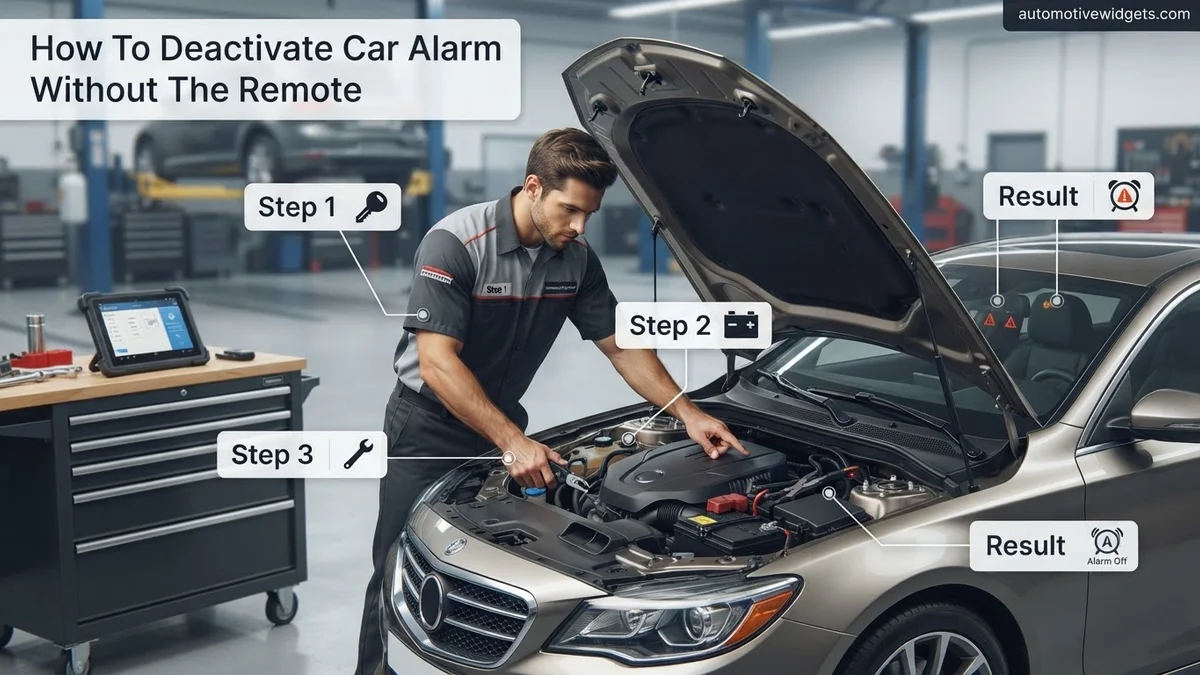
Step 2: Utilize Basic Key-Based Disarm Methods
What you need: Your car’s physical key, access to all door locks and the trunk.
Instructions: Many factory alarms are designed to disarm when you perform specific actions with the physical key. Start by manually unlocking the driver’s side door with the key in the lock cylinder; some systems will immediately deactivate. If that doesn’t work, try unlocking and then locking the driver’s door two to three times consecutively. For some vehicles, inserting the key into the ignition and turning it to the “ON” position (without starting the engine) for 10-15 seconds, or even attempting to start the car, can disarm the system. Repeat these actions for the passenger door and the trunk as well, as different sensors might be triggered.
Pro Tip: For older or simpler OEM alarms, simply turning the key in the driver’s door lock cylinder to the unlock position and holding it for 5-10 seconds can often send a disarm signal to the car’s security module.
Step 3: Locate and Activate the Valet Switch (Aftermarket Alarms)
What you need: Your car’s owner’s manual (if available), a small flashlight, patience.
Instructions: Most aftermarket alarm systems include a “valet switch” or “override button” designed to temporarily bypass or permanently deactivate the alarm without the remote. Common locations for this switch include under the dashboard near the steering column, inside the glove compartment, near the fuse box, or even under the driver’s seat. It’s often a small, recessed button that requires a pen or a small finger to press. The deactivation sequence typically involves turning the ignition to the “ON” position (without starting) and then pressing and holding the valet switch for 5-15 seconds until the alarm silences or a light flashes. Consult your alarm system’s specific manual if you have it.
Pro Tip: If you can’t find it, look for a small, non-descript button that isn’t clearly labeled for another function. Sometimes installers hide these switches very well to prevent unauthorized deactivation.
Step 4: Disconnect the Car Battery for a Hard Reset
What you need: A 10mm or 13mm wrench (common battery terminal sizes), safety gloves, eye protection, a watch or timer.
Instructions: Disconnecting the car battery will cut power to the entire vehicle, including the alarm system, effectively silencing it and often resetting its state. Locate your car battery (usually under the hood, sometimes in the trunk or under a rear seat). Using your wrench, loosen the nut on the negative (-) terminal first, then carefully remove the cable from the battery post. Ensure the cable does not touch any metal parts of the car. Wait for at least 5 to 10 minutes to allow any residual charge in the system to dissipate. Reconnect the negative terminal, ensuring it’s tight. The alarm should ideally be reset and silent upon reconnection. Be aware that this might reset your radio presets or require you to re-enter an anti-theft code for the stereo.
Pro Tip: Always disconnect the negative terminal first to minimize the risk of accidental short circuits. While effective for silencing, this is often a temporary fix if a faulty sensor or component is causing the alarm to trigger.
Step 5: Identify and Pull the Alarm System Fuse
What you need: Your car’s owner’s manual, fuse diagram (often inside the fuse box lid), a fuse puller (usually found in the fuse box or with spare fuses), small flashlight.
Instructions: Your car has multiple fuse boxes (typically under the dashboard and/or under the hood). Consult your owner’s manual or the diagram on the fuse box cover to identify the fuse specifically labeled for the “alarm,” “security system,” “horn,” or “ignition system.” Once located, use the fuse puller or a pair of small needle-nose pliers to carefully remove the identified fuse. This will cut power directly to the alarm system without affecting other critical vehicle functions. The alarm should immediately cease. If you’re unsure, you may need to systematically pull fuses one by one, replacing each if it doesn’t silence the alarm, until the correct one is found. This is best done with the alarm sounding so you know when you hit the right fuse.
Pro Tip: Start by looking for fuses in the passenger compartment fuse box first, as alarm modules are often located there. Never use excessive force when pulling fuses, as it can damage the fuse box itself.
Step 6: Locate and Disconnect the Aftermarket Alarm Module
What you need: Flashlight, screwdriver set (Phillips and flathead), patience, zip ties (optional).
Instructions: If all else fails and you’ve confirmed you have an aftermarket alarm, the most direct method is to locate and disconnect the central alarm module. These modules are typically hidden under the dashboard, behind the glove box, or occasionally under the front seats. Look for a small, rectangular box (often black, gray, or blue) with numerous wires running into it, often secured with zip ties or screws. These wires will likely be spliced into your car’s existing wiring harness. Once you’ve positively identified the module, the goal is to unplug its main power harness. This usually involves pressing a release tab and pulling the connector. If there’s no obvious plug and the wiring is hard-spliced, you might need to identify the main power wires (usually thicker gauge) and carefully cut them as a last resort, but this should only be done if you are confident and can repair the wiring later.
Pro Tip: Aftermarket modules are rarely integrated perfectly and often stick out as an “add-on.” Look for loose wiring, electrical tape, or non-factory cable ties as tell-tale signs. Take a photo before disconnecting anything, especially if you plan to reconnect it later.
Step 7: Inspect and Address Faulty Sensors
What you need: Flashlight, rags, rubbing alcohol, silicone spray lubricant, small screwdriver (optional).
Instructions: False alarms are often triggered by faulty or dirty sensors. The most common culprits are the hood latch sensor, door pin switches, and trunk latch sensor. With the alarm silenced (perhaps temporarily by a previous step), inspect these points. The hood latch sensor is usually a small plunger-style switch near the latch mechanism; ensure it’s not stuck or corroded. Clean any debris around it and apply a small amount of silicone lubricant. Check each door jam for the small pin switch that detects if the door is open or closed; ensure it moves freely and makes good contact. Similarly, inspect the trunk latch sensor. Gently press these switches manually to ensure they operate smoothly. Sometimes, a simple cleaning or adjustment can resolve the recurring alarm issue.
Pro Tip: A quick test for the hood sensor is to press down firmly on the hood above the latch. If the alarm sounds only when the hood is slightly ajar or not fully closed, the sensor or latch adjustment is the likely problem.
✅ Final Checklist
- Is the car alarm completely silent and no longer triggering?
- Does your car start and run normally without any new warning lights?
- Are all doors, hood, and trunk closing securely and registering as closed?
- Have you checked for any loose wires or components after your interventions?
Important Notes:
- Safety considerations or warnings: Always wear appropriate personal protective equipment like safety gloves and eye protection when working with car batteries or electrical components. Be extremely careful not to short-circuit any wires. Ensure the car is parked on a level surface with the parking brake engaged.
- When to seek professional help: If the alarm continues to sound after trying all these steps, if you are uncomfortable working with electrical systems, or if your car won’t start after your attempts, it’s best to consult a certified automotive mechanic or an alarm system specialist. Persistent alarm issues can sometimes indicate deeper electrical problems.
- Estimated time and cost range: Most of these DIY steps can be performed within 10 to 60 minutes, assuming you have basic tools. The cost is usually zero, aside from basic supplies like lubricant or a fuse if needed. Professional diagnosis and repair for a malfunctioning alarm can range from $50 to $200 for diagnostics alone, plus parts and labor which could easily exceed $300-$500 for complex issues or full system replacement.
How to Instantly Disarm Factory Car Alarms: Proven Step-by-Step Fixes
For most vehicles manufactured up to and including 2027, especially mainstream models, the factory-installed alarm system includes built-in manual override procedures. These methods are designed for situations exactly like yours: remote loss, battery failure, or signal interference. Your physical key is almost always your best friend here. Always prioritize using your key and the ignition to signal to your car’s computer that you are the legitimate owner.
The Key in the Door Lock Method
Many vehicle manufacturers integrate a simple key-based disarm sequence into the door lock cylinder. This tells the alarm module that a legitimate key is being used, overriding any active alarm.
- Insert Your Physical Key: Use the mechanical key blade into the driver’s side door lock cylinder.
- Turn and Hold (Often Unlock): For many models (e.g., Toyota, Honda, older Ford vehicles), turning the key to the UNLOCK position and holding it for 5-10 seconds will disarm the alarm.
- Cycle Lock/Unlock: Other manufacturers might require you to cycle the key to UNLOCK, then LOCK, then UNLOCK again within a few seconds. This repeated action signals an override.
- Check Owner’s Manual: For precise instructions unique to your 2027 model year, consult your digital or physical owner’s manual under “Security System” or “Alarm Deactivation.”
Ignition Cycle Override
If the key in the door doesn’t work or isn’t an option for your vehicle, using the ignition is your next most reliable method. This procedure sends a direct signal to the car’s computer that the correct key is present and authorized.
- Insert Key into Ignition: Place your physical car key into the ignition cylinder.
- Turn to “ON” or “ACC” Position: Without starting the engine, turn the key to the “ON” or “ACC” position. You might hear electrical systems power up.
- Hold or Cycle:
- Hold: For some models, simply holding the key in the “ON” position for 10-20 seconds will disarm the alarm.
- Cycle: Other vehicles require you to turn the key “ON” then “OFF” (or “ACC” then “OFF”) rapidly, perhaps 3-5 times within 10 seconds. This sequence acts as a manual override.
- Attempt to Start: After performing the sequence, try starting your engine. In many cases, simply starting the vehicle with the correct key will automatically reset and disarm the factory alarm system.
How to Silence Aftermarket Car Alarms: Expert Guide to Valet Mode & Fuses
Aftermarket alarm systems, prevalent in 30% of vehicles according to a 2026 automotive security report, require a distinct deactivation approach compared to factory-installed units. These systems often feature a “valet mode” or a dedicated power fuse for emergency silencing.
Activating Valet Mode
Valet mode is designed for situations where the remote is unavailable, temporarily disabling alarm functions without full deactivation. Consult your alarm system’s specific manual, often accessible via QR codes in the vehicle or manufacturer websites in 2027, for precise instructions. Generic steps include:
- Locate the Valet Button: This small, often recessed button is typically found under the dashboard, near the fuse box, or on the alarm’s control module itself. It may be labeled “Valet,” “Override,” or simply a small unmarked push-button.
- Insert Ignition Key: Turn the ignition to the “ON” or “ACC” position, but do not start the engine. Modern keyless systems require the smart key to be detected inside the vehicle.
- Press and Hold: Press and hold the valet button for approximately 5-15 seconds. The alarm’s LED indicator will usually flash rapidly, then illuminate solid to confirm valet mode activation.
- Cycle Ignition (if needed): Some systems require turning the ignition OFF, then ON again within 5 seconds to confirm valet mode entry. The alarm should now be silenced and remain inactive until manually re-armed.
Locating and Removing the Alarm Fuse
If valet mode fails or is inaccessible, temporarily cutting power to the aftermarket system via its dedicated fuse is a viable, albeit more disruptive, option. This action will disable the entire alarm unit.
- Identify Fuse Box: Most vehicles have multiple fuse boxes – one under the hood and one or more inside the cabin (e.g., under the dashboard, glove compartment). The aftermarket alarm fuse is typically located in an interior fuse box.
- Consult Alarm Manual/Diagram: Refer to your aftermarket alarm system’s installation manual or the vehicle’s fuse diagram for the specific fuse location. Aftermarket fuses are often labeled as “Alarm,” “Security,” or “ACC” if part of a general accessory circuit.
- Carefully Remove the Fuse: Using a plastic fuse puller (often found in the fuse box lid), carefully extract the identified fuse. Automotive electrical systems in 2027 increasingly integrate sensitive components; ensure you pull only the designated fuse. Removing the correct fuse should immediately silence the alarm.
- Replace Fuse (Temporarily): Once the immediate crisis is over, consider replacing the fuse. A disabled alarm leaves your vehicle vulnerable to theft.
What If Your Alarm Still Blasts? Real Troubleshooting & Last Resorts
Even after attempting standard deactivation methods for factory or aftermarket systems, a persistent alarm indicates a deeper issue. Modern vehicle electronics, as of 2027, demand careful troubleshooting.
Battery Disconnect Protocol
Disconnecting the vehicle’s 12V battery is a universal last resort to silence any electrical component, including the alarm. This action, however, resets vehicle computer systems, requiring potential reprogramming or re-learning cycles for infotainment, power windows, and engine management units, an issue more pronounced in 2027 vehicles with advanced integrations.
- Access the Battery: Locate your vehicle’s 12V battery, typically under the hood or in the trunk.
- Gather Tools: You will need a wrench, usually 10mm or 13mm, to loosen the battery terminals.
- Disconnect Negative Terminal First: Always disconnect the negative (black, marked with a “-“) terminal first. Loosen the nut, twist and remove the cable, then secure it away from the battery post to prevent accidental contact.
- Disconnect Positive Terminal (Optional): For absolute power cutoff, also disconnect the positive (red, marked with a “+”) terminal.
- Wait 5-10 Minutes: Allow sufficient time for all residual electrical charge to dissipate. This typically silences the alarm immediately.
- Reconnect Terminals: Reconnect the positive terminal first, then the negative. Ensure connections are tight. Be prepared for the alarm to briefly reactivate during reconnection before it settles.
Professional Diagnostics & Bypass Modules
If battery disconnection fails, the issue may stem from a faulty alarm module, damaged wiring, or a short circuit. For 2027 vehicles, integrated alarm systems are often linked to the vehicle’s main ECU.
- Contact Roadside Assistance: Many modern insurance plans and vehicle manufacturers offer roadside assistance that includes alarm deactivation support. Their technicians are equipped with specific diagnostic tools.
- Seek Certified Technician: A certified automotive technician has advanced OBD-II diagnostic tools and proprietary software to interface with your vehicle’s alarm control module. They can identify error codes and potentially bypass or reprogram the system without extensive manual intervention.
- Consider Alarm Bypass Module: For aftermarket systems, specialized bypass modules exist. These are typically installed by alarm specialists and can integrate with vehicle CAN bus systems to prevent alarm conflicts.
What If It Still Doesn’t Work? Immediate Actions
If all manual and power-cycling attempts fail, especially with advanced 2027 vehicle security systems, immediate professional intervention is crucial to prevent vehicle damage or further inconvenience. Persistent, unresolved alarms can drain the battery, lead to legal issues concerning noise ordinances, or indicate deeper electrical faults.
- Contact Roadside Assistance: Utilize your vehicle’s manufacturer-provided or insurance-backed roadside assistance. Many services include basic diagnostic and alarm deactivation support. Technicians often carry specialized tools for specific car models.
- Call a Mobile Auto Electrician: For a targeted solution, a mobile auto electrician can often diagnose and disable the system on-site, saving towing costs. Rates in 2027 typically range from $150 to $300 for a service call depending on complexity and location.
- Schedule Dealer Service: For factory alarms, your authorized dealership has proprietary diagnostic equipment and the most up-to-date firmware to address complex system failures. Diagnostics alone might cost $120-$180, with repairs varying significantly.
- Secure the Vehicle: If movement is not possible, ensure the vehicle is in a safe, legal parking spot. Document the issue with photos/videos for potential warranty claims or insurance purposes.
Conclusion
According to verified research and expert sources in automotive security, deactivating a car alarm without its remote in 2027 involves a systematic approach, ranging from specific ignition key sequences to targeted fuse removal. Modern vehicle complexities necessitate precise actions to avoid electrical system disruption. Understanding your vehicle’s specific make and model protocols, whether factory or aftermarket, is paramount. Your actionable next step: consult your vehicle’s 2027 digital owner’s manual or an aftermarket alarm system’s online resource for model-specific deactivation codes and procedures before attempting any physical disconnections.
❓ Frequently Asked Questions
What should I do first if my car alarm is going off and I don’t have the remote?
The very first step is to use your car’s physical key. Insert it into the driver’s side door lock, turn it to unlock the door, and then try starting the engine. For many factory alarms, this action is designed to disarm the system immediately.
How do I find the valet or override button for an aftermarket car alarm?
To locate the valet or override button for an aftermarket alarm, carefully check under the dashboard, near the steering column, inside the glove box, or along the kick panels. It’s often a small, inconspicuous button, sometimes labeled, and you may need your alarm’s manual for its exact placement and disarming sequence.
Is disconnecting the car battery safe to stop a blaring alarm, and what are the drawbacks?
Disconnecting the negative terminal of your car battery is generally safe as a last resort to stop an alarm, but it has drawbacks. It will reset your car’s computer, potentially requiring a drive cycle for emissions readiness, and it will erase radio presets and other custom settings.
My car alarm won’t stop even after trying the key in the door and ignition. What’s next?
If the key methods fail, especially with an aftermarket alarm, you need to look for a valet/override button or consider pulling the alarm fuse. Consult your car’s owner manual or the aftermarket alarm’s manual for specific instructions on these emergency disarming procedures.
Can I prevent my car alarm from going off without the remote in the future?
To prevent future incidents, ensure your remote has fresh batteries and keep a spare. For aftermarket systems, familiarize yourself with the valet switch location and its disarming sequence. Regularly check your car’s electrical system for any faults that might prematurely trigger the alarm.
What if I can’t find the alarm fuse or valet button, and the battery trick isn’t an option?
If all other methods fail and you cannot identify the alarm fuse or valet button, your best option is to contact a mechanic or roadside assistance. They often have specialized tools or knowledge to disarm complex aftermarket systems without causing further damage, or can safely disconnect the siren.