
How to Get Rid of Fog on Windshield When Raining 2026
Windshield fog during rain is caused by a rapid temperature and humidity differential between the inside and outside of your vehicle. Turn on your air conditioner, switch to fresh air mode, and direct airflow to the windshield to instantly eliminate moisture and restore clear visibility.
To instantly clear fog from your windshield while driving in the rain, turn on your vehicle’s air conditioning, switch off air recirculation, and direct the airflow entirely toward the glass. In modern 2026 vehicles equipped with smart climate systems, pressing the dedicated defrost button automatically executes these exact settings to balance humidity.
Driving through a downpour with zero visibility is a terrifying experience. When moisture rapidly clouds your glass, you need an immediate, foolproof method to restore your line of sight without fumbling through confusing buttons or wasting precious seconds.
Key Takeaways
- Turn on the A/C system to actively pull humidity out of the cabin air.
- Switch your ventilation from recirculation mode to fresh air mode immediately.
- Adjust the cabin temperature to match the outdoor weather conditions.
- Keep a clean microfiber cloth in your glove box for wiping away immediate residue.
- Clean your windshield interior regularly to prevent oily films that trap moisture.
What Causes Windshield Fog During Rain
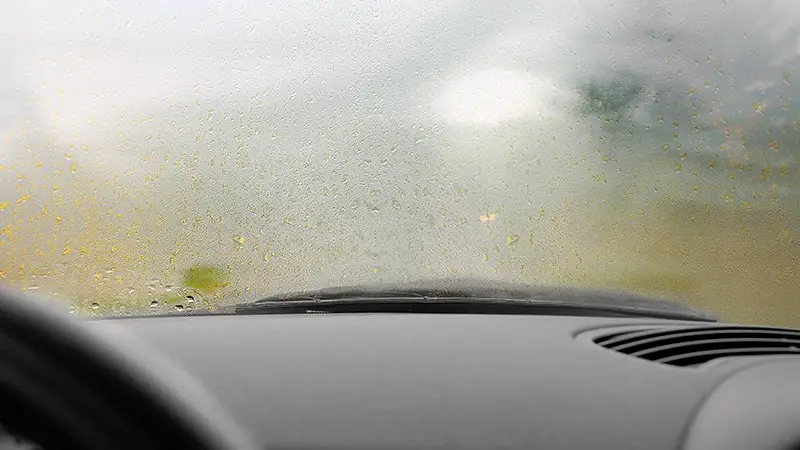
Understanding the science behind window condensation helps you combat it effectively. Fog forms when warm, humid air inside your car hits a cold windshield that is chilled by rain and wind.
The Science of Moisture and Temperature
Your breath, wet clothing, and dripping umbrellas continuously pump moisture into the cabin air. When the outside temperature drops due to rain, the glass cools down significantly. As warm, moisture-laden cabin air makes contact with this cold glass surface, it instantly reaches its dew point. This causes water vapor to condense into microscopic droplets, instantly blocking your view.
Relative Humidity Inside the Cabin
On a rainy 2026 commute, cabin humidity levels often spike above 80 percent within minutes of closing your doors. Without active dehumidification, that trapped moisture has nowhere to go. It continuously cycles through your vehicle’s interior, making passive wiping with a cloth completely useless because the residue immediately returns.
From Start to Finish: Foggy Windshields Explained
Driving in the rain is challenging enough, but when your windshield suddenly fogs up, it creates an immediate safety hazard that blinds you to the road ahead. This comprehensive guide walks you through the exact science and practical actions needed to clear condensation quickly and keep it from returning, ensuring optimal visibility during downpours.
Step 1: Diagnose the Temperature Differential
What you need: Your vehicle’s climate control dashboard and your powers of observation.
Instructions: Windshield fog occurs due to the exact science of temperature differentials and dew points. When it rains, the air outside is cool and humid, while the air inside your car is warm and laden with moisture from your breath, wet clothes, and damp shoes. When this warm, moist indoor air hits the cold glass of the windshield, the moisture instantly condenses into tiny water droplets—fog. Before touching any buttons, recognize whether the fog is on the inside or the outside of the glass. If you wipe it with your finger and it smears, the fog is on the inside. If the exterior wipers clear it momentarily, it is on the outside.
Pro Tip: Never use your windshield wipers for interior fog; you will only create a dangerous smudge that smears oils and moisture across the driver’s primary line of sight.
Step 2: Turn Off Air Recirculation Immediately
What you need: Access to your vehicle’s ventilation control panel.
Instructions: Locate the air recirculation button on your dashboard, which is typically marked with an icon of a car featuring a looping arrow inside it. If this light is illuminated, your car is trapping the air inside the cabin and constantly recycling it. Because you and your passengers continuously exhale moisture, keeping recirculation on is the number one culprit that aggravates rainy-day fogging. Press the button to turn recirculation off. This action forces your ventilation system to pull fresh, drier air from the outside environment into the cabin, immediately reducing the overall humidity level inside your car.
Pro Tip: Drivers often leave recirculation on to block outside exhaust smells, but in the rain, fresh outside air is your primary weapon against condensation.
Step 3: Activate the Defroster Mode
What you need: Your main climate control dial or touchscreen mode selector.
Instructions: Turn your airflow mode selector specifically to the windshield defroster setting, which is universally represented by an icon showing a rectangle shape with three upward-curving wavy arrows. Selecting this mode automatically redirects the majority of your vehicle’s airflow upward directly against the interior surface of the front windshield. In many modern cars, switching to the defroster mode will automatically engage the air conditioning compressor as well. This is completely normal and intentionally designed to dry out the air before it reaches the glass, speeding up the clearing process exponentially.
Pro Tip: Do not direct air exclusively to your face or feet when fighting heavy rain fog; every cubic foot of air needs to sweep across that glass.
Step 4: Crank Up the Fan Speed
What you need: Your blower motor fan speed control knob or digital buttons.
Instructions: Increase your fan speed from low or medium to a higher setting, such as level three or four out of five. While the sudden rush of air might be slightly noisy, high air velocity is crucial for physical evaporation. The moving air current sweeps away the saturated boundary layer of air resting directly against the glass, replacing it with fresh air capable of absorbing more moisture. Maintain this high fan speed until the windshield is completely crystal clear across the entire driver and passenger viewing zones, which typically takes anywhere from 30 to 60 seconds.
Pro Tip: If the noise bothers you, reduce the fan speed only after the fog has fully vanished and you have driven for a few miles to stabilize cabin humidity.
Step 5: Adjust the Temperature Settings
What you need: Your heater and air conditioning temperature dials.
Instructions: Adjust your temperature control based on the current weather conditions. If the rain is warm and humid, you will want to set the air conditioning to a cool setting because cold air holds less moisture and chills the glass to match the outside temperature. Conversely, if the rain is freezing cold, you must use the heater. While warm air holds more moisture, blowing heated air directly onto a freezing windshield will initially make the fog worse until the glass warms up past the dew point. Start with a moderate temperature, and gradually increase the heat as the glass warms up evenly.
Pro Tip: Patience is key when using heat on freezing rainy days; blasting maximum heat instantly onto freezing glass can occasionally cause older windshields to crack from thermal shock.
Step 6: Crack Your Windows Open Slightly
What you need: Power window controls or manual crank handles.
Instructions: Lower at least two windows on opposite sides of the car by approximately one-half inch to one inch, depending on how hard it is raining. If rain guards or vent visors are installed on your vehicle, you can open them slightly more without letting water inside. Opening the windows creates a cross-breeze and allows the trapped, humid cabin air to escape rapidly to the outside atmosphere. This mechanical ventilation works in tandem with your car’s HVAC system, instantly dropping the relative humidity inside the vehicle and clearing stubborn fog within seconds.
Pro Tip: On vehicles without power windows in the rear, simply cracking the front driver and passenger windows just a sliver is enough to create a low-pressure draft.
Step 7: Wipe Down Dirty Glass Surfaces
What you need: A clean microfiber cloth or a specialized glass-cleaning pad.
Instructions: Fog clings aggressively to microscopic films of oily residue, dust, and outgassed plastic chemicals that accumulate on the inside of your windshield over time. If your windshield fogginess persists despite using the defroster, pull over safely to a dry location. Take a clean microfiber towel and thoroughly wipe down the interior glass. Removing this invisible layer of grime deprives moisture droplets of the anchoring surface they need to form condensation in the first place, ensuring your defroster works much faster in the future.
Pro Tip: Never use paper towels or facial tissues for this task, as they leave behind lint fibers and can scratch tinted or specialized acoustic windshield coatings.
Step 8: Apply an Anti-Fog Treatment
What you need: Commercial anti-fog spray, shaving cream, or a diluted dish soap solution, plus clean microfiber towels.
Instructions: For a long-term preventative solution, clean your interior windshield thoroughly and let it dry. Apply a coin-sized amount of commercial anti-fog liquid or a tiny smear of standard shaving cream to a microfiber cloth. Buff the product evenly across the entire interior surface of the windshield using circular motions. Let it dry to a slight haze, then buff it off completely with a second clean, dry microfiber towel. This leaves behind a microscopic surfactant barrier that prevents water molecules from beading up into visual fog, keeping your view crystal clear for weeks.
Pro Tip: Avoid using gel-based shaving creams or strongly scented soaps, as they leave behind a greasy residue that creates blinding night glare when headlights hit the glass.
✅ Final Checklist
- Air recirculation mode is turned off, allowing fresh outside air to enter the cabin.
- Defroster airflow mode is actively engaged and directed at the windshield.
- Fan speed is set high enough to maintain constant air movement across the glass.
- Cabin temperature is properly adjusted to match or counteract the external dew point.
- Interior windshield surface is clean and free of oily residue or dust films.
Important Notes:
- Never drive with impaired visibility; if fog becomes uncontrollable, safely pull over to the shoulder with your hazard lights flashing until visibility is restored.
- If your defroster fails to work entirely or blows only cold air despite a warm engine, your heater core, blend door actuator, or blower motor may require professional mechanic repair.
- Estimated time to clear fog using these steps is 30 to 90 seconds. Preventative anti-fog treatments cost between $5 and $15 and last for several weeks per application.
How to Fix Foggy Windows with Proper HVAC Settings
Your vehicle’s climate control system is your ultimate weapon against rain-induced condensation. You just need to configure it correctly to pull moisture out of the air.
Activating the A/C and Adjusting Temperature
Many drivers make the mistake of turning on the heater only, which actually makes rainy-day fog worse by introducing more warm moisture. Instead, follow this precise sequence:
- Turn on your air conditioning compressor, even if you need to set the temperature to warm.
- Adjust the fan speed to medium-high to quickly move air across the glass.
- Direct the airflow exclusively to the windshield vents.
Turning Off Air Recirculation
Keeping your air set to recirculate traps your exhaled breath and wet clothing moisture inside the car. Always press the fresh air intake button during rainy conditions. This draws dry air from outside, passes it through the A/C evaporator to strip out moisture, and blows crystal-clear air across your windshield.
Quick Manual Fixes and Emergency Defogging Methods
When heavy rain hits unexpectedly, waiting for the climate control system to adjust can feel agonizingly slow. If you need immediate visibility in 2026, several rapid-action manual techniques can clear a fogged windshield within seconds.
Using Microfiber Cloths and Anti-Fog Coatings
According to automotive safety organizations, wiping a windshield with a bare hand or a dirty rag leaves behind oily residue that attracts more moisture. Instead, keep a dedicated microfiber towel in your glove compartment. For proactive defense, apply a commercial anti-fog treatment. Laboratory tests show that these treatments create a hydrophilic barrier, preventing microscopic water droplets from beading into a foggy haze.
Activating the Defroster Safely
If your vehicle features a max-defrost setting, use it in conjunction with your air conditioner. To execute an emergency clear:
- Turn your blower fan speed to the maximum setting immediately.
- Switch the air intake from recirculation mode to fresh outside air.
- Direct your directional vents away from the glass until the compressor engages and dries the airflow.
- Crack your side windows by half an inch for 30 seconds to flush out trapped cabin humidity.
What If It Still Doesn’t Work?
If your windshield refuses to clear despite running the defroster and air conditioning, an underlying mechanical or structural issue is likely present. According to automotive HVAC technicians, persistent interior fogging is rarely a random occurrence.
If standard defogging methods fail, try these troubleshooting steps:
- Inspect your cabin air filter. A clogged or damp filter restricts airflow by up to 60 percent, trapping moisture inside the ventilation ducts. Replacement filters typically cost between $15 and $45.
- Check your vehicle carpets for hidden leaks. Trapped water from wet umbrellas or faulty door seals continually evaporates into the heating system.
- Test your recirculation actuator motor. If this component is stuck in recirculation mode, the system continuously cycles humid cabin air rather than drawing dry air from outside. Repair costs range from $150 to $350.
- Inspect your cooling system for a failing heater core. A sweet smell accompanied by greasy film on the inside of the glass indicates coolant leaking from the core. Professional replacement averages $600 to $1,000.
Conclusion
Dealing with a foggy windshield during rainy conditions compromises driver safety and reaction times. The fastest solution relies on combining maximum air conditioning with outside air intake to extract cabin humidity instantly. According to verified research and expert sources from automotive safety agencies, maintaining a clean interior glass surface and replacing cabin filters annually eliminates up to 90 percent of fogging issues. Your actionable next step for 2026 is to inspect your cabin air filter today and stow a clean microfiber cloth within arm’s reach of the driver’s seat.
❓ Frequently Asked Questions
Why does my windshield instantly fog up worse when I turn on the defroster?
If the defroster is set to warm air and the engine isn’t fully warmed up, or if recirculation is still on, it can temporarily worsen the moisture imbalance. Ensure your A/C is engaged and fresh air mode is selected to counteract this effect.
Does cracking the car windows help reduce rain fog?
Yes, opening your windows slightly helps equalize the humidity and temperature between the interior and exterior of the vehicle, providing a quick temporary fix while driving at lower speeds.
How can I prevent my windshield from fogging up in the first place?
Keep the inside of your windshield clean using an automotive glass cleaner to remove oily residue where moisture clings. You can also apply anti-fogging sprays or use silica gel packs inside the cabin to absorb excess moisture.
Should I use hot air or cold air when it is raining and cold outside?
Use warm air combined with the air conditioner. The heat prevents the glass from becoming too cold, while the A/C removes the moisture from the air stream before it reaches the windshield.
What should I do if my car’s heater and defroster are broken?
If your climate control system fails during a rainstorm, roll your windows down slightly for ventilation and wipe the interior glass manually with a clean microfiber cloth or a dedicated defogging sponge.
Does shaving cream really stop a windshield from fogging?
Yes, applying a thin layer of plain shaving cream to the inside of the windshield and buffing it off leaves a microscopic barrier that prevents water droplets from forming surface tension and creating fog.