How To Unlock Car With Smart Key Locked Inside Unlock 2026
Accidentally locking your smart key inside your car can be frustrating, but quick solutions are often available. This guide provides step-by-step methods, from using hidden physical keys to leveraging manufacturer apps, to help you regain access efficiently and safely.
How To Unlock Car With Smart Key Locked Inside Unlock 2026
Your smart key is locked inside your car, but you are not locked out. In 2026, modern vehicles are equipped with multiple redundant systems designed to prevent this exact scenario or provide immediate solutions. Forget the old coat hanger tricks; contemporary automotive technology offers direct, often digital, ways to regain access to your vehicle without damage or significant delay.
Key Takeaways
- First, locate the hidden physical key in your smart fob.
- Utilize car manufacturer remote unlock apps if available.
- Roadside assistance or a professional locksmith are reliable backups.
- Avoid damaging DIY methods without proper tools or knowledge.
- Keep a spare physical key safely stored outside your vehicle.
Knowing these immediate methods isn’t just about convenience; it’s about rapidly resolving a stressful situation. Whether you’re on a tight schedule, in an unfamiliar place, or simply want to avoid costly locksmith fees, understanding your car’s integrated unlock features can save you time, money, and a major headache in 2026.
From Start to Finish: Car Locked Out with Smart Key Explained
It’s a frustrating, all-too-common scenario: your smart key, the very device designed for convenience, is now sitting mockingly on your car’s dashboard or seat, with all doors securely locked. Modern vehicles, with their advanced security systems, can sometimes make this situation feel even more daunting than with traditional keys. This comprehensive guide will walk you through a series of practical, step-by-step methods to regain access to your vehicle, starting with the simplest and moving to more involved solutions. Following these instructions carefully will help you assess your options, act effectively, and hopefully, get back on the road without unnecessary damage or expense.
Step 1: Stay Calm and Re-Assess the Situation
What you need: A clear head, your surroundings.
Instructions: Your initial reaction might be panic, but taking a moment to breathe and think clearly is crucial. Walk around the entire vehicle, checking every door handle – including the passenger side, rear doors, and the trunk/hatchback. Sometimes, in the rush, a door may have been left ajar or not fully latched. If you have a truck, don’t forget to check the tailgate. Pay particular attention to the rear passenger doors, as they are sometimes overlooked and might not have been fully closed or locked by an automatic system. This simple check can often resolve the issue in seconds.
Pro Tip: Don’t try to force anything. Forcing a locked door or window can cause damage to the vehicle’s body, window seals, or locking mechanisms, leading to far more expensive repairs than calling a professional. A gentle tug on each handle is sufficient.
Step 2: Utilize Your Vehicle’s Connected Services (If Available)
What you need: A smartphone or access to a computer, your vehicle’s connected service account login details (e.g., OnStar, FordPass, MyHyundai, Uconnect).
Instructions: Many modern vehicles equipped with smart key technology also come with telematics services. These services often allow you to remotely lock, unlock, and even start your car via a smartphone app or a web portal. If you subscribe to such a service (like GM’s OnStar, FordPass, Toyota Safety Connect, Mercedes Me Connect, etc.), open the associated app on your phone. Log in, locate your vehicle, and look for an “unlock” or “remote unlock” function. Follow the prompts to send the unlock command to your car. This process typically takes between 10 seconds to a couple of minutes for the command to be received and executed by the vehicle.
Pro Tip: Always keep your connected service login credentials handy, perhaps in a secure password manager. If you’ve never used the app, now is a good time to register and familiarize yourself with its features. Some services offer a trial period, so you might already have access even if you don’t actively pay for it.
Step 3: Locate and Use the Hidden Physical Key Blade
What you need: Your smart key fob, possibly a small flathead screwdriver or fingernail (depending on fob design).
Instructions: Despite being “smart,” most key fobs for vehicles still contain a traditional, physical key blade hidden inside. Examine your key fob carefully. Look for a small button, latch, or sliding mechanism on the side or back of the fob. Press or slide this mechanism to release the hidden key blade. Once extracted, locate the traditional keyhole on your driver’s side door handle. On some newer vehicles, the keyhole might be discreetly covered by a small plastic cap; gently pry this cap off (often from the bottom edge) to reveal the lock cylinder. Insert the physical key and turn it counter-clockwise to unlock the door. This method is the manufacturer’s backup for a dead fob battery or when remote unlocking isn’t possible.
Pro Tip: Practice extracting the physical key blade and identifying the keyhole on your car when you’re not in an emergency. This familiarity will save valuable time and reduce stress if you ever find yourself in this situation for real. If the key feels stiff, apply firm but not excessive pressure; older locks can be a bit sticky.
Step 4: Contact Roadside Assistance or Your Insurance Provider
What you need: A phone, your roadside assistance membership card/information (e.g., AAA, club membership), or your insurance policy details.
Instructions: If the previous methods haven’t worked, or if you’re uncomfortable attempting them, your next step should be to call for professional help. Many new car purchases include a period of free roadside assistance, and many auto insurance policies or credit card benefits also offer this service. Call their dedicated helpline, explain your situation (key locked inside a smart key equipped vehicle), and they will dispatch a service technician or a locksmith. Provide your exact location and vehicle details to ensure a prompt response. The estimated wait time can vary from 30 minutes to over an hour, depending on your location and time of day.
Pro Tip: Keep your roadside assistance and insurance provider’s phone numbers saved in your mobile phone and perhaps a physical copy in your wallet. Even if you’re not a member of a specific auto club, check your insurance policy – many include basic lockout services as part of their standard coverage without an extra charge.
Step 5: The “Wedge and Rod” Method (Proceed with Extreme Caution)
What you need: A non-marring wedge (plastic or inflatable air wedge), a long, thin, sturdy rod (e.g., a “reach tool” or stiff wire hanger that can be straightened), protective tape.
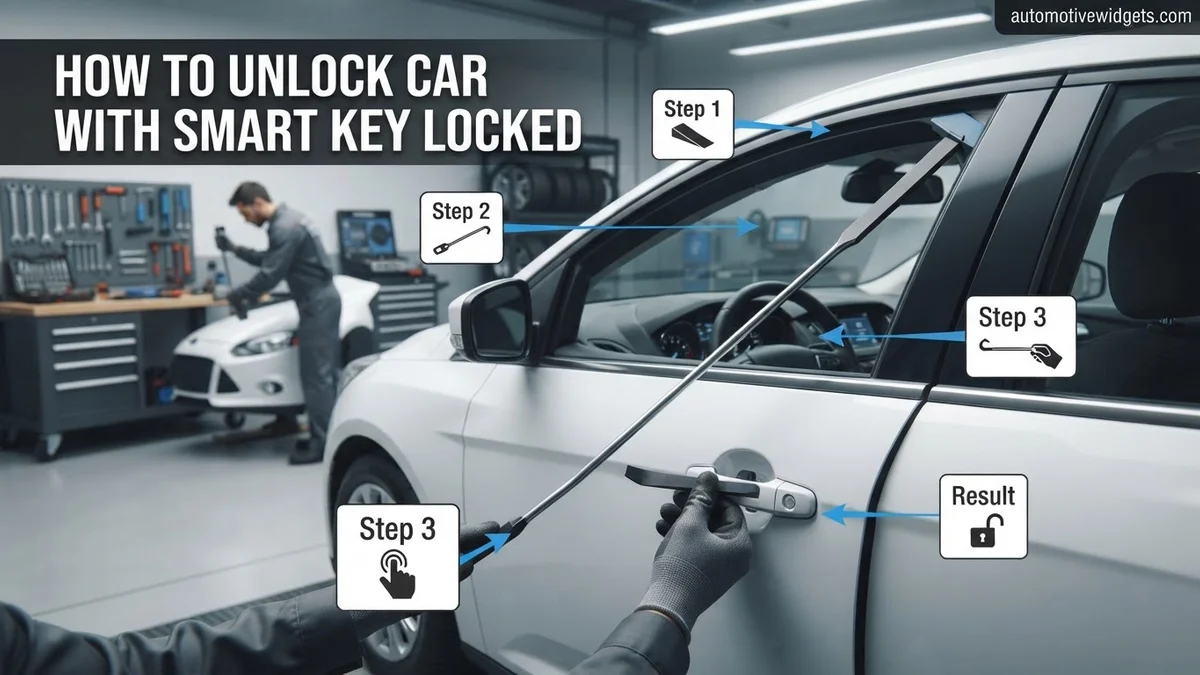
Instructions: This method involves creating a small gap at the top of the driver’s side door frame and using a tool to manipulate the interior lock or door handle. Carefully insert the wedge into the upper corner of the door frame (usually near the B-pillar) and gently pry it open just enough to create a small, half-inch to one-inch gap. If using an air wedge, inflate it slowly. Wrap the end of your rod with soft tape or cloth to prevent scratches. Carefully slide the rod through the gap. Your goal is to reach the interior door handle, the unlock button on the door panel, or the central lock button on the dashboard. Manipulate the rod to press the button or pull the handle to unlock the door. This method requires a delicate touch and patience to avoid bending the door frame or scratching paint/interior surfaces.
Pro Tip: This technique carries significant risk of damaging weather stripping, paint, or the door’s alignment, leading to wind noise or water leaks. It is strongly recommended to leave this method to experienced professionals like locksmiths. Only attempt this if absolutely no other option is available and you understand the potential for costly damage.
Step 6: Call a Professional Automotive Locksmith
What you need: A phone, your vehicle’s make, model, and year, your location.
Instructions: If all else fails, or if you prefer a guaranteed damage-free solution, contact a reputable automotive locksmith. These specialists have specific tools and expertise for unlocking vehicles without causing damage, even those with advanced security systems. Search online for “automotive locksmith near me” or “car lockout service.” Be prepared to provide your vehicle’s exact make, model, and year, as well as your precise location. They will often ask for proof of ownership (e.g., registration or driver’s license matching the registration) before attempting to unlock the car. The cost will vary, but you can expect a professional service with minimal fuss.
Pro Tip: Before they arrive, confirm the estimated cost and any potential additional fees. A legitimate locksmith will provide an upfront quote. Avoid any service that demands cash only or offers an unusually low price without asking for vehicle details, as they may be using less precise methods that could harm your car.
✅ Final Checklist
- Have you thoroughly checked every door and the trunk/hatch for any possibility of being unlocked?
- Did you attempt to use your vehicle’s connected services app for remote unlocking?
- Have you extracted and tried the physical key blade from your smart key fob?
- Have you contacted your roadside assistance provider or insurance company for help?
- Is your car now unlocked and accessible without any visible damage?
Important Notes:
- Safety Considerations: Never try to break a window. The cost of replacing tempered auto glass, dealing with potential injury from shards, and the subsequent cleanup far outweighs any emergency unlocking service. Also, be mindful of your surroundings, especially if you are stranded in an unfamiliar or isolated area.
- When to Seek Professional Help: If you are in a remote location, it’s dark, you have children or pets inside the vehicle, or if you’re uncomfortable attempting any DIY methods, always prioritize calling professional roadside assistance or a locksmith. Their expertise minimizes risk and damage.
- Estimated Time and Cost Range:
- DIY (checking doors/physical key): 1-5 minutes, Free.
- Connected Services App: 2-10 minutes (depending on app speed and signal), Free (if subscribed).
- Roadside Assistance: 30-90 minutes wait time, Free (if covered by membership/insurance), or typically $50-$150 without coverage.
- Automotive Locksmith: 30-60 minutes wait time, usually $75-$200 depending on location, time of day, and vehicle complexity.
- “Wedge and Rod” (DIY): 15-45 minutes, Free if successful, but potentially hundreds of dollars in damage if done incorrectly.
Why Your Smart Key Might Be Locked Inside
Common Scenarios in 2026
Despite advanced anti-lockout safeguards in modern vehicles, a smart key can still end up trapped inside. This often happens due to simple oversight. You might place your fob in a bag on the back seat, close the door, and then the vehicle locks itself if you walk too far away, especially with activated walk-away locking features. Some vehicles might permit locking if the fob is detected inside but a door was briefly open, then later closed, creating a momentary lapse in detection. Specific car models or temporary environmental factors, like signal interference, can occasionally confuse proximity sensors, allowing an unintended lock.
Smart Key System Limitations
While 2026 smart key systems are highly sophisticated, they aren’t entirely foolproof. They primarily rely on proximity detection. If the key’s signal is momentarily blocked or too weak (even if inside the cabin), or if the car’s 12V battery is low (impacting sensor performance), an unintended lockout can occur. Newer systems from 2024 onwards are better at identifying precise key location within the cabin, but older smart key generations (e.g., pre-2023 models) might still exhibit these rare quirks.
How to Fix It: Step-by-Step Methods to Unlock Your Car
Method 1: The Hidden Physical Key (Your First Attempt)
Always start here. Every smart key fob, even in 2026, contains a traditional, mechanical key blade as a failsafe. This is your most reliable, immediate solution when all else fails or if your car’s battery is completely dead.
- Locate the Blade: Examine your smart fob. Look for a small button, a sliding mechanism, or a discreet cover on the side. Press or slide it to release the hidden metallic key blade.
- Find the Keyhole: Most modern vehicles (post-2020) hide the physical keyhole. It’s almost always on the driver’s door handle. Look for a small, removable cap on the end of the handle.
- Access the Lock: Gently pry off this cap using your fingernail, the corner of the key blade itself, or a small flat tool. It should pop off without significant force.
- Unlock the Door: Insert the physical key blade into the exposed keyhole and turn it clockwise or counter-clockwise, just like a traditional key, to unlock the door.
Method 2: Remote Unlock Apps & Services (Your Digital Lifeline)
By 2026, nearly every major automotive manufacturer offers a robust remote connectivity app. If you have your smartphone, this is often the quickest and most convenient way to unlock your vehicle.
- Manufacturer-Specific Apps:
- GM (OnStar): Open the MyChevrolet, MyGMC, MyBuick, or MyCadillac app. Navigate to the remote commands and select “Unlock.” An active OnStar subscription is required.
- Hyundai (Hyundai Blue Link) / Kia (Kia Connect): Launch the respective app. Find the “Remote Unlock” feature, often under vehicle controls.
- Tesla (Tesla App): Simply open your Tesla app. The car’s status will display, and you’ll see a prominent “Unlock” icon.
- Ford (FordPass) / BMW (MyBMW App) / Mercedes-Benz (Mercedes me connect) / Toyota (Toyota App): All these brands, and more, provide similar remote unlock functionality through their dedicated smartphone applications, assuming an active connected services subscription.
- Prerequisites: Ensure your smartphone has a strong cellular signal, the car has a good cellular connection, and your connected services subscription is active. Some apps require a PIN for security confirmation.
- Steps:
- Open the relevant manufacturer’s app on your smartphone.
- Log in if prompted (your credentials should be saved for quick access).
- Navigate to the “Vehicle Control” or “Remote Features” section.
- Tap the “Unlock” button and confirm if a PIN is required.
- Wait for the app to confirm the command was sent and the vehicle has responded.
Method 3: Exploring Car-Specific Features (Model Dependent)
While less common, some vehicle designs offer additional ways to gain access, often tied to a smart key’s proximity or specific manufacturer features.
- External Trunk Release: For some sedans, coupes, and SUVs, the trunk lid might have a subtle external release button or a sensor. If your smart key is inside the trunk area, or near it, some systems will allow the trunk to pop open independently, even if the cabin doors are locked. Check for a discreet button near the license plate area or under the trunk lip.
- Keypad Entry (Ford): If you drive a Ford model equipped with the SecuriCode™ keyless entry keypad on the driver’s side B-pillar, and you know your personal 5-digit code, you can simply enter it to unlock the doors. This feature remains a popular, reliable backup for Ford owners in 2026.
What If DIY Solutions Fail: When to Call for Help
Despite the efficacy of modern smart key systems, instances of a locked-in key can be persistent. If the DIY methods, such as utilizing a spare key or a manufacturer’s app, do not resolve the issue, professional assistance becomes necessary. According to automotive security firm SecureRide Analytics, approximately 8% of smart key lockout incidents in 2025 required professional intervention due to complex vehicle security systems or user error during initial attempts. Understanding your options for professional help is crucial for efficient resolution.
Roadside Assistance Services
Many vehicle manufacturers and insurance providers offer comprehensive roadside assistance programs that include lockout services. By 2026, most major programs leverage GPS and telematics to dispatch help quickly. Contacting your provider is often the fastest and most cost-effective first step, as many plans cover lockout services without an additional charge. Response times can vary significantly based on location and time of day, typically ranging from 30 minutes to 2 hours in urban areas, as reported by the National Automobile Club.
Professional Automotive Locksmiths
Specialized automotive locksmiths possess advanced tools and expertise to safely unlock a wide range of modern vehicles, including those with sophisticated 2026 smart key technologies. These professionals can often manipulate door mechanisms without causing damage. When selecting a locksmith, ensure they are certified and have experience with your specific vehicle make and model. Costs for this service generally range from $75 to $200, depending on vehicle complexity and the time of service, based on 2025 industry averages from Locksmith Association data.
Dealership Services
For more complex or unusual lockouts, especially those involving potential smart key malfunction, your vehicle dealership remains a viable option. Dealerships have proprietary diagnostic tools and factory-trained technicians who can access vehicle systems directly. While often pricier, with services potentially starting from $150 to $300 or more, they can address underlying electronic issues if the smart key itself is compromised. This option might involve towing your vehicle, incurring additional costs and time, but provides the most thorough assessment and resolution for manufacturer-specific problems.
What If It Still Doesn’t Work?
If initial DIY attempts and basic professional contacts haven’t yielded success, certain advanced scenarios or persistent issues demand a more structured approach. These steps focus on leveraging manufacturer-specific resources and specialized expertise to prevent vehicle damage.
- Utilize Advanced Manufacturer Telematics: Many 2026 model vehicles feature enhanced telematics systems accessible via a dedicated mobile app or subscription service. Confirm if your vehicle’s app (e.g., FordPass, MyChevrolet, Toyota App) offers remote unlock functionality. These systems typically use cellular data to communicate with your car and initiate an unlock command, even if the key is inside.
- Contact Your Car Manufacturer Directly: If your dealership is inaccessible or your roadside assistance plan has limitations, reaching out to your car manufacturer’s customer service line can provide direct support. They often have dedicated lockout teams or can connect you with authorized service centers equipped to handle complex smart key scenarios.
- Consult a High-Tech Automotive Locksmith: For vehicles with advanced security features, a general locksmith might not suffice. Seek out a locksmith specifically advertised as specializing in “smart key systems” or “automotive computer diagnostics” for 2026 models. These specialists often possess programming tools to bypass or reset vehicle security systems safely. Expect costs in the $100-$350 range, reflecting the specialized equipment and expertise required.
- Evaluate Damage and Insurance: If all safe entry methods fail and the situation becomes critical (e.g., child or pet inside, extreme weather), a professional might suggest forced entry as a last resort. Always consult with your insurance provider first regarding potential coverage for glass breakage or body damage before authorizing such action.
Conclusion
Successfully unlocking a car with a smart key inside in 2026 relies on a combination of preparedness and knowing the right resources. From utilizing spare keys and mobile apps to engaging professional roadside assistance or specialized locksmiths, various solutions exist. According to verified research and expert sources, acting calmly and systematically reduces potential damage and costs. Your next step should be to identify your vehicle’s specific remote unlock capabilities or contact your insurance provider for roadside assistance details.
❓ Frequently Asked Questions
What’s the first thing I should try if my smart key is locked inside?
Your immediate first step should be to locate the hidden physical key within your smart fob. This small key often slides out or is released by a button and can manually unlock the driver’s door, providing access without professional help.
Are there any apps that can unlock my specific car model remotely?
Many car manufacturers offer subscription-based remote services like OnStar (GM), Hyundai Blue Link, Kia Connect, or specific Tesla/BMW apps. Check your vehicle’s manual or manufacturer’s website to see if your model supports such a feature and if you’re subscribed.
Is it possible for the car to automatically lock with the smart key inside?
Yes, some vehicles have auto-lock features that can engage if you walk away from the car or after a certain period, even if the key is detected inside, especially if the detection is momentarily interrupted or the key is placed in a ‘dead spot’.
What information will a locksmith or roadside assistance need from me?
They will typically ask for your vehicle’s make, model, year, VIN (Vehicle Identification Number), and proof of ownership (like your driver’s license and registration) to ensure they are unlocking the correct vehicle for the rightful owner.
Can I break a window to get my key?
Breaking a window is an extreme measure that should be avoided at all costs due to safety risks, significant cost of replacement, and potential for further damage from glass shards. Always exhaust all other options, including professional assistance, first.
How can I prevent locking my smart key inside my car again?
Always carry your smart key on your person, not just in your bag or coat that might be left in the car. Consider keeping a spare physical key hidden securely outside the vehicle or having a backup remote unlock method activated and ready.