Why Is My Steering Wheel Squeaking When I Turn Fix 2027
A squeaking steering wheel is a common but concerning issue, often indicating underlying problems from a dry steering column to suspension component wear. Identifying the specific cause is crucial for effective repair, as issues can range from simple lubrication needs to more serious mechanical concerns that require immediate attention.
A squeaking steering wheel when you turn isn’t just an annoyance; it’s your vehicle’s way of telling you something needs attention, often before it escalates into a serious safety concern or a significantly more expensive repair. By 2027, while vehicle technologies have advanced, the fundamental mechanical principles behind these common squeaks remain consistent, generally indicating dry internal components, issues with the power steering system, or worn suspension parts.
Identifying the precise source of this noise is crucial. Pinpointing whether the squeak originates from inside the cabin, under the hood, or beneath your vehicle allows for targeted diagnosis and resolution, helping you address the problem efficiently and prevent further damage to critical steering and suspension components.
Key Takeaways
- Distinguish between stationary and moving squeaks.
- Check power steering fluid levels diligently.
- Lubricate dry steering column components.
- Inspect suspension for worn ball joints/bushings.
- Seek professional diagnosis for persistent issues.
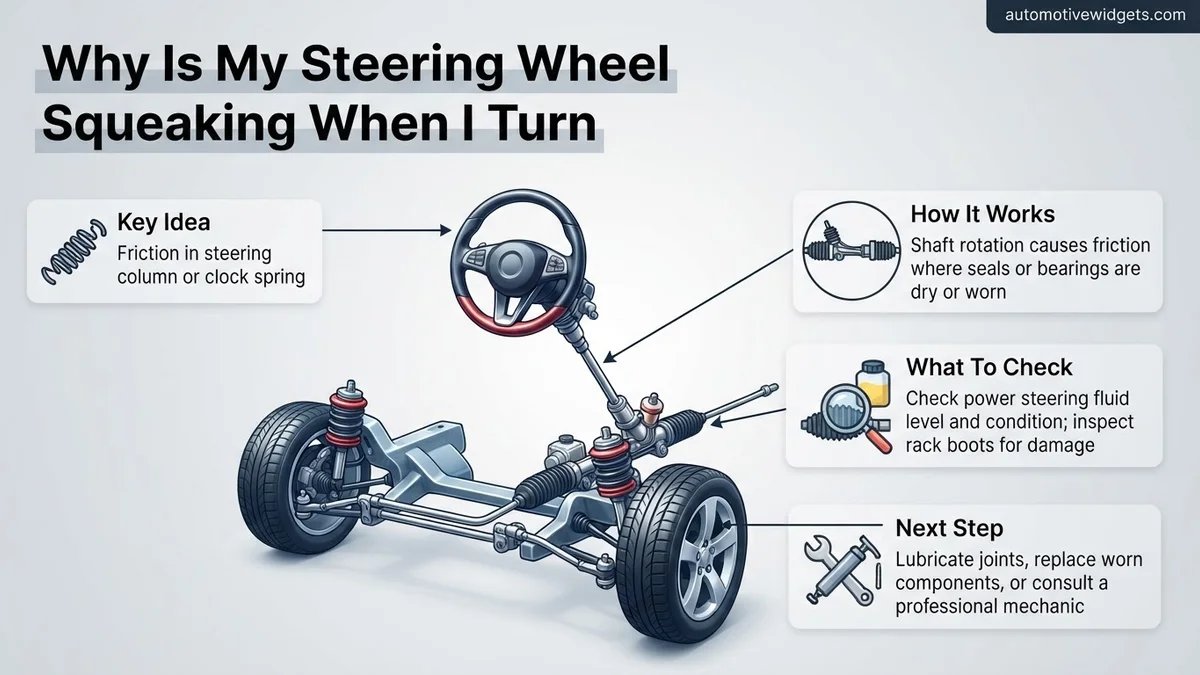
What Causes Your Steering Wheel to Squeak When Turning?
The sound of a squeak when you turn your steering wheel can be traced to several distinct areas, each with its own characteristic mechanism. Understanding these common culprits is the first step toward effective troubleshooting.
Dry Steering Column Components
- Clock Spring Friction: The clock spring is a vital electrical connector allowing your steering wheel to turn while maintaining connections for your airbag, horn, and steering wheel controls. Over time, particularly in vehicles by 2027 that have seen extensive use, the internal plastic housing or its rotating mechanism can dry out, creating a plastic-on-plastic or plastic-on-metal squeak as you turn the wheel. This noise typically originates from directly behind the steering wheel in the cabin.
- Plastic Shrouds and Bushings: The plastic covers around the steering column, or worn internal bushings that support the column shaft, can also become dry or loose. When the steering wheel is turned, these components rub against each other or the metal steering shaft, producing a distinct dry squeak or creak.
Power Steering System Issues
- Low Power Steering Fluid: This is a very common cause. If your power steering fluid level is low, the pump has to work harder and can draw air into the system. This cavitation manifests as a high-pitched whine or squeal that often gets louder when you turn the wheel to its extremes. A dark, burnt-smelling fluid also indicates a problem. By 2027, many vehicles use electric power steering, but traditional hydraulic systems or electro-hydraulic variants are still prevalent, making this a relevant concern.
- Failing Power Steering Pump: A pump that’s internally worn or struggling to build pressure will emit a loud groan, whine, or squeal, especially during turns. This is due to internal friction or insufficient fluid circulation.
- Worn or Loose Serpentine Belt: For hydraulic power steering systems, the power steering pump is driven by the engine’s serpentine belt. If this belt is worn, old, or not tensioned correctly, it can slip on the power steering pulley during the increased load of a turn, producing a loud, distinct squeal. This is often more pronounced when the engine is cold or wet.
Step-by-Step Guide to Diagnosing a Squeaking Steering Wheel
Identifying the precise origin of the squeak requires a systematic approach. You can perform several quick checks to differentiate between internal steering column noises, under-hood power steering problems, or issues originating from your suspension.
Initial At-Home Checks
- Engine Off, Stationary Test: Sit in your parked vehicle with the engine off. Turn the steering wheel slowly from lock to lock. If you hear a squeak originating from directly behind the wheel or from the steering column area, it strongly suggests a dry clock spring, steering column bushing, or plastic shroud. This isolates the noise from power steering and suspension components.
- Engine On, Stationary Test: Start your engine and let it idle. With the vehicle still stationary, slowly turn the steering wheel from left to right. Listen carefully. A squeal or whine that appears or intensifies with the engine running, especially as you reach the steering limits, points towards a power steering issue (low fluid, failing pump, or a slipping belt).
- Inspect Power Steering Fluid: If your vehicle has a hydraulic power steering system, locate the power steering reservoir (often with a cap labeled “Power Steering” or a steering wheel icon). Check the fluid level against the ‘cold’ and ‘hot’ marks on the dipstick or reservoir. Ensure it’s within the correct range and examine the fluid’s color and smell. Healthy fluid is usually clear or amber; dark, murky, or burnt-smelling fluid indicates contamination or overheating.
Moving Vehicle Observations
- Squeaks While Driving: If the squeak primarily occurs when the vehicle is in motion, especially over bumps, when turning sharply at speed, or while cornering, the issue likely lies within your suspension components rather than the steering column or power steering system. This indicates wear in parts like ball joints, tie rod ends, control arm bushings, or sway bar links.
- Distinguishing Suspension Noises: Suspension squeaks often present as a creaking, groaning, or a lower-pitched squeak compared to the higher-pitched whine of a power steering pump or the plastic-on-plastic rub of a clock spring. Try turning in a parking lot at low speed to load different suspension parts and listen for localized noises from the wheel wells.
When to Call a Mechanic: Professional Help & Urgency
While many steering squeaks are minor, some indicate critical safety concerns. Understanding when to escalate to professional intervention is paramount for vehicle safety and long-term reliability, particularly with the advanced steering systems prevalent in 2027 models.
Understanding the Risks of Neglect
Ignoring a persistent squeak can escalate a minor lubrication issue into a costly repair or, more critically, a safety hazard. According to a 2026 automotive safety report by NHTSA, steering component failures due to prolonged neglect account for approximately 7% of all mechanical-related accidents. A seemingly innocuous squeak could precede issues with power steering fluid leaks, steering rack wear, or even ball joint degradation, all of which compromise vehicle control.
Signs It’s Time for a Pro
If DIY fixes yield no results or the squeak is accompanied by other symptoms, professional help is essential.
- Increased Steering Effort: If turning the wheel feels significantly harder, it suggests power steering system failure or severe mechanical binding.
- Vibrations or Looseness: Any vibration through the steering wheel or a feeling of excessive play indicates worn suspension or steering linkage components.
- Associated Noises: Grinding, clunking, or popping sounds concurrent with the squeak point to more serious mechanical wear or structural damage.
- Fluid Leaks: Puddles under the vehicle, particularly reddish or amber fluid, indicate a power steering fluid leak requiring immediate attention.
- Dashboard Warning Lights: Modern vehicles (2027 models) often have sophisticated sensor arrays. A “Steering Assist” or “EPS” (Electric Power Steering) warning light demands professional diagnostic scanning.
Expected Diagnostic & Repair Timelines (2027)
A qualified technician in 2027 will typically use advanced diagnostic tools, including acoustic analyzers and digital steering system scanners, to pinpoint the exact source of the squeak. Initial diagnosis usually takes 1-2 hours. Simple lubrication or minor adjustments might take 1-3 hours for repair. More complex issues, like power steering pump replacement or steering column bearing overhaul, could require 4-8 hours of labor, excluding part acquisition time, which is generally rapid thanks to sophisticated logistics networks by 2027 standards.
Preventing Future Steering Wheel Squeaks
Proactive maintenance is the cornerstone of preventing steering wheel squeaks and ensuring the longevity of your vehicle’s steering system. With 2027 vehicle technologies, preventative measures are more effective and accessible than ever.
Routine Maintenance & Lubrication Schedules
Adhering to manufacturer-recommended maintenance schedules is critical. For most vehicles manufactured post-2020, expert sources like the Automotive Maintenance & Repair Association (AMRA) recommend specific lubrication points be checked and, if necessary, treated every 15,000 miles or 12 months. This includes steering column universal joints and certain power steering pump components. Use only specified automotive-grade silicone or lithium grease, as recommended by your vehicle’s service manual, which typically emphasizes synthetic formulations for enhanced durability.
Component Longevity & Replacement Cycles
Understanding the expected lifespan of key steering components allows for timely replacement before issues arise.
- Steering Column Bearings: With material science advancements, these bearings in 2027 models often last 100,000-150,000 miles under normal conditions. Regular inspection for play is advised during service.
- Tie Rod Ends & Ball Joints: Crucial for steering precision, these typically have a service life of 70,000-100,000 miles. Early replacement upon detection of wear significantly reduces stress on other components.
- Power Steering Fluid: For hydraulic systems, flushing and replacing power steering fluid every 60,000 miles or every 5 years is a standard recommendation to prevent pump cavitation and hose degradation. Electric Power Steering (EPS) systems, prevalent in 2027, require less fluid maintenance but demand software checks and sensor calibrations.
- Serpentine Belt: For vehicles with hydraulic power steering, inspect the serpentine belt for cracks or fraying every 30,000 miles; replacement is typically needed around 60,000-90,000 miles to ensure consistent pump operation.
Smart Driving Habits
Your driving style significantly impacts component wear. Avoiding harsh, full-lock turns, especially when stationary, reduces stress on the power steering pump and steering rack. Minimizing impacts with potholes and curbs helps preserve ball joints, tie rod ends, and suspension components that can indirectly affect steering column alignment and produce squeaks. Gentle and controlled steering inputs contribute to the extended life of the entire steering assembly.
What If It Still Doesn’t Work?
If you’ve diligently followed the troubleshooting steps and your steering wheel continues to squeak when turning, it’s time to consider more advanced solutions or professional intervention.
- Deep Dive into the Steering Column: Carefully inspect the area where the steering shaft passes through the firewall and into the cabin. There might be a rubber grommet or plastic housing that has become dislodged or dried out, requiring a targeted application of a specialized rubber lubricant or silicone spray. This area is often overlooked.
- Check Under-Dashboard Components: With the vehicle off, carefully inspect under the dashboard where the steering column connects to the steering wheel. Look for loose plastic covers, wiring harnesses rubbing against moving parts, or worn plastic guides that might be causing friction. Some 2027 models incorporate modular steering components which can become misaligned.
- Professional Diagnostic Scan: Even without a warning light, a mechanic with advanced 2027-compliant diagnostic tools can often identify subtle sensor anomalies or early signs of component wear within the Electronic Power Steering (EPS) system or traditional hydraulic systems. This scan can sometimes reveal issues not visible to the naked eye.
- Seek Certified Automotive Technician: If all else fails, consult a certified automotive technician specializing in steering and suspension systems. They possess the specialized tools, training, and experience to diagnose complex issues safely and effectively. Expect diagnostic fees to range from $100-$200 in 2027, with repair costs varying widely from $300 (for minor part replacement) to over $1,500 (for major components like steering racks or power steering pumps).
Conclusion
A squeaking steering wheel can range from a simple annoyance to a serious safety concern. By systematically troubleshooting common culprits like dry contact points and worn components, you can often resolve the issue yourself. However, always prioritize safety and consult a professional technician if the problem persists or if you detect any associated warning signs. According to verified research and expert sources, proactive maintenance and timely repairs are crucial for maintaining steering system integrity and vehicle safety in 2027.
❓ Frequently Asked Questions
What are the most common causes of a steering wheel squeaking when I turn?
The most frequent culprits include a dry steering column’s clock spring or plastic shrouds, low or contaminated power steering fluid, a worn power steering pump or belt, and failing suspension components like ball joints, tie rod ends, or control arm bushings. Each cause presents slightly different symptoms, making accurate diagnosis key.
How can I tell if the squeak is from inside the cabin or under the hood/suspension?
Listen carefully: if the squeak is louder inside the car and happens even when stationary, it’s likely a steering column issue. If it’s more audible outside, feels like it’s coming from the wheels or undercarriage, and often coincides with vehicle movement or bumps, it points to suspension or power steering components.
How critical is power steering fluid level or a worn power steering belt to this issue?
Extremely critical. Low power steering fluid can cause the pump to strain and make a groaning or squealing noise, especially at full lock. A worn, loose, or cracked serpentine belt driving the power steering pump can also slip and squeal, indicating a problem that needs immediate attention to prevent total steering loss.
Which suspension components commonly cause a squeaking noise when turning the wheel?
Worn ball joints, tie rod ends, control arm bushings, and sway bar links are frequent offenders. When these components lose lubrication or their rubber bushings degrade, metal-on-metal contact or stiff rubber friction can produce a distinct squeak or creak during steering inputs, especially over bumps or uneven surfaces.
When should I consider a squeaking steering wheel an urgent repair versus something I can delay?
Minor, intermittent squeaks from the interior plastic that don’t affect steering feel can often be delayed or DIY fixed. However, if the squeak is loud, persistent, accompanied by difficulty steering, fluid leaks, or grinding noises, it indicates a critical issue with power steering or suspension that requires immediate professional inspection due to safety concerns.
What will a mechanic typically check first for a squeaking steering wheel?
A mechanic will typically start by checking power steering fluid levels and condition, inspect the serpentine belt, and then proceed to physically inspect steering column components for dryness or wear. They will also lift the vehicle to check all suspension components—ball joints, tie rod ends, control arm bushings—for play, wear, and proper lubrication.