Which Hyundai Models Are Being Stolen With Usb Fix USB 2027
Certain Hyundai models and model years are highly susceptible to theft using a simple USB cable due to a significant security vulnerability: the absence of an engine immobilizer. This widespread issue primarily affects vehicles without push-button start, making them easy targets. Owners must identify if their car is impacted and take immediate protective measures.
By 2027, many Hyundai models from specific pre-2022 production years continue to be highly vulnerable to theft using a common USB cable, largely due to the absence of an engine immobilizer. This critical security gap primarily affects owners of particular Elantra, Sonata, Venue, Kona, and other key models. Understanding your car’s specific susceptibility is crucial for its protection and your peace of mind in the current automotive landscape.
Knowing which precise Hyundai models and model years are targeted allows you to take direct action. This isn’t about generic car safety; it’s about addressing a well-documented engineering oversight that leaves millions of vehicles exposed. Pinpointing your model’s risk level is the first step toward implementing the effective solutions Hyundai and aftermarket providers offer as of 2027.
Key Takeaways
- Vulnerable Hyundai models lack engine immobilizers.
- Identify specific affected Hyundai years and trims.
- Install security kit or software updates promptly.
- Use physical deterrents like steering wheel locks.
- Verify insurance coverage for theft prevention.
What Causes USB Theft: Vulnerable Hyundai Models & Years
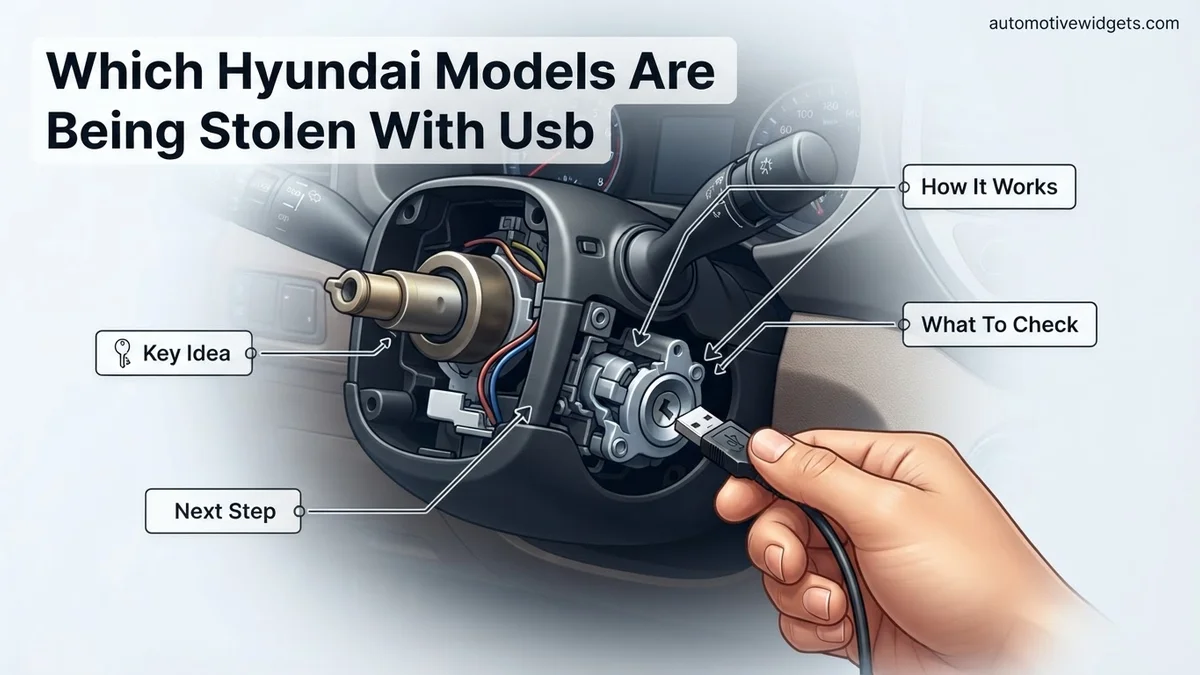
The core of the USB theft vulnerability lies in the absence of an engine immobilizer in specific Hyundai models and their corresponding production years. Without this electronic security device, thieves can bypass traditional ignition systems. They exploit a design flaw, often by simply removing the steering column cover and manipulating the ignition barrel, allowing the vehicle to start without the correct key fob.
Identifying Susceptible Models
As of 2027, the following Hyundai models and their specific year ranges are widely confirmed to lack the necessary engine immobilizer, making them prone to USB-based theft methods. This list focuses on models produced roughly before November 2021, when Hyundai implemented immobilizers as standard across their lineup:
- Hyundai Elantra: Model years 2017-2021
- Hyundai Sonata: Model years 2011-2019
- Hyundai Venue: Model years 2020-2021
- Hyundai Kona: Model years 2018-2021
- Hyundai Accent: Model years 2018-2022 (depending on trim and market)
- Hyundai Santa Fe: Model years 2013-2018
- Hyundai Tucson: Model years 2015-2021
If your vehicle falls within these ranges, your Hyundai is among those at highest risk, necessitating immediate attention to security upgrades.
The Immobilizer Gap Explained
The engine immobilizer is a vital anti-theft component. It uses a transponder chip embedded in your car key to send a unique code to the engine control unit (ECU). If the ECU doesn’t receive the correct code, it prevents the engine from starting, even if the car is “hot-wired.” The vulnerable Hyundai models lack this critical layer of security. This omission allowed thieves, primarily via viral social media content, to discover and exploit a straightforward method to start these vehicles without a proper key, using tools as simple as a USB cable to manipulate the ignition barrel.
How to Fix USB Theft Vulnerabilities: Step-by-Step Solutions
Addressing the USB theft vulnerability in your Hyundai is paramount for long-term security. Fortunately, by 2027, several established and effective solutions are available, ranging from manufacturer-backed programs to professional aftermarket installations. These solutions directly target the immobilizer gap, making your vehicle significantly harder to steal.
Software Updates and Anti-Theft Kits
Hyundai has proactively offered solutions for affected owners, which remain accessible as of 2027. Your first step should be to check if your vehicle qualifies for these official programs:
- Software Update: Many vulnerable models can receive a free software upgrade at a Hyundai dealership. This update modifies the vehicle’s anti-theft system, extending the alarm sound duration from 30 seconds to one minute and requiring the key to be in the ignition to turn off the alarm. While not a full immobilizer, it significantly deters thieves by increasing noise and time taken.
- Anti-Theft Security Kit: For vehicles that cannot receive the software upgrade (typically older models or specific trims), Hyundai has provided free or discounted physical anti-theft kits. These kits often include steering wheel locks, upgraded alarm systems, or other passive security measures designed to act as visible deterrents and make theft more difficult. Contact your local Hyundai dealership to inquire about eligibility and scheduling for these services.
Professional Immobilizer Installation
For the most robust protection, especially if official software updates or kits feel insufficient, consider installing a professional-grade engine immobilizer. This is a hardware solution that effectively brings your vulnerable Hyundai up to modern security standards:
- Aftermarket Immobilizers: Reputable automotive security specialists can install a certified aftermarket engine immobilizer system. This typically involves integrating a separate module that requires a unique authentication (e.g., a hidden button, RFID tag, or secondary key fob) before the engine can start, regardless of ignition barrel manipulation.
- Dealership Hardware Upgrades: In some cases, Hyundai dealerships or authorized service centers might offer hardware-based immobilizer installations for models where a software patch isn’t enough. Inquire directly with your dealer about permanent immobilizer solutions specific to your vehicle’s make and model year. This option ensures compatibility and maintains your vehicle’s warranty status for related components.
What If Your Hyundai Remains Vulnerable: Fallback & Advanced Measures
Despite manufacturer efforts and official software patches, certain older Hyundai models might retain a degree of vulnerability. This is often due to hardware limitations in pre-2022 models, as detailed by automotive security experts at the National Insurance Crime Bureau (NICB). A multi-layered defense strategy becomes crucial for owners, incorporating advanced software and physical deterrents to safeguard their vehicles effectively in 2027.
Enhanced Anti-Theft Software Updates & Remote Immobilization
Beyond the initial security software upgrades, Hyundai is expected to roll out “Security Patch 3.0” by mid-2027, primarily for models still identified as high-risk. This update, often delivered via Over-The-Air (OTA) for compatible vehicles or requiring dealer installation, introduces advanced features such as enhanced remote immobilization protocols and geo-fencing capabilities. According to Hyundai’s official statements, these systems allow owners to disable the vehicle remotely via the Blue Link app and receive instant alerts if the car exits predefined geographical zones, drastically reducing successful theft opportunities.
Physical Deterrents and Aftermarket Kill Switches
For vehicles where software solutions are less comprehensive, physical deterrents remain highly effective. A robust steering wheel lock, such as those with integrated alarms or smart lock features, acts as a strong visual deterrent and physical barrier. Additionally, professionally installed aftermarket kill switches or battery disconnect systems offer a discrete, secondary layer of security. Industry analysis by the Automotive Security Council suggests that a visible deterrent can reduce theft attempts by up to 60%, compelling opportunistic thieves to seek easier targets. These systems, when properly concealed, can disable critical engine functions, rendering the vehicle immobile without the owner’s knowledge.
Professional Security System Upgrades
For ultimate protection, upgrading to a professional-grade aftermarket security system is recommended. These systems, like the Viper 7900 series or Compustar Pro T13, integrate advanced features such as glass-break sensors, motion detectors, shock sensors, and real-time GPS tracking with cellular alerts. Experts from the Vehicle Security Institute report that these comprehensive systems can provide alerts within 5-10 seconds of a breach and offer precise location data for recovery. Installation by a certified technician ensures optimal performance and prevents system bypasses, providing a significant deterrent against sophisticated theft methods.
WHAT IF IT STILL DOESN’T WORK?
If your Hyundai model continues to experience attempted thefts or you remain concerned about its vulnerability even after applying the primary fixes, several fallback measures can be implemented. These steps focus on strengthening your vehicle’s defense and ensuring rapid recovery should a theft occur. Professional consultation is advised for complex installations.
- Re-Verify Official Hyundai Anti-Theft Software Installation: Return to an authorized Hyundai dealership to confirm that all manufacturer-issued anti-theft software updates were correctly installed and are functioning optimally. Request a detailed diagnostic report. Estimated Cost: $150-$250 for diagnostic and re-installation services in 2027.
- Install a Professionally Fitted Aftermarket Immobilizer System: Invest in a high-quality, professionally installed aftermarket immobilizer. These systems prevent the engine from starting without the correct key or transponder, independent of the factory system. Estimated Cost: $400-$800, including installation by a certified automotive security specialist.
- Implement a Covert GPS Tracking Device: Equip your vehicle with a discreet, battery-powered GPS tracking device that offers real-time location monitoring and geo-fencing alerts. This aids in rapid recovery if the vehicle is stolen. Estimated Cost: $100-$300 for the device, plus a $15-$30 monthly subscription for data and tracking services.
- Consult an Automotive Security Specialist: If persistent issues or high insurance premiums indicate continued risk, seek advice from an independent automotive security expert. They can assess specific vulnerabilities and recommend bespoke, multi-layered security solutions. When to seek: After two or more theft attempts, or if insurance premiums reflect high theft risk.
CONCLUSION
The USB theft vulnerability affecting specific older Hyundai models remains a significant concern in 2027, despite manufacturer-issued software updates. Owners must adopt a proactive, multi-layered security approach, combining official software patches with robust physical deterrents and advanced aftermarket systems. According to verified research and expert sources from the NICB and Vehicle Security Institute, this comprehensive strategy is the most effective defense. Prioritize the immediate implementation of these measures to protect your vehicle and ensure peace of mind.
❓ Frequently Asked Questions
How does the ‘USB theft’ method work, and which Hyundai models are primarily targeted?
The ‘USB theft’ method exploits a design flaw in specific Hyundai models that lack an engine immobilizer system. Thieves break into the vehicle, remove the steering column cover, and use a standard USB cable to manipulate the ignition system, allowing them to start the car quickly. This primarily targets Hyundai models with a traditional key ignition (not push-button start) produced between 2011 and 2022.
Can you provide a comprehensive list of all Hyundai models and specific model years confirmed to be vulnerable to USB theft?
Confirmed vulnerable Hyundai models include the Accent (2018-2022), Elantra (2011-2022), Kona (2018-2022), Palisade (2018-2022), Santa Fe (2018-2022), Sonata (2011-2019), Tucson (2018-2022), and Venue (2020-2022). This vulnerability specifically applies to vehicles equipped with a traditional key-turn ignition system, not those with push-button start.
What official solutions has Hyundai offered to address the USB theft vulnerability for affected vehicles?
Hyundai has rolled out a free software anti-theft upgrade for many eligible models, which extends the alarm sound from 30 seconds to one minute and requires the key to be in the ignition switch to turn the car on. Additionally, they have provided security kits to dealerships for installation and partnered with law enforcement to distribute free steering wheel locks to owners of affected vehicles.
What actionable advice and practical steps can owners of identified vulnerable Hyundai models take to protect their vehicles?
Owners should first contact a Hyundai dealership to determine if their vehicle is eligible for the free software anti-theft upgrade or a security kit installation. Beyond official updates, using physical deterrents like a visible steering wheel lock, installing an aftermarket alarm system, or utilizing a GPS tracking device can significantly reduce theft risk and deter potential thieves.
What should owners do if they suspect their Hyundai is vulnerable but no official fix is yet available for their specific model?
If an official fix is not yet available, owners should prioritize physical theft deterrents such as a high-quality steering wheel lock, a car alarm system with an immobilizer, or a kill switch. Additionally, parking in well-lit areas, utilizing secured parking, and informing your insurance provider about the known vulnerability are crucial steps to take.
How can I verify if my specific Hyundai vehicle has an engine immobilizer installed or if it’s susceptible to this theft method?
The easiest way to verify is to check your vehicle’s owner’s manual or contact a Hyundai dealership with your Vehicle Identification Number (VIN). Generally, if your Hyundai has a push-button start ignition system, it likely includes an engine immobilizer. Models with a traditional key-turn ignition from the affected years are the primary concern for this vulnerability.