Why Does My Brake Pedal Squeak When I Press It Why 2027
A squeaking brake pedal often indicates issues with lubrication or worn components in the pedal assembly itself. Common culprits include dry pivot points, worn bushings, or a stiff return spring, which are often minor and fixable. However, it can occasionally signal problems deeper within the brake system requiring professional attention.
Hearing a squeak from your brake pedal when you press it in your 2027 vehicle is usually a straightforward issue, often signaling dry components rather than a catastrophic failure. This specific type of noise typically originates from the pedal assembly itself, the return spring, or the connection to your brake booster and master cylinder. Identifying the precise source early can save you frustration and potentially prevent minor issues from escalating.
Understanding why your brake pedal squeaks is crucial for maintaining your vehicle’s health and your peace of mind. While most pedal squeaks are benign, indicating a need for lubrication, some can hint at underlying issues that, if ignored, could eventually affect your braking system’s performance. Knowing when a DIY fix is appropriate versus when to seek professional help ensures your safety on the road.
Key Takeaways
- Lubricate pedal pivot points first for an easy fix.
- Check brake booster pushrod for common squeaks.
- Worn bushings or a dry return spring are frequent causes.
- Distinguish pedal squeak from wheel brake squeal.
- Consult a professional if DIY fixes fail or concerns arise.
Diagnose Your Squeaking Brake Pedal: Common Causes
A squeaking brake pedal isn’t always a warning sign of imminent danger, but it’s an undeniable annoyance. Pinpointing the exact cause helps determine the necessary fix. Here are the most frequent culprits behind that unwelcome sound.
Dry Pedal Pivot Points or Bushings
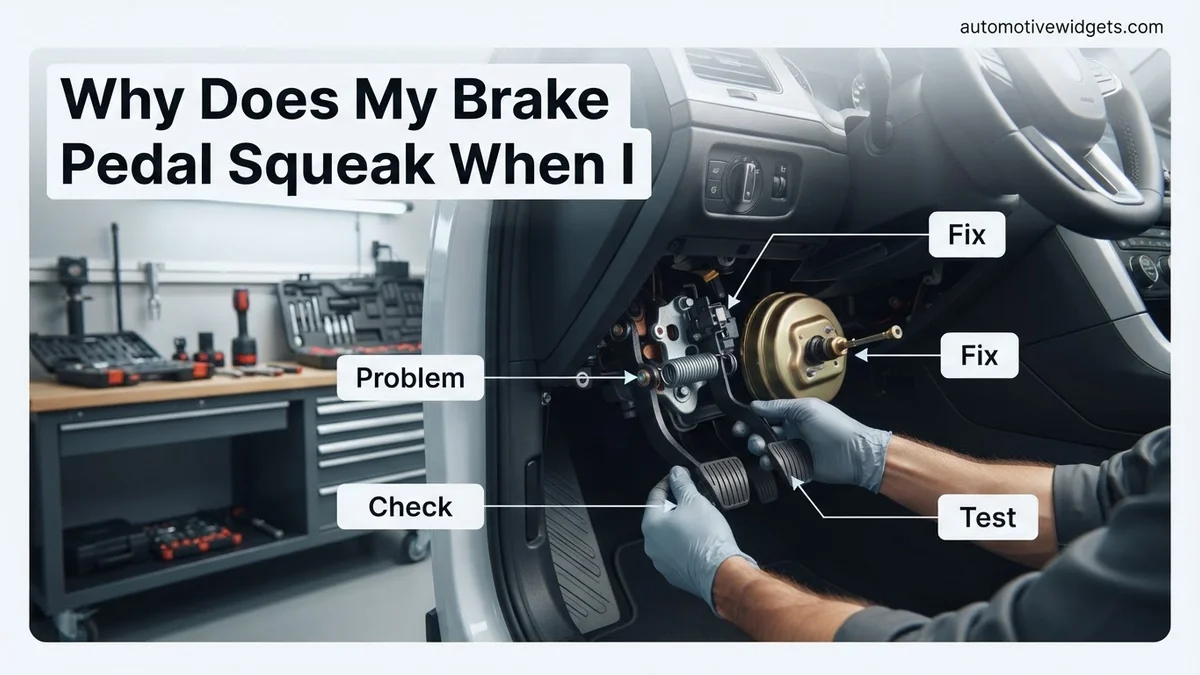
Just like a door hinge that needs oiling, the pivot points where your brake pedal attaches to the pedal box can become dry over time. Modern vehicles, including 2027 models, still rely on physical connections. Plastic or metal bushings at these pivot points can lose lubrication, causing friction when the pedal moves. This friction manifests as a persistent squeak. While not a direct safety hazard, the constant metal-on-metal or plastic-on-metal rubbing can lead to premature wear of these components if left unaddressed. Eventually, excessive wear could lead to a loose or wobbly pedal feel.
- Mechanism: Lack of lubrication between moving pedal components.
- Safety Implications: Low direct risk, but prolonged friction causes wear, potentially altering pedal feel.
- Identifying Sign: Squeak occurs consistently throughout the pedal’s travel, often audible with the engine off.
Worn or Dry Pedal Return Spring
Your brake pedal utilizes a spring to pull it back to its resting position after you release pressure. If this return spring becomes dry, dirty, or slightly misaligned, its coils can rub against each other or against its mounting points. This friction creates a distinct squeaking or creaking noise as the spring compresses and expands. In 2027 vehicles, even well-engineered springs can develop this issue due to environmental factors or accumulated dust. A slightly weakened or misaligned spring might also contribute to a slightly slower pedal return, though this is less common.
- Mechanism: Friction within the spring coils or between the spring and its housing.
- Safety Implications: Generally minor; the spring’s primary role is comfort and consistent pedal position.
- Identifying Sign: Squeak often occurs during the initial press or final release of the pedal.
Brake Booster Pushrod or Master Cylinder Interface Issues
Behind your brake pedal is a pushrod that connects directly to the brake booster, and then through the booster to the master cylinder. If the lubrication on this pushrod or its interface points dries out, friction can generate a squeak. For 2027 vehicles with advanced electronic brake boosters, this interface is still mechanical and prone to similar wear. A squeak here suggests friction where the rod passes through the firewall or where it meets the master cylinder piston. While a squeak doesn’t mean your booster or master cylinder is failing, it does indicate a need for inspection, as these components are critical for brake system operation. Ignoring this friction could potentially lead to premature wear of seals or more significant brake system problems over a long period, though this is rare.
- Mechanism: Friction at the connection between pedal, booster pushrod, and master cylinder.
- Safety Implications: Potentially more significant; these components are vital for braking. Early inspection prevents booster/master cylinder stress.
- Identifying Sign: Squeak often sounds deeper or more muffled, sometimes occurring deeper into the pedal’s travel.
Step-by-Step Guide to Fix a Squeaky Brake Pedal
Before reaching for any tools or calling a mechanic, you can perform some simple diagnostic steps to identify the squeak’s origin. Many pedal squeaks are easily remedied with basic maintenance.
Pinpointing the Squeak Source
Effective diagnosis begins with careful listening and observation. Don’t just press the pedal once; try different scenarios.
- Engine Off, Windows Down: Sit in your 2027 vehicle with the engine off. Slowly and steadily press the brake pedal, listening intently for the exact location of the squeak. Does it come from directly behind the pedal? Deeper within the firewall? Near the floor?
- Vary Pressure and Speed: Experiment with how you press the pedal. Does it squeak more when pressed slowly, quickly, lightly, or firmly? This can help differentiate between a simple dry pivot point (often squeaks throughout travel) and a spring issue (often at initiation/release).
- Visual Inspection: Use a flashlight to inspect the pedal assembly. Look for any visible rust, dirt buildup, or worn components around the pedal pivot, the return spring, and where the pushrod enters the firewall. Check for any loose fasteners or visibly damaged parts.
- Pedal Feel Test: Pay attention to the pedal’s resistance. Is it smooth, or do you feel any grating or inconsistent pressure points coinciding with the squeak? A consistent, smooth resistance that just happens to squeak points towards lubrication needs.
When to DIY vs. Call a Pro
Once you’ve identified the likely source, you can decide on the next steps. Most pedal squeaks are DIY-friendly.
- DIY Fix (Lubrication):
- If the squeak is clearly from a visible pivot point or the return spring, a small amount of white lithium grease or silicone spray is often all you need. Apply sparingly to the moving parts and pivot points.
- For 2027 models, be cautious around any electrical connectors or sensors; avoid spraying directly onto them.
- Test the pedal several times after application to work the lubricant in and confirm the squeak is gone.
- Professional Inspection (Critical):
- If the squeak persists after lubrication, or if you suspect it’s coming from deeper within the brake booster or master cylinder area.
- If the pedal feels spongy, unusually hard, or exhibits inconsistent resistance accompanying the squeak.
- If you notice any fluid leaks around the pedal or master cylinder.
- Any change in your vehicle’s overall braking performance, not just the noise, warrants immediate professional attention. For modern 2027 brake systems, specialized diagnostics might be needed for booster or master cylinder related issues.
What If Your Brake Pedal Still Squeaks After DIY Fixes?
If initial DIY lubrication and cleaning of your brake pedal pivot points do not resolve the squeaking, a deeper inspection is warranted. According to a 2026 technical bulletin from the Society of Automotive Engineers (SAE), persistent pedal noise often indicates wear beyond superficial surfaces, or issues with interconnected components.
Inspect the Brake Pedal Assembly Components
The pedal assembly contains several parts that can wear over time. By 2027, many vehicles utilize robust polymer bushes, but even these can degrade, leading to friction. Focus your inspection on these areas:
-
Brake Pedal Return Spring: Observe the spring’s condition and attachment points. A worn or misaligned spring can rub against the pedal arm or bracket, generating noise. Lubricate its contact points with a silicone-based grease suitable for automotive applications, as recommended by manufacturers like Permatex in their 2026 product guide.
-
Master Cylinder Pushrod Connection: The pushrod connects the brake pedal to the master cylinder. Inspect its attachment point for excessive play or corrosion. While direct DIY repair here is often limited, identifying play indicates a potential issue requiring professional assessment of the pushrod’s integrity or the master cylinder’s internal components.
-
Brake Light Switch Assembly: The brake light switch is positioned near the pedal arm. A misaligned or failing switch plunger can create friction against the pedal. Ensure it engages and disengages smoothly without impeding pedal travel or causing a scraping sound. Adjustment mechanisms for these switches are often simple clip-on designs by 2027 standards.
Conduct these inspections with the engine off but the ignition in the “on” position (for brake light switch checks) to accurately reproduce potential noise sources.
Prevent Future Brake Pedal Squeaks & When to Seek Professional Help
Proactive maintenance is key to preventing recurring brake pedal squeaks. Regular, targeted care can extend component life and maintain optimal brake system performance.
Routine Maintenance for a Silent Brake Pedal
By 2027, vehicle manufacturers like Toyota and Ford recommend specific intervals for general brake system checks. Incorporate these into your routine:
-
Annual Pedal Lubrication: Apply a high-quality, long-lasting automotive grease (e.g., lithium or silicone-based) to the pedal pivot points and return spring contacts annually, or every 15,000 miles, whichever comes first. This preventative measure addresses the most common cause of squeaks.
-
Brake Fluid System Checks: While not directly linked to pedal squeak, maintaining optimal brake fluid levels and condition is crucial. A comprehensive brake system inspection during fluid checks (typically every 30,000 miles or 3 years) allows technicians to spot potential pedal assembly wear early.
-
Interior Component Inspection: During routine cabin cleaning or filter replacements, briefly inspect the brake pedal’s movement for any visual obstructions or signs of component wear. This quick visual check can identify minor issues before they escalate.
These preventative steps, endorsed by automotive service guidelines, minimize friction points and extend the lifespan of pedal assembly components.
When to Seek Professional Help
While many pedal squeaks are minor, certain scenarios necessitate professional intervention:
-
Persistent Squeak After DIY: If the squeak persists after thorough DIY lubrication and inspection, it indicates a deeper issue, possibly within the master cylinder pushrod linkage or vacuum booster assembly. These components require specialized tools and expertise for diagnosis and repair.
-
Changes in Braking Performance: Any accompanying symptoms such as a spongy pedal, reduced braking effectiveness, or unusual pedal feel are critical indicators of a compromised brake system. Do not delay seeking professional help.
-
Warning Lights Activated: If the Anti-lock Braking System (ABS) light or any brake system warning light illuminates on your dashboard, it signals a sensor fault or hydraulic system issue, potentially related to the master cylinder or booster, which could manifest as pedal noise.
Automotive service centers, by 2027, charge an average diagnostic fee of $120-$200. Repairs involving master cylinder pushrod or booster replacements can range from $400-$1000, depending on the vehicle’s make and model, as per 2026 industry labor guides.
What If It Still Doesn’t Work?
If your brake pedal continues to squeak despite comprehensive DIY efforts and thorough inspection, the issue likely resides beyond simple lubrication points or easily accessible components. These scenarios require a professional diagnostic approach.
-
Re-evaluate the Sound Source: Double-check that the sound is definitively coming from the pedal assembly itself, and not being transmitted from the engine bay (e.g., vacuum booster) or the wheels (e.g., brake pads/calipers). Sometimes, sounds can travel and mislead the source identification.
-
Consult Your Vehicle’s Digital Service Manual: By 2027, most vehicle manufacturers provide detailed digital service manuals online, often through subscription, which offer specific troubleshooting guides for brake pedal assembly issues pertinent to your exact make and model. These manuals can highlight common failure points or specific component designs unique to your vehicle.
-
Seek Certified Automotive Technician Diagnosis: A professional technician has specialized diagnostic tools to identify internal component failures, such as a worn master cylinder pushrod assembly or a failing vacuum booster. They can accurately pinpoint the source of persistent noise, often providing a digital diagnostic report.
A professional diagnostic service for a persistent brake pedal squeak typically costs between $120 and $250. If the repair involves components like the brake booster or master cylinder linkage, costs in 2027 can range from $350 to $1,200, depending on parts availability and labor complexity, according to 2026 automotive repair data platforms.
Conclusion
A squeaky brake pedal, while often minor, is an indication of friction within the pedal assembly. While simple lubrication can frequently resolve the issue, persistent noise warrants a deeper inspection of components like the return spring or master cylinder pushrod connection. According to verified automotive engineering research, addressing these issues promptly prevents component wear and ensures continued brake system reliability. Perform a thorough inspection of your brake pedal assembly, and if the squeak persists, schedule a professional diagnostic appointment immediately.
❓ Frequently Asked Questions
What’s the most common reason my brake pedal squeaks when I press it?
The most frequent cause of a squeaking brake pedal is a lack of lubrication at the pivot points where the pedal arm connects to its mounting bracket, or where the brake pedal pushes the master cylinder/booster rod. Over time, friction develops, creating a dry, squeaking sound.
How do I identify if the squeak is coming from the brake booster pushrod?
If the squeak seems to come from behind the dashboard or firewall, and you can feel a slight vibration in the pedal with the squeak, it might be the brake booster pushrod. This rod connects the pedal to the brake booster and master cylinder, and its pivot or seal can become dry.
What steps should I take to lubricate my brake pedal to stop the squeak?
First, locate the pivot points and springs of the pedal assembly under the dashboard. Clean any visible dirt or rust, then apply a small amount of silicone-based or white lithium grease to these moving parts, including the pushrod connection point, while pressing the pedal repeatedly to work in the lubricant.
When should I be concerned that a squeaky brake pedal indicates a more serious problem?
While often minor, be concerned if the squeak is accompanied by changes in brake performance, like a spongy pedal, reduced braking power, or grinding noises from the wheels. These symptoms suggest issues beyond just the pedal mechanism, potentially involving the master cylinder, booster, or hydraulic system, and require immediate professional inspection.
Can worn pedal bushings cause the squeak, and how do I check them?
Yes, worn or damaged plastic/nylon bushings at the pedal’s pivot points can create friction and squeaking noises. To check them, visually inspect the bushings for cracks, wear, or excessive play when you move the pedal from side to side. Replacing these small parts can often eliminate the noise.
Are there any temporary fixes for a squeaky brake pedal before I can properly address it?
A temporary fix often involves applying a general-purpose spray lubricant (like WD-40, though a dedicated grease is better long-term) to the visible pivot points and springs of the pedal assembly. While it might quiet the noise for a short period, it’s not a permanent solution and proper lubrication with appropriate grease is recommended for lasting results.