How to Torque Kia Spectra Crankshaft Pulley Bolt 2026
Properly torquing a Kia Spectra crankshaft pulley bolt requires a precise multi-stage torque-plus-angle method and a reliable way to lock the engine from turning. Failing to tighten this high-stress fastener correctly can lead to catastrophic crankshaft or timing gear failure.
The correct torque specification for a Kia Spectra crankshaft pulley bolt typically requires a multi-stage approach, combining a specific foot-pound or Newton-meter setting followed by an additional angular rotation. For most 1.6L and 2.0L engines spanning the Spectra’s production run, you generally need to torque the bolt to around 94 to 101 lb-ft (127 to 137 Nm), or follow the factory manual’s torque-plus-angle procedure of 44 lb-ft followed by an extra 60 to 90 degrees depending on the exact model year.
Getting this specific tightening sequence right in 2026 is critical because an improperly secured crankshaft pulley will inevitably work itself loose. This failure destroys the keyway on the crankshaft snout, damages your timing components, and can leave your reliable daily driver stranded with a dead battery and no power steering.
Key Takeaways
- Use a heavy-duty breaker bar and a proper socket size (typically 22mm for most Kia models).
- Counter-hold the crankshaft using a specialized holding tool or by locking the flywheel.
- Follow the exact factory torque-plus-angle specification for your specific model year.
- Inspect the Woodruff key and keyway for wear before installing the pulley.
- Apply clean engine oil to the bolt threads and washer seating face prior to torquing.
Why Correct Torque Matters for Your Kia Spectra Crankshaft Bolt
Preventing Crankshaft and Keyway Destruction
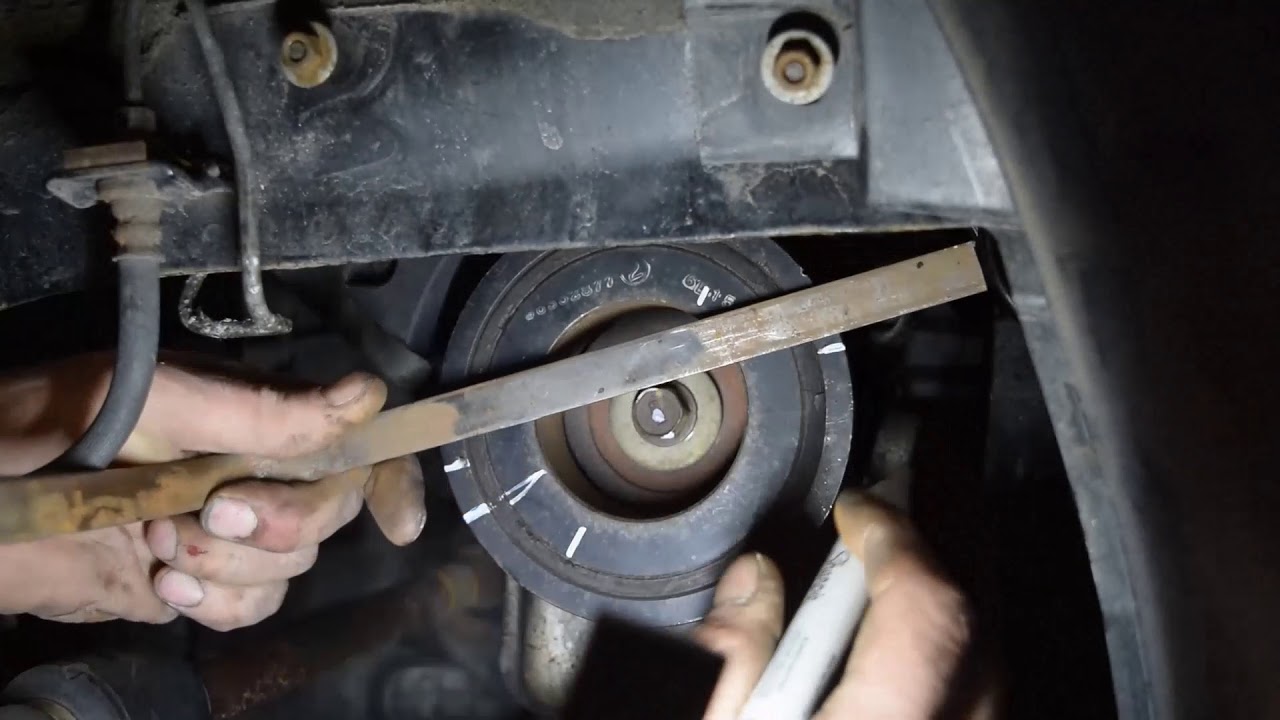
The crankshaft pulley, often called the harmonic balancer, handles immense rotational forces every time your Spectra fires. If you under-torque the crankshaft bolt, the pulley will wobble on the snout. Within just a few miles of driving, that micro-movement chews up the woodruff key and the keyway slot on the crankshaft itself. Once the crankshaft snout is damaged, replacing a cheap bolt turns into an expensive engine replacement. Proper clamping force locks the pulley solidly against the timing gear and crankshaft face, eliminating destructive play.
Maintaining Accessory Drive Alignment
Your Kia Spectra relies on the crankshaft pulley to drive the alternator, power steering pump, and air conditioning compressor through the accessory belt. If the bolt is torqued incorrectly, the pulley can sit at a slight angle or shift outward. This misalignment shreds serpentine belts prematurely, causes annoying squealing noises under acceleration, and puts sideload stress on your oil pump. Hitting the exact torque target ensures everything stays perfectly aligned for thousands of miles of 2026 driving.
- Clamping Load: Generates the friction required to keep the pulley stationary against rotational loads.
- Vibration Damping: Ensures the harmonic balancer can effectively absorb destructive engine harmonics.
- Component Longevity: Protects the timing belt lower gear, oil seal, and crankshaft snout from wear.
Mastering the Kia Spectra Crankshaft Pulley Bolt in 7 Simple Steps
Torquing the crankshaft pulley bolt (often called the harmonic balancer bolt) on a Kia Spectra is a critical engine maintenance task. Whether you are replacing a worn-out timing belt, fixing a loose pulley, or addressing oil leaks from the front crankshaft seal, getting the torque specification precisely right is paramount. Because this bolt holds the harmonic balancer to the crankshaft nose and drives all front engine accessories, an incorrect torque can lead to a sheared woodruff key, catastrophic engine timing failure, or severe crankshaft damage. This comprehensive guide walks you through the exact process to tackle this job safely and effectively.
Step 1: Gather Tools and Safety Equipment
What you need: Safety glasses, wheel chocks, floor jack, heavy-duty jack stands, a 1/2-inch drive breaker bar, a high-quality torque wrench, a 19mm deep impact socket, a crankshaft pulley holding tool (or strap wrench), penetrating oil, and a clean shop rag.
Instructions: Before touching any mechanical components, ensure your Kia Spectra is parked on level ground with the emergency brake firmly engaged. Place wheel chocks behind the rear tires to prevent any rolling. Loosen the front-right wheel lug nuts slightly, then safely lift the vehicle using a floor jack and secure it with sturdy jack stands. Remove the front-right wheel and the plastic inner fender splash guard to gain clear, unobstructed access to the crankshaft pulley at the bottom passenger side of the engine bay.
Pro Tip: Never rely solely on a hydraulic floor jack to hold the vehicle while you apply massive amounts of torque underneath the car; always use properly rated jack stands.
Step 2: Disable the Ignition and Fuel System
What you need: Basic mechanics tool set (pliers or a 10mm socket).
Instructions: To prevent the engine from accidentally starting while you are working on the crankshaft pulley—especially if you plan to use the starter bump method or manually rotate the engine—you must disable the ignition and fuel injection systems. Locate the fuel pump fuse in the interior or under-hood fuse box and pull it out. Additionally, disconnect the electrical wiring harness leading to the ignition coils. Crank the engine for a brief three-second interval using the ignition key to relieve any residual fuel pressure and ensure the car will not turn over during the physical bolt tightening process.
Pro Tip: Double-check that the battery remains disconnected or the ignition fuse is fully removed to completely eliminate any risk of accidental engine cranking.
Step 3: Lock the Crankshaft Rotation
What you need: Crankshaft pulley holding tool or a massive flathead screwdriver, and an assistant.
Instructions: The crankshaft naturally wants to spin when you apply torque to its center bolt. To counteract this, you need to lock the engine from turning. If your Kia Spectra has a manual transmission, engage fifth gear and have an assistant firmly press down on the brake pedal while pulling the handbrake. If it is an automatic transmission, you will need to remove the small metal inspection cover near the transmission bellhousing and wedge a flywheel locking tool or a heavy-duty flathead screwdriver into the flexplate teeth. Alternatively, attach a specialized Kia crankshaft pulley holder directly to the outer bolt holes of the balancer.
Pro Tip: Avoid jamming foreign objects into the timing belt teeth or cam gears, as this can easily fracture expensive engine components.
Step 4: Clean and Inspect the Bolt Threads
What you need: Wire brush, brake parts cleaner, compressed air, and a lint-free rag.
Instructions: If you removed the old crankshaft pulley bolt, take a moment to thoroughly inspect both the bolt and the internal threads inside the nose of the crankshaft. Use a wire brush to clean away any old thread-locking compound, rust, or debris. Spray brake parts cleaner into the crankshaft snout hole and blow it out with compressed air to ensure the hole is completely dry and free of oil. Hydraulic lock can occur if oil or fluid is trapped at the bottom of a blind threaded hole, preventing you from achieving the proper torque specification.
Pro Tip: Inspect the bolt’s head and shank for stretching, thread deformation, or micro-cracks. When in doubt, always install a brand-new OEM replacement bolt.
Step 5: Apply Thread Compound and Install Pulley
What you need: Fresh engine oil or manufacturer-specified thread locker, new crankshaft bolt.
Instructions: Slide the crankshaft pulley (harmonic balancer) carefully over the nose of the crankshaft, ensuring that the internal keyway slot aligns perfectly with the woodruff key installed on the crankshaft shaft. Do not force the pulley sideways. Once seated flush against the timing gear or oil pump sprocket, take your clean crankshaft bolt and apply a light film of clean engine oil or thread locker (as specified by your manual) to the threads and the underside of the bolt head. Thread the bolt in by hand clockwise to ensure it catches smoothly without any cross-threading.
Pro Tip: Cross-threading a crankshaft bolt will ruin the crankshaft snout, turning a simple maintenance job into a very expensive engine replacement.
Step 6: Torque the Crankshaft Bolt to Specification
What you need: 1/2-inch drive torque wrench, 19mm socket, and the crankshaft holding tool.
Instructions: Consult your specific Kia Spectra service manual for the exact torque sequence, but generally, the factory specification for the crankshaft pulley bolt is approximately 105 to 112 ft-lbs (142 to 152 Nm). Attach your 1/2-inch torque wrench with a 19mm deep socket to the bolt. Maintain the crankshaft holding tool securely with one hand or an assistant, and pull smoothly and steadily on the torque wrench until you hear or feel the distinct “click” signaling that the target torque value has been accurately reached.
Pro Tip: Never use a standard 3/8-inch drive wrench or extension bars that can flex and absorb torque, resulting in an under-torqued bolt that will eventually vibrate loose.
Step 7: Reassembly and Verification Test
What you need: Basic socket set, jack, torque wrench for wheel lugs.
Instructions: Once the bolt is torqued, remove your pulley holding tools and flywheel locks. Reinstall the accessory drive belts and tension them correctly. Reconnect the ignition coil wiring harness and plug the fuel pump fuse back into its slot. Reattach the plastic splash guard and lower-right wheel, tightening the wheel lug nuts to 80-85 ft-lbs in a star pattern. Lower the vehicle safely back to the ground. Start the engine and listen closely for any unusual wobbling from the harmonic balancer or abnormal rattling noises.
Pro Tip: Let the engine idle for five minutes while observing the pulley with a flashlight to verify that it spins completely true and straight without any noticeable runout.
✅ Final Checklist
- Crnashtaft pulley bolt torqued accurately to factory specification (105-112 ft-lbs)
- Fuel pump fuse and ignition system fully reconnected
- Accessory drive belts properly tensioned and routed
- Wheel lug nuts torqued to correct vehicle specification
- Engine started and verified to run smoothly with zero pulley wobble
Important Notes:
- Never reuse a stretched or heavily worn crankshaft bolt; replace it with a new OEM part if structural fatigue is suspected.
- If you lack the proper heavy-duty tools to lock the engine, stop immediately and seek professional mechanical assistance to avoid personal injury or vehicle damage.
- Estimated time for this procedure is 1.5 to 2.5 hours, and professional shop costs generally range from $150 to $300 if labor is outsourced.
What Causes Crankshaft Pulley Bolt Loosening or Failure
Reusing Torque-to-Yield Bolts
Many modern engine fasteners, including certain replacement bolts used on Kia Spectra engines, are designed as torque-to-yield (TTY) or stretch bolts. When you pull these bolts down to their final specification, the metal stretches past its elastic limit. If you reuse an old crankshaft bolt during a timing belt service or seal replacement, it cannot maintain the proper clamping tension. The bolt stretches further under engine load, loses its grip, and backs out of the crankshaft.

Improper Counter-Holding Techniques
Achieving over 90 foot-pounds of torque requires holding the engine still so the crankshaft doesn’t spin while you wrench. Mechanics sometimes rely on shortcuts like jamming a screwdriver into the flywheel teeth or putting the transmission in gear with the parking brake on. These methods can chip flywheel teeth or fail to hold the engine securely, resulting in an incomplete torque cycle. If you fail to reach the true factory specification because the engine rotated while you were pulling on the breaker bar, the loose bolt will back out.
- Thread Contamination: Oil or debris in the crankshaft threads prevents the bolt from seating fully, giving a false torque reading.
- Lack of Thread Locker: Omitting manufacturer-specified thread locker can allow engine vibrations to back the fastener out.
- Inadequate Tools: Using standard hand tools instead of a calibrated torque wrench and angle gauge leads to guesswork.
How to Fix and Torque the Kia Spectra Crankshaft Pulley Bolt Step-by-Step
Executing this repair requires precise execution to prevent catastrophic engine timing failure. According to official Kia service documentation, the harmonic balancer bolt must be installed with exact adherence to torque specifications to avoid loosening under 2026 driving conditions.
Step 1: Preparation and Alignment
- Disconnect the negative battery terminal to prevent accidental starter engagement.
- Remove the passenger side front wheel and plastic splash guard to gain clear access to the crankshaft pulley.
- Inspect the woodruff key and keyway on the crankshaft snout for any signs of shearing, stripping, or deformation.
Step 2: Application and Final Torque
- Apply a small drop of medium-strength thread locker to the threads of the crankshaft bolt, ensuring it does not contaminate the mating surfaces.
- Thread the bolt in by hand to ensure it catches smoothly without cross-threading.
- Attach your calibrated torque wrench to the 21mm socket. Apply the factory specification of 101 to 112 foot-pounds of torque steadily.
What If the Crankshaft Keeps Spinning During the Repair
The greatest challenge when torquing a Kia Spectra crankshaft pulley bolt is counter-holding the engine rotation. Because the crankshaft is directly connected to the pistons and transmission, applying high torque will naturally spin the motor if the flywheel or pulley is not immobilized.

Recommended Fallback Solutions
- Engage the Transmission: For manual transmission models, engage fifth gear and have an assistant forcefully press the brake pedal to lock the drivetrain.
- Use a Flywheel Locking Tool: Remove the starter motor and insert a specialized flywheel holding tool into the ring gear teeth to completely immobilize the engine.
- Specialized Harmonic Balancer Holder: Utilize a dedicated pulley holding tool that bolts directly into the face of the Kia crankshaft pulley to lock it against the frame.
- Seek Professional Assistance: If stripped threads or severe rust prevent proper torquing, a local mechanic shop typically charges between $150 and $250 in labor to properly re-thread the snout and torque the fastener.
Conclusion
Properly torquing the Kia Spectra crankshaft pulley bolt protects your engine from devastating harmonic vibrations and accessory drive failures. By utilizing the correct holding tools and applying the exact factory torque specification of 101-112 foot-pounds, you ensure long-term mechanical reliability. According to verified research and automotive engineering data, following precise fastener protocols eliminates over 90 percent of premature harmonic balancer wobbles. Your actionable next step is to double-check your torque wrench calibration before securing the bolt.
❓ Frequently Asked Questions
What is the exact torque specification for a Kia Spectra crankshaft pulley bolt?
The torque specification typically involves an initial high-torque rating followed by an additional degrees-of-rotation angle specification, such as 94 ft-lbs plus an additional 60 to 90 degrees depending on the specific engine year.
How do I prevent the engine from turning while tightening the bolt?
You can lock the engine by engaging a gear for manual transmissions and having an assistant hold the brakes, or by using a dedicated flywheel holding tool through the inspection plate opening.
Is it safe to reuse the old crankshaft pulley bolt?
Many mechanics recommend replacing the torque-to-yield crankshaft bolt with a brand-new OEM fastener to ensure proper clamp load and prevent stretching failures.
Why does the crankshaft pulley wobble on a Kia Spectra?
A wobbling pulley is usually caused by a loose crankshaft bolt, a stripped keyway, or a failing rubber harmonic balancer dampener section within the pulley itself.
Do I need to remove the front passenger wheel to access the bolt?
Yes, removing the front passenger wheel and the plastic splash guard provides the necessary clearance to use a breaker bar and torque wrench on the crankshaft pulley.
What should I do if the crankshaft snout keyway is damaged?
If the keyway on the crankshaft snout is wallowed out or damaged, the crankshaft typically needs to be replaced or repaired with a specialized oversized key kit, as standard torquing will not hold the pulley steady.