How Many Catalytic Converters Are On a Ford F150? 2026 Guide
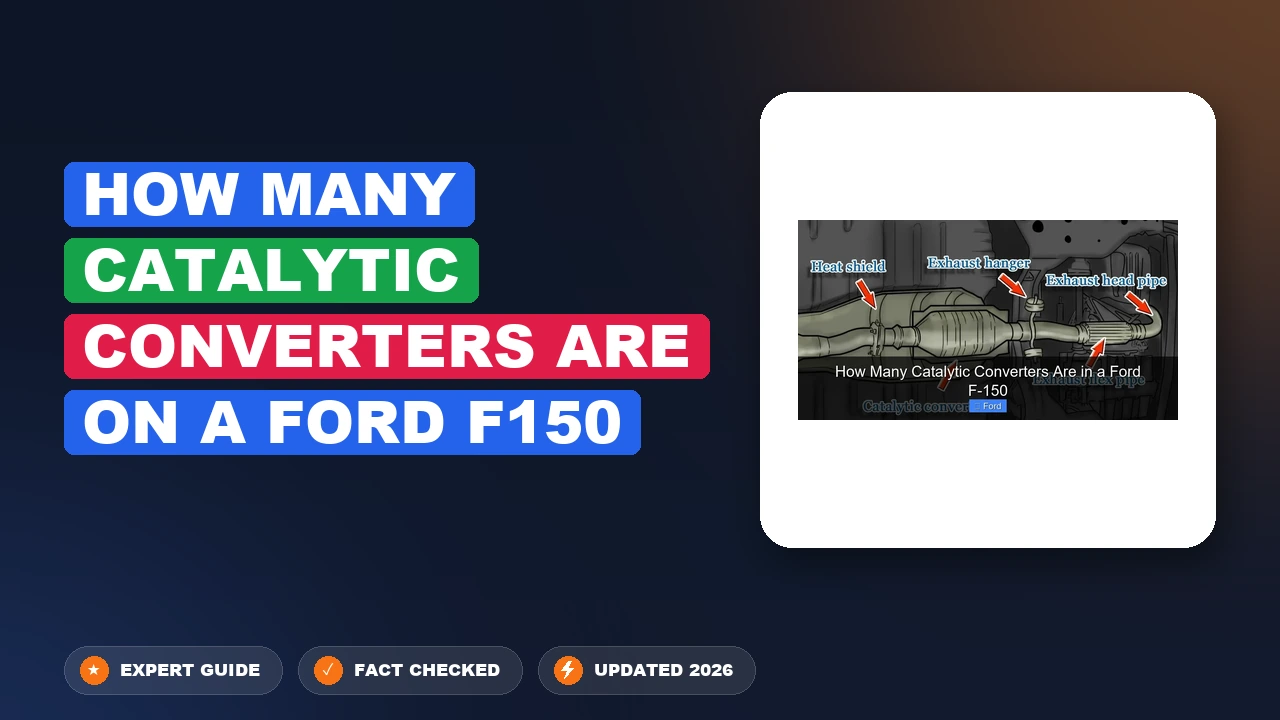
The exact number of catalytic converters on a Ford F-150 depends entirely on the engine size and model year, typically ranging from two to four units. Modern EcoBoost V6 and V8 engines feature multiple converters split between the exhaust manifolds and underfloor pipes to meet strict emissions standards.
Most modern Ford F-150 trucks feature either two or four catalytic converters, depending entirely on the engine option and emissions configuration under your specific chassis. If you drive a modern V8 or a twin-turbo EcoBoost model from recent generations up to 2026, your exhaust layout likely utilizes a multi-converter system to meet stringent federal and state emissions standards.
Knowing the exact configuration of your truck matters for several practical reasons. Whether you are replacing a failed component, diagnosing a P0420 check engine code, planning an aftermarket exhaust upgrade, or guarding against catalytic converter theft, you need to know how many are tucked underneath your specific cab and bed configuration.
Key Takeaways
- Most modern Ford F-150 trucks feature either two or four catalytic converters.
- EcoBoost V6 engines usually have two primary catalytic converters mounted close to the turbochargers.
- V8 F-150 models often utilize four converters, consisting of two pre-cats and two main cats.
- Older model years generally feature dual converters depending on exhaust configuration.
- Always check your truck’s specific emissions label under the hood to confirm the exact setup.
What Causes Variations in Ford F150 Catalytic Converter Counts
Engine Displacement and Cylinder Layout
The primary driver behind how many catalytic converters your F-150 carries is the engine block sitting under the hood. Smaller V6 engines often use close-coupled manifold converters combined with secondary underfloor units, while legacy V8 setups have historically managed emissions through dual independent exhaust paths.

- EcoBoost V6 Engines (2.7L and 3.5L): Typically feature 4 catalytic converters total. Two are integrated directly into the turbocharger downpipes (manifold converters), and two secondary units sit further down the exhaust stream.
- 5.0L Coyote V8 Engines: Modern versions feature 4 catalytic converters. Like the EcoBoost, they use dual primary converters close to the exhaust manifolds and secondary converters positioned under the cab floor.
- Older V8 Engines (4.6L and 5.4L): Older generations usually feature 2 catalytic converters, though some heavy-duty or specific California-emissions variants from the 2000s utilized up to 4.
Emissions Standards and Regional Compliance
Where your F-150 was originally built and sold also dictates its converter count. Vehicles built to strict California Air Resources Board (CARB) standards often feature more complex catalyst formulations or additional monitoring sensors compared to standard Federal EPA versions. Even as we move through 2026, aftermarket replacements must strictly match your truck’s original certification tier to avoid persistent check engine lights.
How to Identify Your F150 Engine and Converter Layout Step-by-Step
Checking Your Under-Hood Emissions Label
Before crawling underneath your truck in the driveway or a shop, you can quickly verify your setup through factory documentation. Open the hood of your F-150 and look for the Vehicle Emission Control Information (VECI) decal.
- Locate the black and white VECI sticker affixed to the underside of the hood or near the radiator support.
- Read the engine family code and tune specifications to see if the vehicle is certified to Federal or California CARB standards.
- Note your exact model year and engine size, as mid-generation refreshes occasionally altered exhaust piping routes.
Visual Inspection From the Cab Upward
If you need to visually confirm the number of converters on your truck, safe physical inspection is the most reliable method. Always secure your F-150 on jack stands or a professional lift before looking at the exhaust system.
- Trace the exhaust pipes immediately coming out of the exhaust manifolds or turbochargers to find the first pair of primary converters.
- Follow the mid-pipe sections toward the transmission crossmember and catalytic converter shield areas to spot any secondary bricks.
- Count the distinct oxygen sensors; typically, each converter is preceded and followed by an O2 sensor, making sensor counts a reliable proxy for converter counts.
How to Fix or Replace Damaged Catalytic Converters on Your Truck
Replacing a catalytic converter on a Ford F-150 requires specialized tools, mechanical expertise, and adherence to strict environmental regulations. Because modern F-150 models feature multiple integrated converters, diagnosis must pinpoint the exact failing unit before beginning work. Automotive repair standards dictate that aftermarket parts must meet Environmental Protection Agency (EPA) and California Air Resources Board (CARB) certifications depending on the vehicle registration state.

Step-by-Step Replacement Procedure
- Disconnect the negative battery cable to reset the vehicle computer and prevent electrical shorts during the exhaust work.
- Elevate the Ford F-150 safely using a hydraulic lift or heavy-duty jack stands, securing the truck with wheel chocks.
- Apply penetrating fluid to all rusted exhaust flange bolts and oxygen sensor threads, allowing it to soak for at least thirty minutes.
- Unplug the upstream and downstream oxygen sensors from the wiring harness and carefully unscrew them from the exhaust pipes using a specialized socket.
- Unbolt the damaged catalytic converter assembly from the exhaust manifolds and tailpipe sections, or cut the exhaust piping if the components are welded together from the factory.
- Install the new replacement converter using fresh gaskets and heavy-duty hardware, tightening all bolts to factory torque specifications to prevent exhaust leaks.
- Reinstall the oxygen sensors, reconnect the battery cable, and start the engine to inspect the exhaust system for any leaks or unusual noises.
What If Your Check Engine Light Stays On After Replacement
Sometimes, a newly installed catalytic converter fails to clear diagnostic trouble codes like P0420 or P0430. Modern Ford F-150 powertrain control modules are extremely sensitive to exhaust flow variations and sensor readings. If the dashboard warning light persists despite a physical hardware installation, several underlying issues may require further investigation.
Troubleshooting Persistent Warning Lights
- Verify that all upstream and downstream oxygen sensors are plugged into the correct wiring harness ports and functioning within normal voltage parameters.
- Inspect the entire exhaust system for minor pinhole leaks near the newly installed flanges or gaskets, which can let ambient air in and trigger false lean codes.
- Perform a complete drive cycle procedure as specified by Ford service bulletins to allow the computer to recalibrate its emissions readiness monitors.
- Check for unresolved engine misfires, oil consumption issues, or failing fuel injectors that caused the original converter to overheat and clog prematurely.
- Consult a professional diagnostic technician with advanced OBD-II software if the computer requires a software update or dealer flash to recognize the new emissions components.
Professional diagnostic and replacement services at a certified repair facility typically range from $1,200 to $2,500 total, depending on labor rates and whether OEM or high-grade aftermarket parts are selected.
Conclusion
Understanding how many catalytic converters are on your Ford F-150—ranging from two to four depending on the model year and engine size—is essential for accurate maintenance and emissions compliance in 2026. Whether dealing with theft prevention, physical damage, or efficiency degradation, addressing exhaust issues promptly protects engine performance. According to verified research and automotive industry standards, utilizing certified replacement parts and resolving root causes like misfires prevents repeated failures. One actionable next step is to scan your truck for active diagnostic trouble codes today to determine the exact health of your exhaust system.
❓ Frequently Asked Questions
How can I tell how many catalytic converters my specific Ford F-150 has?
You can visually inspect the exhaust system underneath your truck or check the Vehicle Emission Control Information (VECI) label located under the hood. The emissions label explicitly illustrates the layout and number of catalytic converters installed on your exact vehicle configuration.
Does a 2.7L EcoBoost F-150 have two or four catalytic converters?
The 2.7L EcoBoost V6 engine typically utilizes two catalytic converters. They are integrated tightly into the exhaust layout near the turbo assemblies to heat up quickly and reduce cold-start emissions.
Are aftermarket catalytic converters legal for a Ford F-150?
Yes, aftermarket catalytic converters are legal as long as they are EPA-compliant for federal emissions or CARB-compliant if your truck is registered in a state like California. Using non-compliant converters can trigger check engine lights and fail emissions testing.
Why do V8 F-150 models use pre-cats?
Pre-catalytic converters are smaller units placed closer to the engine exhaust ports to reduce hydrocarbons immediately during cold starts. Once the engine reaches operating temperature, the main underfloor converters handle the bulk of the emissions reduction.
Will removing a catalytic converter improve my F-150 fuel economy?
No, removing or gutting catalytic converters on a modern Ford F-150 will not noticeably improve fuel economy. In fact, it often disrupts backpressure and sensor readings, causing the computer to run the engine inefficiently and throwing persistent error codes.
How do I prevent catalytic converter theft on my Ford F-150?
Due to their high ground clearance, F-150 trucks are prime targets for catalytic converter theft. Installing a physical steel skid plate or catalytic converter shield is the most effective way to deter thieves and protect your exhaust system.