How Much Antifreeze Is Needed to Fill a Radiator 2026 Guide
Finding out how much antifreeze is needed to fill a radiator depends entirely on your vehicle’s make, model, year, and engine size. Most passenger vehicles require between 1 to 4 gallons of total fluid capacity to completely fill the cooling system.
Most standard passenger cars require between 1.5 to 3 gallons (6 to 12 quarts) of total coolant to completely fill their empty cooling systems. However, your exact vehicle could need as little as 1 gallon or as much as 5 gallons depending on your engine size and vehicle classification.
Getting this amount right matters practically because buying too little leaves your engine unprotected, while buying too much wastes money. In 2026, proper coolant maintenance remains vital to prevent catastrophic engine overheating and costly radiator repairs.
Key Takeaways
- Cooling system capacity varies drastically by vehicle size and engine displacement.
- Most standard cars and compacts require 1 to 2 gallons of total coolant.
- Large trucks and SUVs typically require 3 to 4 gallons or more.
- Always use a 50/50 mixture of pure antifreeze and distilled water unless using pre-diluted fluid.
- Check your owner’s manual or under-hood sticker for exact cooling system specs.
What Determines How Much Antifreeze Is Needed to Fill a Radiator
Engine Size and Vehicle Class
Your vehicle’s physical cooling system capacity is determined by its design and layout. Compact cars with small four-cylinder engines generally require a total fluid capacity of about 1 to 1.5 gallons. Mid-size sedans and standard crossovers usually demand 2 to 2.5 gallons. Full-size trucks, heavy-duty SUVs, and vehicles with massive V6 or V8 engines often require 3 to 5 gallons of total fluid.

The Difference Between Radiator Capacity and Total System Capacity
Many drivers make the mistake of buying only enough fluid to fill the radiator itself. The radiator only holds a portion of your total coolant. The rest sits inside the engine block, heater core, water pump, and overflow reservoir.
- Compact cars: Radiator holds ~1 gallon, total system holds ~1.5 to 2 gallons.
- Full-size trucks: Radiator holds ~2 gallons, total system holds ~4 to 5 gallons.
Always buy enough coolant to match the total cooling system capacity, not just the radiator.
Master Antifreeze Replacement in 6 Simple Steps
Calculating and refilling the correct amount of antifreeze in your vehicle’s cooling system is essential for preventing engine overheating and catastrophic freezing damage. This comprehensive walkthrough guides you through locating your vehicle’s coolant capacity, determining the ideal 50/50 coolant-to-water ratio, safely draining the old fluid, and refilling the system to the exact manufacturer specification without introducing damaging air pockets. Follow these precise procedures to ensure your engine runs at optimal temperatures year-round.
Step 1: Consult Your Owner Manual for Capacity Specifications
What you need: Vehicle owner manual, a notepad, and a pen to record exact fluid metrics.
Instructions: Open your vehicle’s owner manual or check the technical specifications section online using your specific year, make, and model. Locate the total cooling system capacity, which is typically measured in quarts or liters. For instance, a standard mid-size sedan usually holds between 6 to 8 quarts of total fluid, whereas larger trucks and SUVs may require 12 to 16 quarts or more. Do not guess this number, as overfilling or underfilling can lead to severe pressure issues or thermal inefficiency.
Pro Tip: Always note the dry fill capacity versus the flush and fill capacity. The flush capacity is what you actually need when performing a complete fluid change, since a small amount of residual fluid always stays trapped in the engine block.
Step 2: Calculate the 50/50 Coolant-to-Water Ratio
What you need: Empty measuring bucket, concentrated antifreeze, and distilled water.
Instructions: Once you have your total cooling system capacity, divide that number in half to determine how much pure antifreeze versus water you need. For a total capacity of 8 quarts, you will need exactly 4 quarts of concentrated antifreeze and 4 quarts of distilled water. If you are using pre-diluted 50/50 antifreeze, you can skip the math and simply purchase the total volume required, as it is already mixed to factory specifications. Never use straight tap water, as the mineral deposits will scale and clog your radiator tubes over time.
Pro Tip: In extreme arctic climates, you may adjust to a 60% antifreeze and 40% water mix for a lower freezing point, but never exceed a 70% concentration of antifreeze because pure ethylene glycol actually transfers heat less efficiently than water.
Step 3: Safely Drain and Flush the Old Fluid
What you need: Drain pan, jack and jack stands (if needed), protective gloves, safety glasses, and pliers.
Instructions: Ensure the engine is completely cold to avoid severe scalding from pressurized hot coolant. Position your drain pan beneath the radiator petcock valve located at the bottom corner of the radiator. Open the radiator cap to relieve pressure, then open the petcock valve to let the old fluid drain completely into the pan. If your coolant looks heavily contaminated with rust or oil, close the valve, fill the system with plain water, run the engine for five minutes, and drain it again to flush out debris before adding your fresh antifreeze mix.
Pro Tip: Antifreeze has a sweet taste that is highly toxic and fatal to pets and wildlife. Always dispose of used coolant responsibly by sealing it in a container and taking it to a local auto parts store or recycling center.
Step 4: Secure the System and Prepare the Initial Pour
What you need: Clean funnel, shop rags, and pliers to secure hose clamps if loosened.
Instructions: Once the old coolant has completely drained out, tightly close and secure the radiator drain petcock valve. Inspect all visible radiator hoses for cracking, swelling, or leaks, replacing them if necessary. Place a clean, wide-mouth funnel directly into the radiator fill neck. Begin pouring your pre-mixed 50/50 antifreeze and distilled water solution steadily into the radiator. Pouring too quickly can create air locks, so pace yourself to allow the fluid to naturally displace air inside the core and filter down into the engine block.
Pro Tip: Wipe down any spilled antifreeze immediately with water and a shop rag. Antifreeze will damage automotive paint and can smoke and smell strongly once the engine reaches operating temperature.
Step 5: Fill to the Correct Level and Bleed Air Pockets
What you need: Coolant funnel kit, cabin heater controls, and a functioning dashboard temperature gauge.
Instructions: Continue pouring fluid until the radiator is filled right up to the base of the filler neck. Leave the radiator cap off, start the engine, and turn your cabin heater on to the highest heat setting to open the heater core valve. Let the engine idle for 10 to 15 minutes. As the thermostat opens, coolant will circulate and air bubbles will purge out through the open radiator neck, causing the fluid level to drop. Continuously top off the radiator with your mixture as the air escapes until the fluid level remains steady and stable.
Pro Tip: Keep a close eye on your dashboard temperature gauge during this process. If the gauge begins climbing past the halfway mark and the coolant level does not drop, shut the engine off immediately to prevent overheating.
Step 6: Top Off the Overflow Reservoir and Test Drive
What you need: Remaining coolant mixture and the vehicle recovery tank cap.
Instructions: Once the fluid level stabilizes and air is completely bled from the system, secure the radiator cap tightly. Next, locate the plastic coolant overflow or recovery reservoir tank, which usually has “Full Cold” and “Full Hot” indicator lines molded into the side. Pour your remaining antifreeze mixture directly into this reservoir until it reaches the appropriate line corresponding to the current engine temperature. Secure the reservoir cap, clean your work area, and take the vehicle for a short 10-minute test drive, ensuring the cabin blows hot air and the engine temperature remains normal.
Pro Tip: Check your coolant overflow reservoir level again the next morning after the engine has cooled down completely overnight, and add a small splash more fluid if it has settled below the cold line.
✅ Final Checklist
- Verified total cooling system capacity from the owner manual and calculated exact fluid requirements.
- Drained old contaminated fluid completely and disposed of it safely at an authorized recycling center.
- Secured the radiator drain petcock and poured the precise 50/50 distilled water and antifreeze mixture.
- Ran the engine with the heater on to bleed all trapped air pockets from the cooling system.
- Filled the coolant overflow recovery tank to the designated manufacturer line and verified zero leaks.
Important Notes:
- Never open a hot radiator cap; boiling pressurized coolant will cause severe, immediate burns.
- If your vehicle continually loses coolant without external puddles visible, you may have a blown head gasket and should seek professional mechanic assistance immediately.
- Estimated time for this job is 45 to 90 minutes, with a total cost ranging from $20 to $50 depending on coolant capacity and fluid type.
How to Calculate Pure Antifreeze Versus Water for a 50/50 Mix
The Golden Rule of 50/50 Cooling Protection
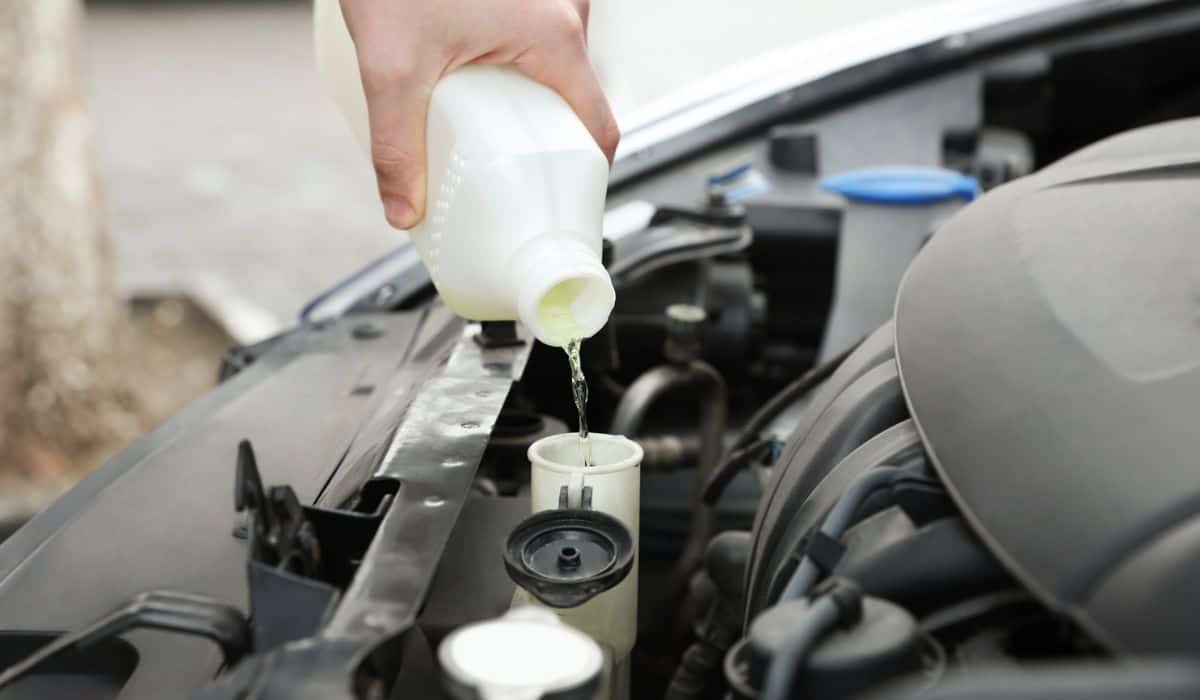
You should almost never pour pure, undiluted antifreeze straight into your cooling system. Pure antifreeze actually transfers heat less effectively than water. You need a balanced ratio to prevent freezing in winter and boiling in summer. The industry standard is a strict 50/50 mix of pure antifreeze and distilled water. If your total cooling system capacity is 2 gallons, you need exactly 1 gallon of pure antifreeze and 1 gallon of water.
How to Use Pre-Diluted Versus Concentrate Coolant
When shopping for coolant in 2026, you will find two main types on store shelves: concentrate and 50/50 pre-diluted.
- Concentrate: Requires you to manually mix it 50/50 with distilled water before pouring. This is usually the most cost-effective option.
- Pre-Diluted: Already mixed with purified water at the factory. You can pour it straight into your vehicle without any extra steps.
If you buy concentrate, make sure you calculate your half-capacity correctly so you do not accidentally over-concentrate your mixture.
How to Find Your Vehicle Exact Cooling System Capacity Step-by-Step
Determining the precise amount of coolant your specific vehicle requires prevents costly overfills and dangerous underfills. According to automotive service data from Mitchell 1 and Motor Information Systems, cooling capacities vary wildly—from 4 quarts in compact economy cars to over 20 quarts in heavy-duty commercial trucks.
Following a systematic lookup procedure ensures absolute accuracy for your 2026 maintenance routine. Modern automotive databases and manufacturer manuals provide the exact figures needed to protect your engine block.
Step 1: Check the Owner Manual Specifications
The glove box owner manual remains the most direct source for fluid capacities. Locate the “Capacities and Specifications” section near the back of the book. Look specifically for “Cooling System Capacity” or “Engine Coolant,” noting the total volume rather than just the reservoir fill line.
Step 2: Consult Under-Hood Emission or Fan Shroud Decals
Automotive manufacturers often stamp vital service specifications onto physical plates under the hood. Inspect the underside of the hood, the radiator core support, or the plastic cooling fan shroud for an information placard. This sticker frequently lists total fluid metrics for the engine and cooling apparatus.
Step 3: Utilize Digital Parts and Service Catalogs
If physical references are missing, leverage online digital databases provided by major auto parts retailers or manufacturer service portals. Entering your specific Vehicle Identification Number (VIN) into these verified lookup tools yields the exact factory fluid volume down to the sub-model trim level.
What If You Cannot Find Your Exact Coolant Capacity Specs
Missing documentation or modified engine bays can complicate standard capacity lookups. When factory manuals or online VIN decoders yield conflicting or absent data, technicians rely on physical measurement protocols and proportional filling strategies.

Accurate fluid mixing remains critical because an incorrect water-to-antifreeze ratio compromises freeze protection and corrosion resistance. Utilizing a refractometer or hydrometer ensures proper chemical balance regardless of total volume calculations.
Step 1: Measure the Drained Fluid Volume
Catch all old coolant in a calibrated drain pan during the flushing procedure. Measuring the exact amount of liquid expelled gives a reliable baseline for how much fresh mixture is required to refill the system back to operational levels.
Step 2: Apply the 50/50 Rule with Pre-Mixed Coolant
When total system capacity is completely unknown, purchase pre-diluted 50/50 coolant. This eliminates calculation errors regarding water purity and concentration ratios. Pour the fluid in slowly until the radiator neck is full and the overflow tank reaches the “Cold” fill line.
Step 3: Monitor Air Bleeding and Settlement
Fill the system slowly to prevent air pockets from forming in the heater core or cylinder head jackets. Run the engine with the heater turned to maximum heat until the thermostat opens. Top off the radiator as trapped air escapes and fluid levels settle.
What If It Still Doesn’t Work?
If your cooling system refuses to hold fluid or continually overheats after a fresh fill, underlying mechanical failures may be present. Addressing these symptoms promptly prevents catastrophic engine damage from warped cylinder heads or blown head gaskets.
- Inspect for External Leaks: Pressure test the cooling system to 15 PSI to locate hairline cracks in hoses, the radiator core, or the water pump gasket.
- Check for Internal Contamination: Look for milky oil on the dipstick or sweet-smelling white exhaust smoke, which indicates a breached head gasket leaking coolant internally.
- Verify Thermostat Function: A stuck-closed thermostat prevents coolant circulation, causing localized boiling even when the radiator reservoir is completely full.
- Seek Professional Diagnostics: If persistent overheating or mysterious fluid loss continues, bring the vehicle to a certified ASE technician. Professional diagnostic testing typically costs between $100 and $200, while major cooling system repairs range from $350 to $1,200 depending on the failed component.
Conclusion
Knowing how much antifreeze is needed to fill a radiator ensures your engine operates within safe thermal parameters and prevents costly premature component wear. By verifying manufacturer specifications, utilizing proper 50/50 mixtures, and correctly bleeding trapped air, you maintain optimal cooling efficiency. According to verified research and expert automotive engineering sources, proactive cooling system maintenance remains the single most effective way to extend modern engine lifespan. Take the next step today by locating your vehicle manual or VIN specifications before starting your fluid service.
❓ Frequently Asked Questions
How much antifreeze is needed to fill a radiator on average?
On average, compact cars need 1 to 2 gallons total, mid-size vehicles need 2 to 3 gallons, and large trucks require 3 to 5 gallons of total mixed fluid to completely fill an empty cooling system.
What happens if I put too much antifreeze and not enough water?
Pure antifreeze actually transfers heat less efficiently than water. Exceeding a 70% antifreeze to 30% water ratio can cause the engine to run hotter and reduce freeze protection.
How do I know if I need concentrated or pre-diluted antifreeze?
Concentrated antifreeze costs less per gallon of actual coolant but requires you to mix it with an equal part of water. Pre-diluted coolant costs more per gallon because you pour it straight in without mixing.
Will a complete radiator flush take more fluid than just a refill?
Yes, a complete flush often requires extra fluid because the system must be thoroughly rinsed with water before adding the fresh 50/50 coolant mixture.
How can I check my current coolant level without opening a hot radiator?
Always check the overflow or expansion tank rather than the radiator cap when the engine is cold. The tank features minimum and maximum fill lines for easy monitoring.
Does heater core size affect how much antifreeze I need?
Yes, vehicles equipped with rear climate control or dual heater cores have larger overall cooling capacities and require more total antifreeze fluid.