How to Determine if Catalytic Converter is Bad Expert 2027
Identifying a bad catalytic converter is crucial for your car’s performance and emissions compliance. This guide outlines key symptoms and provides step-by-step diagnostic tests you can perform to confidently determine its condition, preventing further engine damage and costly repairs.
Determining if your catalytic converter is failing is crucial for your vehicle’s health and your wallet, especially as automotive systems become more integrated and precise by 2027. A compromised catalytic converter not only impacts performance and fuel efficiency but can also lead to more serious, costly engine damage if left unaddressed. Knowing the definitive signs and how to perform some initial diagnostic checks can save you from unnecessary repairs or more extensive issues down the line.
Your catalytic converter is a vital component in your exhaust system, designed to reduce harmful emissions. When it starts to fail, it gives off clear indicators. Understanding these early warnings and being able to perform a few simple, safe at-home tests will empower you to act quickly, whether that means scheduling professional service or understanding the problem yourself.
Key Takeaways
- Recognize common symptoms like rotten egg smell or reduced power.
- Perform DIY tests safely using visual inspection and temperature checks.
- Understand specific Check Engine Light codes for catalytic converter issues.
- Driving with a bad converter causes damage and emissions failures.
- Professional diagnosis confirms issues and outlines repair options.
What Are the Signs of a Bad Catalytic Converter?
A failing catalytic converter often broadcasts its distress through a combination of sensory cues and performance issues. Recognizing these symptoms early is key to preventing further damage to your engine and ensuring your vehicle complies with emissions standards prevalent in 2027.
Audible and Olfactory Clues
- Rattling Noise: If you hear a rattling sound coming from underneath your vehicle, particularly when starting the engine, accelerating, or idling, it’s a strong indicator. This often means the ceramic honeycomb substrate inside the converter has broken apart. As the pieces tumble around, they create that distinct rattling, much like loose gravel in a can.
- Rotten Egg or Sulfur Smell: One of the most infamous signs is a strong, persistent smell of rotten eggs or sulfur. A healthy catalytic converter processes hydrogen sulfide, a byproduct of combustion, into odorless sulfur dioxide. When the converter fails, it can no longer perform this conversion efficiently, allowing the pungent hydrogen sulfide to escape through your exhaust. This smell becomes more noticeable when driving uphill or under heavy acceleration.
Performance and Dashboard Warnings
- Reduced Engine Performance: A failing catalytic converter can significantly restrict exhaust flow. If the internal ceramic monolith melts or breaks apart, it creates a blockage, effectively choking your engine. You’ll notice a marked decrease in acceleration, feeling like your car struggles to gain speed. Your engine might also feel sluggish or hesitant, especially when attempting to pass other vehicles or merge onto a highway.
- Poor Fuel Economy: The engine has to work harder to push exhaust gases through a restricted converter, which directly translates to increased fuel consumption. You might find yourself filling up your tank more frequently than usual.
- Stalling or Rough Idling: In more severe cases of blockage, the exhaust back pressure becomes so intense that it can cause the engine to stall unexpectedly, particularly at idle or low speeds. A rough or uneven idle, where the engine vibrates or chugs erratically, is another common symptom of a severely restricted exhaust system.
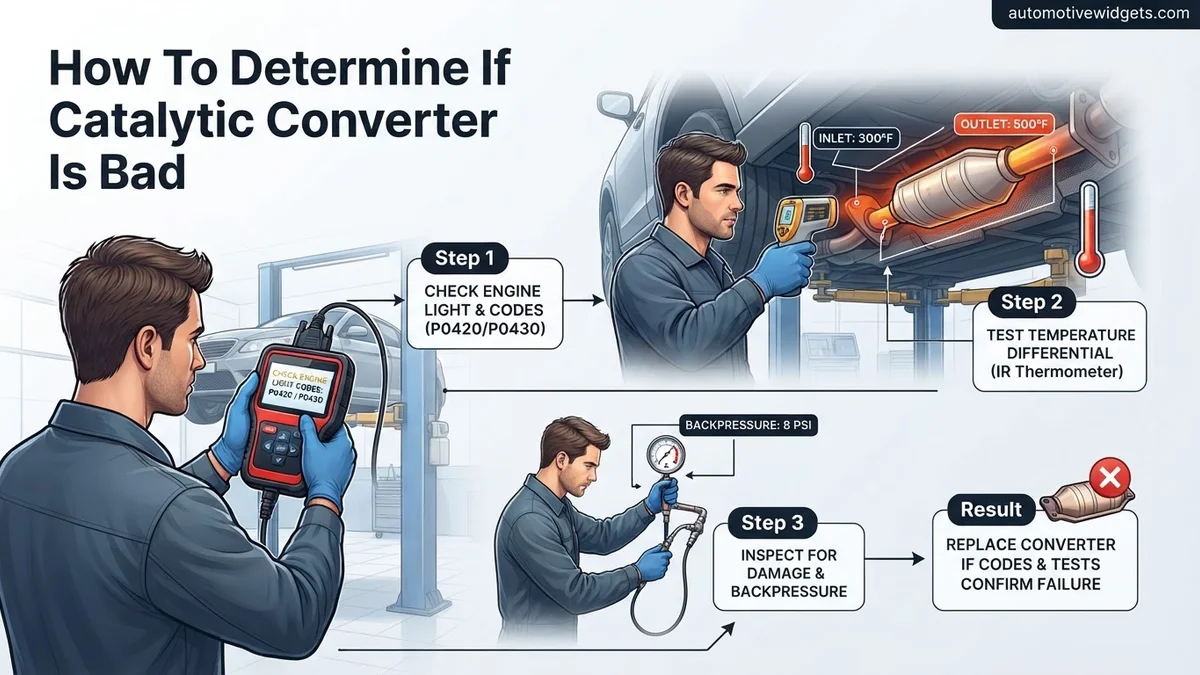
- Illuminated Check Engine Light (CEL): This is often the first and most definitive sign. Your vehicle’s onboard diagnostics (OBD-II) system, standard on all vehicles since the late 1990s and highly advanced by 2027, monitors the efficiency of the catalytic converter using oxygen sensors. If the converter isn’t cleaning the exhaust gases effectively, the downstream oxygen sensor will detect levels similar to the upstream sensor. This discrepancy triggers the CEL and stores specific trouble codes, most commonly P0420 (Catalyst System Efficiency Below Threshold – Bank 1) or P0430 (Catalyst System Efficiency Below Threshold – Bank 2). These codes specifically point to a catalytic converter efficiency issue.
From Start to Finish: Catalytic Converter Diagnostics Explained
A failing catalytic converter can significantly impact your vehicle’s performance, fuel efficiency, and emissions, potentially leading to costly repairs if left unaddressed. This comprehensive guide will walk you through the essential diagnostic steps, empowering you to accurately determine if your catalytic converter is bad. By carefully following these instructions, you can pinpoint the problem and make informed decisions about your vehicle’s health, saving you time and money.
Step 1: Recognize the Warning Signs and Symptoms
What you need: Your vehicle, keen observational skills, and a working understanding of how your car normally operates.
Instructions: Pay close attention to your vehicle’s behavior. Common indicators of a failing catalytic converter include a noticeable drop in engine performance, such as sluggish acceleration or reduced power, especially when going uphill. You might also experience decreased fuel economy or the “Check Engine” light illuminating on your dashboard. Another classic sign is a strong, rotten egg-like odor (sulfur) emanating from the exhaust, particularly after driving. Finally, a rattling sound from underneath the vehicle, often heard upon startup or during acceleration, can signal a broken internal honeycomb structure.
Pro Tip: Don’t ignore intermittent symptoms. A “Check Engine” light that comes and goes, or a subtle performance dip, can be early warnings that save you from more severe issues down the road. Note down when these symptoms occur.
Step 2: Conduct a Thorough Visual and Auditory Inspection
What you need: Safety glasses, work gloves, a flashlight, and potentially jack stands and a floor jack if you need to get under the vehicle safely.
Instructions: With the engine off and cool, carefully inspect the catalytic converter and surrounding exhaust system. Look for obvious signs of external damage, such as dents, cracks, or rust holes, which can compromise its integrity. Pay attention to any signs of overheating, like discoloration on the converter’s casing, which might appear dark blue or purple. Gently tap the converter with a rubber mallet (or your fist if no mallet is available) while listening for rattling sounds; a loose internal matrix will produce a distinct clinking or rattling noise. Ensure the exhaust hangers are intact, as a sagging exhaust can cause vibrations that mimic internal converter damage.
Pro Tip: Always prioritize safety. If you need to raise the vehicle, use sturdy jack stands on a level surface. Never rely solely on a jack. A leaking exhaust joint before the converter can also introduce fresh air, confusing O2 sensor readings, so inspect all connections carefully.
Step 3: Scan for Diagnostic Trouble Codes (DTCs)
What you need: An OBD-II scanner (either a basic code reader or a more advanced scan tool).
Instructions: Connect your OBD-II scanner to the diagnostic port, usually located under the dashboard on the driver’s side. Turn the ignition to the “ON” position (do not start the engine unless the scanner specifically instructs you to). Follow the scanner’s instructions to read any stored or pending DTCs. Common codes related to catalytic converter issues include P0420 (Catalyst System Efficiency Below Threshold – Bank 1) and P0430 (Catalyst System Efficiency Below Threshold – Bank 2). While these codes strongly suggest a bad cat, they can sometimes be triggered by faulty oxygen sensors or exhaust leaks upstream of the converter, so further testing is crucial.
Pro Tip: Before jumping to conclusions, clear the codes and drive the vehicle for a few days to see if they return. Sometimes a temporary anomaly or a specific driving condition can trigger a P0420/P0430. If the code reappears quickly, the problem is likely persistent.
Step 4: Perform an Infrared Temperature Test for Efficiency
What you need: An infrared (IR) thermometer (temperature gun), safety glasses, work gloves.
Instructions: Start the engine and allow the vehicle to reach normal operating temperature (typically 10-15 minutes of driving). With the engine idling, carefully aim the infrared thermometer at the exhaust pipe directly before the catalytic converter (inlet) and note the temperature. Then, aim it at the exhaust pipe directly after the catalytic converter (outlet) and record that temperature. A healthy catalytic converter will create an exothermic reaction, meaning the outlet temperature should be significantly hotter than the inlet temperature—typically 50-100 degrees Fahrenheit (28-56 degrees Celsius) hotter. If the outlet temperature is equal to or colder than the inlet, the catalyst is likely inefficient or clogged.
Pro Tip: For the most accurate reading, perform this test on a flat surface, with the vehicle warmed up and idling. Avoid taking readings too close to any welds or flanges, as these can affect temperature consistency. A converter that is colder at the outlet might be “dead,” while one with a very low or no difference might be less efficient.
Step 5: Assess Exhaust Backpressure for Restrictions
What you need: An exhaust backpressure gauge kit, a wrench to remove an oxygen sensor, safety glasses, work gloves.
Instructions: Locate the upstream (pre-catalytic converter) oxygen sensor. With the engine off and cool, carefully remove this oxygen sensor using the appropriate wrench. Thread the exhaust backpressure gauge into the empty oxygen sensor port. Start the engine and let it idle. Observe the pressure reading on the gauge. A healthy exhaust system should show very low backpressure, typically less than 1.25 PSI (pounds per square inch) at idle. Now, rev the engine to 2,000-2,500 RPM and hold it steady. The backpressure should remain below 2.5 PSI. If the pressure builds significantly above these values, it indicates a restriction, often a clogged catalytic converter.
Pro Tip: After completing the test, carefully remove the backpressure gauge and reinstall the oxygen sensor, ensuring it’s tightened to factory specifications to prevent exhaust leaks. High backpressure is a definitive sign of a physical obstruction within the exhaust system, and a clogged catalytic converter is a primary suspect for this issue.
Step 6: Analyze Upstream and Downstream Oxygen Sensor Data
What you need: An advanced OBD-II scan tool capable of displaying live data streams, your vehicle’s service manual (optional, for specific voltage ranges).
Instructions: Connect your scan tool and navigate to the live data stream function. Locate the readings for the upstream (Bank 1 Sensor 1, B1S1) and downstream (Bank 1 Sensor 2, B1S2) oxygen sensors. Start the engine and bring it to operating temperature. Observe the upstream O2 sensor voltage: it should fluctuate rapidly between approximately 0.1 and 0.9 volts, indicating the engine’s computer is constantly adjusting the air-fuel mixture. Now, look at the downstream O2 sensor voltage: a healthy catalytic converter will “scrub” the exhaust, causing the downstream sensor’s voltage to remain relatively stable and close to the middle range (e.g., 0.45-0.7 volts), with much slower fluctuations compared to the upstream sensor. If the downstream sensor’s readings mirror the upstream sensor’s rapid fluctuations, it indicates the catalytic converter is not efficiently storing oxygen and is likely bad.
Pro Tip: For vehicles with two catalytic converters or a V-engine, you’ll have Bank 1 and Bank 2. Always check both sets of sensors (B1S1, B1S2, B2S1, B2S2) if applicable. A consistently low voltage (below 0.2V) or high voltage (above 0.8V) on the downstream sensor that mimics the upstream sensor is a strong indicator of a failed catalytic converter.
✅ Final Checklist
- Symptoms (CEL, performance, smell, rattling) align with catalytic converter failure.
- Visual inspection confirms no external damage or obvious leaks elsewhere in the exhaust.
- DTCs P0420/P0430 (or similar catalyst efficiency codes) are present and recurring.
- Infrared temperature test shows insufficient temperature differential (outlet not hotter than inlet).
- Exhaust backpressure test indicates excessive pressure at idle or higher RPMs.
- Live O2 sensor data shows downstream sensor mirroring upstream sensor fluctuations.
Important Notes:
- Safety Considerations: Always work on a cool engine. If raising the vehicle, use approved jack stands on a level surface. Wear safety glasses and gloves to protect against hot exhaust components and sharp edges.
- When to Seek Professional Help: If you’re uncomfortable performing any of these tests, lack the necessary tools, or if diagnostic results are inconclusive, it’s always best to consult a certified mechanic. They have specialized equipment and expertise to accurately diagnose and safely replace a catalytic converter.
- Estimated Time and Cost Range: Diagnosing the issue yourself can take anywhere from 30 minutes to 2 hours, depending on your familiarity with the process and availability of tools. If replacement is needed, the cost for a new catalytic converter (parts and labor) can range from $500 to $2,500+, varying significantly by vehicle make, model, and the type of converter required (OEM vs. aftermarket).
How to Perform DIY Catalytic Converter Tests
Before heading to a professional, there are several practical, at-home diagnostic steps you can take to confirm if your catalytic converter is indeed the culprit. Always prioritize safety when working around your vehicle’s hot engine and exhaust system.
Quick Checks for Physical Integrity
- Listen for Internal Rattling: With your vehicle turned off and cooled down, gently tap the catalytic converter unit with a rubber mallet or the handle of a wrench. Listen carefully for any internal rattling or loose sounds. A healthy converter will sound solid. If you hear a jingling or rattling, it indicates the internal catalyst material has broken apart.
- Visual Inspection: Carefully inspect the exterior of the catalytic converter. Look for obvious signs of damage such as large dents, cracks, or holes in the casing. While less common, extreme discoloration or a converter glowing cherry-red after a short drive (especially at night) indicates severe overheating and a likely internal failure or blockage. Safety Note: Only perform this visual check after the vehicle has cooled down completely to avoid burns. If checking for glowing, observe from a safe distance after a drive.
Temperature and Backpressure Diagnostics
- Infrared Thermometer Test: A functional catalytic converter should operate at a significantly higher temperature at its outlet than its inlet. This is due to the chemical reactions occurring inside. After a 10-15 minute drive to get the converter up to operating temperature, use an infrared thermometer to measure the temperature of the exhaust pipe just before the catalytic converter (inlet) and just after it (outlet). A healthy converter’s outlet should typically be 50-100 degrees Fahrenheit (approximately 10-38 degrees Celsius) hotter than its inlet. If the temperatures are similar, or if the outlet is cooler than the inlet, it strongly suggests a clogged or failed converter. Safety Note: Exhaust components are extremely hot; wear appropriate heat-resistant gloves and eye protection.
- Simple Exhaust Backpressure Check: This test helps detect significant blockages. With the engine running at idle, place your hand about an inch or two away from the exhaust tailpipe. You should feel a consistent, steady flow of exhaust gas. If the flow is very weak, erratic, or feels like it’s pushing back strongly, it suggests an obstruction further up the exhaust system, often within the catalytic converter. Safety Note: Exhaust gases are hot and contain harmful fumes. Do not directly block the tailpipe for extended periods, and perform this in a well-ventilated area.
Professional Diagnosis & Understanding Check Engine Codes
While preliminary checks offer good indicators, a definitive diagnosis often requires professional tools and expertise. The vehicle’s onboard diagnostic (OBD-II) system, standard in all vehicles manufactured since 1996, provides crucial insights into engine and emissions performance. By 2027, OBD-II systems are exceptionally sophisticated, logging thousands of potential fault codes with high precision.
Decoding Your OBD-II System
When your Check Engine Light illuminates, it’s typically triggered by the OBD-II system detecting an anomaly. A dedicated OBD-II scanner can retrieve these diagnostic trouble codes (DTCs). According to SAE International standards for 2027, common P-codes indicating catalytic converter issues include:
- P0420: Catalyst System Efficiency Below Threshold (Bank 1)
- P0430: Catalyst System Efficiency Below Threshold (Bank 2, for V-style engines)
- P0401-P0409: Can indicate issues with the Exhaust Gas Recirculation (EGR) system, which can indirectly affect catalyst efficiency by altering exhaust gas composition.
- P0171/P0174: System Too Lean (Bank 1/2), often caused by upstream issues that overload the catalyst.
These codes signify that the catalytic converter is not efficiently converting harmful emissions, failing to meet federal and regional environmental thresholds. Consulting an up-to-date OBD-II code database, which are regularly updated with new vehicle models and software, is essential for accurate interpretation.
Professional Diagnostic Procedures
Certified technicians employ advanced methods beyond simple code reading to confirm catalytic converter failure. These methods provide quantitative data on the converter’s performance and physical integrity:
- Exhaust Backpressure Test: A pressure gauge is inserted into the upstream oxygen sensor port. Excessive backpressure (e.g., above 3.5 PSI at 2,500 RPM, based on 2027 industry benchmarks) strongly indicates a clogged or restricted converter.
- Infrared Thermometer Analysis: An operational converter should exhibit an exhaust gas temperature increase of approximately 50-100 degrees Celsius (90-180 degrees Fahrenheit) from its inlet to its outlet. A lack of temperature differential suggests the catalyst is inert.
- Exhaust Gas Analyzer: This device measures the levels of CO, HC, and NOx in the exhaust stream. High readings, particularly for NOx, indicate the converter is failing to perform its chemical conversion duties.
- Borescope Inspection: For some designs, a fiber-optic borescope can visually inspect the ceramic matrix inside the converter for signs of melting, crumbling, or physical damage without extensive disassembly.
These professional diagnostics, leveraging 2027-standard equipment, provide a conclusive determination, often pinpointing the exact nature of the converter’s degradation.
Why Catalytic Converters Fail & What to Do Next
Understanding the root causes of catalytic converter failure is crucial for effective repair and preventing recurrence. A converter rarely fails in isolation; its degradation is often a symptom of underlying engine or fuel system issues.
Common Causes of Catalytic Converter Degradation
Research published by leading automotive engineering societies by 2027 identifies several primary culprits for premature catalytic converter failure:
- Fuel Contamination: Repeated exposure to unburnt fuel (due to engine misfires, faulty spark plugs, or incorrect fuel mixture) can superheat the converter, causing the internal ceramic matrix to melt down. Data from emissions control specialists indicates that over 40% of early cat failures are linked to persistent engine misfires.
- Oil or Coolant Contamination: Leaking oil or engine coolant entering the exhaust stream can coat the catalyst’s active surface, blocking its reactive sites and rendering it ineffective. A study in 2026 highlighted that just a few ounces of coolant leakage per 1,000 miles can significantly reduce a converter’s lifespan.
- Oxygen Sensor Failure: Malfunctioning upstream or downstream oxygen sensors provide inaccurate data to the engine control unit (ECU), leading to an incorrect fuel-air mixture. This imbalance can overload and damage the converter over time.
- Road Damage/Physical Impact: External trauma, such as striking road debris, can crack or deform the converter’s housing or damage the internal matrix, impeding exhaust flow and efficiency.
- Lead or Silicon Poisoning: While less common in 2027 due to unleaded fuel mandates, historic exposure to leaded gasoline or modern exposure to silicone-based sealants (if they reach the exhaust) can permanently foul the catalyst.
Actionable Steps After Diagnosis
Once a professional diagnosis confirms a faulty catalytic converter, the next steps are critical:
- Address the Root Cause: Simply replacing the converter without resolving the underlying engine issue (e.g., misfires, oil leaks, sensor faults) will lead to rapid failure of the new unit. This is paramount for long-term reliability.
- Catalytic Converter Replacement: Replace the faulty unit with an OEM-grade or high-quality aftermarket catalytic converter that meets federal and, if applicable, state-specific emissions standards for your vehicle’s year and model. By 2027, many regions mandate specific emissions certifications.
- Post-Replacement Diagnostics: After replacement, a full diagnostic scan and drive cycle should be performed to ensure all emissions monitors reset and the new converter is operating within specifications. Confirm the Check Engine Light remains off.
- Scheduled Maintenance Review: Consult your vehicle’s 2027 maintenance schedule. Regular engine tune-ups, spark plug replacement, and oxygen sensor checks can prevent the conditions that lead to converter damage.
Timely action based on professional advice can mitigate further engine damage and ensure your vehicle complies with environmental regulations.
WHAT IF IT STILL DOESN’T WORK?
If you’ve performed initial checks and even consulted basic diagnostics, yet the catalytic converter issue persists, it’s time for deeper intervention. Sometimes, the problem’s root is more complex than a simple sensor or a clogged cat. Advanced diagnostics are necessary to prevent costly, incorrect repairs.
- Re-verify Oxygen Sensor Operation: A professional technician in 2027 can use an oscilloscope to graph the live data from both upstream and downstream oxygen sensors. This provides a detailed, real-time view of their switching patterns, identifying subtle sensor degradation that standard OBD-II scanners might miss.
- Perform Exhaust System Integrity Check: Even a small exhaust leak upstream of the catalytic converter or between the two oxygen sensors can skew readings and falsely indicate a bad converter. A smoke test on the exhaust system can pinpoint such leaks.
- Check Fuel System Pressure and Injector Performance: An over-rich fuel condition, often caused by faulty fuel injectors or an incorrect fuel pressure regulator, can overwhelm the catalytic converter. Specialized fuel system diagnostics can identify these issues.
- Consider ECU Software Updates: In some cases, vehicle manufacturers release software updates (flashes) for the engine control unit (ECU) that refine emissions strategies and sensor readings. Ensure your vehicle’s ECU software is up-to-date to rule out software-related anomalies.
- Seek Certified Emissions Specialist: If the problem remains elusive, engage a facility with ASE-certified L1 (Advanced Engine Performance Specialist) technicians. These experts possess the diagnostic equipment and specialized knowledge to troubleshoot the most complex emissions-related failures. A full catalytic converter replacement, including parts and labor, typically costs between $1,500 and $3,500 in 2027, depending on the vehicle model and whether OEM or high-grade aftermarket parts are used. Addressing underlying causes often adds to this cost.
Conclusion
Identifying a failing catalytic converter involves a combination of sensory observations, basic at-home tests, and, most reliably, professional diagnostic procedures. Early detection and understanding the root cause are paramount for an effective and lasting repair. According to verified research and expert sources in 2027, ignoring these symptoms can lead to increased emissions, reduced engine performance, and potentially more extensive, costly engine damage. Your actionable next step should be to use an OBD-II scanner to pull any active codes, then schedule a professional diagnostic appointment if the issue is confirmed or persists.
❓ Frequently Asked Questions
What specific noises indicate a failing catalytic converter?
A rattling or clunking sound coming from underneath your vehicle, particularly noticeable when the engine is cold or during acceleration, often points to a broken internal honeycomb structure within the catalytic converter. This loose material vibrates, creating the noise.
How can I tell if the rotten egg smell is from the catalytic converter?
The sulfurous, rotten egg smell is typically caused by unburned sulfur compounds passing through a catalytic converter that isn’t converting them properly into less noxious gases. If this smell is prominent from your exhaust, especially during hard acceleration, it’s a strong indicator of converter failure.
What kind of performance issues will I notice with a bad catalytic converter?
A failing catalytic converter can cause significant performance issues, including reduced engine power, sluggish acceleration, poor fuel economy, and even stalling. This is often due to exhaust backpressure buildup, which chokes the engine and prevents it from ‘breathing’ efficiently.
Is an illuminated Check Engine Light always related to the catalytic converter?
While an illuminated Check Engine Light doesn’t always mean a bad catalytic converter, specific OBD-II codes like P0420 or P0430 directly indicate an issue with catalyst system efficiency. It’s crucial to use an OBD-II scanner to read these codes for accurate diagnosis.
How does an infrared thermometer help diagnose a bad catalytic converter?
A functional catalytic converter will undergo a chemical reaction that generates heat, making its outlet temperature significantly hotter (typically 100-200°F or more) than its inlet temperature. If both temperatures are similar or the outlet is cooler, it suggests the converter is not working effectively.
What are the common causes of catalytic converter failure?
Catalytic converters often fail due to engine problems like misfires, rich fuel mixtures, or oil/antifreeze leaks, which can overheat or contaminate the catalyst. Physical impact, rust, or normal wear and tear over time can also contribute to its failure.