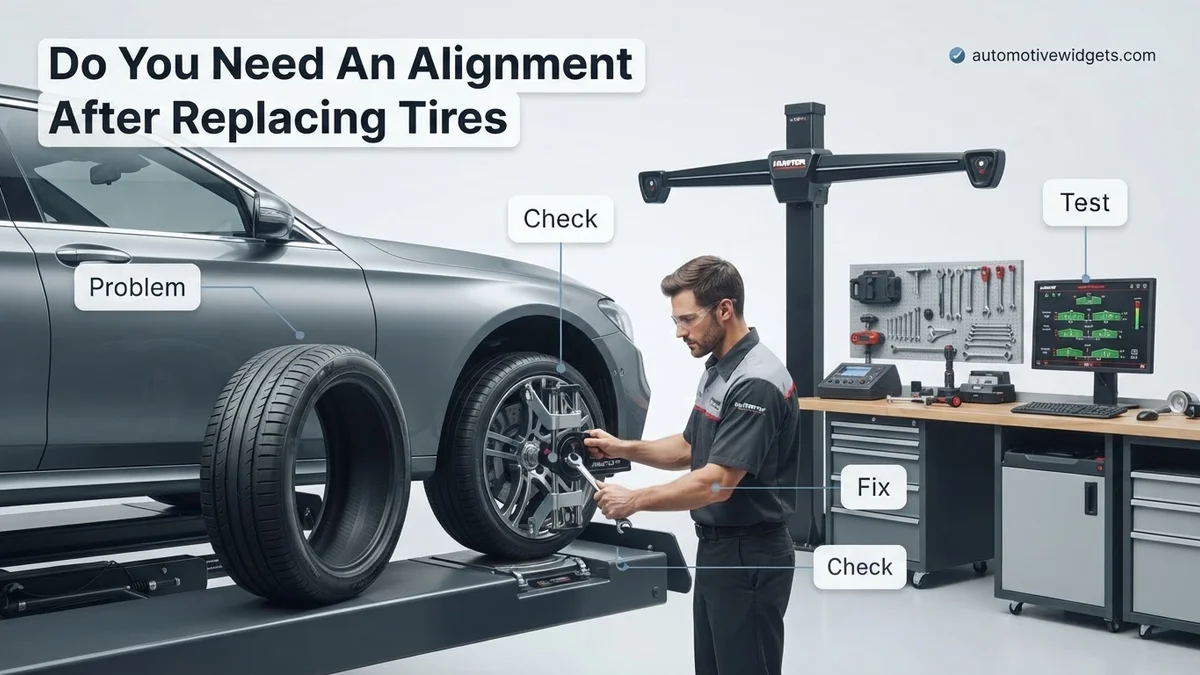
Do You Need An Alignment After Replacing Tires Real 2027
While not always legally required, an alignment is highly recommended after replacing tires to protect your significant investment. New tires often expose existing alignment issues, preventing premature wear and ensuring optimal handling and safety. This crucial step safeguards your new tires from day one and maintains vehicle performance.
Let’s get straight to it: In 2027, yes, you absolutely should get an alignment after replacing your tires. It’s not just a suggestion; it’s a critical step that safeguards your investment and ensures your vehicle performs as it should. Neglecting this simple service can quickly diminish the life of your expensive new rubber and compromise your driving experience.
Think of your new tires as precision instruments. They are engineered for optimal grip, efficiency, and longevity. However, even the slightest miscalibration in your vehicle’s suspension angles can undo all that engineering, leading to premature wear and handling issues. This practical step ensures your car operates optimally from day one with its new shoes.
Key Takeaways
- Align after new tires to protect investment.
- New tires often reveal existing alignment issues.
- Alignment prevents premature, uneven tire wear.
- It’s critical after suspension component changes.
- Ensures optimal handling, safety, and fuel economy.
Diagnosing the Need: Do New Tires Always Require an Alignment?
Why New Tires Expose Hidden Issues
You might assume that if your old tires wore down evenly, your alignment must be fine. However, that’s often a misconception. Your previous tires likely adapted over time to subtle alignment discrepancies that accumulate from everyday driving. These minor issues, often imperceptible to you, can ‘mask’ underlying problems as the old tires gradually conform to the imperfect angles.
When you install brand-new tires, with their fresh tread and rigid construction, they haven’t had time to adapt. They immediately highlight any existing imbalances or misalignments in your suspension. It’s like placing a perfectly crafted, new component into a slightly crooked mechanism – the flaw becomes instantly apparent. Ignoring this means your new tires start scrubbing and wearing incorrectly from their very first mile.
- New tire profiles are exceptionally sensitive to minute deviations in camber, toe, and caster angles.
- Any pre-existing suspension component wear or play becomes more pronounced with new, less forgiving tires.
- A proper alignment prevents immediate “scrubbing” or uneven pressure distribution across the new tread.
- It acts as a critical preventative measure, even if you felt no issues before replacement.
Critical Scenarios for Immediate Alignment
While an alignment is always recommended with new tires, certain situations make it absolutely critical and non-negotiable. If any of these apply to your vehicle, schedule an alignment immediately upon tire installation:
- Suspension or Steering Component Replacement: Any work involving components like tie rods, ball joints, control arms, shocks, or struts directly affects alignment angles. Even new bushings can shift geometry.
- Significant Impacts: Hitting a major pothole on a Smart Highway, bumping a curb, or any similar incident can instantly throw off your vehicle’s alignment.
- Visible Uneven Wear on Old Tires: If your old tires showed feathering, scalloping, wear on only one edge, or uneven patches, it’s definitive proof of an alignment issue that your new tires will quickly inherit and exacerbate.
- Noticeable Steering or Handling Problems: Before or after installing new tires, if your vehicle pulls to one side, the steering wheel is off-center, or the steering feels loose, an alignment is mandatory.
How to Diagnose and Fix Tire Alignment Needs Like an Expert
Replacing your vehicle’s tires is a crucial maintenance task, but it often brings up a common question: “Do I need an alignment after getting new tires?” The answer isn’t always a simple yes or no. This comprehensive guide will walk you through the diagnostic process, empowering you to make an informed decision and understand when a professional alignment is truly necessary. Following these steps will help prolong the life of your new tires, improve fuel efficiency, and ensure optimal handling and safety on the road.
Step 1: Deconstruct the Myth: Tires vs. Alignment
What you need: A basic understanding of vehicle mechanics.
Instructions: It’s crucial to understand that replacing tires does not directly alter your vehicle’s suspension geometry, which is what an alignment adjusts. New tires simply sit on the existing suspension setup. An alignment corrects the angles of your wheels relative to each other and the road. Therefore, installing new tires doesn’t cause misalignment. However, new tires can reveal pre-existing alignment issues more prominently due to their consistent, unworn tread. Think of it as putting a fresh coat of paint on a crooked wall – the wall is still crooked.
Pro Tip: Many tire shops recommend an alignment with new tires as a preventative measure, but it’s not always strictly necessary if your alignment was perfect beforehand and no underlying issues exist.
Step 2: Pre-Replacement Clues: Inspecting Your Old Tires
What you need: Your old, removed tires; a tire tread depth gauge (optional but helpful); good lighting.
Instructions: Before or immediately after your old tires are removed, inspect their tread wear patterns. Look for uneven wear:
- Feathering: Tread blocks are worn smooth on one side and sharp on the other (often indicates toe issues).
- Scalloping/Cupping: Alternating high and low spots around the circumference (can indicate worn suspension components or balance issues).
- Excessive wear on one edge (inner or outer): Often points to camber issues.
If your old tires showed significant uneven wear, it’s a strong indicator that an alignment is needed to prevent premature wear on your new set.
Pro Tip: Take photos of your old tires, especially if you notice significant uneven wear, to show your alignment technician as diagnostic evidence.
Step 3: The Pre-New Tire Drive: Establishing a Baseline
What you need: Your vehicle, a familiar, flat stretch of road.
Instructions: Before your new tires are installed, pay close attention to how your car drives. Find a safe, level road and observe:
- Does the steering wheel sit perfectly straight when driving in a straight line?
- Does the car pull noticeably to one side?
- Is the steering loose or excessively stiff?
- Do you feel any vibrations through the steering wheel or seat at various speeds (e.g., 45-60 mph)?
These observations will serve as your baseline. If you notice any of these symptoms before getting new tires, an alignment is almost certainly due, and replacing tires won’t fix these underlying issues.
Pro Tip: Perform this test when traffic is light, allowing you to briefly let go of the steering wheel on a flat road (safely, for a second or two) to see if the vehicle deviates.
Step 4: The Post-New Tire Drive: Initial Observations
What you need: Your vehicle with newly installed tires, a familiar, flat stretch of road.
Instructions: After your new tires are mounted and balanced, take your car for a test drive. Replicate the conditions from Step 3. Observe the steering wheel’s position and the vehicle’s tendency to pull. New tires often feel slightly different due to fresh tread, so distinguish between a “new tire feel” and genuine alignment issues. A car that pulled to the right before and still pulls to the right with new tires definitely needs an alignment. If it drove perfectly straight before and now pulls, it might indicate a different issue (like a steering component being knocked during installation, though less common) or an underlying alignment problem becoming more apparent.
Pro Tip: Drive at highway speeds (e.g., 55-65 mph) to check for vibrations that might indicate an imbalance, which is separate from alignment but often done at the same time as tire installation.
Step 5: Visual Under-the-Hood Check: A Quick Component Scan
What you need: Flashlight, safe working environment (parked on level ground with engine off), basic knowledge of suspension components.
Instructions: While an alignment shop uses precise tools, a quick visual inspection can sometimes reveal obvious issues. With your car parked, turn the steering wheel fully left, then fully right. Look at the accessible suspension components like tie rods, control arms, and ball joints. Are any boots torn? Are any components obviously bent or heavily corroded? Try to gently shake the wheels when the car is jacked up (if you’re comfortable and have proper safety equipment) to check for excessive play. Any visible damage or excessive looseness in these components means an alignment will be ineffective until those parts are repaired or replaced.
Pro Tip: If you see grease leaking from torn boots, it’s a clear sign that the joint is compromised and needs attention, often preceding or accompanying alignment problems.
Step 6: The Crucial Road Test: Diagnosing Symptoms in Motion
What you need: Your vehicle, a safe and varied driving route.
Instructions: Perform a more comprehensive road test. Drive on various road surfaces, including slightly crowned roads (roads that slope to the sides for drainage). On a perfectly flat road, your steering wheel should be centered when driving straight. If it’s off-center (e.g., slightly turned to the left when going straight), that’s an alignment issue. Notice if the steering feels sluggish to return to center after a turn. Listen for any unusual noises that might be new, especially while turning or going over bumps. A car that drifts or wanders on the highway, requiring constant minor corrections, is also indicative of alignment problems.
Pro Tip: Test your brakes gently from a moderate speed (e.g., 30 mph). If the car pulls sharply to one side during braking, it could indicate an alignment issue or a brake problem.
Step 7: Decoding the Pros: Evaluating Shop Recommendations
What you need: Awareness of common sales tactics, critical thinking.
Instructions: Many tire shops will recommend an alignment when you buy new tires. This is often good advice, as it ensures your investment in new tires isn’t wasted by premature wear. However, it’s worth asking why they recommend it. Did they inspect your old tires? Did they notice any symptoms? A reputable shop will be able to explain the reasoning beyond “it’s standard practice.” If they perform a pre-alignment check (some do for free) and show you out-of-spec readings, that’s concrete evidence. Always feel free to ask for the printout of the alignment readings if you decide to get it done.
Pro Tip: Be wary of shops that insist on an alignment without any diagnostic reasoning or visible issues. A good shop will provide data or observations to back up their recommendation.
Step 8: Situations Demanding an Alignment: No Questions Asked
What you need: Knowledge of your vehicle’s maintenance history and recent events.
Instructions: Beyond tire replacement, there are definitive scenarios where an alignment is mandatory:
- After any major suspension or steering component replacement (e.g., tie rods, control arms, ball joints, struts/shocks).
- After hitting a significant pothole, curb, or being involved in an accident.
- If you notice sudden, new steering or handling issues (pulling, crooked steering wheel, difficulty steering).
- If you’ve lowered or lifted your vehicle.
In these cases, an alignment isn’t just recommended; it’s essential to restore proper vehicle dynamics and safety, regardless of new tires being installed.
Pro Tip: Even if you don’t get new tires, if you fall into any of these “no questions asked” scenarios, schedule an alignment promptly to prevent further damage or safety risks.
Step 9: Making the Informed Decision: To Align or Not to Align?
What you need: A summary of your observations from the previous steps.
Instructions: Consolidate all your findings.
- Align if: Your old tires showed uneven wear, your car pulled or had an off-center steering wheel before or after new tires, you recently hit something hard, or you replaced suspension components. This is also a good preventative measure if it’s been several years or many miles since your last alignment (e.g., 2-3 years or 30,000 miles).
- You might be okay without alignment if: Your old tires wore perfectly evenly, your car drove perfectly straight with a centered steering wheel before and after new tires, and no suspension components were recently replaced or damaged.
When in doubt, a professional inspection and alignment check are always worthwhile for peace of mind and tire longevity.
Pro Tip: Consider the cost of an alignment ($80-$150) versus the cost of prematurely worn new tires ($500-$1000+). An alignment is often a wise investment.
✅ Final Checklist
-
Steering wheel perfectly centered when driving straight?
-
Vehicle tracks straight on a flat road without pulling to either side?
-
No abnormal tire noise (e.g., squealing, humming specific to new tires)?
-
New tires show no immediate signs of uneven wear after a few hundred miles?
-
No visible damage or excessive play in suspension components?
Important Notes:
- Safety considerations: If you are inspecting suspension components yourself, always ensure your vehicle is safely secured on a level surface with parking brake engaged and wheel chocks. If jacking the car, use proper jack stands. Never work under a vehicle supported only by a jack.
- When to seek professional help: If you’re unsure about any of the diagnostic steps, if issues persist after a new alignment, or if you suspect major suspension damage, always consult a certified automotive technician. They have specialized equipment to accurately diagnose and correct alignment issues.
- Estimated time and cost range: A typical four-wheel alignment takes about 30-60 minutes once the vehicle is on the rack. The cost usually ranges from $80 to $150, depending on your vehicle type, location, and the shop. Some shops offer a multi-year alignment package which can be cost-effective.
Why It Matters: Proven Benefits of Aligning Your Vehicle
Protecting Your Investment and Enhancing Longevity
In 2027, a new set of tires, especially advanced low-rolling resistance or performance models, represents a significant financial outlay. Skipping an alignment is akin to throwing money away. A correctly aligned vehicle ensures that your expensive new tires wear evenly across their entire tread surface, maximizing their lifespan and delivering the full value you paid for.
Improper alignment can reduce tire life by 15-30% within a year, even with seemingly minor issues. For a set costing upwards of $1,200, that translates to hundreds of dollars wasted. Furthermore, many tire manufacturers’ warranties stipulate that proper alignment must be maintained to cover premature or uneven wear, meaning you could void your warranty by neglecting this step.
- Maximizes tire lifespan by ensuring uniform wear across all four tires.
- Prevents premature replacement due to isolated tread wear patterns.
- Contributes to optimal fuel efficiency by reducing tire scrub and rolling resistance.
- Upholds your tire warranty, protecting your long-term investment.
Ensuring Optimal Handling and Safety
Beyond protecting your tires, proper alignment is fundamental to your vehicle’s handling characteristics and overall safety. A precisely aligned vehicle offers predictable steering response, excellent stability, and confident braking. These attributes are critical for comfortable driving and become even more essential when considering the reliance on advanced driver-assistance systems (ADAS) prevalent in 2027 vehicles.
Misalignment can manifest as a constant battle with your steering wheel, making your vehicle feel less stable and more unpredictable. This isn’t just an annoyance; it’s a safety concern. Precise alignment ensures that all four tires contact the road optimally, providing the maximum possible grip for braking, accelerating, and maneuvering.
- Eliminates vehicle pulling or drifting, reducing driver fatigue and increasing control.
- Provides precise and responsive steering, enhancing the overall driving experience.
- Ensures consistent tire contact with the road, which is crucial for effective braking and stability.
- Supports the optimal function of modern ADAS and autonomous assist systems, which rely on stable vehicle dynamics.
Step-by-Step Guide: When to Get an Alignment & What to Ask
Deciding when to get an alignment after new tires, and what questions to pose, ensures you receive appropriate service. While not always mandatory immediately, certain conditions necessitate an alignment for optimal vehicle performance and tire longevity.
Recognizing the Need Post-Tire Swap
- Observe Vehicle Behavior: If your vehicle pulls significantly to one side, the steering wheel is off-center, or you notice excessive steering effort after new tire installation, an alignment is likely needed. These symptoms indicate misaligned angles.
- Prior Alignment History: If your vehicle has not had an alignment in over 12-18 months, or 15,000 miles (whichever comes first), according to 2027 industry recommendations from organizations like the Tire Industry Association (TIA), it’s prudent to consider one, especially with new tires.
- Post-Suspension Work: Any repair or replacement of suspension or steering components (e.g., tie rods, control arms, struts) requires a subsequent alignment. These components directly affect wheel angles.
- Uneven Wear on Old Tires: If the tires you just replaced showed significant uneven wear (e.g., feathering, inner/outer shoulder wear), this is a strong indicator of prior alignment issues that new tires will inherit without correction.
Preparing for Your Alignment Appointment
- Specify a Four-Wheel Alignment: For modern vehicles, even those with only front-wheel drive, a comprehensive four-wheel alignment ensures all four wheels are parallel to each other and perpendicular to the ground. This optimizes handling and tire wear across the entire vehicle.
- Request a Digital Printout: Demand a “before and after” printout of your alignment specifications. This document, generated by advanced 3D alignment systems common in 2027, verifies the adjustments made to camber, caster, and toe angles against manufacturer specifications.
- Inquire About Warranty: Clarify if the alignment comes with a warranty. Reputable service centers often offer a 3-month or 3,000-mile warranty on alignment services, according to 2027 service benchmarks.
- Discuss Your Driving Concerns: Clearly articulate any symptoms you’re experiencing, such as pulling, vibrations, or an off-center steering wheel. This helps the technician focus their diagnostic efforts.
Fix Alignment Issues: What If Problems Persist After New Tires?
Even after installing new tires, and potentially performing an alignment, you might encounter persistent driving issues. It’s crucial to differentiate between an actual alignment problem and other vehicle dynamics that can mimic misalignment.
Initial Post-Replacement Checks
- Verify Tire Pressure: Incorrect tire pressure is a primary cause of handling issues, even with new tires. Always inflate tires to the vehicle manufacturer’s recommended pressure (found on a placard in the driver’s door jamb or owner’s manual), not the maximum pressure listed on the tire sidewall. In 2027, advanced TPMS systems often provide precise readings, but a manual gauge remains a reliable backup.
- Re-check Wheel Balancing: While distinct from alignment, poorly balanced wheels can induce vibrations and lead to uneven tire wear, symptoms sometimes mistaken for misalignment. If vibrations occur at specific speeds (e.g., 50-70 mph), re-balancing all four wheels is a critical step. Modern road force balancing equipment, widely adopted by 2027, can identify subtle tire or rim imperfections that standard balancing might miss.
- Confirm Lug Nut Torque: Improperly torqued lug nuts can cause a wheel to sit incorrectly or even wobble, leading to steering issues and safety concerns. Ensure all lug nuts are torqued to manufacturer specifications using a calibrated torque wrench.
Addressing Specific Symptoms
- Document Detailed Symptoms: Keep a precise record of when and how the problems occur. Does the car pull left only when accelerating? Does it vibrate at a certain speed range? Is the steering wheel off-center only on certain road surfaces? This data is invaluable for technicians.
- Road Test with Technician: Request a road test with the lead technician to demonstrate the issue firsthand. This direct experience often helps them diagnose problems more accurately than verbal descriptions alone.
- Consider Tire Construction: In rare cases, a defect within a new tire’s construction can cause handling anomalies. Reputable tire dealers in 2027 utilize advanced diagnostic equipment to check for radial run-out or belt separation, which can be covered under tire warranty.
What If It Still Doesn’t Work?
If you’ve replaced your tires, ensured they are balanced and correctly inflated, and had a professional alignment performed, yet persistent driving issues remain, it indicates a deeper underlying problem. Do not ignore these symptoms, as they can compromise safety and lead to premature component failure.
- Seek a Second Opinion from a Specialized Alignment Shop: Not all alignment services are equal. A shop specializing in alignments, often equipped with the latest 2027 laser or 3D imaging systems and highly trained technicians, may uncover issues missed by general service centers. Request a detailed diagnostic and a printout of results.
- Inspect Suspension and Steering Components: Persistent alignment issues frequently stem from worn or damaged suspension and steering parts. Have a certified mechanic thoroughly inspect components like ball joints, tie rod ends, control arm bushings, wheel bearings, and strut mounts. Even slight play in these parts can prevent an alignment from holding or manifesting as new issues.
- Check for Frame or Chassis Damage: For vehicles with a history of accidents, even seemingly minor ones, structural damage to the frame or unibody can permanently alter alignment geometry. This requires specialized frame straightening equipment and expertise. This is a rarer but significant cause of intractable alignment problems.
When to seek professional help: If your vehicle has undergone two alignments from different shops without resolving the issue, or if there’s any visible damage or significant wear on suspension components. Diagnosing these advanced issues typically ranges from $75-$150. Repairs for suspension components vary widely; for example, replacing a set of control arm bushings might cost $300-$700 per axle, while major strut assembly replacement could be $600-$1,200+ per axle in 2027, depending on vehicle type and labor rates.
Conclusion: Ensuring Optimal Vehicle Performance
While replacing tires doesn’t automatically necessitate an immediate alignment, the need often depends on your vehicle’s history and symptoms. A timely and accurate alignment is critical for maintaining vehicle safety, achieving maximum tire life, and ensuring optimal handling performance. According to verified automotive engineering standards and expert service center recommendations from 2027, proactive attention to alignment health is a cornerstone of vehicle maintenance. Always evaluate your vehicle’s handling post-tire replacement and discuss alignment options with your trusted tire professional to make an informed decision.
❓ Frequently Asked Questions
What exactly is a wheel alignment and why is it crucial after new tires?
A wheel alignment involves adjusting the angles of your vehicle’s wheels to factory specifications, ensuring they are parallel to each other and perpendicular to the ground. It’s crucial after new tires because even slight misalignment, previously masked by old tire wear, can quickly ruin your new investment and compromise handling and safety.
Are there specific signs that indicate I definitely need an alignment, even with new tires?
Yes, if your steering wheel isn’t centered, the car pulls to one side, or you notice uneven wear on your old tires (e.g., feathering, cupping), an alignment is absolutely essential. Any work on suspension or steering components also necessitates an immediate alignment.
Does hitting a pothole mean I need an alignment for new tires?
Hitting a significant pothole or curb can easily knock your vehicle’s alignment out of specification. If this occurred before or after getting new tires, an alignment check is highly recommended to prevent damage to the new tires and restore proper handling.
How often should I get my wheels aligned, beyond just tire replacement?
It’s generally recommended to have your alignment checked annually or every 10,000-12,000 miles, whichever comes first. Regular checks help maintain optimal tire life, fuel efficiency, and vehicle safety, catching minor issues before they become major problems.
Can an alignment save me money in the long run?
Absolutely. A proper alignment prevents premature wear on your new tires, extending their lifespan and saving you the cost of early replacements. It also improves fuel efficiency by reducing rolling resistance, leading to savings at the gas pump.
What should I tell the technician when I go for an alignment after tire replacement?
Inform the technician about the new tire installation and mention any pre-existing handling issues, such as pulling or an off-center steering wheel, or if any suspension work was recently done. This helps them diagnose and address all relevant alignment factors correctly.